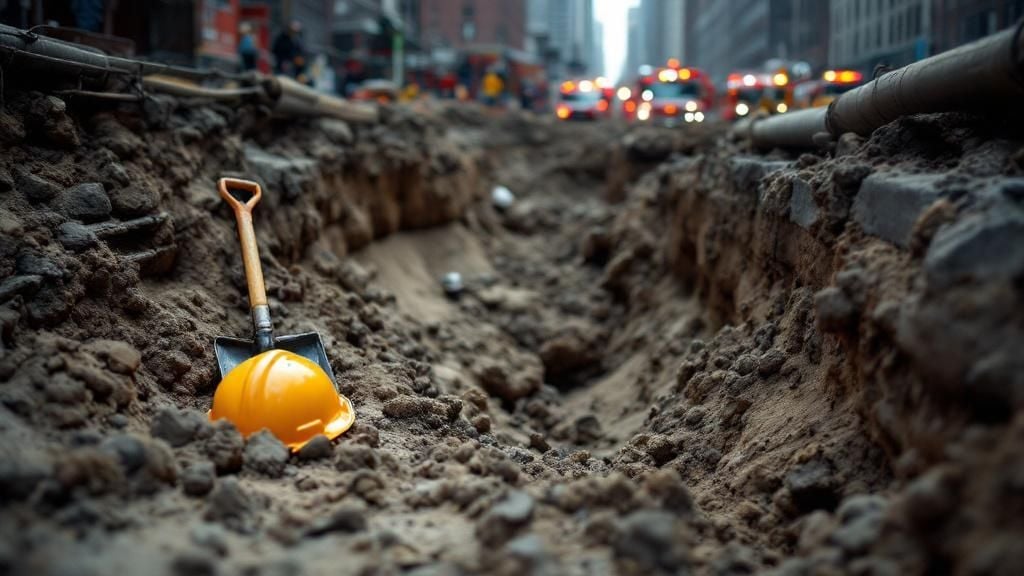
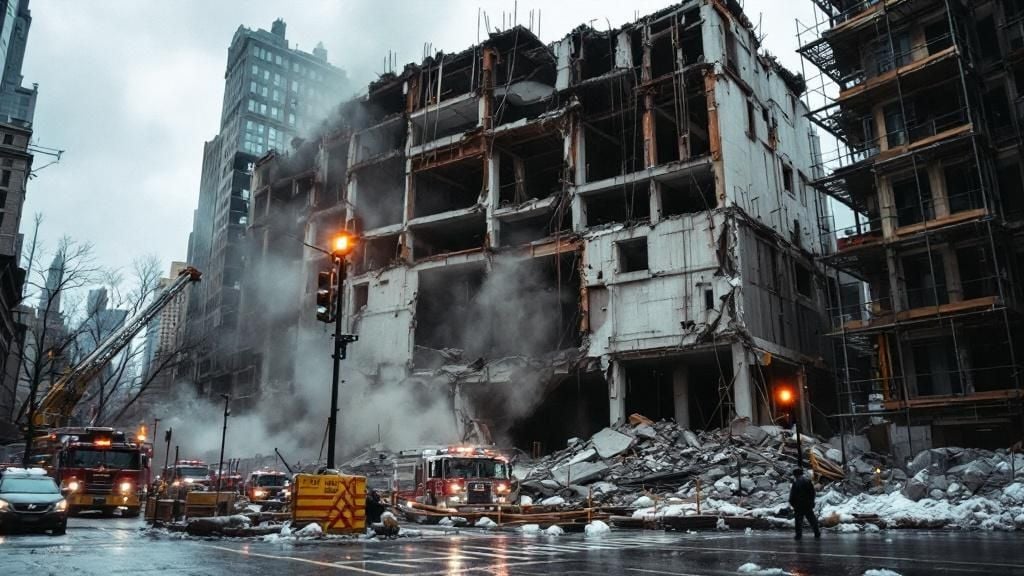
Construction workers at a New York building site
OSHA Fatal Four Protection

Caught-Between Accidents

Caught-between and caught-in accidents constitute one of OSHA's 'Fatal Four' construction hazards, causing approximately 5.4% of construction worker fatalities annually. These devastating incidents occur when workers become compressed, crushed, or trapped between objects, machinery, or collapsing materials. If you've been crushed, pinned, or trapped between objects on a New York construction site, you may have significant legal rights under Labor Law 240, 241(6), and common law negligence that can provide compensation far beyond workers' compensation benefits.

The Deadly Reality of Caught-Between Accidents

Crushing hazards kill and catastrophically injure construction workers at alarming rates. These statistics from OSHA and BLS reveal the devastating scope of this preventable problem.

5.4%
Of construction fatalities

Caught-between accidents account for approximately 5.4% of all construction worker deaths, making them one of OSHA's 'Fatal Four' hazards.

50-60
Annual fatalities

According to BLS, 50-60 construction workers die annually from caught-between accidents, with many more suffering life-altering injuries.

28%
From unguarded machinery

OSHA reports that approximately 28% of caught-between fatalities involve unguarded or inadequately guarded machinery.

22%
Trench cave-ins

Per BLS data, about 22% of caught-between deaths involve trench or excavation cave-ins that trap workers.

What Are Caught-Between Accidents?

Caught-between and caught-in accidents occur when a worker's body or body part becomes compressed, crushed, or entangled. OSHA categorizes these hazards into several types:

Caught-In Machinery

Workers are caught in or drawn into rotating, reciprocating, or moving parts: - Rotating shafts, pulleys, or gears - Conveyor belts and rollers - Augers and mixing equipment - Power take-off (PTO) shafts - Unguarded drill presses or lathes

Caught-Between Equipment and Objects

Workers are crushed between moving equipment and fixed structures: - Pinned between a forklift and wall - Crushed between a backing vehicle and another object - Caught between swinging crane loads and structures - Compressed between machinery components

Caught-Between Collapsing Materials

Workers are trapped by structural failures: - Trench cave-ins and excavation collapses - Collapsing scaffolding or temporary structures - Falling stacked materials - Structural collapses during demolition

Tip-Over Incidents

Workers are crushed by overturning equipment: - Forklift tip-overs - Crane collapses - Scaffold tip-overs - Tipping material stacks

In New York City's high-rise construction environment, caught-between hazards are particularly prevalent due to heavy equipment in confined spaces, complex steel erection, and excavation work.

The Physics of Crushing Injuries

Understanding the mechanics of caught-between accidents reveals why these injuries are so devastating:

*Force Concentration* - When a worker becomes trapped between two objects, enormous pressure concentrates on a relatively small area of the body. A 10,000-pound load distributed across a 12-inch contact zone creates pressures exceeding 800 PSI—sufficient to crush bone and rupture internal organs.

*Time Factor* - Unlike impact injuries where force dissipates quickly, caught-between accidents often involve sustained compression. Extended entrapment causes progressive tissue damage, with muscle death (rhabdomyolysis) beginning within hours and leading to potentially fatal kidney failure if not treated promptly.

*Hydraulic Effect* - The human body is largely incompressible fluid. When external force compresses one area, internal pressure spikes throughout, causing remote injuries far from the point of contact. This explains why chest compression can cause fatal brain hemorrhage even without direct head trauma.

NYC-Specific Risk Factors

New York construction presents unique caught-between hazards:

*Congested Work Sites* - Manhattan construction sites often occupy minimal footprints while supporting massive vertical construction. Workers operate heavy equipment in spaces barely larger than the machinery itself, with minimal clearance from walls, columns, and other fixed structures.

*Below-Grade Work* - Basement excavation for high-rise foundations in NYC's unstable glacial soils creates extreme cave-in risks. The high water table, old utility infrastructure, and vibration from adjacent buildings compound trench collapse dangers.

*Steel Erection Complexity* - Assembling structural steel for skyscrapers requires coordinating crane operations, ironworker positioning, and load handling in ways that create numerous caught-between exposure points.

*Aging Infrastructure* - Renovation work in pre-war buildings often involves removing walls and floors that may collapse unpredictably, trapping workers in debris.

Legal Protections for Caught-Between Victims

New York provides strong legal protections for workers injured in caught-between accidents:

Labor Law Section 240(1) - The Scaffold Law

Labor Law 240 applies to caught-between accidents involving gravity-related hazards: - Crushed by falling objects or materials - Trapped by collapsing structures - Caught between falling loads and fixed objects - Injured by inadequate hoisting equipment

When a gravity-related caught-between accident occurs, property owners and general contractors face absolute liability—they cannot blame the worker's own negligence.

Labor Law Section 241(6) - Industrial Code Compliance

This section requires compliance with specific safety rules. Relevant provisions include: - 12 NYCRR 23-1.7 (protection of workers) - 12 NYCRR 23-4.2 (trench and excavation protection) - 12 NYCRR 23-9.2 (construction vehicles and equipment) - 12 NYCRR 23-9.5 (power-operated equipment)

Labor Law Section 200 - General Safety Duty

Property owners and contractors must provide a reasonably safe workplace. Liability attaches when: - The defendant controlled the work being performed - The defendant created or knew of the hazardous condition

Who Can Be Held Liable?

Caught-between accident claims can target: - **Property owners** – Strictly liable under Labor Law - **General contractors** – Responsible for site safety - **Subcontractors** – For hazards they create - **Equipment manufacturers** – For defective products - **Excavation contractors** – For trench failures

Critical Court Decisions

New York courts have consistently applied Labor Law protections to caught-between scenarios:

*Runner v. New York Stock Exchange (2012)* - The Court of Appeals held that Labor Law 240(1) applies when a worker is injured by an object that fell while being hoisted or secured, or that required securing for the work being performed. This landmark decision expanded protection for workers caught between falling loads and fixed structures.

*Wilinski v. 334 East 92nd Housing Development (2012)* - The Court established that inadequate hoisting equipment creating a caught-between hazard triggers absolute liability under Section 240(1), even when the falling object was being moved horizontally at the time.

*Misseritti v. Mark IV Construction (2013)* - This case confirmed that workers caught between construction vehicles and fixed objects can recover under Labor Law 200 and common law negligence when inadequate safety measures created the hazard.

The Sole Proximate Cause Defense

The only complete defense available to defendants in Labor Law 240 caught-between cases is proving that the worker's own conduct was the sole proximate cause of the accident. This requires showing that: - Adequate safety devices were available - The worker knew the devices were available - The worker unreasonably chose not to use them - No other factor contributed to the accident

This defense rarely succeeds because it requires proving that absolutely nothing the defendant did contributed to the accident—a nearly impossible standard.

Common Causes of Caught-Between Accidents

Caught-between accidents result from identifiable hazards that employers have a duty to prevent:

Machinery Hazards

  • Missing or bypassed machine guards
  • Unprotected rotating parts
  • No emergency stop mechanisms
  • Lockout/tagout procedures not followed
  • Workers reaching into operating machinery

Equipment Operation Failures

  • No spotters for backing vehicles
  • Operators with obstructed views
  • Malfunctioning backup alarms
  • Inadequate clearance in work areas
  • Poor communication between operator and ground workers

Excavation Deficiencies

  • Improper or missing shoring
  • No trench box in unstable soils
  • Excavations exceeding safe angles of repose
  • Spoil piles too close to trench edge
  • Water accumulation weakening walls

Material Storage Problems

  • Improper stacking of materials
  • Unsecured loads and pallets
  • Overloaded storage areas
  • Materials stored on unstable surfaces

Training and Supervision Deficiencies

  • Workers untrained in machinery hazards
  • No designated competent persons
  • Inadequate excavation training
  • Failure to conduct daily inspections
  • Supervisors not enforcing safety rules

Under New York law, employers, property owners, and general contractors who fail to prevent these hazards can be held liable.

Case Study: Manhattan Excavation Collapse

In 2019, a worker installing utility lines in a 12-foot trench in Midtown Manhattan was buried when the unsupported trench walls collapsed. Investigation revealed multiple failures: no competent person had inspected the excavation that morning, the sandy soil conditions required but lacked sheet piling or trench boxes, and spoil piles were positioned within one foot of the trench edge (violating the two-foot OSHA requirement). The worker survived but suffered spinal compression fractures requiring fusion surgery. The property owner, general contractor, and excavation subcontractor all faced liability, ultimately settling for $4.2 million.

Case Study: Queens Industrial Equipment Accident

A maintenance worker performing repairs on a packaging machine at a Queens distribution center was caught in the machine when a coworker inadvertently activated it during the maintenance procedure. The facility had lockout/tagout procedures on paper but had never trained workers or provided individual locks. The worker lost three fingers and suffered nerve damage resulting in permanent partial disability. Product liability claims against the machine manufacturer combined with Labor Law claims against the building owner resulted in a $2.8 million recovery.

Root Cause Analysis

OSHA investigations of caught-between fatalities consistently identify the same underlying failures:

*Management System Failures* - 73% of caught-between fatalities involve documented safety procedures that were not followed, indicating supervisory breakdown.

*Equipment Maintenance Deficiencies* - 41% involve machinery with known guard or safety interlock deficiencies that had not been corrected.

*Communication Breakdowns* - 38% involve failures to communicate between equipment operators and ground workers, often due to inadequate spotters or signal systems.

*Inadequate Hazard Assessment* - 52% occur in situations where no formal job hazard analysis was performed before work began.

*Settlement amounts vary based on injury severity, jurisdiction, and case facts. Figures reflect reported NY construction verdicts. Source: NY State court records. Your case may differ significantly.*

Need help understanding your case?

Free, confidential consultation—no obligation.

Free Case Review

Injuries from Caught-Between Accidents

Caught-between accidents cause some of the most catastrophic injuries in construction:

Traumatic Amputations

  • Limbs severed by machinery
  • Fingers lost in gears or rollers
  • Partial amputations requiring surgical completion
  • Multiple digit loss
  • Crush injuries necessitating amputation

Crushing Injuries

  • Compartment syndrome requiring fasciotomy
  • Muscle destruction (rhabdomyolysis)
  • Internal organ damage
  • Chest wall compression
  • Pelvic crush injuries

Spinal Cord Injuries

  • Vertebral fractures from compression
  • Spinal cord damage causing paralysis
  • Permanent paraplegia or quadriplegia
  • Chronic spinal pain syndromes

Asphyxiation

  • Chest compression preventing breathing
  • Suffocation in trench cave-ins
  • Positional asphyxiation when trapped

Bone and Joint Trauma

  • Multiple fractures from crushing
  • Joint destruction
  • Complex open fractures
  • Permanent joint deformity

Psychological Trauma

  • PTSD from near-death experience
  • Survivor's guilt when coworkers are killed
  • Phantom limb pain after amputation
  • Depression and anxiety disorders

Caught-between injuries often require extensive surgical intervention, long-term rehabilitation, and frequently result in permanent disability.

Medical Treatment Pathways

Caught-between injuries require specialized trauma care:

*Initial Stabilization* - Emergency responders must carefully manage extrication to prevent "rescue death"—the phenomenon where releasing prolonged compression causes sudden cardiac arrest as accumulated toxins flood the circulation. Controlled decompression with aggressive fluid resuscitation is essential.

*Surgical Intervention* - Crush injuries frequently require fasciotomy (cutting open tissue compartments to relieve pressure), debridement of dead tissue, vascular repair, and orthopedic stabilization. Multiple staged surgeries over weeks are common.

*Limb Salvage vs. Amputation* - Modern microsurgery can often save severely damaged limbs, but the decision involves complex factors including viability of remaining tissue, infection risk, and long-term function. Some salvaged limbs never regain useful function, making amputation with prosthetic fitting the better outcome.

*Rehabilitation* - Physical therapy for crush injuries is prolonged, often 6-18 months, addressing muscle weakness, joint stiffness, nerve recovery, and scar tissue management. Occupational therapy helps restore functional capabilities for work and daily living.

Long-Term Prognosis

Outcome statistics for caught-between injuries:

  • 78% of survivors report chronic pain at 5-year follow-up
  • 62% never return to construction work
  • 45% require additional surgery within 5 years
  • 34% develop permanent disability affecting all work
  • 28% develop secondary conditions (chronic pain syndrome, depression, substance abuse) requiring ongoing treatment

OSHA Requirements to Prevent Caught-Between Hazards

OSHA has established extensive regulations to prevent caught-between accidents:

Machine Guarding (29 CFR 1926.300)

  • All exposed moving parts must be guarded
  • Guards must prevent contact with hazardous components
  • Guards must not create additional hazards
  • Interlocked guards required where appropriate
  • Emergency stop devices must be accessible

Lockout/Tagout (29 CFR 1926.417)

  • Written energy control procedures required
  • Equipment must be de-energized before maintenance
  • Locks must be applied to isolate energy
  • Only authorized employees may perform lockout
  • Procedures must be verified before work begins

Excavation Safety (29 CFR 1926.650-652)

  • Competent person must inspect excavations daily
  • Protective systems required at 5+ feet depth
  • Sloping, benching, or shoring as appropriate
  • Spoil piles at least 2 feet from excavation edge
  • Adequate means of egress required
  • Daily inspections after weather events

Motor Vehicle and Equipment Safety (29 CFR 1926.600-602)

  • Rollover protective structures (ROPS) required
  • Backup alarms on equipment with obstructed rear view
  • Vehicles must have adequate brakes
  • Equipment operators must be trained

Material Handling (29 CFR 1926.250)

  • Materials must be properly stacked and secured
  • Storage areas must not obstruct egress
  • Proper rigging required for lifting operations

OSHA violations are frequently cited in caught-between investigations and serve as evidence of negligence.

New York Industrial Code Requirements

Beyond OSHA, New York's Industrial Code provides additional protections enforceable under Labor Law 241(6):

*12 NYCRR 23-4.2 (Trench and Excavation Work)* - Requires sheeting, shoring, bracing, or sloping for excavations over 5 feet deep. Mandates daily inspection by competent persons. Specifies maximum allowable slopes based on soil type.

*12 NYCRR 23-9.2 (General Vehicle Requirements)* - All construction vehicles must have functional brakes, adequate lighting, and audible backup alarms. Operators must have clear vision or use spotters.

*12 NYCRR 23-9.5 (Power-Operated Equipment)* - Requires guards on all moving parts that could cause caught-in injuries. Mandates emergency stop mechanisms within reach of operators.

*12 NYCRR 23-1.7 (Protection from General Hazards)* - Requires protection from hazards including falling objects, falling through openings, and caught-between hazards from moving equipment.

Enforcement and Penalties

OSHA aggressively enforces caught-between violations:

*Willful Violations* - When employers knowingly ignore caught-between hazards, penalties can reach $161,323 per violation. Repeated willful violations exposing workers to death risk trigger criminal prosecution.

*Serious Violations* - Standard penalties for serious caught-between hazards average $15,625 per violation but can be increased based on employer history and accident severity.

*Fatal Accident Investigations* - Every caught-between fatality triggers mandatory OSHA investigation. Employers face penalties plus potential criminal referral to the Department of Justice.

Prevention Programs

Effective caught-between prevention requires systematic approaches:

*Job Hazard Analysis (JHA)* - Before any work involving heavy equipment, excavation, or machinery, supervisors must identify specific caught-between hazards and implement controls.

*Competent Person Requirements* - Excavation, crane operation, and machinery work require designated competent persons with authority to stop work when hazards exist.

*Equipment-Specific Safe Work Procedures* - Each piece of equipment needs written procedures addressing caught-between hazards, reviewed with workers before operation.

*Pre-Task Safety Meetings* - Daily toolbox talks should address specific caught-between hazards anticipated that day, with worker input on additional concerns.

*Settlement amounts vary based on injury severity, jurisdiction, and case facts. Figures reflect reported NY construction verdicts. Source: NY State court records. Your case may differ significantly.*

Need help understanding your case?

Free, confidential consultation—no obligation.

Free Case Review

What to Do After a Caught-Between Accident

Caught-between accidents often require immediate emergency response:

1. Emergency Response

  • Call 911 immediately
  • Do not attempt to extricate trapped workers unless trained
  • Stabilize the scene to prevent additional collapses
  • Administer first aid if safe and trained
  • Keep the victim calm and still if conscious

2. Seek thorough medical Treatment

Caught-between injuries often involve internal trauma: - Go to a trauma center, not urgent care - Report all symptoms, including numbness or weakness - Request imaging to rule out internal injuries - Follow up with specialists as recommended

3. Report and Document

  • Ensure the accident is reported to supervisors
  • Request written incident reports
  • File for workers' compensation promptly
  • Document the accident scene if possible

4. Preserve Evidence

  • Do not allow equipment repairs or alterations
  • Preserve damaged PPE and clothing
  • Note serial numbers on machinery
  • Identify equipment manufacturers
  • Request maintenance and inspection logs

5. Contact a Construction Accident Attorney

Caught-between accidents involve complex liability questions: - Evidence degrades rapidly - Multiple parties may be responsible - Engineering experts may be needed - Large damages justify thorough investigation

Do not give recorded statements to insurance adjusters before consulting an attorney.

6. Understand the Investigation Process

After a serious caught-between accident, multiple investigations occur simultaneously:

*OSHA Investigation* - Federal inspectors will arrive within days for fatalities or hospitalizations. They will interview witnesses, photograph the scene, review safety programs, and issue citations if violations existed. You can request copies of OSHA investigation reports, which provide valuable evidence for civil claims.

*NYC DOB Investigation* - For New York City construction sites, the Department of Buildings investigates serious accidents. They examine permits, approved plans, and compliance with NYC Building Code requirements.

*Employer Investigation* - Most employers conduct internal investigations. Be cautious about statements made during these investigations—they may be used defensively in later litigation.

*Insurance Adjuster Investigation* - The employer's workers' compensation insurer and any general liability insurers will investigate to minimize their exposure. Do not provide recorded statements without legal counsel.

Compensation for Caught-Between Accident Victims

Due to the catastrophic nature of caught-between injuries, victims may be entitled to substantial compensation:

Workers' Compensation Benefits

  • Complete medical expense coverage
  • Temporary total disability (wage replacement)
  • Permanent partial disability (scheduled loss awards)
  • Permanent total disability benefits
  • Vocational rehabilitation
  • Death benefits for dependents

Third-Party Lawsuit Damages

Beyond workers' comp, victims may recover: - Full lost wages (past and future) - Loss of earning capacity - Pain and suffering - Emotional distress - Loss of enjoyment of life - Disfigurement - Loss of consortium for spouses - Punitive damages in egregious cases

Settlement and Verdict Ranges

Caught-between accidents often result in significant awards: - Amputations: $1,000,000-$5,000,000+ - Spinal cord injuries with paralysis: $3,000,000-$15,000,000+ - Severe crushing injuries: $750,000-$3,000,000 - Wrongful death: $2,000,000-$10,000,000+

Notable New York Cases

  • $18.5 million for worker crushed in excavation collapse
  • $12.2 million for amputation caused by unguarded machinery
  • $9.8 million for worker pinned between forklift and wall
  • $7.5 million for caught-between fatality (family settlement)

Labor Law 240 violations in caught-between cases often lead to larger recoveries because comparative negligence is not a defense.

Calculating Future Damages

Caught-between injuries often cause permanent disability, requiring expert calculation of lifetime damages:

*Life Care Planning* - Medical experts project lifetime care needs including surgeries, therapy, medications, assistive devices, and home modifications. For spinal cord injuries, life care plans often exceed $5 million in present value.

*Vocational Expert Analysis* - Rehabilitation specialists assess lost earning capacity by comparing pre-injury earning potential with post-injury capabilities. A 35-year-old construction worker earning $80,000 annually who becomes permanently disabled faces over $2 million in lost earnings.

*Economic Expert Testimony* - Forensic economists calculate present value of future losses, applying appropriate discount rates, inflation adjustments, and mortality tables.

The Workers' Compensation Lien

When you recover damages in a third-party lawsuit, your employer's workers' compensation carrier has a lien on the recovery to reimburse benefits paid. However, New York law (Workers' Compensation Law Section 29) requires the carrier to share in attorney fees and litigation expenses proportionally, reducing the effective lien amount significantly.

Structured Settlements

For catastrophic caught-between injuries requiring lifetime care, structured settlements may be appropriate. These arrangements convert lump-sum awards into guaranteed periodic payments, providing financial security while potentially offering tax advantages.

*Settlement amounts vary based on injury severity, jurisdiction, and case facts. Figures reflect reported NY construction verdicts. Source: NY State court records. Your case may differ significantly.*

Key Facts About Caught-Between Accidents

Caught-between is one of OSHA's Fatal Four

Includes machinery, equipment, and collapse incidents

Machine guarding is required by OSHA

Lockout/tagout procedures prevent many incidents

Common Safety Violations

Missing machine guards

No lockout/tagout procedures

Workers in collapse zones

Equipment operated near workers

Improper trenching protection

No spotters for backing vehicles

Frequently Asked Questions About Caught-Between Accidents

Get answers to common questions about caught-between accident claims and Labor Law protections.

Injured in a Caught-Between Accident?

Caught-between accidents cause devastating injuries that can affect you for life. If you've been crushed, trapped, or pinned on a construction site, a free consultation can help you understand your options. There's no obligation—just answers when you need them most.

24/7 Free Consultation
No Fee Unless You Win

This page is for informational purposes only and does not constitute legal advice. Every case is unique. For advice about your specific caught-between accident case, please consult with a qualified attorney. This website is operated by NY Construction Advocate, a licensed New York attorney. This is attorney advertising.

Call NowFree Case Review