Electrocution Accidents
Electrical hazards cause severe burns, cardiac arrest, and death on construction sites.
Or call now: (914) 407-3717
Understanding Electrocution Accidents
The short answer
Key Facts
Electrocution is one of OSHA's Fatal Four
Minimum 10-foot clearance from power lines
GFCI protection required on construction sites
Only qualified electricians may work on live equipment
Common Safety Violations
When property owners or contractors fail to provide adequate safety measures, they may be held responsible under Labor Law 240. Common violations in electrocution accidents cases include:
Working near energized power lines
No GFCI protection
Defective electrical equipment
Unqualified workers on electrical tasks
No lockout/tagout procedures
Missing insulation on conductors
Common Injuries
Death
Severe electrical burns
Cardiac arrest
Neurological damage
Falls from shock
Amputations
Were You Injured?
If you or someone you know was hurt in a electrocution accident, we can help you understand your options—no pressure, no obligation.
Free Case ReviewFree, confidential consultation
Your Protection
Under Labor Law 240, property owners have an absolute duty to provide proper safety equipment. If they failed to protect you, you may have a claim—even if you made a mistake.
Learn about the lawOfficial Sources for Electrocution Accidents Claims
These official New York and federal construction-safety references support the legal and safety context on this page.
Related Accident Types
Equipment Failures
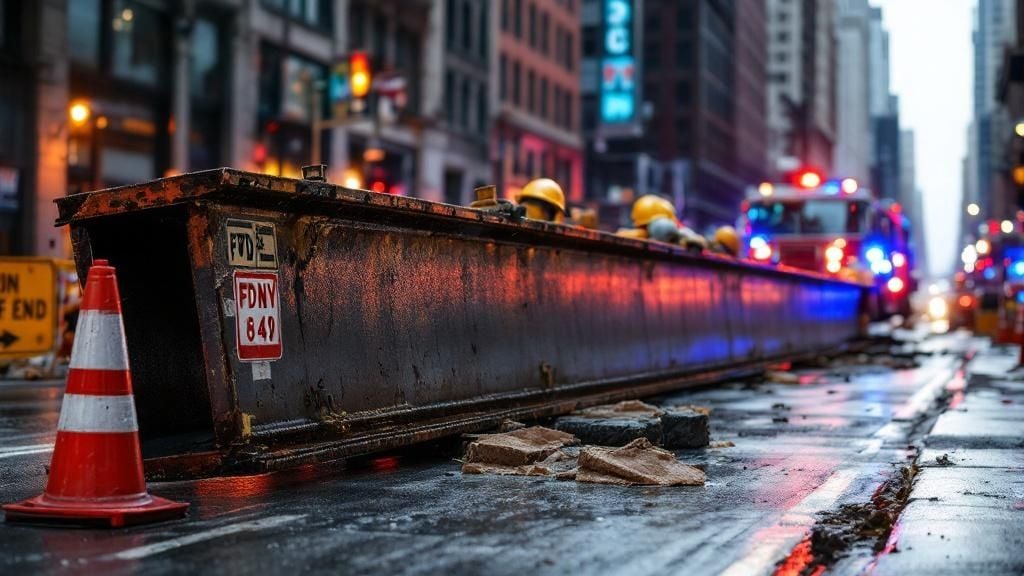
Crane Accidents
Crane accidents including load drops, tip-overs, and struck-by incidents cause catastrophic injuries.
Learn more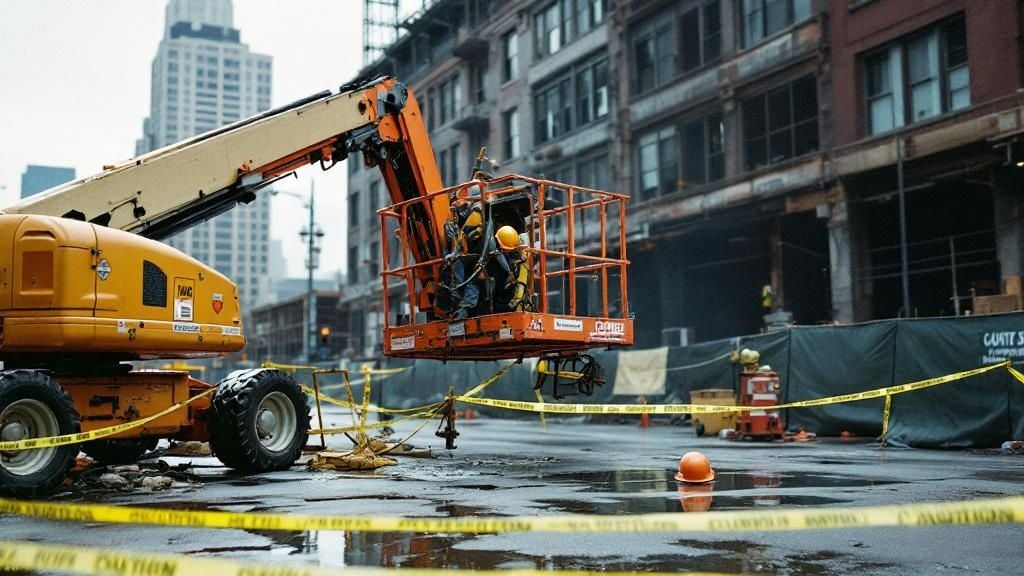
Equipment Failures
Aerial Lift Falls
Falls from aerial lifts, boom lifts, and bucket trucks are covered under Labor Law 240.
Learn more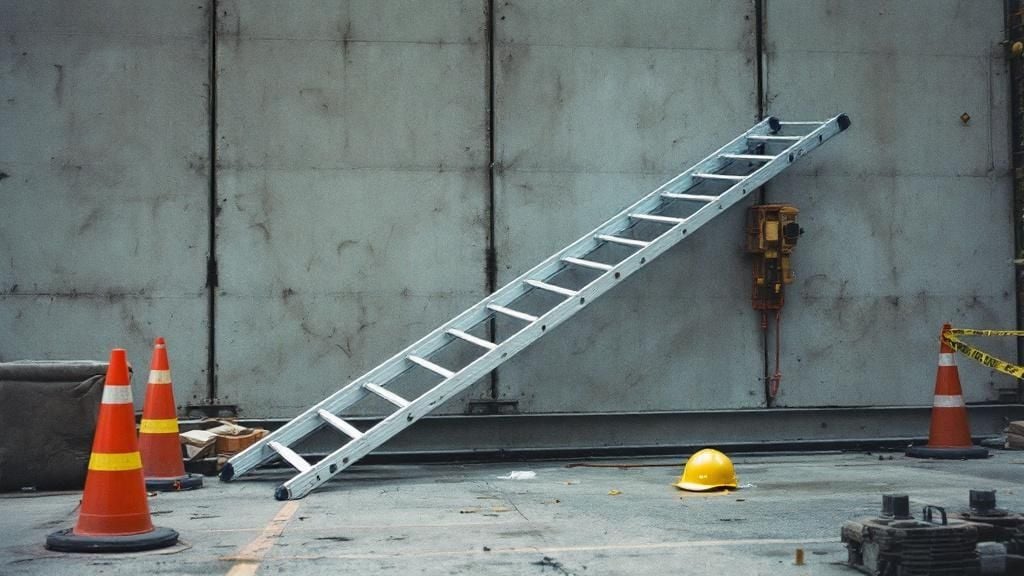
Falls from Heights
Ladder Accidents
Defective, improperly secured, or inadequate ladders cause thousands of construction injuries each year.
Learn moreHow New York Labor Law Applies to a Electrocution
The textbook NON-§240(1) construction injury — a pure shock has no gravity differential, so strict liability does not attach.
A pure electric shock has no elevation differential, so Labor Law §240(1) — limited to gravity-related hazards — does not apply. The Court of Appeals held in Nieves that §240(1) reaches "only a narrow class of special hazards" and not every peril tangentially connected to gravity. Electrocution cases therefore live on §241(6) — through the Industrial Code's electrical-hazard provisions — and on §200 negligence.
§241(6) is the workhorse: it is non-delegable and vicarious, and the owner's or contractor's lack of notice is irrelevant to it. §200 splits two ways — a dangerous-premises track (a pre-existing energized or concealed cable, where liability turns on notice) and a means-and-methods track (a worker mishandling a live tool or temporary line, where liability turns on actual supervisory control). The defining wrinkle: if the shock causes a fall, §240(1) re-enters, but causation becomes a jury question — whether the fall (a §240 hazard) or the shock (not a §240 hazard) caused the injury (Cutaia).
NY Industrial Code (12 NYCRR Part 23)
NY Industrial Code 23-1.13 ("Electrical hazards") requires the employer to investigate for live circuits and to protect workers by de-energizing and grounding or by effective insulation. Its investigation and protection provisions are recognized §241(6) predicates, and because §241(6) is vicarious, the owner's lack of notice does not defeat the claim.
Federal OSHA Standards That Govern Electrocution Accidents
These are the verbatim federal standards enforceable on every New York construction site. An OSHA citation for a standard that proximately caused your injury supports a Labor Law §241(6) claim independent of Labor Law §240.
29 CFR 1926.404(b)(1)
Ground-fault circuit interrupters on 120V receptacles in use, or an assured equipment grounding conductor program.
29 CFR 1926.416(a)(1)
No work near a circuit a worker could contact unless it is de-energized and grounded, or guarded by insulation.
29 CFR 1926.1408
Cranes/equipment near overhead power lines: de-energize and ground, keep 20 feet clearance, or follow the voltage-based clearance table.
How a Electrocution Accident Happens — and the Injuries It Causes
The Mechanism
Contact with an energized conductor, an overhead line, an ungrounded tool, or concealed live wiring, with current passing through the body. AC is more dangerous than DC because of the tetanic "no-let-go" lock-on. Arc flash (intense radiant heat at a distance) and arc blast (a concussive pressure wave with molten shrapnel) injure without direct contact and are often higher-voltage events.
The Medical Reality
A genuinely different medical profile from the fall injuries. Ventricular fibrillation and cardiac arrest can occur at currents below ordinary-outlet output; cardiac arrest is the leading cause of immediate death. Thermal burns concentrate at entry and exit wounds but mask far worse deep-tissue ("iceberg") damage, leading to compartment syndrome, rhabdomyolysis, kidney injury, and amputation. Latent injuries — delayed cardiac arrhythmias, neuropsychiatric and neuropathic deficits, and cataracts emerging weeks to years later — are a key litigation point that supports future-medical and permanency claims even when the worker "looked fine."
What Drives Case Value in a Electrocution Accident Claim
Catastrophic burns drive multiple skin-graft surgeries, burn-ICU care, and lifetime scar treatment; disfigurement, amputation and prosthetics, and cardiac or neurological permanency follow. A high proportion are wrongful-death cases. §241(6) vicarious liability frequently yields partial summary judgment on liability, shifting the fight to damages.
Prior results do not guarantee a similar outcome.
What the Defense Will Argue
Keep the case out of §240(1) (no gravity hazard; and where there was a fall, argue the shock, not the device, caused it — Cutaia). Comparative negligence is available under §241(6) and §200 (ignored lockout/tagout, no insulated PPE). On §200, argue lack of notice on the premises track or no supervisory control on the means-and-methods track, and point to a third party or the utility for the line.
The New York Cases That Control a Electrocution Accident Claim
Nieves v. Five Boro Air Conditioning, 93 NY2d 914 (1999)
§240(1) protects against a narrow class of gravity hazards and does not reach a pure electric shock.
Cutaia v. Board of Managers of 160/170 Varick Street, 38 NY3d 1037 (2022)
Where a shock causes a fall from a ladder, whether the §240 hazard or the shock caused the injury is a triable question.
More Questions About Electrocution Accidents Claims
How a Electrocution Actually Causes Harm
The mechanism matters in litigation. Defense counsel will argue the worker caused his own injury. The biomechanics of how this accident type produces specific injuries — and which OSHA standard was supposed to prevent it — is what proves the violation caused the harm.
Ground fault with no GFCI protection
When a tool's insulation is damaged, current finds a path to ground through any conductor in contact with the tool — including a worker's body. At 120V, 60mA (well below the 15-amp circuit breaker threshold) is enough to produce ventricular fibrillation. A GFCI trips at 5mA within 1/40th of a second. On construction sites without required GFCI protection on temporary power, the worker becomes the fault-detection device.
Inadvertent contact with energized conductors
Workers cutting through walls, drilling, or driving stakes can contact buried or enclosed conductors that are not marked, de-energized, or isolated. In urban renovation — where building electrical systems are frequently older than 80 years and wiring is not as-built documented — the location of live conductors is genuinely unknown. Contact is brief but delivers current at 120 or 240V before the worker can break contact.
Arc flash from switchgear or panel work
When an electrician or laborer works near energized bus bars or makes contact with phase conductors in a panel, an arc flash can release thousands of calories per square centimeter in milliseconds. The arc temperature exceeds 35,000°F — hotter than the surface of the sun. Workers within the arc-flash boundary who are not wearing rated PPE suffer full-thickness burns, blast overpressure, and projectile impact from vaporized copper.
Mechanism descriptions sourced from OSHA technical documentation, NIOSH fatality investigation reports, and NY Workers' Compensation Board case data.
OSHA Standards Most Cited in Electrocution Cases
FY2024 federal citation data. A documented violation of any of these standards, where the violation proximately caused the injury, supports a Labor Law 241(6) claim independent of Labor Law 240.
29 CFR 1926.501
Fall Protection
6,307 citations issued nationally in FY2024.
29 CFR 1926.451
Scaffolding
1,873 citations issued nationally in FY2024.
Source: OSHA Construction-Specific Top 5 + Top 10, Fiscal Year 2024.
OSHA Citations on NY Construction Sites — FY2024
The federal standards below were the most-cited safety violations on construction sites nationwide last fiscal year. When any of these standards is violated on a New York job site and a worker is hurt as a result, the citation history can support a Labor Law 241(6) claim independent of Labor Law 240. Electrocution Accidents cases routinely involve at least one of these standards.
Rank #1 · 29 CFR 1926.501
Fall Protection - General Requirements
6,763 citations issued in FY2024 · 6,615 on construction sites.
Rank #3 · 29 CFR 1926.1053
Ladders
2,764 citations issued in FY2024 · 2,711 on construction sites.
Rank #7 · 29 CFR 1926.503
Fall Protection Training
2,217 citations issued in FY2024 · 2,171 on construction sites.
Rank #8 · 29 CFR 1926.451
Scaffolding
1,937 citations issued in FY2024.
Rank #9 · 29 CFR 1926.102
Eye and Face Protection
1,912 citations issued in FY2024 · 1,814 on construction sites.
Source: OSHA Top 10 Most-Cited Standards, Fiscal Year 2024 (federal data).
Major NY Construction Unions
Most New York construction workers are covered by one of the locals below. Union membership does not waive your Labor Law 240 rights — and your collective bargaining agreement cannot bargain those rights away. Workers' compensation and a Labor Law 240 lawsuit run on separate tracks; you are entitled to both.
Laborers' International Union of North America (LIUNA)
8 active locals on NY job sites — including Local 6A, Local 66.
International Brotherhood of Electrical Workers (IBEW)
6 active locals on NY job sites — including Local 3, Local 25.
United Brotherhood of Carpenters and Joiners (UBC)
7 active locals on NY job sites — including Local 157, Local 926.
International Union of Operating Engineers (IUOE)
5 active locals on NY job sites — including Local 14-14B, Local 15.
International Association of Ironworkers
7 active locals on NY job sites — including Local 40, Local 361.
United Association of Plumbers and Pipefitters (UA)
6 active locals on NY job sites — including Local 1, Local 638.
International Brotherhood of Teamsters
4 active locals on NY job sites — including Local 282, Local 807.
International Association of Sheet Metal Workers
4 active locals on NY job sites — including Local 28, Local 46.
NY Industrial Code Rule 23 — Sections That Drive Liability
New York's Industrial Code Rule 23 (12 NYCRR Part 23) sits on top of OSHA and is frequently stricter. A violation of a specific Rule 23 section that proximately caused the injury supports a Labor Law 241(6) claim independent of Labor Law 240. The following are the sections most often cited in Electrocution Accidents litigation:
- 12 NYCRR 23-1.7 — Hazardous openings, slipping hazards, falling hazards, drowning hazards.
- 12 NYCRR 23-1.15 — Safety railings on elevated work surfaces.
- 12 NYCRR 23-1.16 — Safety belts, harnesses, lifelines, and fall arrest systems.
- 12 NYCRR 23-1.21 — Ladders and ladderways: construction, placement, and use.
- 12 NYCRR 23-5 — Scaffolding (general requirements, planking, footings, guardrails).
- 12 NYCRR 23-9 — Power-operated equipment, including cranes, hoists, and earth-moving equipment.
Source: NY Codes, Rules and Regulations, Title 12, Part 23 (Industrial Code).
What Damages Cover in Electrocution Accidents Claims
Damages in a Labor Law 240 case fall into five categories: past and future medical bills, past and future lost earnings, loss of earning capacity, conscious pain-and-suffering, and (in fatal cases) wrongful-death economic loss to the family. The single largest driver is usually future lost earnings — calculated from the worker's pre-accident wage rate, projected to retirement age, and reduced to present value by an economist.
Settlement ranges depend heavily on injury severity, age, union vs. non-union wage rate, and whether the worker can return to construction. Catastrophic injuries — spinal-cord injuries, traumatic brain injuries, amputations — produce the highest verdicts because they eliminate earning capacity entirely. Soft-tissue and orthopedic injuries with full recovery sit at the low end of the range. Every case turns on the medical record and the economist's wage projection.
Frequently Asked Questions About Electrocution Accidents
Common questions about electrocution accidents claims and your rights under New York Labor Law 240.
You Don't Have to
Figure This Out Alone
Understanding your rights after an accident can feel overwhelming. We're here to help explain your options—at your pace, on your terms.
Get a Free Case Review
Tell us what happened. A licensed New York attorney will review your case and call you — no obligation.
This website is operated by NY Construction Advocate. If you contact us, your case will be reviewed by our attorneys. If co-counsel is brought in, any fee arrangement will be disclosed in writing. Prior results do not guarantee a similar outcome. This is attorney advertising.