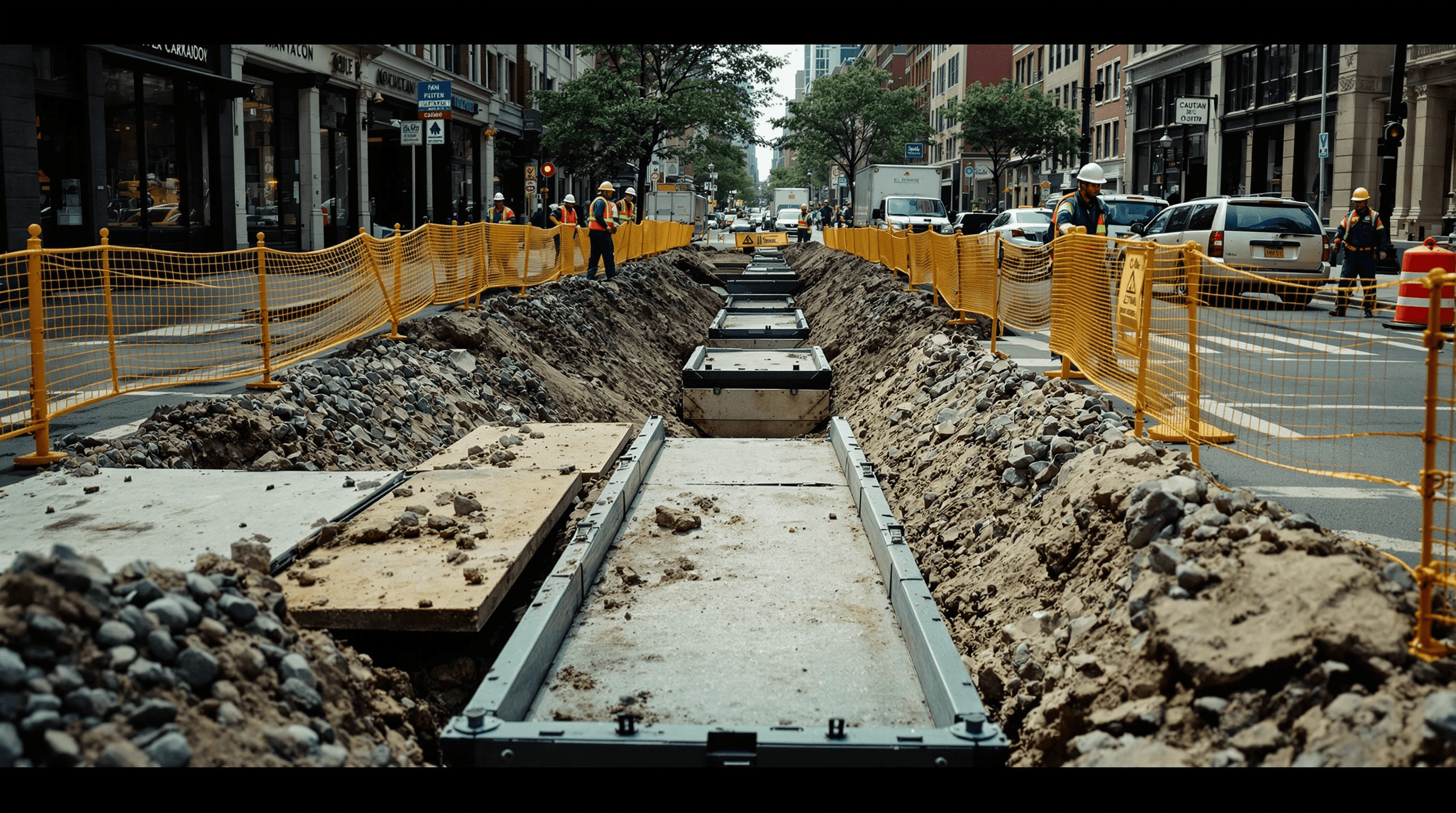
Bronx Warehouse Roof Collapse Highlights Critical Safety Failures and Worker Rights
Construction sites across New York City present inherent dangers that can turn deadly in seconds. A recent incident at a warehouse construction project in the Bronx serves as a stark reminder of these risks, as two workers required hospitalization following a devastating roof collapse. This accident highlights both the urgent need for proper safety protocols and the strong legal protections available to construction workers under New York law.
Understanding the Incident and Its Implications
The collapse of a roof structure during active construction represents one of the most serious types of workplace accidents in the building industry. When structural elements fail during construction, workers often have little warning and minimal opportunity to escape harm's way. The fact that two workers sustained injuries serious enough to require hospitalization demonstrates the violent and unpredictable nature of these incidents.
[Roof falls](/accidents/roof-falls) consistently rank among the leading causes of construction fatalities and severe injuries nationwide. In New York's dense urban environment, where complex construction projects often involve multiple contractors working simultaneously, the risks become even more pronounced.
These accidents don't happen in isolation. A 2024 Manhattan office tower project saw similar structural failures that resulted in a $3.2 million settlement for an injured ironworker. The beam collapse there violated multiple OSHA standards under 29 CFR 1926.757 for steel erection safety. Workers had no proper fall protection when the temporary support gave way.
OSHA Violations in Roof Construction Projects
The federal Occupational Safety and Health Administration maintains strict requirements for roof work under 29 CFR 1926.501. These regulations demand fall protection systems when workers are exposed to falls of six feet or more. But enforcement isn't always consistent before accidents happen.
Common OSHA violations that lead to roof collapses include:
A Queens warehouse project in 2024 accumulated $147,000 in OSHA fines before a roof section collapsed onto three workers below. The violations existed for months. Someone knew. Someone got hurt anyway.
New York's Industrial Code Rule 23 under 12 NYCRR 23-2.2 requires additional protections beyond federal OSHA standards. When workers are constructing roofs or working on elevated surfaces, contractors must provide safety belts, lifelines, and proper anchorage points. These aren't suggestions—they're legal requirements.
Labor Law 240: The Scaffolding Law's Protection for Workers
New York's Labor Law Section 240, commonly known as the Scaffolding Law, provides unique and powerful protections for construction workers injured in elevation-related accidents. This law applies directly to incidents like the [Bronx](/locations/bronx) warehouse collapse, as it covers workers injured due to falling objects or structural failures.
Under Labor Law 240, property owners and general contractors bear absolute liability for failing to provide adequate safety devices and protections. The law recognizes that construction workers face gravity-related hazards that are inherent to their work and places the responsibility for safety squarely on those who control the worksite and profit from the construction project.
Key aspects of Labor Law 240 protection include:
The Court of Appeals affirmed in Rocovich v. Consolidated Edison Co. that Labor Law 240(1) creates absolute liability when proper safety devices aren't provided. No excuses. No shared blame. The owner and general contractor are responsible.
Settlement Values for Roof Collapse Injuries
Roof collapse accidents typically result in catastrophic injuries that generate substantial settlements. Settlement ranges depend on injury severity, but patterns emerge:
**Severe spinal injuries**: $2.5–8 million settlements are common when workers suffer paralysis or require spinal fusion surgery after roof collapses. A 2023 Brooklyn warehouse case settled for $6.8 million when falling debris crushed a worker's vertebrae.
**Traumatic brain injuries**: Cases involving head trauma from falling structural elements settle between $3–12 million. Cognitive impairment and memory loss drive higher valuations.
**Multiple fractures and orthopedic injuries**: Workers who survive roof collapses with broken bones, torn ligaments, and joint damage typically see settlements of $800,000–3.5 million. The need for multiple surgeries and permanent disability increases these amounts.
**Fatal accidents**: Wrongful death cases for construction workers killed in roof collapses range from $1.5–6 million, depending on the victim's age, earnings, and family situation.
Don't accept early settlement offers. Insurance companies for general contractors routinely offer $50,000–150,000 immediately after accidents, hoping workers won't understand their rights. These initial offers represent a fraction of true case value.
New York Industrial Code Requirements
Beyond federal OSHA standards, New York's Industrial Code Rule 23 under 12 NYCRR Part 23 imposes stricter safety requirements for construction operations. These regulations implement Labor Law Section 241(6), creating specific duties that strengthen workers' legal claims.
Roof Construction Safety Under 12 NYCRR 23-2.2
The Industrial Code requires specific protections for roof construction work:
These requirements are more stringent than federal OSHA's six-foot fall protection trigger. When contractors violate 12 NYCRR 23-2.2, it creates a Labor Law 241(6) claim with strict liability—similar to Labor Law 240(1).
Scaffold and Support Structure Requirements
Under 12 NYCRR 23-5, temporary support structures for roof work must meet specific standards:
A recent Staten Island project violated these requirements when temporary roof supports collapsed. The general contractor's insurer settled for $4.2 million after investigators found the scaffolding couldn't support even twice the intended load—far below the required four-times safety factor.
Identifying Liable Parties in Construction Roof Collapses
Determining liability in construction accidents requires careful analysis of the project's structure and the relationships between various parties involved. In a warehouse roof collapse, several entities may bear responsibility:
Property Owners
Under Labor Law 240, property owners cannot escape liability by delegating safety responsibilities to contractors. They remain absolutely liable for providing adequate safety protections, regardless of contractual arrangements with other parties.
The owner of the Bronx warehouse where this collapse occurred faces automatic liability under Labor Law 240(1). It doesn't matter if they hired competent contractors or had no direct control over daily operations. They own the property. They're responsible.
General Contractors
General contractors who supervise and coordinate construction activities face the same strict liability as property owners. Their role in overseeing the project makes them responsible for ensuring proper safety measures are in place.
In roof collapse cases, general contractors often try to blame subcontractors or claim they weren't supervising the specific work area. Courts reject these arguments consistently. The GC's duty to provide safety devices is non-delegable under Labor Law 240(1).
Subcontractors and Specialty Contractors
While subcontractors may not face Labor Law 240 liability (unless they also act as general contractors), they can still be held liable under common law negligence theories. Roofing contractors, structural engineers, and other specialists involved in roof construction may bear responsibility if their work contributed to the collapse.
Specialty contractors who control specific work areas can face Labor Law 240 liability when they exercise supervisory authority equivalent to general contractors. A roofing subcontractor who directs safety protocols and coordinates with other trades may qualify as a statutory agent under the law.
Architects and Engineers
Professionals who design structural elements may face liability if design defects or inadequate specifications contributed to the roof failure. However, Labor Law 240 limits their exposure to planning and design activities only—they can't be held liable for on-site safety device failures unless they actively supervised construction work.
Equipment Manufacturers and Suppliers
When defective materials or equipment contribute to roof collapses, manufacturers face product liability claims. These cases often involve:
Product liability claims proceed separately from Labor Law cases but can provide additional compensation when equipment failures cause or contribute to accidents.
Immediate Steps for Injured Construction Workers
Workers injured in construction accidents like the Bronx warehouse roof collapse should take immediate action to protect their rights and health:
Seek Medical Attention
Even if injuries seem minor initially, construction accidents often cause internal injuries or delayed-onset conditions that require professional medical evaluation. Emergency room treatment also creates crucial documentation of the accident and resulting injuries.
Roof collapses generate massive force. Workers who think they're "fine" often have:
Get checked. The adrenaline after accidents masks serious injuries.
Report the Incident
Notify supervisors and ensure the accident is properly documented in company records. Request copies of all incident reports and witness statements.
Under 29 CFR 1904.39, employers must report construction fatalities within 8 hours and hospitalizations within 24 hours to OSHA. Make sure this happens. OSHA investigations provide valuable evidence for legal claims.
Preserve Evidence
If possible, take photographs of the accident scene, damaged equipment, and visible injuries. Collect contact information from witnesses who saw the incident occur.
Hurt on a Construction Site?
Tell us what happened. A licensed New York attorney will review your case and call you — free, no obligation.
Document everything:
Evidence disappears quickly on construction sites. Contractors start repairs immediately to minimize project delays.
Contact Legal Counsel
Construction accident cases involve complex legal issues and multiple potentially liable parties. An experienced construction accident attorney can protect workers' rights while they focus on recovery.
Don't talk to insurance adjusters before consulting an attorney. They're not your friends. They're paid to minimize claim values. A simple recorded statement can destroy your case if you're not careful.
File Workers' Compensation Claims
While pursuing Labor Law 240 claims, injured workers should also file for workers' compensation benefits to cover immediate medical expenses and lost wages.
Workers' comp provides partial wage replacement and medical coverage regardless of fault. But it's not enough. The no-fault system limits compensation to 2/3 of average weekly wages, capped at $1,063.05 per week in 2024. That doesn't cover full losses from catastrophic injuries.
Labor Law claims provide unlimited compensation for all damages:
Immigration Status and Worker Rights
Your immigration status has no bearing on your rights under New York Labor Law. Courts have affirmed this consistently in cases like Balbuena v. IDR Realty LLC. Undocumented workers have the same rights to compensation as citizens.
Contractors often exploit immigrant workers by claiming they can't pursue legal claims. This is false. Immigration status cannot be used to:
The law protects all workers equally. Period.
The Broader Impact of Construction Safety Failures
Roof collapses and similar structural failures don't just harm individual workers—they affect families, communities, and the construction industry as a whole. When safety protocols fail, the human cost extends far beyond the immediate victims.
Families lose breadwinners and face mounting medical bills. Communities lose skilled workers who contribute to local economies. The construction industry faces increased scrutiny and potential regulatory changes that could have been avoided through proper safety measures.
Economic Impact on Families
Construction workers typically support extended families with their wages. A 2024 study found that each construction injury affects an average of 3.2 family members financially. When breadwinners can't work due to roof collapse injuries:
Labor Law 240 exists precisely to shift these costs back to property owners and general contractors who profit from construction projects. They can afford proper safety measures. Working families can't afford catastrophic injuries.
Industry-Wide Safety Culture
Every roof collapse that makes headlines forces the construction industry to confront its safety culture. Projects across the city implement new protocols after high-profile accidents. But reactive improvements aren't enough.
Proactive safety investment costs money upfront but prevents:
Smart contractors understand that safety isn't an expense—it's an investment in project success.
Case Study: Similar Roof Collapse Settlements
A 2023 case in Queens provides insight into potential compensation for roof collapse victims. During warehouse construction, inadequate temporary bracing caused a roof section to collapse onto four workers. The injuries included:
Total settlements exceeded $18 million. The general contractor's insurance carrier fought initially but eventually paid full amounts when discovery revealed systematic OSHA violations throughout the project.
Investigation showed the GC knew about inadequate bracing for weeks before the collapse. Internal emails discussed cost savings from using substandard materials. Someone knew. Someone got hurt anyway.
Moving Forward: Prevention and Accountability
While Labor Law 240 provides crucial protections for injured workers, prevention remains the ultimate goal. Property owners and contractors must prioritize safety through:
The Bronx warehouse roof collapse serves as a reminder that construction safety requires constant vigilance and commitment from everyone involved in the building process. When that commitment fails, New York's Labor Law 240 ensures that injured workers have recourse and the resources they need to rebuild their lives.
Holding Contractors Accountable
Real change happens when contractors face meaningful financial consequences for safety violations. Labor Law 240's absolute liability standard ensures that corner-cutting on safety devices results in full compensation for injured workers.
Recent legislative proposals would increase penalties further:
Until these measures pass, Labor Law 240 remains workers' strongest protection. It shifts the true cost of construction injuries back to those who control worksites and profit from the work.
The Role of Union Safety Programs
Unionized construction projects typically have lower injury rates than non-union jobs. Union safety representatives conduct regular inspections and have authority to stop work for hazardous conditions. These programs work because:
Non-union contractors often resist these protections to maintain cost advantages. But the Bronx warehouse collapse shows the true cost of inadequate safety—human lives and multi-million-dollar settlements that dwarf any short-term savings.
Construction workers deserve to go home safely every day. When they don't, New York law ensures accountability. That's not just legal theory—it's justice for families whose lives are shattered by preventable accidents.
Related Reading
[Trench Collapse Rights in NY](/blog/trench-collapse-accidents-liability)
[Wrongful Death Claims](/blog/construction-accident-wrongful-death)
[What Collapse Cases Are Worth](/blog/scaffold-accident-settlement-amounts)
[Bronx Construction Accidents](/locations/bronx)
[Roof Collapse Accident Page](/accidents/roof-collapse)
Related: Brooklyn Scaffold Collapse Kills Worker: What Labor Law 240 Means for Families — /blog/brooklyn-scaffold-collapse-kills-worker-what-labor-law-240-means-for-families
Frequently Asked Questions
Can I sue if I was injured in a construction roof collapse?▼
What compensation is available for construction roof collapse injuries?▼
How long do I have to file a lawsuit after a construction accident?▼
Can I be blamed for causing my own injury in a roof collapse?▼
Get a Free Case Review
Find out if you have a claim under New York Labor Law. A licensed NY attorney will review your case and call you back.