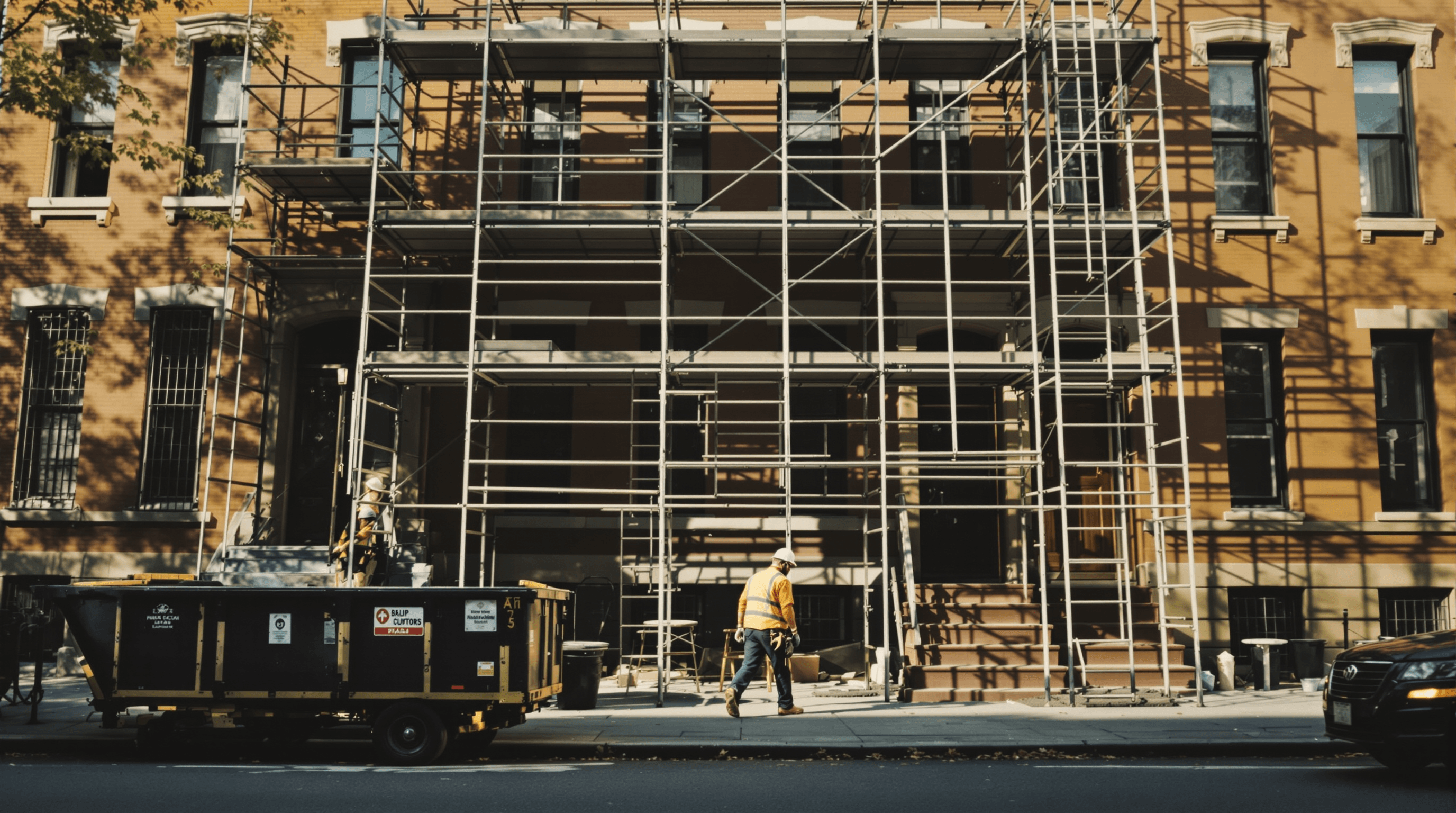
What Happens When a Scaffold Collapse Kills a Construction Worker in Brooklyn?
A construction worker died and another was seriously injured when scaffolding collapsed at a Brooklyn job site, according to reports from the New York Daily News. The fatal accident highlights the deadly risks construction workers face every day — and the strict legal protections New York provides when safety equipment fails.
This wasn't just a tragic workplace accident. Under New York Labor Law 240, known as the Scaffold Law, this collapse likely created automatic liability for the property owner and general contractor. The deceased worker's family has rights to significant compensation, and the injured worker may be entitled to substantial damages regardless of how the collapse occurred.
But understanding these rights means knowing exactly how New York's construction safety laws work, who's liable when scaffolding fails, and what steps families must take to protect their legal interests.
How Labor Law 240 Creates Automatic Liability for Brooklyn Scaffold Collapses
New York Labor Law 240(1) doesn't require proving anyone was negligent when scaffolding collapses. The law creates strict liability — meaning the property owner and general contractor are automatically responsible for gravity-related construction accidents involving elevation differences.
The statute requires owners and contractors to provide "scaffolding, hoists, stays, ladders, slings and other devices which shall be so constructed, placed and operated as to give proper protection to a person so employed."
When scaffolding fails, Labor Law 240 analysis focuses on two questions: 1. Was the worker engaged in construction, demolition, or repair work? 2. Did the accident result from inadequate safety devices for elevation-related work?
If both answers are yes, liability is established. The worker doesn't need to prove the scaffold was defective, that someone failed to inspect it, or that safety protocols were violated.
Who Gets Held Liable Under Labor Law 240
In this Brooklyn collapse, several parties face potential liability:
**Property Owner**: Automatically liable under Labor Law 240 regardless of whether they hired the contractor or had any involvement in the scaffolding.
**General Contractor**: Also strictly liable if they controlled the work site, even if they didn't erect the scaffold.
**Construction Manager**: If they exercised supervisory control over the project, they're treated as agents of the owner.
**Subcontractors**: Generally not liable under Labor Law 240, though they might face claims under other theories.
The key distinction is control versus performance. Parties who control the work site bear strict liability. Workers who merely perform the labor typically don't.
Wrongful Death Claims in New York Construction Accidents
The deceased worker's family can pursue a wrongful death claim under New York Estates, Powers and Trusts Law 5-4.1. Combined with Labor Law 240's strict liability, these cases often result in substantial settlements.
What Families Can Recover
New York wrongful death law allows recovery for:
**Economic Losses**: Lost earnings the worker would have provided over their expected working lifetime. For a construction worker in their 30s or 40s, this often reaches $2-4 million.
**Conscious Pain and Suffering**: If the worker survived for any period after the accident with awareness of their condition. This typically ranges from $100,000-$500,000 depending on the duration and severity of suffering.
**Funeral and Medical Expenses**: All reasonable costs related to the worker's final illness and burial.
Notably, New York doesn't allow recovery for the family's grief or loss of companionship in wrongful death cases — only economic losses and the deceased's own pain and suffering.
Typical Settlement Ranges for Construction Wrongful Death
*Settlement amounts vary substantially based on injury severity, liability clarity, jurisdiction, comparative fault, and specific case facts. Figures below reflect ranges from reported New York construction verdicts and settlements. Past results do not guarantee future outcomes. Your case may differ significantly. Consult an attorney for an evaluation of your specific situation.*
Rights of the Seriously Injured Brooklyn Worker
The worker who survived this [scaffold collapse accident](/accidents/scaffold-collapse) faces their own complex legal situation. Their injuries could range from fractures requiring surgery to spinal cord damage or traumatic brain injury.
Immediate Medical Concerns
Scaffold collapses often cause: - Multiple bone fractures from the fall impact - Spinal cord injuries when workers land awkwardly - Traumatic brain injuries from falling debris - Internal organ damage from crushing forces - Lacerations from sharp metal edges
The full extent of injuries may not be apparent immediately. Some spinal and brain injuries develop symptoms over days or weeks.
Labor Law 240 Claims for Serious Injuries
The injured worker can pursue compensation for:
**Past and Future Medical Expenses**: All treatment costs, including surgery, rehabilitation, and long-term care needs.
**Lost Wages**: Both past income lost during recovery and reduced future earning capacity if disabilities prevent returning to construction work.
**Pain and Suffering**: Compensation for physical pain, emotional distress, and reduced quality of life.
Under Labor Law 240, these damages aren't reduced by comparative negligence. Even if the worker contributed to the accident somehow, their recovery remains intact.
What Brooklyn Construction Accident Victims Must Do Immediately
Document Everything at the Scene
If possible, workers or family members should: - Photograph the collapsed scaffolding from multiple angles - Take pictures of the entire work area - Document weather conditions - Get names and contact information for all witnesses - Preserve any safety equipment or hard hats
This evidence becomes crucial when reconstruction experts analyze how the collapse occurred.
Report to the Right Agencies
Several agencies investigate serious construction accidents:
**OSHA**: Must be notified within 8 hours of any fatality. Their investigation creates a public record that often helps civil cases.
**NYC Department of Buildings**: Investigates accidents at permitted construction sites and can issue violations that support liability claims.
**Workers' Compensation Board**: The injured worker should file a claim immediately, even though Labor Law 240 allows pursuing additional compensation.
Don't Give Statements Without Legal Representation
Insurance companies for the property owner and contractor will want statements from witnesses and the injured worker. These statements can be used to minimize liability or shift blame.
Workers should politely decline to give recorded statements until they've consulted with an attorney familiar with New York construction law.
Understanding Liability in Brooklyn Construction Projects
Most [construction accidents in Brooklyn](/locations/brooklyn) involve multiple parties with overlapping responsibilities. Understanding who bears liability helps determine the strength of potential claims.
Common Brooklyn Construction Site Scenarios
**Residential Development**: Property developers, general contractors, and subcontractors may all face liability depending on their control over safety conditions.
**Commercial Projects**: Large commercial developments often involve construction managers who exercise broad supervisory authority, making them liable under Labor Law 240.
**Infrastructure Work**: City projects may involve municipal liability in addition to contractor responsibility.
Insurance Coverage Considerations
Most construction projects require substantial insurance coverage: - General contractors typically carry $1-5 million in liability coverage - Property owners often maintain separate coverage - Umbrella policies may provide additional protection
Multiple insurance policies mean more available compensation for serious injuries, but also more complex litigation as insurers fight over responsibility.
Timeline for Filing Brooklyn Construction Accident Claims
New York's statute of limitations creates strict deadlines that can't be missed:
**Personal Injury Claims**: Must be filed within three years of the accident date under CPLR 214.
**Wrongful Death Claims**: Also three years, but the clock starts running from the date of death, not the accident.
**Notice Requirements**: Claims against municipalities require filing a Notice of Claim within 90 days.
But waiting until the deadline approaches is a mistake. Evidence disappears, witnesses relocate, and insurance companies have more time to build defenses.
Why Early Legal Action Matters
Starting the legal process immediately allows attorneys to: - Preserve evidence before it's destroyed or removed - Interview witnesses while memories are fresh - Ensure proper medical documentation of all injuries - Handle insurance communications to prevent harmful statements
What Construction Accident Cases Are Worth in Brooklyn
Settlement values depend on multiple factors, but Brooklyn juries generally award substantial damages for serious construction injuries.
Factors That Increase Settlement Value
**Clear Labor Law 240 Violation**: When scaffolding obviously failed to provide proper protection, liability is undisputed.
**Severe Permanent Injuries**: Spinal cord injuries, traumatic brain injuries, and amputations command the highest settlements.
**Young Workers**: Younger victims have longer expected working lifetimes, increasing lost wage calculations.
**High Earnings**: Skilled construction workers earning $80,000-$120,000 annually can show substantial economic losses.
Recent Brooklyn Construction Settlements
*Settlement amounts vary substantially based on injury severity, liability clarity, jurisdiction, comparative fault, and specific case facts. Figures below reflect ranges from reported New York construction verdicts and settlements. Past results do not guarantee future outcomes. Your case may differ significantly. Consult an attorney for an evaluation of your specific situation.*
How OSHA Standards Support Labor Law 240 Claims
Federal OSHA regulations provide additional support for New York Labor Law 240 claims. While OSHA violations don't create private rights to sue, they establish that safety standards weren't met.
Relevant OSHA Scaffold Standards
**29 CFR 1926.451**: Requires scaffolds to support at least four times the maximum intended load and be erected on sound, rigid footings.
**29 CFR 1926.452**: Mandates specific construction requirements for different scaffold types.
**29 CFR 1926.95**: Requires hard hats and other personal protective equipment.
OSHA violations discovered during their investigation strengthen Labor Law 240 claims by showing defendants failed to meet even basic safety standards.
Why Brooklyn Construction Workers Need Specialized Legal Representation
Construction accident law in New York requires specific expertise that general personal injury attorneys often lack. The intersection of Labor Law 240, OSHA regulations, and complex insurance coverage creates unique challenges.
What to Look for in a Construction Accident Attorney
**Experience with Labor Law 240**: The attorney should handle construction accident cases regularly, not occasionally.
**Trial Experience**: Insurance companies settle more favorably when they know the attorney will take cases to trial if necessary.
**Resources for Expert Witnesses**: Construction accident cases require engineers, economists, and medical experts who understand the technical issues.
**No Fee Unless You Win**: Legitimate construction accident attorneys work on contingency, advancing all case costs and taking payment only from settlements or verdicts.
This Brooklyn scaffold collapse represents a preventable tragedy that should never have occurred. But when safety failures kill or injure construction workers, New York's Labor Law 240 ensures that families and victims have real legal recourse. The key is acting quickly to preserve evidence and protect legal rights before crucial deadlines pass.