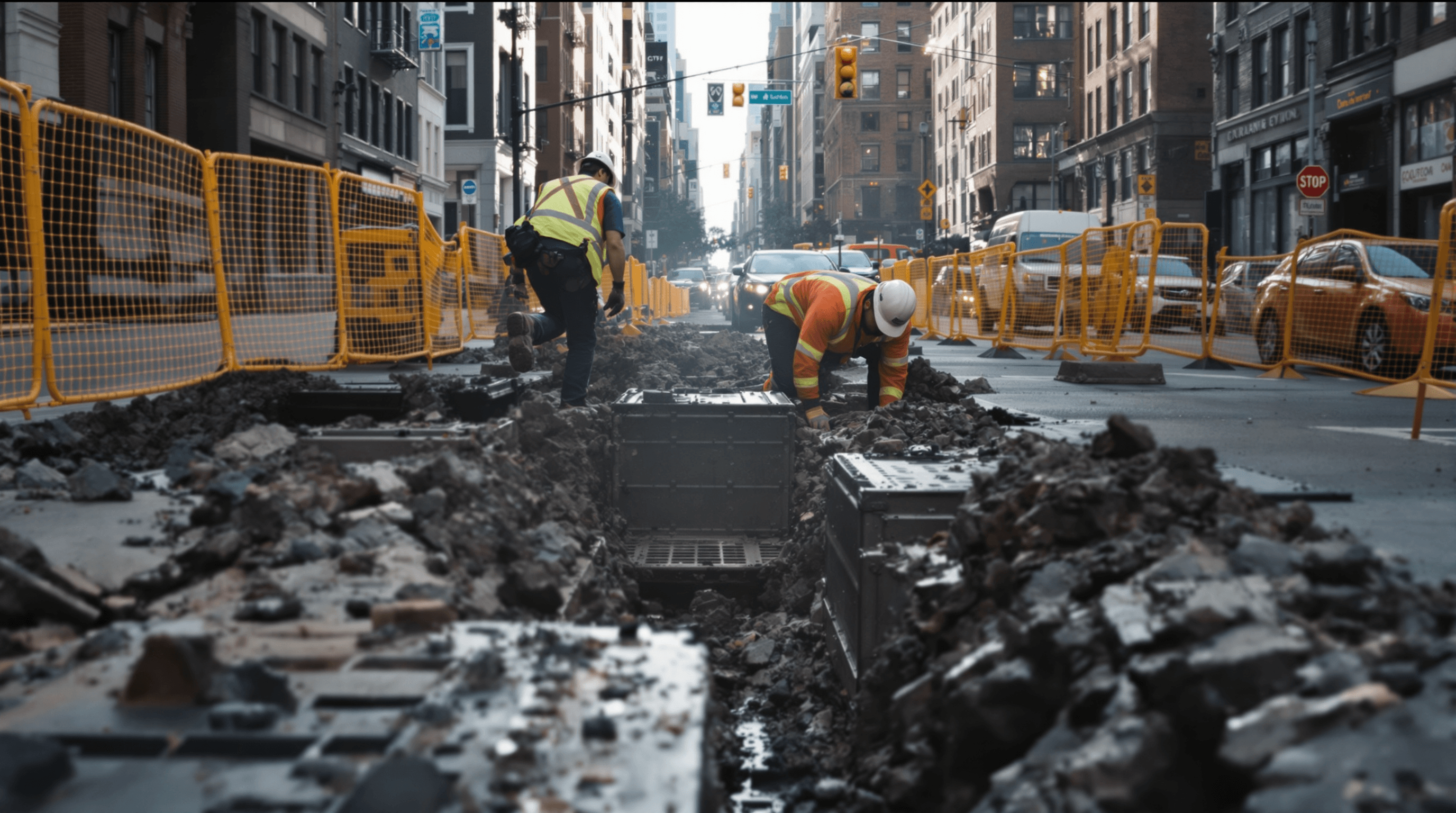
Manhattan Scaffold Collapse Highlights Critical Worker Safety Protections Under New York Law
A construction worker recently sustained injuries when scaffolding collapsed at a high-rise construction project on 42nd Street in [Midtown Manhattan](/locations/midtown). This incident underscores the persistent safety hazards that construction workers encounter daily on New York's bustling job sites, particularly involving elevated work platforms and temporary structures.
The Reality of Scaffold Accidents in New York Construction
[Scaffold collapse accidents](/accidents/scaffold-collapse) remain among the most serious threats to construction worker safety. These incidents can result from various factors including improper assembly, inadequate bracing, overloading, or failure to follow manufacturer specifications. When scaffolding fails, workers often face catastrophic injuries including broken bones, traumatic brain injuries, spinal cord damage, or worse.
The busy construction environment of Midtown Manhattan, with its towering buildings and compressed work spaces, creates additional challenges for maintaining safe scaffolding systems. Workers depend entirely on their employers and site supervisors to ensure these temporary structures can support their weight and provide a secure work platform.
At a Tribeca luxury condo project last year, three workers fell 40 feet when frame scaffolding collapsed during facade work. The general contractor hadn't properly secured the scaffolding to the building structure — a violation of both OSHA's 29 CFR 1926.451(c)(2)(i) and New York's 12 NYCRR 23-5.3(b). The case settled for $3.2 million before trial.
OSHA's scaffold inspection data for New York City shows predictable patterns. Missing guardrails account for 35% of scaffold citations under 29 CFR 1926.451(g)(1). Improper platform construction represents another 28% under 29 CFR 1926.451(b). These aren't random failures — they're preventable violations that construction companies know about before someone gets hurt.
How Labor Law 240 Protects Injured Construction Workers
New York's Labor Law 240, known as the "Scaffold Law," provides crucial protections for workers injured in elevation-related accidents. This statute imposes absolute liability on property owners and general contractors when workers are injured due to inadequate safety equipment or improper scaffolding.
Under Labor Law 240, injured workers don't need to prove negligence. Instead, the law recognizes that gravity-related construction accidents often result from failures by those in control of the worksite to provide proper safety equipment. The statute covers:
This legal framework acknowledges that individual workers cannot control the structural integrity of scaffolding systems or the overall safety protocols on construction sites.
But Labor Law 240's protection goes deeper than most people realize. The law doesn't just cover obvious scaffold collapses. It also applies when guardrails are missing, when planking is inadequate, or when access ladders aren't properly secured. You don't need to fall from great height — courts have found Labor Law 240 applies to falls from scaffolding just 8 feet off the ground.
The statute's absolute liability standard means owners and general contractors can't escape responsibility by blaming the injured worker. They can't argue the worker was careless or should have noticed the hazard. If the safety device was inadequate or missing, they're liable. Period.
Critical OSHA and New York State Scaffold Safety Requirements
Federal OSHA regulations under 29 CFR 1926.451 set minimum standards for scaffold safety, but New York's Industrial Code Rule 23 often requires stricter protections. Understanding both sets of rules is crucial because violations strengthen Labor Law 241(6) claims.
OSHA's Key Scaffold Requirements (29 CFR 1926.451):
New York's Stricter Standards (12 NYCRR 23-5):
At a Financial District office renovation in 2024, the contractor violated both 29 CFR 1926.451(g)(1)(i) and 12 NYCRR 23-5.14(a) by failing to install proper guardrails on suspended scaffolding. When a worker fell through a gap, the dual violations supported both Labor Law 240 and 241(6) claims. The case settled for $4.7 million.
Understanding Liability in Construction Scaffold Accidents
Multiple parties may bear responsibility when scaffolding fails on a construction site:
**Property Owners** face automatic liability under Labor Law 240, regardless of their direct involvement in daily construction activities. The law holds them responsible for ensuring adequate safety measures protect workers on their property.
**General Contractors** typically oversee site safety and coordinate subcontractor activities. They're responsible for ensuring scaffolding meets safety standards and that proper installation procedures are followed.
**Subcontractors** who erect, maintain, or use scaffolding may face liability if their actions contributed to the collapse. This includes companies responsible for scaffolding installation, maintenance, or inspection.
**Scaffolding Companies** that provide equipment or services may be liable if defective products or improper installation caused the accident.
The interconnected nature of construction projects means multiple parties often share responsibility for ensuring worker safety.
Here's what courts have consistently found: owners can't escape liability by hiring reputable contractors. General contractors can't avoid responsibility by delegating scaffold work to subcontractors. The law places the burden on those who profit from construction projects to ensure worker safety.
In a recent Upper East Side residential project, both the property owner and general contractor tried to blame the scaffolding subcontractor for a collapse that injured two workers. The court rejected their arguments under Labor Law 240's absolute liability standard. The owner's insurance paid $2.8 million; the GC's carrier contributed another $1.9 million.
Settlement Ranges and Case Values in Scaffold Collapse Claims
Scaffold accident settlements vary significantly based on injury severity, age, lost wages, and future medical needs. But New York's strong worker protection laws consistently produce substantial awards:
**Serious Non-Fatal Injuries:** $800,000 to $3.5 million for cases involving multiple fractures, traumatic brain injuries, or permanent disabilities that don't prevent all work.
**Catastrophic Injuries:** $3.5 million to $8 million for spinal cord injuries causing partial paralysis, severe brain trauma, or injuries requiring lifetime care.
**Wrongful Death Cases:** $2 million to $12 million depending on the victim's age, earnings, and family circumstances.
A 2023 scaffold collapse in Queens involving frame scaffolding that wasn't properly braced resulted in a $6.2 million settlement for a 34-year-old ironworker who suffered partial paralysis. The case involved violations of both 29 CFR 1926.451(c)(2) and 12 NYCRR 23-5.3.
Don't let insurance companies lowball your claim with quick settlement offers. Scaffold cases routinely settle for seven figures when injuries are severe. Your immigration status doesn't matter — Labor Law 240 protects all construction workers regardless of documentation status.
Hurt on a Construction Site?
Tell us what happened. A licensed New York attorney will review your case and call you — free, no obligation.
Immediate Steps for Injured Construction Workers
If you've been injured in a scaffolding collapse, taking prompt action protects both your health and legal rights:
**Seek immediate medical attention**, even if injuries seem minor initially. Scaffold accidents can cause internal injuries or concussions that aren't immediately apparent.
**Report the incident** to your supervisor and ensure an accident report is filed. Document the scene with photographs if possible, including the collapsed scaffolding and surrounding area.
**Preserve evidence** by keeping work clothes, safety equipment, and any documentation related to the accident. Don't allow anyone to pressure you into making statements about fault or causation.
**Contact an experienced construction accident attorney** before speaking with insurance representatives. Insurance companies often try to minimize claims or shift blame to injured workers.
**File for workers' compensation benefits** to cover immediate medical expenses and lost wages, but understand this may not provide full compensation for your injuries.
Get copies of all accident reports filed with OSHA, the Department of Buildings, and your employer. These documents often contain admissions or evidence that strengthen your case. OSHA typically investigates scaffold collapses within 48 hours — their citation reports become crucial evidence.
If possible, identify witnesses who saw the collapse or the scaffold conditions before the accident. Get their contact information immediately. Construction sites change rapidly, and witnesses often move to other projects.
Don't sign any documents from insurance companies without legal review. They'll often present "medical authorization" forms that actually waive your rights or limit their liability. Everything can wait until you have proper representation.
The Critical Role of Expert Investigation in Scaffold Cases
Scaffold collapse cases require immediate professional investigation. Evidence disappears quickly on active construction sites. Here's what experienced attorneys do:
**Secure the Scene:** Emergency court orders can prevent destruction of evidence and require preservation of the collapsed scaffold components.
**Engage Expert Engineers:** Structural engineers who specialize in scaffolding systems can determine the exact cause of failure and identify code violations.
**Review Safety Records:** OSHA inspection histories, previous citations, and safety meeting records often show patterns of violations.
**Analyze Training Records:** Whether workers received proper scaffold safety training affects both liability and damages.
**Document Code Violations:** Both federal OSHA and New York Industrial Code violations strengthen Labor Law 241(6) claims for additional damages.
In a 2023 Brooklyn scaffold collapse case, expert investigation revealed the general contractor had received OSHA citations for identical guardrail violations at three other job sites within six months. This pattern of deliberate indifference supported punitive damages and increased the settlement to $5.4 million.
Why Legal Representation Matters
Scaffolding collapse cases involve complex liability issues and require thorough investigation. Insurance companies and defendants often have teams of lawyers working to minimize their exposure. Having experienced legal counsel ensures:
Construction workers deserve safe working conditions and full protection under the law when safety failures cause injuries. Labor Law 240 exists specifically to hold property owners and contractors accountable for providing adequate safety equipment and protocols.
Insurance defense lawyers will immediately start building their case to minimize your claim. They'll interview witnesses, examine the site, and look for any way to blame the accident on worker error rather than safety violations. You need equally aggressive representation from the start.
Don't let the defendants' insurance companies control the narrative. In scaffold cases, early investigation often determines the outcome. Evidence that's lost or destroyed in the first few days after an accident can never be recovered.
Understanding Labor Law 241(6) Claims for Code Violations
While Labor Law 240 provides absolute liability for inadequate safety devices, Labor Law 241(6) allows additional claims when specific safety regulations are violated. This creates another avenue for compensation in scaffold cases.
Common Industrial Code Rule 23 violations in scaffold cases include:
These violations must be specific rather than general safety requirements. But when they apply, they provide additional grounds for liability beyond Labor Law 240's absolute liability standard.
Moving Forward After a Scaffold Accident
Recovering from a serious construction accident involves more than just medical treatment. Injured workers often face extended time off work, ongoing medical needs, and uncertainty about their ability to return to their previous employment. Understanding your legal rights helps ensure you receive the compensation necessary for complete recovery and financial stability.
The recent incident on 42nd Street serves as a reminder that scaffolding safety cannot be taken for granted. Every construction worker has the right to proper safety equipment and secure work platforms. When those protections fail, the law provides remedies to help injured workers rebuild their lives.
Your case is worth fighting for. New York's construction worker protection laws are among the strongest in the nation precisely because the legislature recognized that construction work involves inherent dangers that individual workers can't control. When safety systems fail, those who profit from construction projects must be held accountable.
Don't accept inadequate compensation from insurance companies who hope you'll settle quickly before understanding your rights. Scaffold collapse cases often involve life-changing injuries that require lifetime medical care, retraining for new careers, and compensation for permanent disabilities. You deserve full compensation under the law.
The construction industry in New York City generates billions in profits annually. When companies cut corners on safety to increase those profits, workers pay the price with their bodies and their lives. Labor Law 240 ensures that when scaffolding fails, the financial consequences fall on those who should have prevented the accident in the first place.
[Related: Colapso de Zanjas en Construcción — Responsabilidad Legal en NY](/blog/colapso-zanjas-responsabilidad-legal)
[Related: Trench Collapses: Understanding Your Rights After an Excavation Accident](/blog/trench-collapse-accidents-liability)
[Related: Bronx Warehouse Roof Collapse Highlights Critical Safety Failures and Worker Rights](/blog/bronx-warehouse-roof-collapse-highlights-critical-safety-failures-and-worker-rights)
Related Reading
Frequently Asked Questions
What should I do immediately after being injured in a scaffold collapse?▼
Does Labor Law 240 apply to all construction workers injured in scaffold accidents?▼
Can I sue my employer if I'm already receiving workers' compensation benefits?▼
Get a Free Case Review
Find out if you have a claim under New York Labor Law. A licensed NY attorney will review your case and call you back.