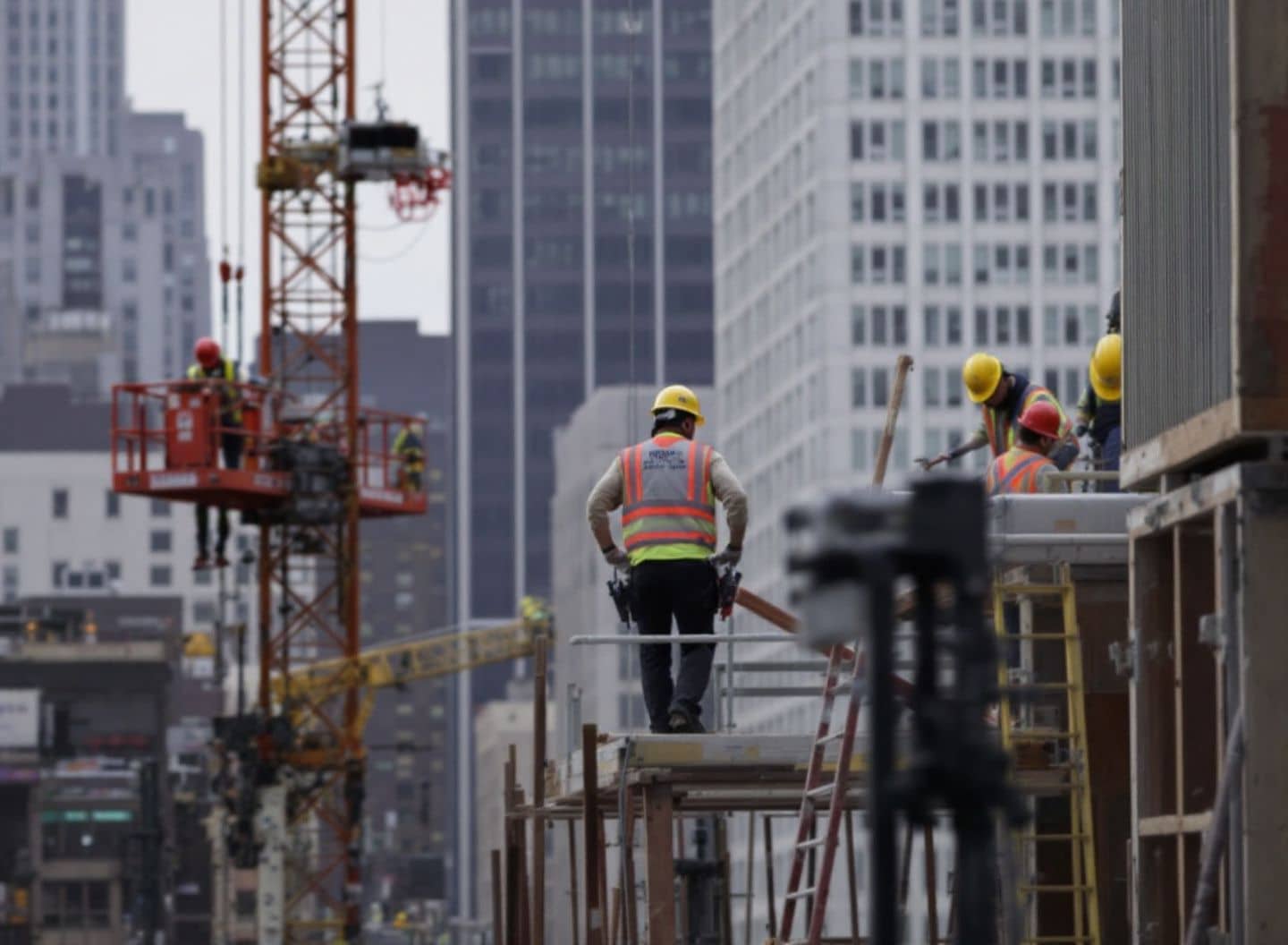
Construction work in New York happens at every height imaginable. Workers repair facades dozens of stories up, install MEP systems above finished ceilings, and trim trees along city streets from scissor lifts parked on asphalt. Aerial work platforms, including boom lifts, scissor lifts, and articulating lifts with personnel buckets, are common on sites across the five boroughs and throughout the state. They're also a consistent source of catastrophic injury. Falls from aerial lifts are often fatal or permanently disabling, and the legal framework that applies to these accidents is more worker-protective than almost any in the country.
How Aerial Lift Accidents Actually Happen
The mechanics of an aerial lift injury differ from a simple ladder fall, and understanding those mechanics matters when you're trying to explain what went wrong. Aerial work platforms fail workers in a handful of distinct ways, and each one creates its own pattern of injury.
Bucket ejections are probably the most dramatic. When a boom lift arm swings or extends rapidly, the occupant can be thrown clear of the platform guardrail. This happens when a machine operator makes a sudden movement, when the platform strikes an overhead obstruction like a beam or pipe, or when wind catches the boom at extended reach. The worker doesn't fall from a standing surface; they're launched. Harness attachment points inside buckets are sometimes present but frequently ignored, rigged incorrectly, or absent entirely on older machines.
Tip-overs are a different failure mode. Aerial lifts are top-heavy when the boom is extended, and they depend on firm, level ground to stay stable. Soft soil, unlevel pavement, unmarked voids under the ground surface, and rubber outrigger pads sinking into asphalt on a hot day can all cause a machine to tip. When a lift tips, the worker in the basket often goes down with it, striking the ground or intermediate structure at a height that multiplies the energy of impact. Even a tip on a machine raised only ten feet can kill.
Other common causes include contact with overhead power lines (a leading cause of electrocution in this equipment category), mechanical failures in the hydraulic system, and the platform being struck by passing vehicles or other machinery on the job site. Scissor lifts, which don't extend horizontally the way boom lifts do, are more vulnerable to overloading: workers stack materials on the platform, exceed the weight rating, and the machine becomes unstable before anyone realizes what's happening.
Trade-Specific Risk: Who Gets Hurt and Why
Electricians, ironworkers, painters, glaziers, and mechanical insulators are among the trades most frequently found working from aerial lifts on New York construction sites. Each trade brings its own risk profile. Electricians often work near energized lines with boom arms extended to maximum reach, reducing the machine's stability margins. Ironworkers may use lifts to position steel connections, meaning they're routinely working at the outer edge of the platform with heavy components. Painters use boom lifts on facades where wind exposure is high and overhead obstacles, like balconies, cornices, and parapet walls, create the collision hazards that trigger ejections.
The risk isn't evenly distributed across experience levels, either. New workers assigned to aerial lifts without adequate training are at much higher risk of tip-overs caused by improper setup and of ejections caused by abrupt, unfamiliar controls. But experienced operators face hazards too, particularly when they're working under pressure to move quickly and begin making shortcuts on inspection routines or outrigger placement.
Federal Standards: OSHA's Rules for Aerial Work Platforms
Federal construction safety law addresses aerial lifts directly. OSHA 29 CFR 1926.453 covers aerial lifts as a subset of scaffolding, and it sets out specific requirements: workers must stand on the floor of the basket or bucket and not sit on or climb over the edge, fall protection is required (either a body belt or harness attached to the boom or basket), and the lift must be used only for purposes consistent with the manufacturer's design. The regulation also prohibits using aerial lifts as a workaround to getting proper fall protection in place.
The broader fall protection standard, 29 CFR 1926.501, applies to construction work generally and demands that any worker exposed to a fall of six feet or more must be protected. In 2024, fall protection violations under 29 CFR 1926.501 generated 6,307 citations nationwide, making it one of OSHA's most-cited standards year after year. That persistent citation rate tells you something real: employers keep cutting corners on fall protection, and aerial lift workers are among those left exposed.
OSHA violations matter in a New York civil lawsuit, but they don't control it. New York has its own statutory scheme that often provides stronger protection for injured workers, and that scheme is what determines whether a contractor or building owner is liable for what happened to you.
Understanding New York's Scaffold Law and Aerial Lifts
Labor Law § 240, commonly called the Scaffold Law, is the most powerful tool an injured construction worker in New York has. The statute requires that contractors, owners, and their agents erect or furnish scaffolding, hoists, stays, ladders, slings, hangers, blocks, pulleys, braces, irons, ropes, and other devices to give proper protection to workers employed in construction, demolition, or repair work. Courts have consistently held that aerial work platforms fall within the types of equipment governed by Labor Law § 240. When a worker falls from an aerial lift because that lift wasn't adequate to protect against the gravity-related risk involved, the statute applies.
What makes Labor Law § 240 exceptional is its imposition of absolute liability on owners and contractors when a violation of the statute causes injury. This means the worker doesn't have to prove the owner was negligent in the traditional sense. If the aerial lift wasn't properly equipped, wasn't appropriate for the task, wasn't inspected, or wasn't set up correctly, and the worker fell as a result, the owner and general contractor are liable. The comparative negligence of the worker is generally not a defense when the statute's protections have been violated.
Courts apply the statute to tip-overs and to bucket ejections. The key question is whether the injury was the result of a gravity-related risk that proper safety devices should have prevented. An aerial lift that tips over and sends a worker falling is clearly within this framework. A worker ejected from a bucket after the boom strikes an obstruction is also generally within this framework. The statute is read broadly by New York courts, and contractors who argue that an aerial lift is somehow different from a scaffold have rarely succeeded.
State Regulations: 12 NYCRR 23-1.7 and Site Safety Requirements
Hurt on a Construction Site?
Tell us what happened. A licensed New York attorney will review your case and call you — free, no obligation.
Beyond the Scaffold Law, New York's Industrial Code provides additional, more granular safety requirements for construction sites. 12 NYCRR 23-1.7 addresses protection from hazards in construction, demolition, and excavation operations, covering everything from overhead hazards to slip-and-fall risks on walking surfaces. When a worker's injury results from a violation of a specific, concrete requirement in 12 NYCRR 23-1.7, that violation can support a claim under Labor Law § 241(6), which is a separate cause of action from the Scaffold Law claim.
Labor Law § 241(6) claims require the worker to point to a specific regulatory provision that was violated, and 12 NYCRR 23-1.7 is one of the most frequently used sources for those predicate violations. Where, for example, the ground around an aerial lift was not adequately maintained, creating a hazardous footing condition that contributed to a tip-over, a violation of 12 NYCRR 23-1.7 can become the basis for a viable § 241(6) claim. These claims can run alongside a Labor Law § 240 claim, giving the injured worker multiple theories of recovery.
It's worth noting that § 241(6) claims, unlike § 240 claims, are subject to comparative fault arguments from the defendant. The absolute liability feature of the Scaffold Law doesn't apply to § 241(6), which is one reason establishing a § 240 claim is so significant in aerial lift cases.
What Owners and Contractors Are Supposed to Do
The law places the primary duty to furnish safe equipment on contractors and property owners, not on the individual worker. This allocation of responsibility reflects a deliberate policy choice by the New York legislature: the parties with control over the site, the budget, and the choice of equipment bear the risk when something goes wrong. Workers often have no say in what lift is brought to the job, whether it's inspected before use, whether outrigger pads are available, or whether a spotter is assigned during operation.
Contractors should be conducting pre-shift inspections of aerial lifts using the manufacturer's checklist. They should be ensuring that the ground conditions are assessed before a lift is set up. On soft or uneven surfaces, cribbing and outrigger pads are essential. Workers need documented training before operating any aerial lift, and that training should cover the specific model being used, not just aerial lifts in general. Harness anchor points inside the bucket must be functional, and workers need to use them, which requires the employer to actually enforce the policy.
When these steps aren't taken, injuries follow. And under New York law, when injuries follow, the contractor and owner typically bear legal responsibility for those injuries, regardless of how the worker's conduct is characterized.
The Value of an Aerial Lift Injury Claim
Falls from aerial lifts tend to produce severe injuries. Traumatic brain injuries, spinal cord damage, multiple fractures, internal organ injuries, and crush injuries from tip-overs are all documented consequences of these accidents. The value of any particular claim depends on the severity of the injury, the nature and duration of medical treatment required, the impact on the worker's ability to return to their trade, lost wages, and the long-term effects on quality of life. Cases involving permanent disability or death are among the most consequential in the construction injury practice, and the damages can be significant even without the ability to point to a specific statutory violation beyond Labor Law § 240.
Workers' compensation will typically provide some coverage for medical bills and lost wages, but it doesn't provide full compensation for pain and suffering or for the full extent of economic loss. A Labor Law § 240 claim against the owner and contractor runs separately from the workers' compensation system, and both may apply simultaneously. Workers should not assume that filing for workers' compensation forecloses their civil claim under the Scaffold Law.
Steps to Take After an Aerial Lift Accident
If you or a coworker is injured in an aerial lift accident in New York, the steps taken in the hours and days immediately after the accident matter considerably. First, get medical attention, even if you feel you can push through. Injuries from falls and tip-overs often involve internal damage, soft tissue injuries, or early-stage neurological effects that aren't immediately obvious. Second, the accident should be reported to the site supervisor and documented in writing. Third, if you're able to, preserve evidence: take photographs of the equipment, the ground conditions, the rigging inside the bucket, and the surrounding area before anything is moved or cleaned up.
Witnesses should be identified. Equipment serial numbers should be noted. The make, model, and condition of the aerial lift are all potentially relevant to a later legal claim. Construction sites can be very fast to return equipment and resurface areas after an accident, making early documentation critical.
Speaking with an attorney who handles New York construction accident cases is important because of how quickly evidence can disappear and because Labor Law § 240 claims have specific procedural requirements depending on the type of owner involved. Municipal defendants, for example, require very short notice-of-claim filing windows that can be missed if the worker waits too long.
A Note on Recurrent Violations and Industry Culture
The frequency of aerial lift accidents in New York and nationally isn't random. It reflects a set of industry pressures that consistently push safety to the side. Project schedules are tight, aerial lift inspections take time, and workers are often pressured to start work before pre-shift checks are complete. Equipment is rented, not owned, and rental companies have their own obligations, but those obligations can be harder to enforce than the duties placed directly on the general contractor and owner by Labor Law § 240.
The Scaffold Law's absolute liability standard exists precisely because the legislature recognized that voluntary compliance wasn't enough. When the legal consequence of ignoring fall protection is absolute liability for whatever injury results, the incentive structure changes for contractors who might otherwise gamble on not getting caught. For workers, knowing that the law is structured this way provides important context: your injury isn't just an accident, and the law may treat it as the predictable result of choices made by people with more control than you had.
Attorney Advertising. Prior results do not guarantee a similar outcome. This article is for general informational purposes only and does not constitute legal advice. NY Construction Advocate connects injured workers with experienced New York construction accident attorneys.
Primary sources
Frequently Asked Questions
Does Labor Law § 240 apply to accidents involving boom lifts and scissor lifts, or just traditional scaffolding?▼
Can I still make a claim under Labor Law § 240 if my employer says I was using the aerial lift incorrectly?▼
What is the difference between a Labor Law § 240 claim and a claim under Labor Law § 241(6) involving 12 NYCRR 23-1.7?▼
What federal OSHA rules apply to aerial lift accidents on New York construction sites?▼
If I collect workers' compensation after an aerial lift accident, can I also file a lawsuit against the building owner or general contractor?▼
How soon after an aerial lift accident do I need to act legally?▼
Get a Free Case Review
Find out if you have a claim under New York Labor Law. A licensed NY attorney will review your case and call you back.