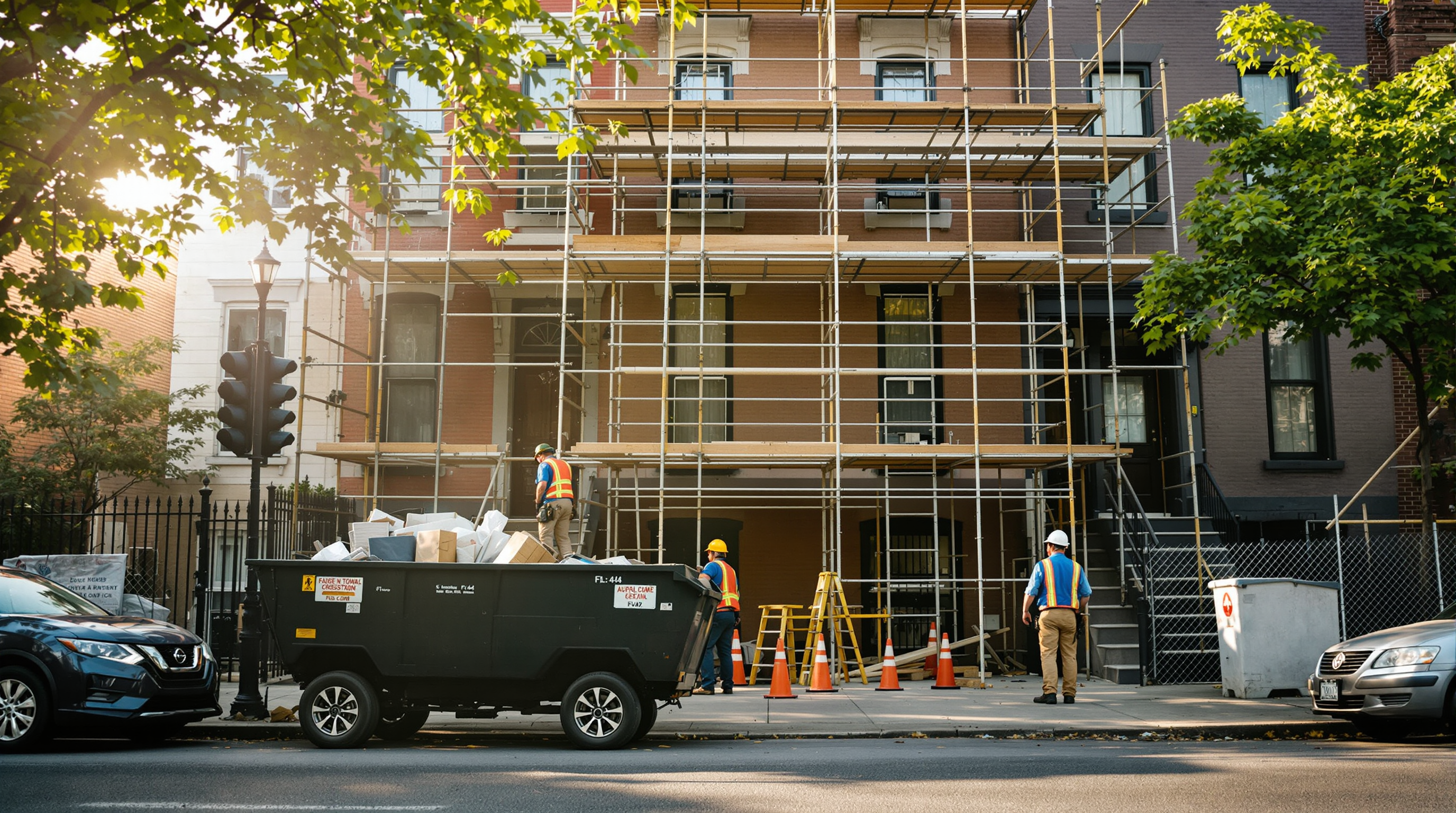
Brooklyn Construction Scaffold Violations: A Case Study in What Goes Wrong
When OSHA Citations Become Legal Evidence
At a Brooklyn high-rise project in 2025, OSHA inspectors cited the general contractor for multiple scaffold safety violations before a worker was seriously injured. Cases like this illustrate a pattern that New York construction accident attorneys see regularly: the violations existed before the accident. The GC knew—or should have known. Someone got hurt anyway.
If you were injured on a scaffold where OSHA violations existed, those citations can become powerful evidence in a Labor Law 240 claim.
The pattern we see is predictable: OSHA shows up, finds violations, issues citations. The GC promises to fix them. Weeks pass. Nothing changes. Then someone falls 30 feet to concrete. It's a story that plays out across Brooklyn construction sites every year.
What the Violations Were
OSHA's scaffold safety regulations under 29 CFR 1926.451 require specific standards for scaffold construction, planking, guardrails, and access. Common violations that precede scaffold accidents include:
Guardrail failures (29 CFR 1926.451(g)): Top rails must be between 38 and 45 inches high. Mid-rails are required on all open sides. Missing or improperly installed guardrails are among the most frequently cited violations before scaffold falls.
But it's not just about height. The regulations under 29 CFR 1926.451(g)(4) specify that guardrails must withstand 200 pounds of force applied in any outward or downward direction. We've seen cases where rails were present but constructed from flimsy materials that couldn't support a worker's weight during a fall.
Planking deficiencies (29 CFR 1926.451(b)): Scaffold planks must be secured, overlap properly at supports, and span no more than one inch gaps. Rotted, damaged, or improperly sized planking gives way under load.
The specific requirements under 29 CFR 1926.451(b)(2) mandate that planks overlap their supports by at least 6 inches but no more than 12 inches. We've handled cases where planks extended barely 2 inches beyond supports—creating a diving board effect that launched workers when they stepped on the overhanging end.
Overloading (29 CFR 1926.451(f)(1)): Each scaffold has a rated capacity. Exceeding it—by adding workers, storing materials, or ignoring dynamic loads—is a common precursor to collapse.
Light-duty scaffolds are rated for 25 pounds per square foot. Medium-duty: 50 pounds. Heavy-duty: 75 pounds. But these aren't just about static weight. When workers move rapidly, jump, or drop materials, the dynamic loading can double or triple the actual force on the scaffold structure.
Inadequate access (29 CFR 1926.451(e)): Workers must have a safe means to reach and leave the scaffold platform. Missing ladders, blocked access points, and workers climbing cross-braces are all violations.
The regulations under 29 CFR 1926.451(e)(1) require that access points be within 25 feet of each worker's work area. We've seen scaffolds 100 feet long with one ladder at the end. Workers don't walk 50 feet to climb down safely when they need to grab materials from ground level.
Advanced OSHA Violations That Kill Workers
Beyond the basic violations, there are more complex regulatory failures that lead to catastrophic injuries:
Scaffold connection failures (29 CFR 1926.451(c)(1)): Scaffolds must be tied to structures at vertical intervals not exceeding 4 times the minimum base dimension and at horizontal intervals not exceeding 30 feet. On windy days in Brooklyn, scaffolds that aren't properly tied become sails.
Fall protection system failures (29 CFR 1926.451(g)(1)): When guardrails aren't feasible, employers must provide personal fall arrest systems. But under 29 CFR 1926.502(d)(15), anchor points must support 5,000 pounds per worker attached. We've seen cases where fall protection was anchored to the scaffold itself—meaning when the scaffold failed, so did the fall protection.
Competent person requirements (29 CFR 1926.451(f)(7)): Someone qualified by experience and training must inspect scaffolds before each work shift and after any occurrence that could affect structural integrity. This isn't just any supervisor. The person must recognize hazards and have authority to correct them immediately.
NY Industrial Code Requirements
New York has its own scaffold requirements in 12 NYCRR 23-5 that are often stricter than federal OSHA standards. When both sets of rules are violated, it strengthens a Labor Law 241(6) claim—which requires showing a specific safety regulation was violated, not just general negligence.
The New York Industrial Code requires:
But the Industrial Code goes further than OSHA in critical areas:
Enhanced planking requirements (12 NYCRR 23-5.1(e)(3)): While OSHA allows 1.5-inch planking in some circumstances, New York requires minimum 2-inch nominal thickness for all scaffold platforms. The planks must be scaffold grade or equivalent, not construction-grade lumber from Home Depot.
Stricter guardrail specifications (12 NYCRR 23-5.1(g)): New York requires guardrails on all open sides of scaffolds. No exceptions for "temporary" work. The rails must be substantial—capable of withstanding normal use stress, not just the minimum force requirements.
Tie-in requirements (12 NYCRR 23-5.1(h)): Every scaffold more than three times its minimum base width in height must be secured to the building. For typical scaffolds with 5-foot bases, that means anything over 15 feet high needs ties. This catches many scaffolds that wouldn't require ties under federal OSHA standards.
Daily inspection mandates (12 NYCRR 23-5.1(c)): Before each work shift, not just when workers notice problems. The inspection must be documented. We've won cases where scaffold collapses happened weeks after the last recorded inspection.
How Prior OSHA Citations Affect Your Case
If OSHA cited the site before your accident for the same type of violation that injured you, it creates a paper trail showing the GC was aware of the hazard and failed to fix it. This matters in two ways:
For Labor Law 240: It demonstrates that proper safety equipment was not provided, satisfying the core element of a strict liability claim. You don't need to prove negligence, but evidence of known violations eliminates any argument that the scaffold was "adequate."
For punitive damages: While rare in construction cases, pre-knowledge of a defect combined with inaction can support arguments for enhanced damages in egregious cases.
The timing matters crucially. Citations issued months before an accident show chronic problems. Citations issued the day before an accident show the GC knew exactly what was dangerous and let workers continue anyway.
We've handled cases where OSHA cited missing guardrails in March, the GC promised to fix them, and a worker fell from the same scaffold in June. The citations show the GC wasn't just negligent—they were willfully blind to known hazards.
Real Brooklyn Case Examples
Case 1: Red Hook warehouse conversion, 2023: OSHA cited the GC under 29 CFR 1926.451(g)(1) for missing mid-rails on scaffolding during building renovation. Two months later, a plasterer fell through the gap where mid-rails should have been. The case settled for $3.2 million after we showed the GC received the citations but continued using the defective scaffold.
Case 2: Downtown Brooklyn high-rise, 2024: Industrial Code violation under 12 NYCRR 23-5.1(h) for inadequate scaffold ties during facade work. When wind gusts reached 40 mph, the scaffold swayed and threw a mason to the street. Settlement: $4.7 million. The GC's own emails showed they knew about the tie violations but delayed fixes to avoid work stoppages.
Case 3: Park Slope brownstone renovation, 2022: Combined OSHA and Industrial Code violations for overloading and deficient planking under 29 CFR 1926.451(f)(1) and 12 NYCRR 23-5.1(e). A scaffold collapsed when workers loaded it with brick pallets exceeding the rated capacity. Settlement: $2.8 million for multiple injured workers.
These aren't unusual cases. They represent the typical pattern: known violations, delayed fixes, predictable injuries.
Settlement Ranges Based on Violation Severity
Settlement values correlate directly with the severity of injuries and the egregiousness of safety violations:
Death cases with clear OSHA violations: $2–8 million, depending on age, family circumstances, and degree of safety negligence.
Permanent paralysis with documented scaffold violations: $4–12 million. Higher end when multiple regulatory violations existed.
Severe brain injuries from scaffold falls: $3–15 million. Variable based on cognitive impact and life expectancy.
Broken bones, back injuries requiring surgery: $750,000–3 million. Prior citations push settlements toward the higher end.
Hurt on a Construction Site?
Tell us what happened. A licensed New York attorney will review your case and call you — free, no obligation.
"Minor" injuries like broken arms, concussions: $150,000–800,000. Even these cases are valuable when clear violations existed.
The presence of documented OSHA citations before the accident typically increases settlement values by 30–60%. It eliminates the "accident was unavoidable" defense and focuses negotiations on damages, not liability.
What to Do If You Were Injured on a Scaffold
Immediately after the accident:
But there's more you need to preserve:
Document the weather conditions: Wind, rain, and ice affect scaffold stability. Weather reports from the accident day become evidence.
Identify all witnesses: Other workers, supervisors, passersby who saw the scaffold before or during the collapse. Get names and phone numbers immediately.
Note any modifications: Scaffolds are often modified in the field. Document any changes from the original design, especially temporary fixes or field modifications.
Check for manufacturer defects: Sometimes scaffold components themselves are defective. Note manufacturer names and model numbers on scaffold components.
After the accident:
Timeline for legal action: You have three years from the accident date to file a Labor Law claim, but evidence disappears quickly. Scaffolds get disassembled. Workers move to other jobs. Security footage gets deleted. The sooner you act, the stronger your case becomes.
Beware of quick settlement offers: Insurance companies often approach injured workers within days of scaffold accidents, offering $50,000–$100,000 for serious injuries. These offers are designed to close cases before the full extent of injuries and violations becomes clear. Don't sign anything.
The Investigation Process
A proper scaffold accident investigation involves multiple steps:
OSHA investigation: OSHA typically investigates serious scaffold accidents within days. Their findings become public records that support your case.
Independent engineering analysis: We retain structural engineers who analyze scaffold design, loading, and failure modes. This analysis often reveals violations not obvious to OSHA investigators.
Scaffold manufacturer inspection: Defective components sometimes cause or contribute to scaffold failures. Manufacturers have deeper pockets than most contractors.
Documentation review: We subpoena scaffold inspection records, delivery receipts, modification orders, and safety meeting minutes. These documents often reveal knowledge of problems.
Undocumented Workers Are Fully Protected
One thing worth stating clearly: your immigration status has no bearing on your rights under New York Labor Law 240. Courts have affirmed this consistently. If you were injured on a scaffold in Brooklyn or anywhere else in New York, you have the same legal protections as any other worker.
The Balbuena v. IDR Realty LLC decision from New York's highest court confirmed that Labor Law protections extend to all workers regardless of immigration status. You can't be threatened with deportation for filing a lawsuit. Your case can't be dismissed because you lack documentation.
Insurance companies sometimes try to intimidate undocumented workers with threats about immigration consequences. These threats are illegal and ineffective. Federal immigration enforcement has consistently stated they won't pursue removal cases based solely on personal injury lawsuits.
Why These Violations Keep Happening
The pattern of scaffold violations followed by injuries isn't accidental. It's economic:
Cost pressure: Proper scaffolding costs money. Guardrails, proper planking, adequate ties, daily inspections—all add expense to projects already operating on thin margins.
Schedule pressure: Fixing scaffold violations takes time. GCs often gamble they can finish work before anyone gets hurt rather than stop production to address safety issues.
Inadequate penalties: OSHA fines for scaffold violations typically range from $1,000–25,000. For GCs managing million-dollar projects, these fines are cost-of-business expenses, not deterrents.
Insurance calculations: GCs know their insurance will cover scaffold accident claims. They calculate that lawsuit settlements are less expensive than full scaffold safety programs.
This economic reality means scaffold violations won't stop until the financial consequences exceed the costs of compliance. Large jury verdicts and settlements change this calculation by making violations expensive.
Next Steps
A free case review can tell you quickly whether the violations on your site translate into a viable claim. We review OSHA citations, Industrial Code violations, injury medical records, and insurance coverage to assess case value and strategy.
Don't wait. Evidence disappears, witnesses forget, and insurance companies start building defenses immediately after scaffold accidents. The sooner we can investigate, the stronger your case becomes.
Your scaffold accident wasn't inevitable. It was predictable, preventable, and probably already documented in OSHA citations before you got hurt. That documentation becomes the foundation for holding responsible parties accountable.
Related Reading
Winter Construction Safety in NY
Brooklyn Construction Accidents
Related Reading
Related Reading
Frequently Asked Questions
If OSHA cited the site before my accident, does that automatically mean I win a lawsuit?▼
Can I get OSHA inspection records for the site where I was injured?▼
The scaffold was built by a subcontractor, not the GC. Does that affect my claim?▼
Get a Free Case Review
Find out if you have a claim under New York Labor Law. A licensed NY attorney will review your case and call you back.