Multi-Contractor Sites Like Hudson Yards: Who's Liable When You're Injured?
The Multi-Contractor Problem
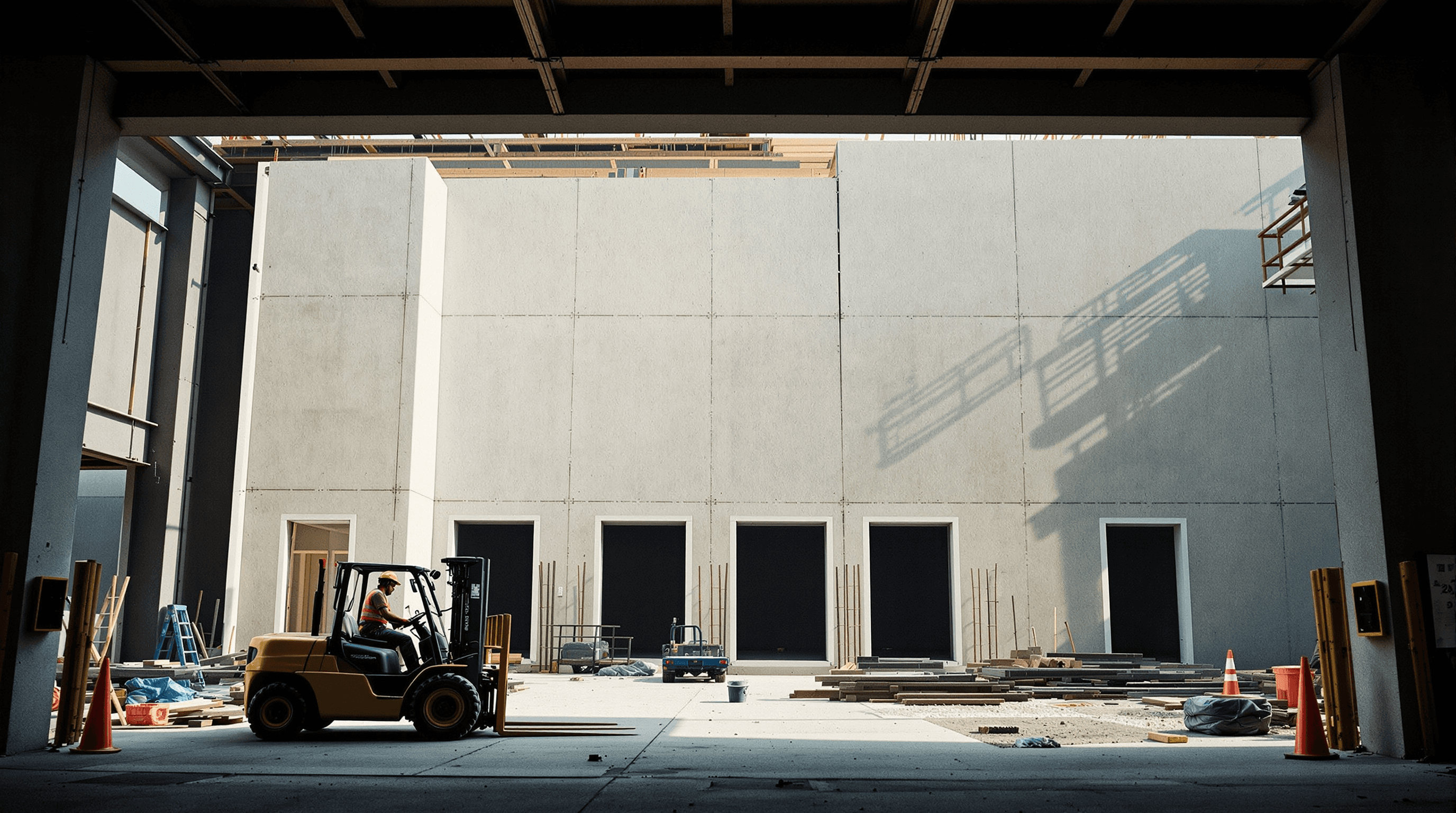
At major New York construction projects—Hudson Yards, the Penn Station reconstruction, the new Midtown towers going up in 2025—there can be 30 or 40 different subcontractors on site at any given time. Ironworkers, electricians, concrete finishers, riggers, elevator installers. The general contractor oversees all of them.
When a worker gets hurt on a site like this, the first question from insurance adjusters is almost always: "Which subcontractor was responsible for that area?" The implication is that only the worker's direct employer—or the subcontractor who controlled that specific task—is liable.
New York law says otherwise.
The GC's Non-Delegable Duty
Labor Law 240 imposes a non-delegable duty on the general contractor. This means the GC cannot escape liability by pointing to a subcontractor. The obligation to provide proper safety devices for work done at elevation belongs to the GC regardless of how many layers of subcontracting exist below them.
This is why workers hurt on large multi-contractor projects often have stronger claims than they realize. Even if a scaffolding subcontractor erected the platform you fell from, the GC is liable. Even if a crane subcontractor operated the crane that dropped a load on you, the property owner and GC are still defendants.
What "Supervision and Control" Means
For Labor Law 241(6) claims—which cover a broader range of construction accidents beyond pure gravity injuries—the law requires showing the defendant had "supervision and control" over the work. On large projects, courts have held that this doesn't require the GC to be standing next to you when you're hurt.
It's enough that the GC:
All of these are standard practice on projects like Hudson Yards. The GC's infrastructure for oversight is itself evidence of control.
Real-World Examples from Multi-Contractor Sites
At Manhattan West in 2024, a concrete worker fell through a floor opening while another subcontractor's crew was installing ductwork above. The GC's insurer initially argued the opening was the responsibility of the flooring subcontractor. The case settled for $2.8 million after discovery revealed the GC's safety manager had walked past that same unguarded opening three times during morning inspections.
Hudson Yards saw a similar pattern. A rigger was struck by falling rebar while erecting steel on level 35. Four different subcontractors were working overhead. The GC tried to shift blame to the specific steel crew that dropped the material. Settlement: $4.2 million. The court found that 12 NYCRR 23-5.17 requires overhead protection netting when workers are below active overhead work—a GC responsibility that can't be delegated.
Falling Objects and Multiple Floors of Activity
One of the most dangerous aspects of large multi-contractor sites is vertical work—multiple trades working at different heights simultaneously. When a worker on floor 15 drops a tool that injures a worker on floor 12, Labor Law 240 applies. The protection covers workers struck by falling objects, not just workers who fall themselves.
The relevant standard: OSHA 29 CFR 1926.502(j) requires controlled access zones and overhead protection netting when workers are below active overhead work. Violations of this standard support a Labor Law 241(6) claim in addition to the Labor Law 240 strict liability claim.
New York's Industrial Code Rule 23-2.2 goes further than federal OSHA. It mandates that "no material, tool, or debris shall be thrown or dropped to a lower level without adequate protection for persons below." Courts interpret this to mean proper catchment systems, not just shouting "heads up." When GCs fail to establish and enforce these systems across multiple subcontractors, they're liable under both Labor Law sections.
The Real Settlement Numbers
Multi-contractor site injuries routinely settle in the $1.5–7 million range when injuries are severe. Here's what drives those numbers:
Spinal injuries with fusion surgery: $3–5 million range, depending on age and number of levels fused. A 28-year-old ironworker who fell from scaffolding at the World Trade Center site in 2023 settled for $4.9 million after L3-L5 fusion.
Traumatic brain injury from falling objects: $2.5–6 million. TBI settlements depend heavily on cognitive impact. A concrete finisher struck by a falling tool at Hudson Yards settled for $5.1 million after neuropsychological testing showed significant memory and processing deficits.
Crush injuries requiring amputation: $1.8–4.2 million. An elevator mechanic crushed between materials and a wall at Manhattan West settled for $3.7 million after below-knee amputation.
Fatal accidents: $2–3.5 million in wrongful death settlements, with higher amounts for younger workers with dependents.
These ranges reflect the reality that major development projects carry massive insurance policies—often $50–100 million in coverage—specifically because the GCs and owners know they're liable regardless of which subcontractor caused the accident.
How Multiple Defendants Increases Your Recovery
Large projects mean multiple defendants with deep pockets. A typical Hudson Yards injury case might involve:
Each defendant carries their own insurance policy. The owner might have $25 million. The GC another $25 million. When multiple policies apply, there's more money available for settlement.
But there's another advantage: defendants blame each other. While they're fighting over who pays what percentage, they're often willing to settle with the injured worker to avoid a trial that exposes all their safety failures.
How Damages Are Split When Multiple Parties Are Liable
New York follows an "apportionment" rule for comparative fault between defendants—but not between the injured worker and the defendants in a Labor Law 240 case. The worker's own fault is generally irrelevant. Among defendants, the GC and property owner may try to bring in the negligent subcontractor as a third-party defendant, but this doesn't reduce what you recover. It just determines how the defendants split the bill among themselves.
Common Multi-Contractor Safety Violations
OSHA's multi-employer worksite policy under 29 CFR 1926.95 makes controlling contractors—typically the GC—responsible for coordinating safety among all subcontractors. Common violations include:
Fall protection coordination failures: 29 CFR 1926.501 requires fall protection when workers are exposed to falls of six feet or more. On multi-contractor sites, the GC must ensure that different trades don't create fall hazards for each other. When ironworkers remove guardrails to position steel, someone must replace them or establish alternative protection before other trades enter that area.
Inadequate crane coordination: 29 CFR 1926.1424 requires crane operators to coordinate with other activities in the crane's swing radius. At One World Trade Center, a crane operator lifting steel didn't coordinate with concrete workers below. A spreader bar struck a finisher who suffered severe head trauma. Settlement: $6.3 million.
Missing overhead protection: 12 NYCRR 23-2.2(b) requires protection for workers below when materials are being hoisted or moved overhead. GCs often fail to establish protected walkways or coordinate lift schedules to avoid simultaneous overhead and ground-level work.
Hurt on a Construction Site?
Tell us what happened. A licensed New York attorney will review your case and call you — free, no obligation.
Inadequate scaffolding inspection: 12 NYCRR 23-5.8 requires competent person inspection of scaffolds before each work shift and after any occurrence that could affect structural integrity. When multiple trades share scaffolding, the GC—not individual subcontractors—must ensure inspections happen.
Multi-Contractor Communication Failures
The most dangerous aspect of large projects isn't necessarily the construction work itself—it's the communication breakdowns between trades. OSHA's multi-employer policy recognizes this. Under 29 CFR 1926.95(a), controlling employers must "exercise reasonable care to prevent and detect violations" across all subcontractors.
In practice, this means daily coordination meetings, shared safety protocols, and unified incident reporting. When GCs fail to establish these systems—or when the systems break down—workers get hurt.
At 432 Park Avenue in 2023, electrical and mechanical trades were both working in the same area. The electrical crew shut off power to install conduit. The mechanical crew didn't get word and tried to operate a powered lift. A mechanic fell 12 feet when the lift failed. The GC's insurer paid $2.1 million. Discovery showed the daily coordination meeting had been canceled three times that week due to "scheduling conflicts."
The Documentation That Proves Control
Multi-contractor sites generate massive documentation that proves the GC's control:
Daily reports showing which trades worked where and when. These prove the GC knew about specific hazards.
Safety meeting minutes showing what hazards were discussed and what corrective action was ordered.
Work permits and hot work permits showing the GC's authority to approve or restrict dangerous work.
Inspection reports from the GC's safety staff showing they knew about violations before accidents occurred.
Radio logs and email chains showing real-time coordination between the GC and subcontractors.
This documentation is discoverable in litigation. GCs can't delete it or claim they didn't know about hazards when their own records prove otherwise.
The Owner's Liability Under Labor Law 200
Property owners on large projects often try to claim they're "hands-off" and shouldn't be liable beyond Labor Law 240. But New York's Labor Law 200 imposes a general duty to maintain safe worksites. For projects like Hudson Yards where the owner is actively involved in construction management, this creates additional liability.
Courts look at whether the owner:
Related Companies, the developer behind Hudson Yards, maintains its own construction management staff and safety protocols. This level of involvement makes them liable under Labor Law 200 in addition to the strict liability under Labor Law 240.
Practical Steps After a Multi-Contractor Site Injury
Get the full name of the general contractor immediately. Not the subcontractor you work for—the GC. Look for signage on the site, request it from HR, or check public building permits (available on NYC Buildings Department website).
Identify who controlled the area where you were hurt. Was it fenced off? Who placed materials there? Who issued work orders for that floor?
Document which other trades were working nearby. Their presence proves the need for coordination and oversight—the GC's responsibility.
Preserve photos of site conditions, especially any barriers, overhead netting, or lack thereof. Get pictures of the general area, not just the specific hazard that hurt you.
Request copies of daily safety reports from your supervisor. These often contain admissions about known hazards.
Don't sign anything from the GC's representatives claiming the accident was your fault or your employer's fault. Large project insurance adjusters are sophisticated and will try to limit their exposure before you understand your rights.
Don't assume your employer is the only party. On a site with 30 subcontractors, the GC has deep pockets and insurance specifically designed for large-scale construction liability. Your workers' comp claim against your employer is separate from—and much smaller than—a Labor Law claim against the GC and owner.
The Time Factor: Why Multi-Contractor Cases Settle Higher
Multi-contractor sites create time pressure that works in injured workers' favor. These projects operate on tight schedules with massive carrying costs—often $100,000+ per day in financing costs alone. Lengthy litigation that might expose widespread safety failures is expensive.
Insurance companies know this. They'd rather pay $3 million to settle a case quickly than spend two years in discovery that might reveal systematic safety violations affecting dozens of other workers. This time pressure often leads to higher settlement offers earlier in the process.
Immigration Status Doesn't Matter
Large construction projects rely heavily on immigrant labor. Undocumented workers have the same rights under New York Labor Law as documented workers. The Court of Appeals confirmed this in Balbuena v. IDR Realty LLC—immigration status is irrelevant to Labor Law claims.
Insurance companies can't ask about your immigration status during settlement negotiations. They can't threaten deportation or use immigration concerns to pressure you into accepting low offers. The law protects your right to recovery regardless of your documentation status.
If you were injured at Hudson Yards, a Penn Station construction site, or any other large NYC multi-contractor project, a free case review can identify every party with potential liability and give you a realistic picture of what your case may be worth.
The key is understanding that your case isn't just against your employer. It's against every entity that had the legal duty to keep you safe—and on major construction projects, that's often several defendants with millions in insurance coverage.
Related Reading
General Contractor Liability in NY
What Multi-Party Cases Are Worth
Filing Deadlines You Cannot Miss
Related Reading
Related Reading
Frequently Asked Questions
My employer is a small subcontractor. Does it make sense to sue the much larger GC?▼
What if I don't know who the general contractor was?▼
If multiple workers were injured in the same accident, can we file together?▼
Get a Free Case Review
Find out if you have a claim under New York Labor Law. A licensed NY attorney will review your case and call you back.