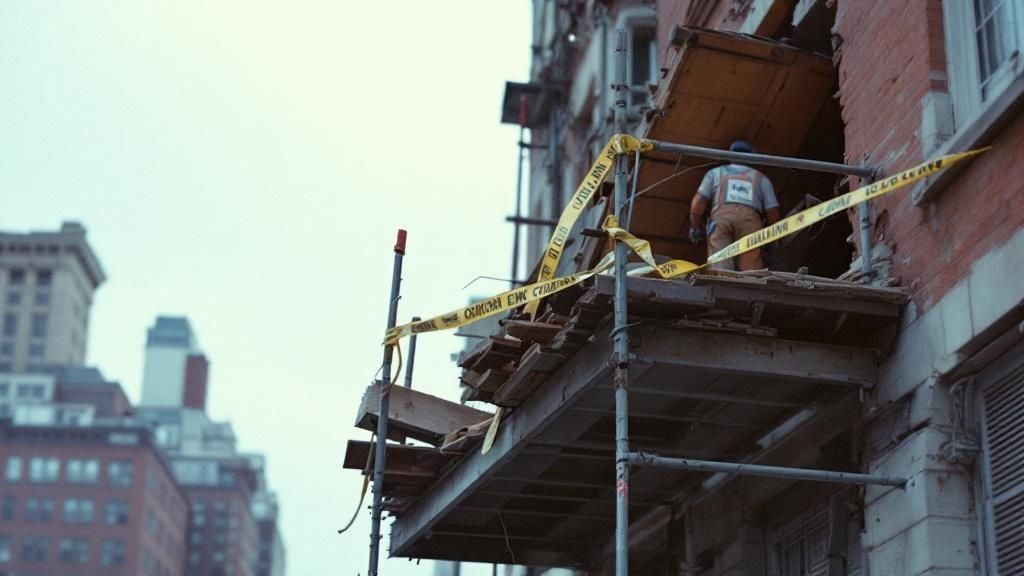
On every multi-story construction project, gravity poses a constant threat—not just to workers who might fall, but to workers who might be struck by objects falling from above. Tools slip from belts. Materials get knocked from scaffolds. Loads swing loose from cranes. And when something heavy falls from height, the results can be catastrophic.
The Bureau of Labor Statistics consistently ranks "struck by object" as one of the "Fatal Four"—the four leading causes of construction worker deaths. In New York, these workers and their families are protected by Labor Law 240, which extends the same strict liability protections to falling object injuries as it does to falls from height.
Hammers, wrenches, and power tools dropped by workers above
Equipment knocked from scaffolds or platforms
Tools sliding off sloped surfaces
Items falling when not properly secured
Building Materials:
Bricks and blocks falling during masonry work
Lumber and plywood sliding off stacks
Metal components dropped during steel erection
Drywall and finishing materials losing stability
Debris and Waste:
Demolition debris falling through floors
Scrap materials not properly contained
Construction waste thrown rather than lowered
Rigging Failures:
Crane loads breaking free
Hoisted materials slipping from slings
Improperly secured loads swinging or falling
Structural Elements:
Unsecured building components falling
Formwork collapsing and striking workers below
Temporary structures failing under load
How Labor Law 240 Protects You
Labor Law 240's "falling object" protection is as powerful as its "falling worker" protection. The statute requires property owners and general contractors to provide "proper protection" for workers endangered by objects that "might fall" on them.
Key principles of falling object protection under Labor Law 240:
Strict liability applies. If you're struck by a falling object because adequate protection wasn't provided, the property owner and contractor are liable. You don't need to prove they were negligent—only that proper protection was missing.
The object doesn't have to fall far. Some courts have found liability even when objects fell relatively short distances. The key is whether the object required securing or protective measures that weren't provided.
Protection can take many forms. Barricades, toe boards, debris netting, hard hats, overhead protection, proper hoisting procedures—when any reasonable protective measure would have prevented the injury and wasn't provided, liability may attach.
Your own mistakes typically don't matter. The comparative negligence defense generally doesn't apply to Labor Law 240 claims. Even if you contributed to the accident, you can usually recover full compensation.
What Protection Should Look Like
OSHA and industry standards require multiple layers of protection against falling objects:
Source Control:
Toe boards on scaffolds and platforms to prevent objects from being kicked off
Material storage rules keeping items away from edges
Tool lanyards to prevent dropped tools
Secure rigging and hoisting procedures
Debris containers at work areas
Path Protection:
Debris netting around work areas
Canopies over walkways and work zones
Barricaded areas below overhead work
Catch platforms at intermediate levels
Covered chutes for debris removal
Worker Protection:
Hard hats rated for the hazards present
Face shields when appropriate
Safety zones and exclusion areas
Communication systems for coordinating overhead work
Lookouts and spotters when necessary
When these protections are missing or inadequate, and a worker is injured as a result, Labor Law 240 provides a clear path to recovery.
The Severity of Falling Object Injuries
Objects falling from height can inflict devastating injuries:
Head and Brain Injuries:
Even with hard hats, severe impacts cause traumatic brain injuries
Skull fractures requiring surgery
Concussions with lasting effects
Fatal injuries are common
Neck and Spinal Injuries:
Compressed vertebrae from downward force
Spinal cord damage causing paralysis
Herniated discs requiring surgery
Chronic pain limiting work ability
Shoulder, Back, and Limb Injuries:
Hurt on a Construction Site?
Tell us what happened. A licensed New York attorney will review your case and call you — free, no obligation.
These injuries often mean extended time off work, expensive medical treatment, and permanent limitations on earning capacity. Labor Law 240's strict liability standard and full damage recovery help ensure that injured workers receive compensation adequate to their losses.
Importantly, your own employer (if you're a subcontractor's employee) typically cannot be sued under Labor Law 240, but you can pursue the property owner and general contractor regardless of who actually dropped the object or failed to provide protection.
Get medical attention immediately. Head injuries especially may be more serious than they initially appear.
Report the incident. Make sure your employer documents it. Get it in writing.
Preserve evidence. Ask that the object and scene be preserved. Photograph everything you can.
Identify witnesses. Get names and contact information from anyone who saw what happened.
Document your hard hat. If you were wearing one, keep it and photograph any damage. If you weren't provided one, document that fact.
Don't give recorded statements. Insurance companies will try to minimize your claim. Speak with an attorney first.
Consult an attorney promptly. Evidence disappears and memories fade. Early investigation protects your case.
Your Recovery Matters
Being struck by a falling object is terrifying. One moment you're working normally; the next, you're on the ground in pain, possibly with life-changing injuries. In those moments, the last thing on your mind is legal strategy.
But the decisions made in the aftermath—whether evidence is preserved, whether the right claims are filed, whether you settle early for less than you deserve—will determine whether you receive the compensation you need for medical care, lost wages, and the changes to your life.
Labor Law 240 exists precisely for moments like these. When construction work goes wrong and a worker pays the price, the law ensures that those who control construction sites bear responsibility. That's not just a legal principle—it's a recognition that construction workers deserve protection, and when protection fails, they deserve to be made whole.
If you've been struck by a falling object on a New York construction site, you have rights. Make sure you protect them.
Can I sue if a hammer fell and hit me on a construction site?▼
Yes. Under NY Labor Law 240 (Scaffold Law), property owners and contractors are strictly liable for falling object injuries. You don't need to prove negligence - only that an object fell and caused your injury.
How much can I get for a falling object injury settlement?▼
Settlements vary widely based on injury severity. Minor injuries may settle for $50,000-$150,000, while serious head injuries or permanent disabilities can result in settlements of $500,000 to several million dollars.
How long do I have to file a lawsuit for falling construction debris?▼
You have 3 years from the date of injury to file a personal injury lawsuit in New York. However, if suing a municipality, you may have only 90 days to file a notice of claim.
Does Labor Law 240 cover me if I dropped something that hit another worker?▼
Labor Law 240 protects the injured worker, not the one who dropped the object. However, the injured worker can still sue the property owner/contractor even if a coworker caused the falling object.
What if my employer says the falling object accident was my fault?▼
Under Labor Law 240, your own negligence cannot reduce your recovery. Even if you weren't wearing a hard hat or were partially at fault, you can still recover full damages from property owners and contractors.
Get a Free Case Review
Find out if you have a claim under New York Labor Law. A licensed NY attorney will review your case and call you back.
The information in this article is for educational purposes only and does not constitute legal advice. Every case is unique. For advice about your specific situation, please consult with a qualified attorney. This is attorney advertising.