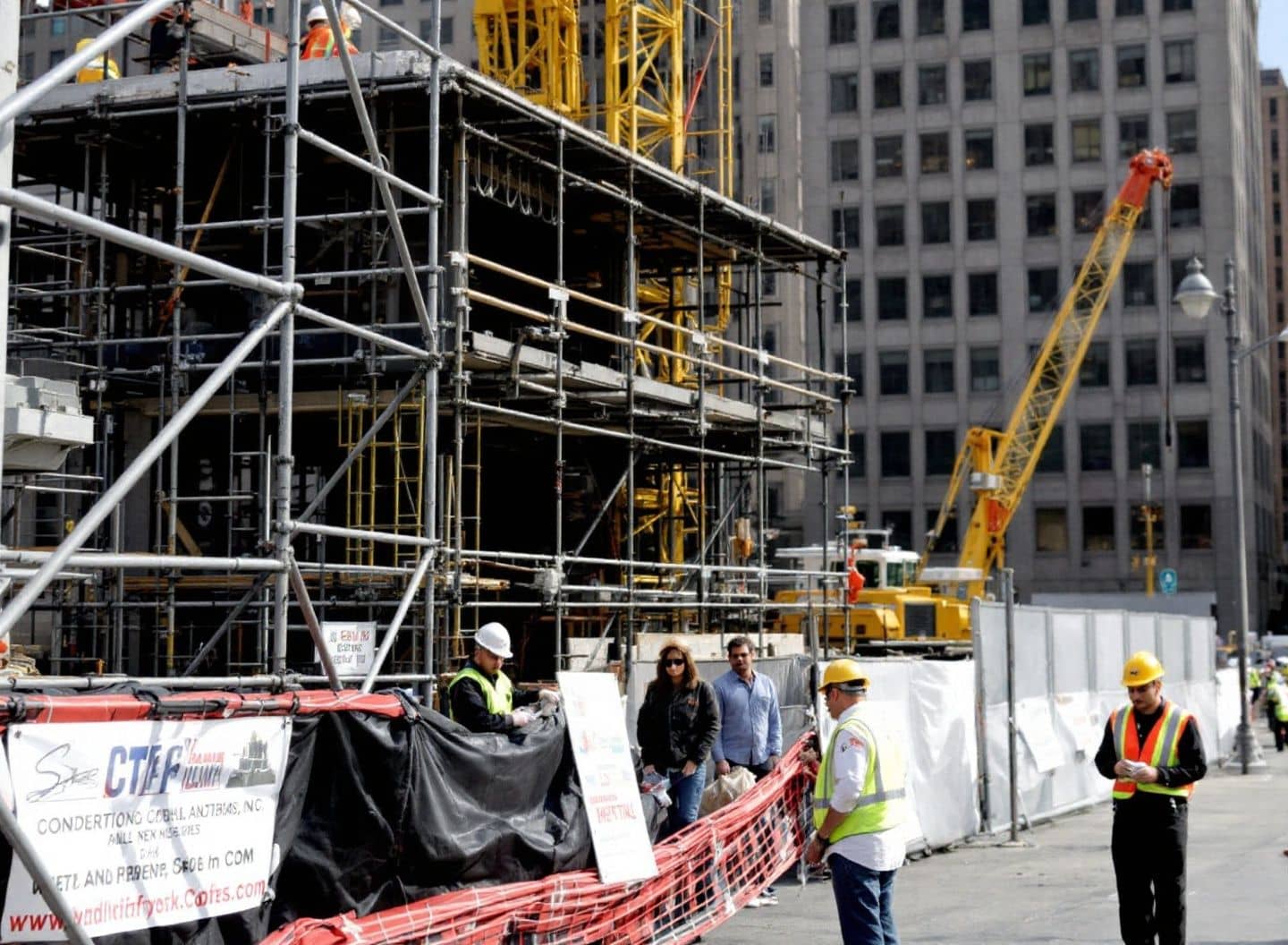
A trench dug into New York City bedrock looks, at a glance, like an open hole. It isn't. Once that excavation reaches a certain depth or configuration, it becomes something far more dangerous: a confined space where the air itself can kill a worker before anyone above ground realizes something has gone wrong. Atmospheric hazards in deep trenches and pits are one of the most underreported categories of construction injury, partly because the injuries happen fast and partly because the hazard is invisible. Understanding how these risks arise, which regulations govern them, and what legal claims they can support is essential for any worker or family member trying to make sense of a serious excavation accident in New York.
What Makes a Deep Excavation a Confined Space?
Most people picture confined spaces as tanks, silos, or sewers. But a trench or pit qualifies as a confined space whenever it's large enough for a worker to enter and perform work, has limited means of entry or exit, and is not designed for continuous occupancy. Deep excavations in urban environments meet all three criteria, especially when workers are sent down into a pit that's been sheeted, shored, or box-braced on all sides. The walls reduce natural air circulation. The depth traps heavier-than-air gases near the floor. Nearby utilities, decomposing organic matter in the soil, or even the machinery running at street level can introduce contaminants that accumulate silently in the work zone.
The result is that a worker climbing down a ladder into what looks like an ordinary dig site may be entering an atmosphere that can cause unconsciousness within a few breaths. That's not an exaggeration. It's the documented mechanism of injury in oxygen-deficient and gas-exposure incidents across the construction industry.
The Specific Atmospheric Hazards Workers Face Underground
There are three main categories of atmospheric danger in excavations, and each works differently on the human body.
Oxygen Deficiency
Normal air is roughly 20.9 percent oxygen. When that level drops below 19.5 percent, OSHA considers the atmosphere oxygen-deficient and immediately dangerous to work in without supplied-air equipment. Oxygen displacement happens when heavier gases seep into a confined trench and push breathable air upward and out. Workers don't smell oxygen deficiency. They don't taste it. The first symptoms, mild euphoria or slight dizziness, are easy to dismiss as fatigue. At oxygen concentrations below 16 percent, cognitive function deteriorates rapidly. Below 6 percent, a worker can lose consciousness and die within minutes. By the time a co-worker notices someone has collapsed, the rescuer who climbs down without proper equipment becomes a second victim. This secondary-victim pattern is tragically common in confined-space accidents and is why entry without atmospheric testing is never acceptable.
Toxic Gas Accumulation
Hydrogen sulfide (H2S) is generated naturally by decomposing organic material in soil and is commonly released when excavation work disturbs old sewer lines, drainage layers, or contaminated fill. It smells like rotten eggs at low concentrations, but it paralyzes the olfactory nerve at higher concentrations, meaning workers lose the ability to smell it just as it becomes most dangerous. Carbon monoxide (CO) is a different problem but equally lethal. Gasoline- or diesel-powered equipment running near an open excavation can feed exhaust fumes directly into the pit, especially when the work is in a cut between buildings where air movement is restricted. CO binds to hemoglobin more effectively than oxygen does, depriving tissues of oxygen even when the air in the trench technically contains enough O2 molecules.
Flammable and Explosive Atmospheres
Natural gas leaks from aging mains are a persistent reality in New York's infrastructure. Methane is lighter than air and tends to accumulate at the top of a confined space rather than the bottom, but in a deep trench with poor ventilation, it can reach explosive concentrations at worker-head level. A spark from a tool, a light switch, or static electricity is sufficient to trigger a detonation. Workers in these environments aren't just at risk of poisoning; they're at risk of a blast that can collapse the shoring and bury everyone in the excavation.
Federal Rules That Govern These Hazards: 29 CFR 1926.652
OSHA's excavation standard at 29 CFR 1926.652 sets out specific duties for employers when workers enter or work in trenches and excavations. This standard requires that excavations be inspected by a competent person before each work shift, after any event that could change conditions, and after every rainstorm. That competent person must be trained to identify hazardous atmospheres, not just soil instability. The standard requires that atmospheric testing be conducted before any worker enters an excavation that has the potential for a hazardous atmosphere, and that adequate ventilation or respiratory protection be provided when hazardous conditions are found. Employers are also required to have rescue equipment available, to ensure that workers can exit the space quickly, and to prevent unauthorized entry.
What this means in practice: a contractor who sends workers into a deep trench without first testing the air, who fails to post a trained attendant, or who doesn't have a written rescue plan is already in violation of federal law before anyone gets hurt. That violation matters enormously in a subsequent legal proceeding.
New York State Law: Labor Law § 241(6) and 12 NYCRR 23-4
Hurt on a Construction Site?
Tell us what happened. A licensed New York attorney will review your case and call you — free, no obligation.
New York has its own statutory framework that goes beyond federal OSHA requirements, and it places meaningful legal responsibilities on property owners and general contractors, not just the direct employer of the injured worker. Labor Law § 241(6) requires that construction, excavation, and demolition work be conducted in a manner that provides reasonable and adequate protection and safety to workers. Critically, this protection doesn't depend on whether the owner or general contractor actually supervised the work. The statute imposes a non-delegable duty, meaning they can be held liable even if they hired a subcontractor to perform the excavation and claim they had no daily oversight of it.
To succeed on a Labor Law § 241(6) claim, an injured worker must point to a specific violation of an industrial code or regulation that caused the injury. That's where 12 NYCRR 23-4 comes in. This section of the New York Industrial Code addresses protection in construction, demolition, and excavation operations. It sets specific safety practices for excavation work across the state, implementing the broader mandate of Labor Law § 241(6) with detailed, enforceable rules. A violation of 12 NYCRR 23-4 is exactly the kind of specific regulatory breach that can ground a § 241(6) claim.
Together, Labor Law § 241(6) and 12 NYCRR 23-4 create a powerful framework for workers injured by atmospheric hazards in excavations. The worker doesn't need to prove that the owner or general contractor personally made the decision to skip air monitoring. What matters is that the site failed to comply with established safety standards, and that failure caused or contributed to the injury.
Who Is Liable When Atmospheric Hazards Injure a Worker?
Liability in an excavation atmospheric-hazard case can rest with multiple parties, and sorting out who bears responsibility is a central task in any legal claim.
The property owner is a natural starting point because Labor Law § 241(6) places a non-delegable duty directly on owners of the premises where the work occurs. The general contractor bears similar responsibility because it controls the overall construction site and the safety plan. The excavation subcontractor who actually put workers into the trench without proper air monitoring may face direct negligence liability in addition to statutory claims. If a utility company's aging gas main contributed to the atmospheric hazard, that entity may carry its own share of responsibility. Equipment manufacturers whose monitoring devices failed, or suppliers who provided defective gas detectors, can also be drawn into the analysis.
In New York, workers' compensation is the exclusive remedy against a direct employer in most situations. But the beauty of § 241(6) is that it allows injured workers to sue third parties, including owners and general contractors, for damages beyond what workers' compensation provides. Those additional damages can include compensation for pain and suffering, lost earning capacity, and other losses that workers' comp doesn't cover. The value of those damages varies with the severity of the injury, the worker's trade, their age and earnings history, and a range of other factors specific to each case.
Trade-Specific Risks: Who Is Most Exposed?
Not every construction worker faces equal atmospheric risk in excavations. The trades most commonly exposed include utility workers digging around gas, water, and sewer infrastructure; plumbers and pipefitters working below grade in tight pits to make connections; laborers performing shoring installation or concrete work in deep foundations; ironworkers installing caissons or soldier piles in confined conditions; and tunnel workers, who face the most extreme version of these hazards but whose protections are often more rigorously enforced due to the recognized danger of their trade.
It's worth noting that newer workers are disproportionately at risk. Experienced tradespeople often know the warning signs and push back against unsafe conditions. Workers who are new to a site, who don't speak the dominant language, or who fear losing their job if they refuse an assignment are more likely to enter an unmonitored space without questioning whether the air is safe. That power imbalance is part of why the law places the duty on owners and contractors rather than leaving it to individual workers to protect themselves.
Practical Steps After an Excavation Atmospheric Injury
If you or a family member has been injured or sickened by atmospheric conditions in a trench or excavation, there are several concrete steps that matter from both a medical and a legal standpoint. Seek emergency medical care immediately and tell treating physicians specifically about potential gas exposure or oxygen deprivation, since the treatment for CO poisoning and H2S exposure differs from standard trauma care and timing is critical. Report the incident to your employer in writing as soon as you're able, and ask that an incident report be prepared. Do not assume that because something was filed, it was filed correctly.
Preserve evidence. If possible, have someone photograph the excavation, the shoring setup, and any atmospheric monitoring equipment (or its absence) at the scene. Ask whether air readings were recorded before the incident and by whom. These records can be subpoenaed in litigation but are much easier to obtain if requested early, before they disappear. Consulting a lawyer experienced in New York Labor Law claims early in the process is important because there are strict notice requirements and statutes of limitation that can bar a claim if not met.
The Bigger Picture: Why These Cases Matter Beyond Individual Claims
Excavation atmospheric-hazard cases are important not just to the individual worker, but to the industry as a whole. When contractors and property owners face legal accountability for failing to monitor air quality in deep excavations, the financial and reputational consequences create real pressure to comply with OSHA and state regulations that they might otherwise treat as optional. Labor Law § 241(6) exists precisely because the New York legislature recognized that voluntary compliance alone was insufficient to protect workers from the power imbalance inherent in construction sites. Holding owners and general contractors directly accountable makes the entire site safer, not just for the person who was harmed.
If you've been injured in a confined-space or excavation incident in New York, you have rights under both federal and state law. Knowing those rights, understanding the regulatory framework, and acting promptly to preserve your legal options can make a meaningful difference in what you're able to recover. NY Construction Advocate is here to help you understand that framework and connect with qualified legal help.
Attorney Advertising. Prior results do not guarantee a similar outcome. This article is for general informational purposes only and does not constitute legal advice. NY Construction Advocate connects injured workers with experienced New York construction accident attorneys.
Primary sources
Frequently Asked Questions
Does Labor Law § 241(6) apply to excavation atmospheric-hazard injuries, or only to fall accidents?▼
Can a property owner be sued for an atmospheric injury in an excavation even if they never visited the site?▼
What is the difference between an oxygen-deficient atmosphere and a toxic atmosphere, and does it matter for a legal claim?▼
What evidence is most important in an excavation atmospheric-hazard case?▼
If a worker is injured by a gas leak from a utility company's main, can they sue the utility in addition to the contractor?▼
Are workers' compensation benefits the only remedy for a construction worker injured by atmospheric hazards in a trench?▼
Get a Free Case Review
Find out if you have a claim under New York Labor Law. A licensed NY attorney will review your case and call you back.