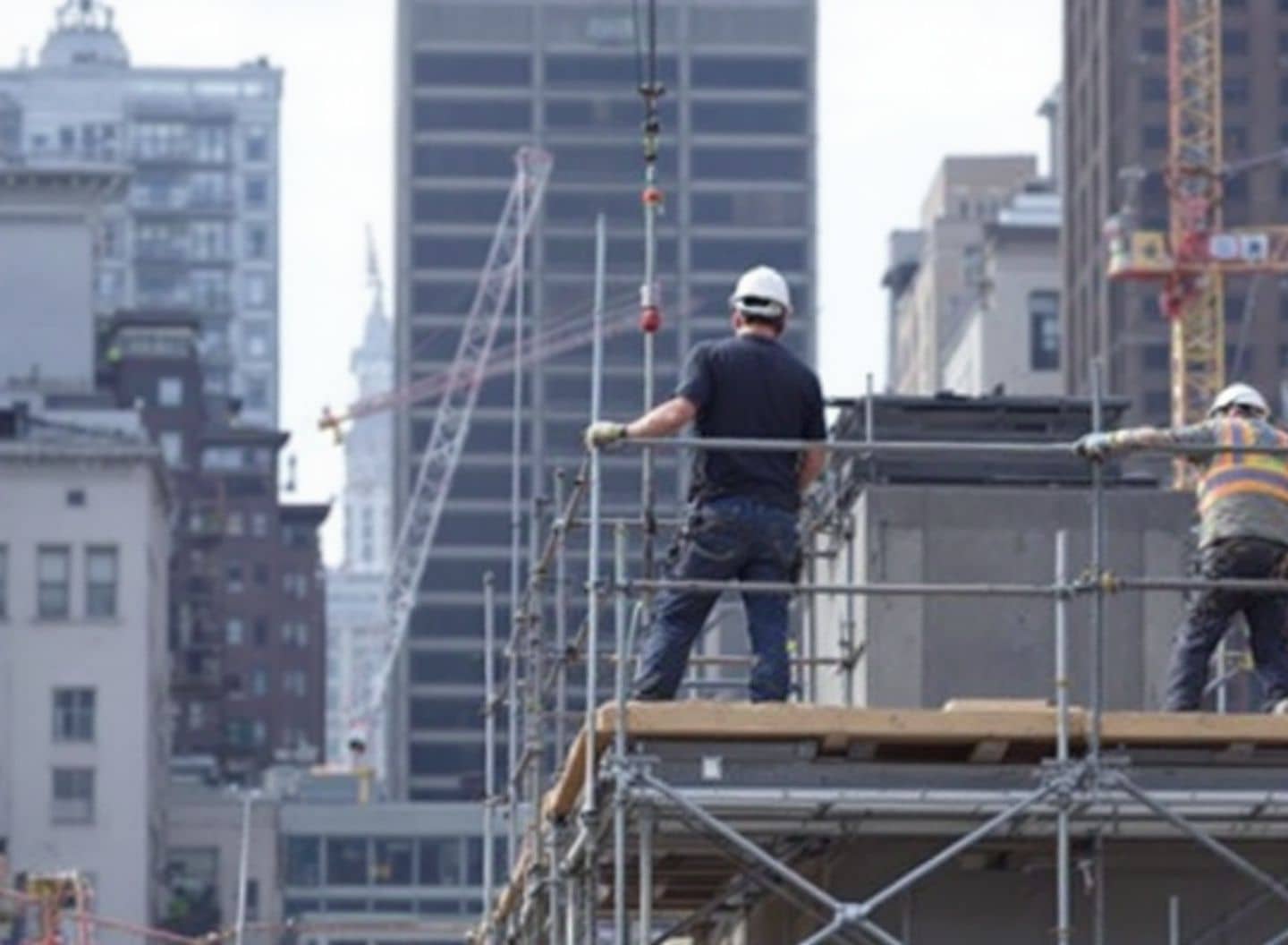
Scaffold planking doesn't get much attention until something goes wrong. Workers walk across those boards dozens of times a day, trusting that whoever built the scaffold used the right lumber, spanned the planks correctly, and checked for cracks or rot. When that trust is violated, the consequences can be catastrophic. Falls from scaffolding remain one of the leading causes of serious injury and death in the construction industry, and plank failure is a recurring culprit. If you or a family member has been hurt on a New York construction site because of defective scaffold planking, understanding the legal framework is the first step toward knowing what options exist.
How Scaffold Planks Fail: The Mechanics Behind the Injury
Scaffold planks fail in a few distinct ways, and each creates its own pattern of injury. A plank can split longitudinally under load, often because a knot or crack was present in the wood before the scaffold was ever built. It can deflect so severely mid-span that a worker loses footing and slides off the edge. Or a plank can simply be undersized for the load it's asked to carry, bending until it snaps. In other cases, the plank is the right size but it's not properly secured at its ends, meaning it slides or tips the moment a worker's weight shifts.
Here's what makes plank failure particularly dangerous: it's often silent and instantaneous. There's no warning creak loud enough to react to. A worker standing six, eight, or ten feet above a concrete floor has almost no time between the moment a plank gives way and the moment of impact. Even at relatively modest heights, a free-fall onto concrete produces forces that can fracture vertebrae, shatter heels, cause traumatic brain injuries, and rupture internal organs. The physics don't care that the fall was short. The body absorbs the energy regardless.
Ironworkers, bricklayers, painters, carpenters, and laborers all spend significant time on scaffold platforms. Bricklayers in particular work at varying heights as a wall goes up, meaning their scaffold gets raised repeatedly throughout a project. Each raise is another opportunity for an improperly planked section to go undetected. Painters often work on frame scaffolding over finished floors or on exterior faces of buildings where a fall means landing on pavement, not dirt. The trade doesn't change the legal obligation that exists to protect these workers.
Labor Law § 240 and Why It Applies to Plank Failures
New York's Labor Law § 240, often called the Scaffold Law, is one of the most worker-protective statutes in the country. It places a nondelegable duty on owners, general contractors, and their agents to furnish or erect scaffolding, hoists, ladders, and other safety devices in a way that gives workers proper protection during construction, demolition, and repair work. Under § 240(1), an owner or general contractor can be liable when a required safety device was missing or failed to give proper protection against an elevation-related risk and that violation was a proximate cause of the injury. That means that if a scaffold fails and that failure is a proximate cause of a worker's fall, the owner and contractor can be held liable even if they weren't physically present on the site that day and even if they delegated scaffold erection to a subcontractor. The duty cannot be transferred away.
For a scaffold plank failure, Labor Law § 240 typically applies because the plank is part of the elevation-related safety device the statute exists to regulate. Courts have consistently held that when a worker falls because a scaffold plank breaks, deflects, or slides out from under them, the resulting injury is exactly the type of gravity-related harm the law was designed to prevent. The plaintiff worker doesn't need to prove that the owner or contractor was negligent in the ordinary sense. They need to show that the scaffold didn't do what it was supposed to do, and that the failure caused their fall and injury. That's a meaningful legal distinction that favors injured workers significantly compared to ordinary negligence claims.
It's worth noting that Labor Law § 240 claims are frequently contested. Defendants may argue that the worker was the sole proximate cause of the accident, perhaps claiming the worker misused the scaffold or ignored safety instructions. These arguments can sometimes succeed, which is why the specific facts of how a plank failed and why it failed matter so much in building a claim.
What 12 NYCRR 23-5 Actually Requires for Scaffold Planking
New York's Industrial Code, specifically 12 NYCRR 23-5, sets out detailed technical requirements for scaffolding used in construction, demolition, and excavation work. These aren't aspirational guidelines. They're enforceable safety rules, and violations of them can form the basis of a Labor Law § 241(6) claim, which works alongside or alternatively to a Labor Law § 240 claim in many scaffold cases.
Under 12 NYCRR 23-5, scaffold planking must meet specific thickness and width requirements depending on the type of scaffold and the load it's expected to carry. Planks must be free of defects that would impair their strength, including knots beyond certain sizes, splits, cracks, and decay. The code also addresses how planks must be secured at their ends to prevent tipping and sliding, and it limits how far a plank can extend beyond its support without being restrained. Overlap requirements exist precisely because an unsecured overhang can act as a lever, flipping a plank when a worker steps on the wrong end.
The span requirements in 12 NYCRR 23-5 are particularly critical. A plank rated for a certain load will fail if the distance between its supports is too great, even if the plank itself is otherwise sound. Many scaffold plank failures on New York sites happen not because someone used bad wood, but because the planks were stretched across supports spaced too far apart for the lumber grade in use. That's a setup failure, not just a materials failure, and it's fully preventable.
When a violation of 12 NYCRR 23-5 is established, it supports a Labor Law § 241(6) claim. Unlike a § 240 claim, a § 241(6) claim requires showing that a specific, applicable Industrial Code rule was violated, that the violation amounted to negligence, and that it was a proximate cause of the injury. The trade-off is that § 241(6) applies to a broader range of injuries beyond pure falls, including those involving struck-by events or caught-in hazards on a defective platform. In many scaffold plank cases, attorneys pursue both theories simultaneously.
Federal Standards and OSHA's Role
Federal OSHA's scaffolding standard, codified at 29 CFR 1926.451, mirrors many of the New York requirements but applies to workplaces covered by federal jurisdiction. Under 29 CFR 1926.451, scaffold planks must be capable of supporting without failure at least four times the maximum intended load, and they must be installed so that they can't shift or be displaced. The standard also requires that platforms be planked or decked as fully as possible and that gaps be minimized. Scaffolding appears regularly on OSHA's annual list of its most frequently cited standards, which suggests how often these requirements go unmet.
OSHA citations and violations don't automatically create liability in a New York civil lawsuit, but they're highly relevant evidence. An OSHA citation issued after a scaffold plank collapse can support the injured worker's account of what happened and demonstrate that industry-accepted safety standards weren't met. Attorneys handling scaffold cases routinely request OSHA inspection records as part of discovery.
Hurt on a Construction Site?
Tell us what happened. A licensed New York attorney will review your case and call you — free, no obligation.
Who Bears Legal Responsibility When a Plank Fails
New York law casts a wide net when it comes to scaffold liability. Under Labor Law § 240, the parties who can be held liable include the property owner (even a private homeowner in some circumstances), the general contractor, and any party who functions as a statutory agent with authority to supervise or control the work. Critically, a worker's own employer is typically shielded from direct Labor Law § 240 liability by workers' compensation exclusivity, but the general contractor and owner are not.
Scaffold erectors occupy a particular place in these cases. If a subcontractor was specifically hired to build the scaffold and did so improperly, they may share liability for the resulting injury. The manufacturer of the scaffold components or the lumber supplier could also face product liability claims if the materials themselves were defective as supplied, separate from any installation errors.
In practice, scaffold plank failure cases often involve multiple defendants. The investigation has to untangle who purchased the planks, who specified them, who erected the scaffold, who was responsible for daily inspections, and whether any documented concerns about the scaffold's condition were raised and ignored. That documentary trail, or the absence of one, often shapes how a case develops.
Steps an Injured Worker Should Take After a Scaffold Plank Accident
If you've been injured because a scaffold plank broke, split, or gave way under you, the actions you take in the immediate aftermath matter. First and most importantly, get medical attention, even if you feel like you might be okay. Spinal injuries, internal injuries, and traumatic brain injuries sometimes aren't immediately apparent. A thorough medical evaluation creates a record tying your injuries to the accident.
New York has a three-year statute of limitations for Labor Law personal injury claims, but there are exceptions that can shorten that window significantly, particularly when a government entity owns the property. Don't assume you have unlimited time to figure out your options.
What Compensation May Cover in These Cases
The value of a scaffold plank failure claim varies with the severity of the injury, the extent of medical treatment required, how long the worker is out of work, and whether the injury results in permanent limitations. Workers' compensation will cover a portion of lost wages and medical costs, but a successful Labor Law § 240 or § 241(6) claim against the owner and general contractor can recover damages that workers' compensation doesn't reach, including full lost earnings, pain and suffering, and future medical needs. The two systems run in parallel, and amounts recovered from a third-party lawsuit may be subject to a workers' compensation lien, which is something an attorney will explain in the context of your specific situation.
A Note on Comparative Fault
One of the features of Labor Law § 240 that workers should understand is that it generally bars the defendant from reducing a judgment by pointing to the worker's comparative negligence. In most New York personal injury cases, if a plaintiff is found partly at fault, their damages are reduced proportionally. Under § 240, once a violation and proximate cause are shown, that reduction doesn't apply. The exception is the sole proximate cause defense mentioned earlier. To succeed with it, a defendant generally must show that adequate safety devices were available, that the worker knew both that they were available and that he or she was expected to use them, that the worker chose for no good reason not to use them, and that the worker would not have been injured had they been used. But that's a high bar, and courts scrutinize it carefully.
Under a § 241(6) claim, comparative fault does apply, so the specific legal theory matters enormously to the outcome. This is one reason why these cases benefit from careful legal analysis early in the process.
Attorney Advertising. Prior results do not guarantee a similar outcome. This article is for general informational purposes only and does not constitute legal advice. NY Construction Advocate connects injured workers with experienced New York construction accident attorneys.
Primary sources
Frequently Asked Questions
Does Labor Law § 240 cover me if I fell from a scaffold plank that cracked or slid off its support?▼
What does 12 NYCRR 23-5 require that scaffold planks be free of?▼
Can I sue the property owner even if they weren't on the construction site when I was injured?▼
How does an OSHA violation under 29 CFR 1926.451 affect my civil lawsuit in New York?▼
My employer says I was responsible for checking the scaffold before I used it. Does that mean I can't bring a claim?▼
Is there a time limit for filing a scaffold plank injury lawsuit in New York?▼
Get a Free Case Review
Find out if you have a claim under New York Labor Law. A licensed NY attorney will review your case and call you back.