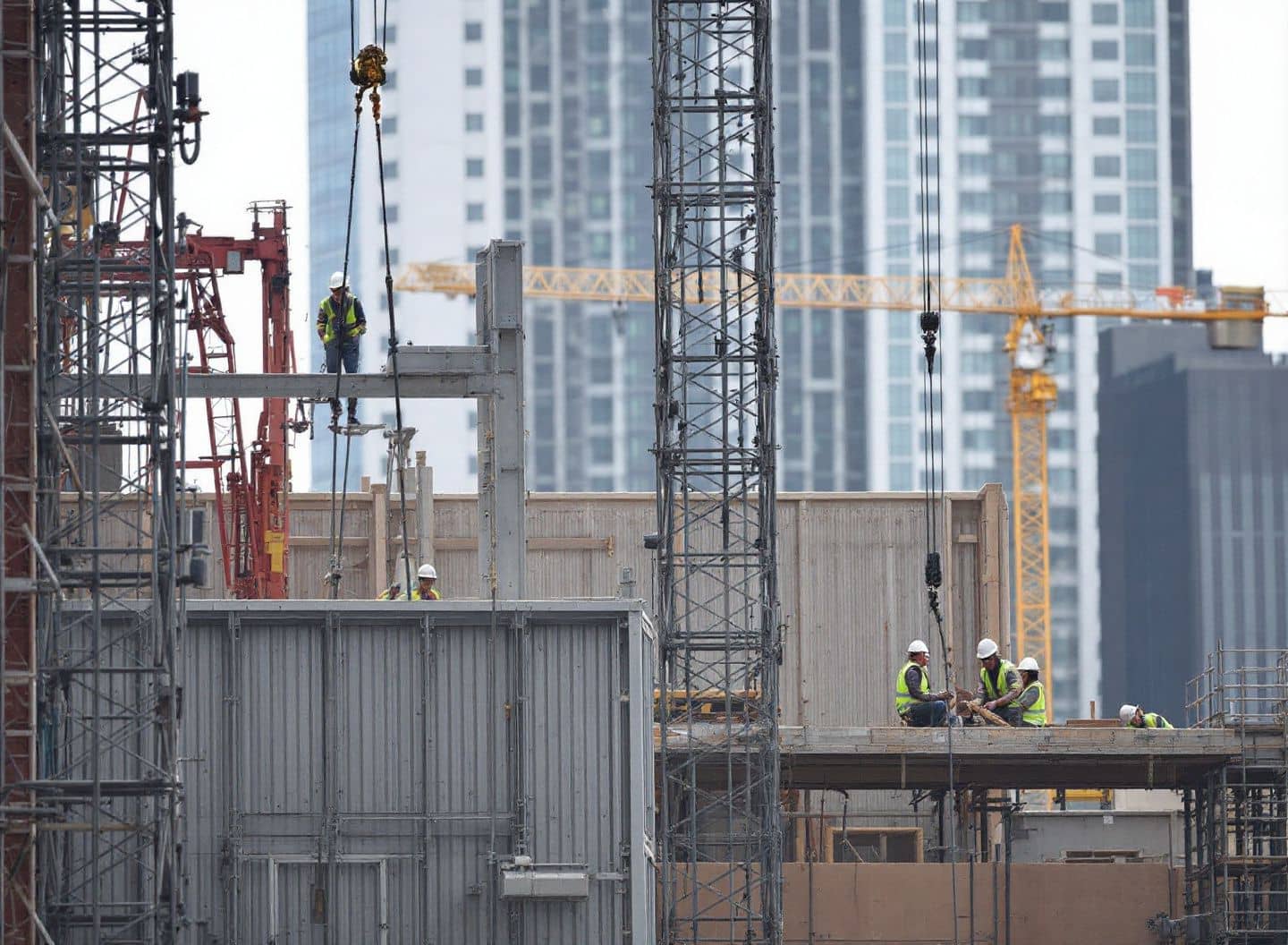
When an interior hung scaffold drops during ceiling or duct installation, New York Labor Law § 240 typically makes the owner and general contractor strictly liable for injuries. These platforms are suspended by hangers, wire rope, and threaded rods, and a single failed connection can send workers plunging onto concrete below. Trade workers hurt this way have strong legal protections.
What Makes Interior Hung Scaffolds Different From Other Scaffold Types?
An interior hung scaffold is suspended from the building's structural system above rather than built up from the floor. Ironworkers, sheet-metal mechanics, pipefitters, and carpenters routinely work on these platforms during mechanical, electrical, and plumbing rough-in phases, as well as during ceiling grid and drywall installation. The platform hangs from beams, bar joists, or concrete decking using wire rope, rigid steel rods, or manufacturer-rated hook hangers. That hanging connection is what makes the system fundamentally different from a supported scaffold sitting on the floor: every load, every movement, and every tool impact transmits directly to the connection points overhead.
In large commercial or institutional projects in New York City and across the state, interior hung scaffolds can span enormous bays. A platform covering a 60-foot mechanical room ceiling can involve dozens of individual hanger points, multiple layers of planking, and several workers moving simultaneously. The complexity creates more places for something to go wrong.
The Specific Mechanics of How These Platforms Fail
Platform drops on hung scaffolds almost always trace back to one of three failure modes: hanger overload, inadequate wire rope or hardware, or planking displacement. Understanding each one matters because the failure mode often points directly to who was responsible.
Hanger and Wire Rope Failures
Wire rope used to suspend scaffold platforms must be rated for a safety factor well above the anticipated load. When the wrong gauge is selected, when rope is kinked or corroded, or when the clamps and thimbles at each end are improperly installed, the connection can fail without warning. A single failed hanger on a multi-point suspension shifts its share of the load to neighboring hangers; if those aren't rated to absorb the sudden increase, a progressive collapse can follow in seconds. Workers on the platform have no meaningful warning before the drop begins.
Planking Failures
Planking failure is the second major mechanism. A worker stands on scaffold planks that deflect, split, or slide off their supports. At as little as 10 feet, a free-fall onto concrete produces forces exceeding what the human spine, pelvis, and lower extremities can absorb. Interior hung scaffold planking can fail when boards are too thin for the span, when they're not cleated or otherwise secured to prevent sliding, or when they're overloaded by stored materials. Stacked duct sections and coils of wire are routinely left on platforms, adding loads the planks weren't designed to carry.
Guardrail Absence and Edge Exposure
When a top rail, mid-rail, or toe board is missing from a scaffold edge, a worker who loses balance or is struck by a coworker has nothing to arrest the fall. Interior hung platforms are often left open on one or more sides to allow material to be lifted up or to accommodate the work pattern. That convenience creates a deadly exposure. A worker leaning to install a duct hanger or reaching to drive a fastener overhead can shift their center of gravity beyond the platform edge before they realize it.
What Does New York Labor Law § 240 Require?
New York Labor Law § 240(1) imposes a non-delegable duty on owners and contractors to furnish or erect scaffolding, hoists, ladders, and other safety devices that give proper protection to workers engaged in covered construction activities. The law is strict: if a scaffold fails and causes injury, the owner and contractor are liable regardless of whether they were present or whether a subcontractor actually built the platform. Courts have consistently held that this protection applies to the entire category of elevation-related risks, including drops from hung ceilings and interior suspended platforms. For injured workers, this matters enormously because it removes the need to prove that the owner was personally negligent.
The practical implication is that when an interior hung scaffold drops, the injured worker's attorney typically names the property owner and the general contractor as defendants under Labor Law § 240. Those parties then have to show either that the scaffold was properly erected and maintained, or that the worker's own conduct was the sole proximate cause of the accident. The latter defense is very difficult to establish when the platform itself failed structurally.
How Do State and Federal Scaffold Regulations Apply to This Work?
Two additional layers of regulation govern interior hung scaffold work beyond Labor Law § 240. Both can support legal claims and define what safe practice looks like.
Hurt on a Construction Site?
Tell us what happened. A licensed New York attorney will review your case and call you — free, no obligation.
12 NYCRR 23-5, promulgated under New York Labor Law § 241(6), contains specific construction safety rules that apply to scaffolding on New York job sites. These regulations address platform width, planking requirements, guardrail heights, and the structural capacity of scaffold components. When a party violates a specific provision of 12 NYCRR 23-5, an injured worker can use that violation to support a Labor Law § 241(6) claim, which is a separate and independent basis for liability from the § 240 claim. Unlike § 240, a § 241(6) claim doesn't require proof that the scaffold failed entirely; it can cover situations where, for example, a guardrail was simply missing.
At the federal level, 29 CFR 1926.451 sets out detailed OSHA scaffolding standards covering suspension rope requirements, platform construction, access, and fall protection. In fiscal year 2024, 29 CFR 1926.451 generated 1,873 citations nationwide, making it one of OSHA's most frequently cited standards. Although an OSHA citation doesn't automatically create civil liability in New York courts, it's highly relevant evidence. An OSHA inspection report documenting a wire rope violation or a missing guardrail can become a central exhibit in a personal injury case.
Which Trades Face the Highest Risk on Interior Hung Platforms?
Sheet-metal workers installing HVAC ductwork face particularly severe exposure. Their work requires them to lift heavy duct sections overhead, often while standing near platform edges. The physical act of guiding a large duct section into position pulls a worker's arms and torso toward the edge and reduces their ability to react to a sudden balance shift. Additionally, duct installation work tends to be staged in sequences where sections of the platform are reconfigured, creating short windows where edge protection is temporarily removed and not always replaced promptly.
Electricians running conduit through ceiling spaces face similar exposure, particularly when they're working above the platform by standing on ladders placed on the scaffold boards. That combination of an elevated work surface plus a ladder multiplies the fall height dramatically. Sprinkler fitters and pipefitters working in mechanical rooms share these risks, often with the added complication of heavy pipe loads concentrated at specific platform points.
Who Is Liable When a Hung Scaffold Platform Drops?
Liability for an interior hung scaffold collapse typically falls on the general contractor, the property owner, and potentially the scaffold subcontractor, if a separate company was hired to erect the system. Under Labor Law § 240, owners and contractors can't escape liability by pointing to the subcontractor who actually built the platform. The duty is non-delegable, which means it sticks to the owner and GC no matter how the work was subdivided.
The scaffold erector, if separate from the GC, may face direct negligence claims. The scaffold manufacturer or rental company may be liable if the equipment itself was defective. A union contract employer may face a workers' compensation claim from the injured worker simultaneously with third-party claims against the owner and GC. These claims often run in parallel: workers' compensation covers immediate medical costs and a portion of lost wages, while a third-party personal injury action under the Labor Law can address the full range of damages that workers' comp doesn't cover.
The value of a Labor Law claim varies with the severity of the injury, the worker's earnings history, and the specific facts of the platform failure. There is no formula, but the combination of strict liability under § 240 and the typically serious nature of fall injuries means these cases are treated seriously by New York courts.
What Should an Injured Worker Do Immediately After a Platform Drop?
Preserving evidence is critical in the hours and days after a scaffold collapse. The platform itself, including wire rope ends, hanger hardware, and planking, should be photographed before anything is moved or discarded. Site foremen and general contractors sometimes act quickly to clear debris and return to work; an injured worker or their representative should request in writing that all components be preserved. Witness information, including names and contact details for everyone who was on or near the platform, should be gathered as soon as physically possible.
Seeking medical evaluation matters not just for health but for documentation. A gap between the accident and medical treatment can be used later to argue that the injuries were less serious than claimed. Workers should also report the accident formally to their employer and confirm that an incident report was filed. Any OSHA investigation that follows the accident will generate records that may be obtainable through a subpoena or public records request later in litigation.
Common Defenses Contractors Raise and Why They Often Fail
Contractors and owners defending Labor Law § 240 claims frequently argue that the worker's own actions caused the fall, a defense known as recalcitrant worker or sole proximate cause. To succeed on this defense, the defendant must show that the worker was provided with adequate safety equipment and unreasonably refused to use it. Where the scaffold itself failed structurally, that defense is essentially unavailable: a worker can't be blamed for not preventing a platform collapse caused by a failed hanger.
Owners of one- and two-family homes sometimes claim an exemption from Labor Law § 240, but that exemption is narrow and doesn't apply when the homeowner directed or controlled the work or when the property was used for commercial purposes. In commercial, institutional, and multi-unit residential construction, which is where most interior hung scaffold work occurs, the exemption rarely applies.
Defense lawyers also sometimes argue that a hung scaffold is not a 'scaffold' within the meaning of Labor Law § 240, but New York courts have generally rejected that argument when the platform was used to perform work at elevation. The statute's text and purpose are both broad, and courts read them to cover the real conditions workers face.
Attorney Advertising. Prior results do not guarantee a similar outcome. This article is for general informational purposes only and does not constitute legal advice. NY Construction Advocate connects injured workers with experienced New York construction accident attorneys.
Primary sources
Frequently Asked Questions
Does Labor Law § 240 cover workers who fall from interior hung scaffolds during ceiling or duct installation?▼
Can I sue the general contractor even if my employer was a subcontractor who built the scaffold?▼
What wire rope and hanger requirements apply to interior hung scaffolds in New York?▼
What if the scaffold platform dropped because a coworker overloaded it with duct materials?▼
How long do I have to file a lawsuit after an interior scaffold fall in New York?▼
Does OSHA's scaffolding standard at 29 CFR 1926.451 help my civil lawsuit?▼
What if I was not wearing a harness when the scaffold dropped — does that hurt my case?▼
Get a Free Case Review
Find out if you have a claim under New York Labor Law. A licensed NY attorney will review your case and call you back.