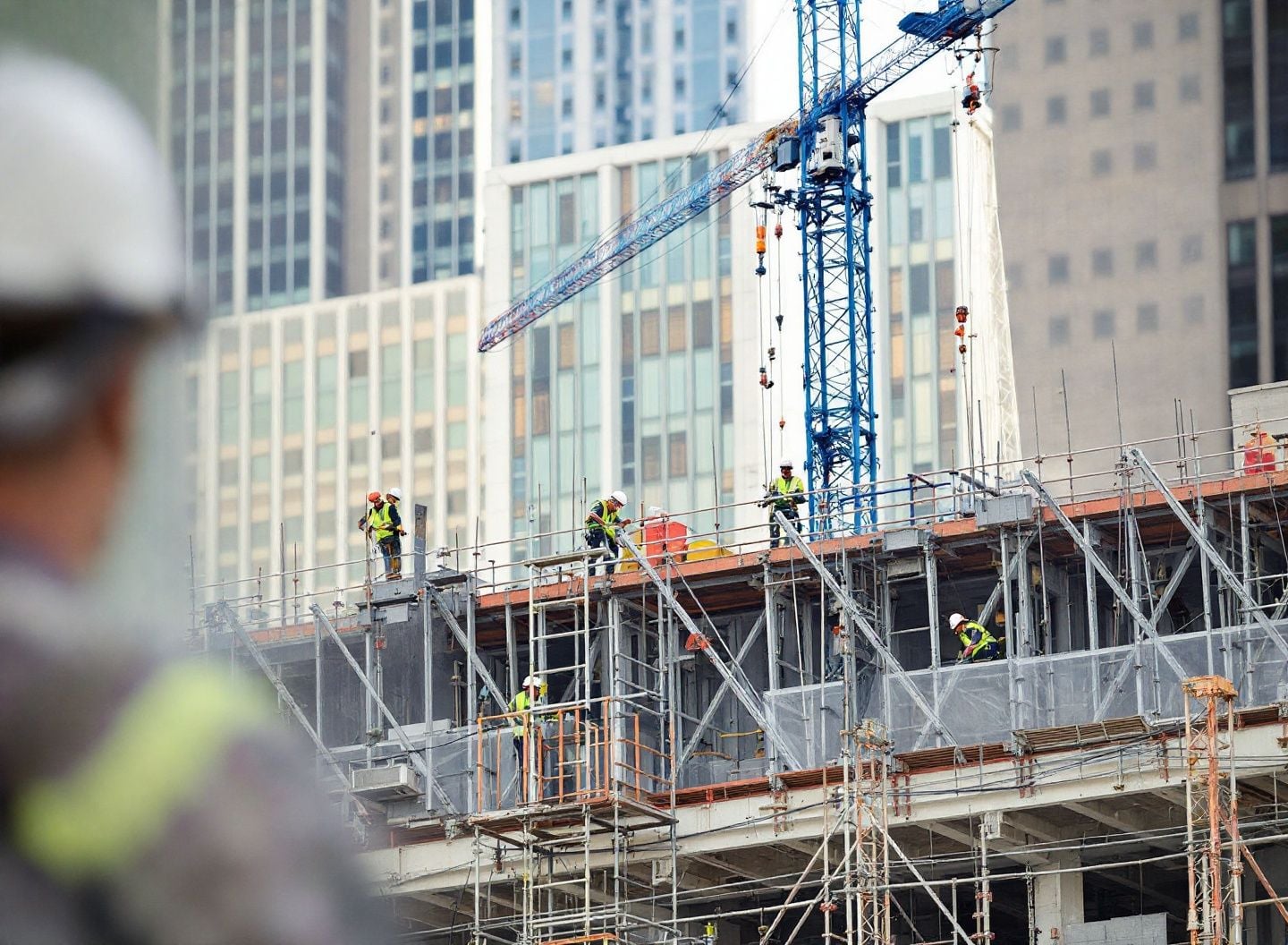
Losing a family member in a construction accident is a shattering experience. The grief is immediate and overwhelming. But in the weeks that follow, questions surface that families aren't prepared to answer: Who is responsible? What rights do we have? Can we hold the contractor or property owner accountable? In New York, the answer to that last question is often yes, and the legal framework protecting construction workers is among the strongest in the country. This article explains how height-related fatalities on construction sites are treated under New York law, who can bring a claim, and what families should know before they speak with an attorney.
Why Height Falls Are So Deadly on Construction Sites
Height-related falls are the leading cause of fatalities in the construction industry nationally and in New York. The physics are simple and brutal: the higher the fall, the less survivable it becomes. Workers in the trades most frequently exposed to elevation hazards include ironworkers, roofers, carpenters, painters, bricklayers, and laborers tasked with tasks like concrete formwork or curtain-wall installation. Each of these trades routinely requires workers to perform physically demanding work on scaffolds, ladders, open floors, rooftops, and elevated platforms.
The mechanism of injury in a fatal fall typically involves an abrupt deceleration when the body strikes a lower surface. Traumatic brain injury, spinal fracture, internal organ damage, and massive blood loss are common causes of death. Even a fall from a relatively modest height can be fatal depending on how the worker lands and what surface or object they strike. Falls through unguarded floor openings, collapses of improperly braced scaffolding, and failures of ladder footing are especially common fatal scenarios on New York job sites.
Federal safety standards recognize this danger explicitly. Under 29 CFR 1926.501, contractors must provide fall protection for workers exposed to fall hazards of six feet or more on construction sites. This regulation generated more than 6,300 citations nationwide in fiscal year 2024, making it the single most frequently cited OSHA standard in the country. That volume of citations tells a clear story: despite decades of established rules, fall protection failures remain widespread.
New York's Scaffold Law and Its Application to Fatal Accidents
New York Labor Law § 240, commonly called the Scaffold Law, is the cornerstone of construction worker protection in this state. It imposes an absolute duty on property owners, general contractors, and their agents to provide proper safety devices when workers are engaged in the erection, demolition, repairing, altering, painting, cleaning, or pointing of a building or structure. The required devices include scaffolding, hoists, stays, ladders, slings, hangers, blocks, pulleys, braces, irons, and ropes.
The word "absolute" matters. Under Labor Law § 240, if a safety device was absent, defective, or inadequate, and that failure caused or contributed to a fall, the owner and contractor can be held liable regardless of whether the worker was also partially at fault. This is sometimes described as strict liability in the elevation-hazard context. The worker's own conduct can only defeat a claim in very narrow circumstances, such as when the worker was the sole proximate cause of the accident because they deliberately ignored safety equipment that was fully available and adequate.
When a fall is fatal, the protections of Labor Law § 240 don't disappear. They transfer. The deceased worker's estate and qualifying family members can pursue those claims through a wrongful-death action. The law doesn't require that a worker survive to enforce it.
Regulatory Protections Under 12 NYCRR 23-1.7
Alongside the Scaffold Law, New York's Industrial Code provides specific operational safety rules for construction sites. The regulation 12 NYCRR 23-1.7 establishes detailed requirements for protecting workers from elevation-related hazards in construction, demolition, and excavation work. These rules address, among other things, the guarding of hazardous openings, protection from falling objects, and requirements for safety railings and planking on elevated work surfaces.
The relevance of 12 NYCRR 23-1.7 in a wrongful-death case is primarily through Labor Law Section 241(6), which requires that construction work be performed in a manner that provides reasonable and adequate protection and safety to workers. When a plaintiff can show that a specific provision of 12 NYCRR 23-1.7 was violated and that violation caused the fatal fall, it can support a claim under Section 241(6) even in cases where the Section 240 claim might face challenges. This gives families and their attorneys multiple legal theories to pursue simultaneously.
Wrongful-Death Claims in New York: Who Has the Right to Sue
New York's wrongful-death statute, found in EPTL Section 5-4.1, controls who can bring a claim when a construction worker dies. The action must be brought by the personal representative of the deceased's estate, meaning the executor or administrator named in the will or appointed by the Surrogate's Court. The personal representative acts on behalf of the estate and the distributees, which is the legal term for the people who are entitled to recover.
Distributees typically include a surviving spouse, children, and parents (where there is no surviving spouse or children). Other family members may qualify depending on the specific family circumstances and whether closer relatives survive. The key point is that it isn't the estate itself that ultimately receives the wrongful-death recovery, but the distributees, in proportion to the economic losses each suffered as a result of the death. A surviving spouse with young children, for example, will generally have substantial economic dependency losses that reflect years of lost financial support.
It's worth distinguishing wrongful-death damages from survival damages. Wrongful-death damages compensate the distributees for their own losses: lost financial support, lost services, and in limited circumstances, grief and loss of companionship (though New York law is more restrictive than many states on this point). Survival damages, by contrast, compensate the estate for losses the deceased worker suffered before death, including conscious pain and suffering experienced between the fall and the moment of death. Both types of claims can be brought together, and they serve different but complementary purposes.
The Time Limits Families Must Know
New York imposes strict deadlines on both wrongful-death and Labor Law claims. The wrongful-death statute of limitations is generally two years from the date of death. For Labor Law claims brought as part of a wrongful-death action, the same two-year period typically applies. These deadlines are not flexible. Missing them almost always bars the family from any recovery, regardless of how strong the underlying case might be.
There are additional complications when the property involved is owned by a municipality or government entity. Claims against government bodies in New York require the filing of a Notice of Claim within 90 days of the death in many circumstances. Government-owned construction projects are more common than people realize, from public housing to infrastructure work to school renovations. Families should not assume the standard two-year deadline applies without first confirming the ownership of the property where the fatal accident occurred.
What Families Should Do in the Immediate Aftermath
The days and weeks after a fatal construction accident are among the most chaotic imaginable. Families are managing grief, funeral arrangements, insurance questions, and sometimes immigration concerns, all at once. But certain steps taken early can significantly affect the strength of any future legal claim.
Hurt on a Construction Site?
Tell us what happened. A licensed New York attorney will review your case and call you — free, no obligation.
What Damages Are Available to the Family
The damages recoverable in a fatal construction accident case in New York vary with the specific facts of the family's situation. Courts examine the age of the deceased, their earning history and expected future earnings, the number and ages of their dependents, and the nature of the services they provided to their family beyond just financial income.
Lost financial support is usually the largest element of wrongful-death damages. Courts calculate what the deceased worker would likely have earned over the remainder of their working life, accounting for career advancement, inflation, and other factors, then reduce that to its present value. A construction worker in the middle of a productive career, supporting young children, represents an enormous financial loss that these calculations attempt to measure.
Lost services are also compensable. A construction worker who maintained the family home, cared for children, or provided eldercare to a parent was providing services that now must be replaced or go without. Those losses have real value. If the worker experienced conscious pain and suffering between the fall and death, those damages belong to the estate through a survival claim and can be pursued alongside the wrongful-death recovery.
Workers' compensation is a separate system that typically pays benefits to surviving dependents regardless of fault. But workers' compensation benefits are limited, and they don't preclude a separate civil claim against the property owner, general contractor, or third parties. In fact, pursuing both simultaneously is common. An attorney can explain how the two systems interact and how any workers' compensation lien would be handled.
The Role of Third-Party Liability
Many families don't realize that the employer is rarely the only party responsible in a fatal construction fall. New York's Labor Laws were specifically designed to impose liability on property owners and general contractors, not just employers. Workers' compensation insulates the employer from a direct civil lawsuit in most cases, but it doesn't protect the owner of the building, the developer who hired the general contractor, or the general contractor who managed the site.
This is where Labor Law § 240 becomes particularly powerful. Even if the deceased worker was employed by a subcontractor and the subcontractor did everything wrong, the general contractor and property owner can still be held responsible under the Scaffold Law because the duty to provide safe elevation equipment is non-delegable. That means the owner and GC cannot escape liability by pointing to the subcontractor or to the worker's own employer. The obligation rests with them, period.
Equipment manufacturers, scaffold rental companies, and safety equipment suppliers may also carry liability if a product defect contributed to the fall. These product liability claims can proceed alongside the Labor Law claims and are not mutually exclusive. Every potential defendant should be identified and evaluated early, before the statute of limitations creates irreversible problems.
Undocumented Workers and Their Families
A question that comes up often in New York construction fatality cases is whether immigration status affects the family's rights. The short answer is that it doesn't strip the family of the right to bring a claim. Labor Law § 240 doesn't distinguish between documented and undocumented workers. New York courts have long recognized that the protections of the Labor Laws apply to all workers on covered construction projects, regardless of immigration status.
That said, the damages calculation in a wrongful-death case may be affected by immigration status in ways that are contested and fact-specific. Families in this situation should speak with an attorney who has specific experience handling cases involving undocumented workers. The legal and practical issues are real, and they deserve a candid, informed assessment.
Choosing the Right Legal Help
Fatal construction accident cases in New York are not routine personal injury matters. They involve specialized knowledge of the Labor Laws, the Industrial Code, workers' compensation law, and wrongful-death procedure. They often require the early retention of engineering experts, safety consultants, and vocational economists. They involve coordinating with the Surrogate's Court to establish an estate if one doesn't already exist. Families deserve attorneys who handle these cases regularly, not as an occasional side matter.
NY Construction Advocate is an educational resource designed to help families understand their rights after a construction accident. If your family has lost someone in a height-related fall on a New York construction site, the first step is getting clear information about the law and your options. You can reach out to ask questions and connect with legal resources suited to your situation. There's no obligation, and there's no reason to face this alone.
Attorney Advertising. Prior results do not guarantee a similar outcome. This article is for general informational purposes only and does not constitute legal advice. NY Construction Advocate connects injured workers with experienced New York construction accident attorneys.
Frequently Asked Questions
Who can file a wrongful-death lawsuit after a fatal construction fall in New York?▼
Does Labor Law 240 apply even when the worker was killed, not just injured?▼
How long does a family have to file a lawsuit after a fatal construction fall?▼
Can the family recover compensation if the worker was receiving workers' compensation benefits?▼
What if the construction worker was undocumented? Can the family still bring a claim?▼
What types of compensation can the family seek in a fatal construction fall case?▼
What is the difference between a Labor Law 240 claim and a negligence claim in a fatal fall case?▼
Get a Free Case Review
Find out if you have a claim under New York Labor Law. A licensed NY attorney will review your case and call you back.