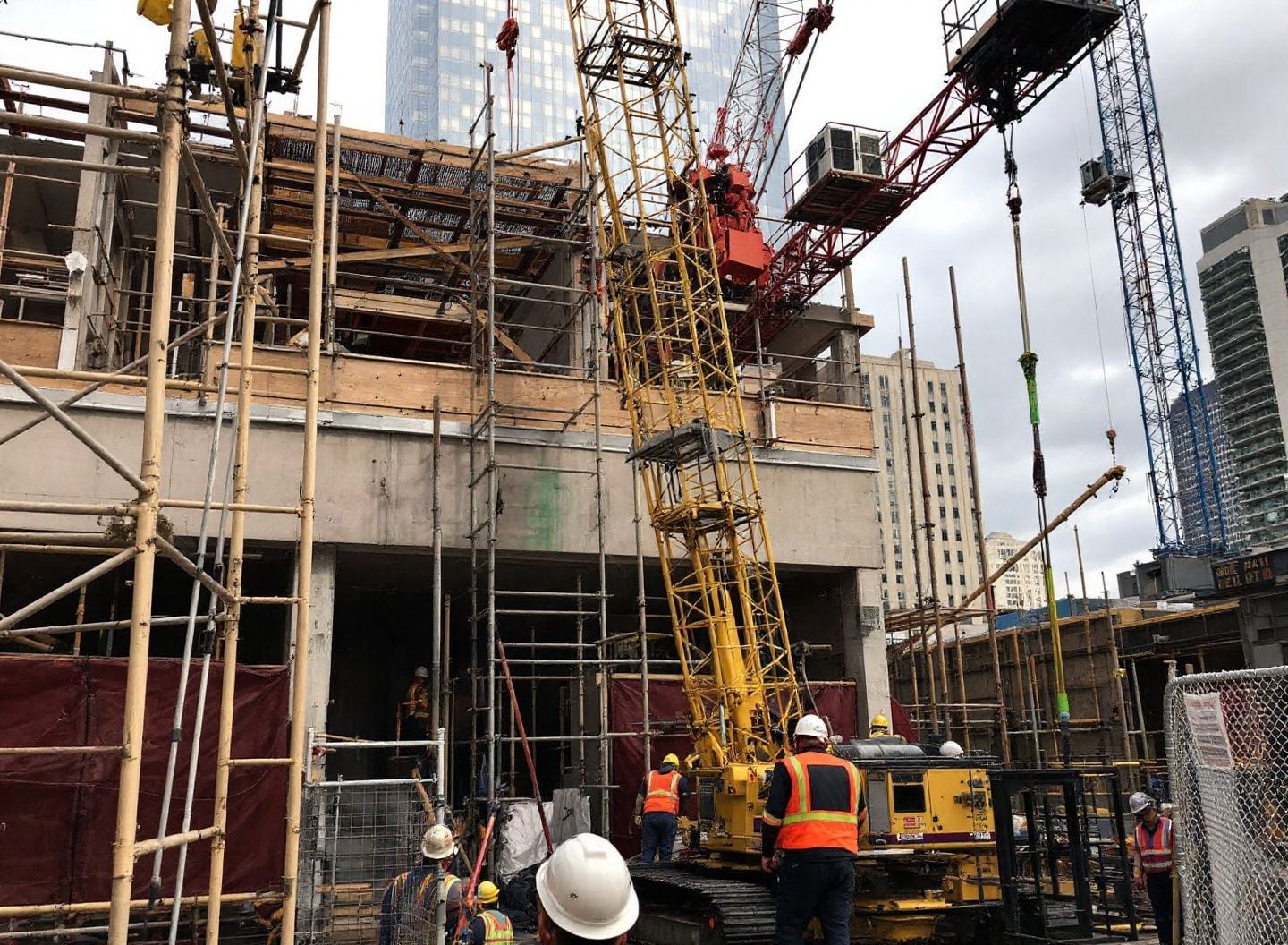
Trench work is among the most dangerous tasks on any New York construction site. A cubic yard of soil can weigh close to a ton, and when a trench wall gives way, it does so without warning. Workers may be buried in seconds, leaving no realistic chance of self-rescue. These accidents aren't rare anomalies. They're a predictable consequence of inadequate shoring, improper sloping, and supervisory pressure to skip safety steps in the name of schedule. For the families left behind, the immediate weeks after a fatal trench collapse are a blur of grief, medical bills, funeral costs, and financial panic. What many families don't know is that New York law gives them several distinct legal avenues, and those avenues can be pursued simultaneously.
How Trench Collapses Happen: The Mechanism Behind the Fatality
Excavation and trenching accidents follow a recognizable pattern. A trench is dug for pipe installation, foundation work, or utility access. The contractor or site supervisor skips required protective systems, whether that's a trench box, sloping, shoring, or some combination of all three. Soil conditions shift, vibrations from nearby machinery loosen the walls, or unexpected water infiltration saturates the ground. Then a wall fails.
Workers inside the trench are struck and buried. The weight of even a partial collapse is enough to cause traumatic asphyxia, crush injuries to the chest and abdomen, or fatal head trauma. Coworkers who attempt rescue without proper equipment face the same risk. By the time emergency responders arrive with specialized equipment, the outcome is often already determined. The trade-specific risk here falls hardest on laborers, pipefitters, plumbers, and utility workers who spend the bulk of their workday below grade. These workers are also frequently newer to a site, less likely to have the authority to refuse an unsafe assignment, and more likely to be employed through subcontracting chains that create confusion about who is actually responsible for site safety.
The Regulatory Framework: Federal and State Rules That Were Likely Violated
Before examining the legal claims, it helps to understand what rules govern trench safety. Those rules exist at both the federal and state level, and violations of them form the factual backbone of most legal claims after a fatal excavation accident.
At the federal level, 29 CFR 1926.501 addresses fall protection requirements on construction sites and is consistently one of the most-cited OSHA standards nationwide. In fiscal year 2024, it generated 6,307 citations nationwide. While fall protection is sometimes thought of as a rooftop concern, trenches create vertical drop hazards and cave-in exposure that fall squarely within this regulatory framework. Excavation-specific OSHA rules (Subpart P, 29 CFR 1926.650 through 1926.652) sit alongside 29 CFR 1926.501 and together define the federal baseline for trench safety: protective systems, competent person inspections, and access and egress requirements.
At the state level, New York's Industrial Code Rule 12 NYCRR 23-1.7 sets specific safety practices for persons employed in construction, demolition, and excavation work. This regulation is significant because it implements Labor Law Section 241(6), and violations of 12 NYCRR 23-1.7 can support a negligence claim under that statute. Where the regulation is specific enough to constitute a concrete standard of conduct, a violation is treated as negligence per se, meaning the family doesn't have to argue over whether the standard was reasonable. The legislature already decided it was.
Workers' Compensation Death Benefits: The First Layer of Recovery
In New York, most construction workers are covered by workers' compensation insurance. When a covered worker dies on the job, the family is entitled to death benefits regardless of fault. You don't have to prove the employer was negligent. You don't have to show a safety violation. The death simply has to arise out of and in the course of employment, which a fatal trench collapse almost always does.
Workers' comp death benefits typically cover a portion of the deceased worker's average weekly wage, paid to surviving dependents for a defined period. The program also covers reasonable funeral expenses up to a statutory cap. These benefits provide immediate, predictable support while other legal claims are still being developed. That matters a great deal to a family facing mortgage payments and household bills in the weeks after a tragedy.
The important trade-off is that workers' compensation is the exclusive remedy against the employer. In most cases, the family cannot also sue the direct employer in civil court. That exclusivity rule, though, does not extend to parties other than the employer, and that's where the more significant legal options often lie.
Wrongful Death Claims in New York: What the Statute Actually Allows
New York's wrongful death statute allows certain family members to recover damages when a death is caused by a wrongful act, neglect, or default. The claim is brought by the personal representative of the estate, and any recovery is distributed to the distributees, typically a spouse and children, or parents if there are no children.
New York's wrongful death law has historically been narrower than the laws in many other states. Recovery has traditionally been limited to economic losses: the financial support the deceased would have provided to dependents over their expected working life, minus personal consumption. Non-economic losses like grief and loss of companionship have not been recoverable under the wrongful death statute itself, though they may be recoverable in a separate survival action for the pain and suffering the worker experienced before death. There is active legislative discussion in New York about expanding wrongful death recovery, so families should discuss the current state of the law with an attorney at the time they bring a claim.
The statute of limitations for wrongful death claims in New York is generally two years from the date of death. That window sounds generous, but complex construction cases require investigation, expert retention, site documentation, and identification of all responsible parties. Families who wait too long may find critical evidence has disappeared.
Third-Party Claims: Where Labor Law 240 and 241(6) Come In
The most significant legal tool available to the families of construction workers killed in New York is the New York Labor Law. These statutes impose non-delegable duties on property owners and general contractors, meaning those parties can't escape liability simply by pointing to a subcontractor as the party that actually performed the dangerous work.
Labor Law § 240, often called the Scaffold Law, requires contractors, owners, and their agents to furnish or erect scaffolding, hoists, ladders, and protective devices during building work. While § 240 is most frequently invoked in fall cases involving elevated heights, New York courts have also applied it to certain trench and excavation scenarios involving the failure to protect workers from gravity-related hazards. Whether a specific trench collapse triggers § 240 depends on the facts and how the collapse is characterized. An attorney experienced in New York construction law will analyze whether the incident involved a gravity-related risk of the type the statute was designed to address.
Labor Law § 241(6) is often the more direct fit for excavation fatalities. That section requires all areas where construction is being performed to be maintained and operated in a manner consistent with the New York Industrial Code. When 12 NYCRR 23-1.7 is violated, a § 241(6) claim can be built on that violation. Importantly, § 241(6) is also a strict liability statute against owners and general contractors, though comparative negligence can reduce a recovery. These third-party claims run alongside workers' comp. The family can collect workers' comp death benefits and still pursue a Labor Law lawsuit against the property owner, general contractor, or other responsible parties.
Hurt on a Construction Site?
Tell us what happened. A licensed New York attorney will review your case and call you — free, no obligation.
Identifying Every Responsible Party
Construction projects in New York typically involve layered chains of responsibility. A property owner hires a developer or general contractor. The general contractor hires subcontractors. Each subcontractor may bring its own workers or hire further sub-tiers. In a fatal trench collapse, multiple parties may share responsibility.
Identifying all of these parties early, before contracts are lost and site records disappear, is one of the most important early steps in building the family's case. New York allows claims against multiple defendants, and apportioning liability among them is the court's job, not the family's.
What Damages Can a Family Seek?
In a combined wrongful death and Labor Law claim, the recoverable damages vary with the specific facts of the case. General categories include the economic support the worker would have provided over a projected working life, the loss of parental guidance and nurturing for surviving children, conscious pain and suffering experienced before death (through the survival action), and funeral and burial expenses. The overall value of the claim depends on the worker's age, earnings history, number and age of dependents, and the degree to which each defendant's conduct contributed to the death. There are no guarantees in litigation, and no attorney can promise a specific result. What is certain is that families who don't bring claims at all leave legitimate legal rights completely unexplored.
Practical Steps for Families in the Immediate Aftermath
The weeks after a fatal trench collapse are disorienting, but a few practical steps can make a real difference in preserving legal options.
Construction site evidence disappears quickly. Contractors grade over trench sites, equipment is moved or repaired, and electronic site logs are overwritten. A prompt legal consultation can result in a preservation letter being sent to all responsible parties, which creates a legal obligation to retain relevant evidence.
Why These Cases Require Construction-Specific Legal Knowledge
New York's Labor Law framework, combined with the workers' comp exclusivity rules and the wrongful death statute, creates an interplay that's genuinely complex. Getting it right requires an attorney who understands not just personal injury law but the specific structure of construction projects, the regulatory standards under 29 CFR 1926.501 and 12 NYCRR 23-1.7, and how New York courts interpret Labor Law § 240 and § 241(6) in excavation contexts. Families deserve representation from someone who works these cases regularly, not as an occasional matter, but as a core focus. The stakes are too high for a learning curve.
Attorney Advertising. Prior results do not guarantee a similar outcome. This article is for general informational purposes only and does not constitute legal advice. NY Construction Advocate connects injured workers with experienced New York construction accident attorneys.
Frequently Asked Questions
Can a family collect workers' compensation death benefits and still sue the property owner or general contractor?▼
Does Labor Law § 240 apply to trench collapses, or only to falls from height?▼
How long does the family have to file a wrongful death lawsuit in New York?▼
What if the worker was undocumented? Does that affect the family's legal rights?▼
Who can bring the wrongful death claim, and who receives any recovery?▼
What role does OSHA's investigation play in a family's civil lawsuit?▼
Get a Free Case Review
Find out if you have a claim under New York Labor Law. A licensed NY attorney will review your case and call you back.