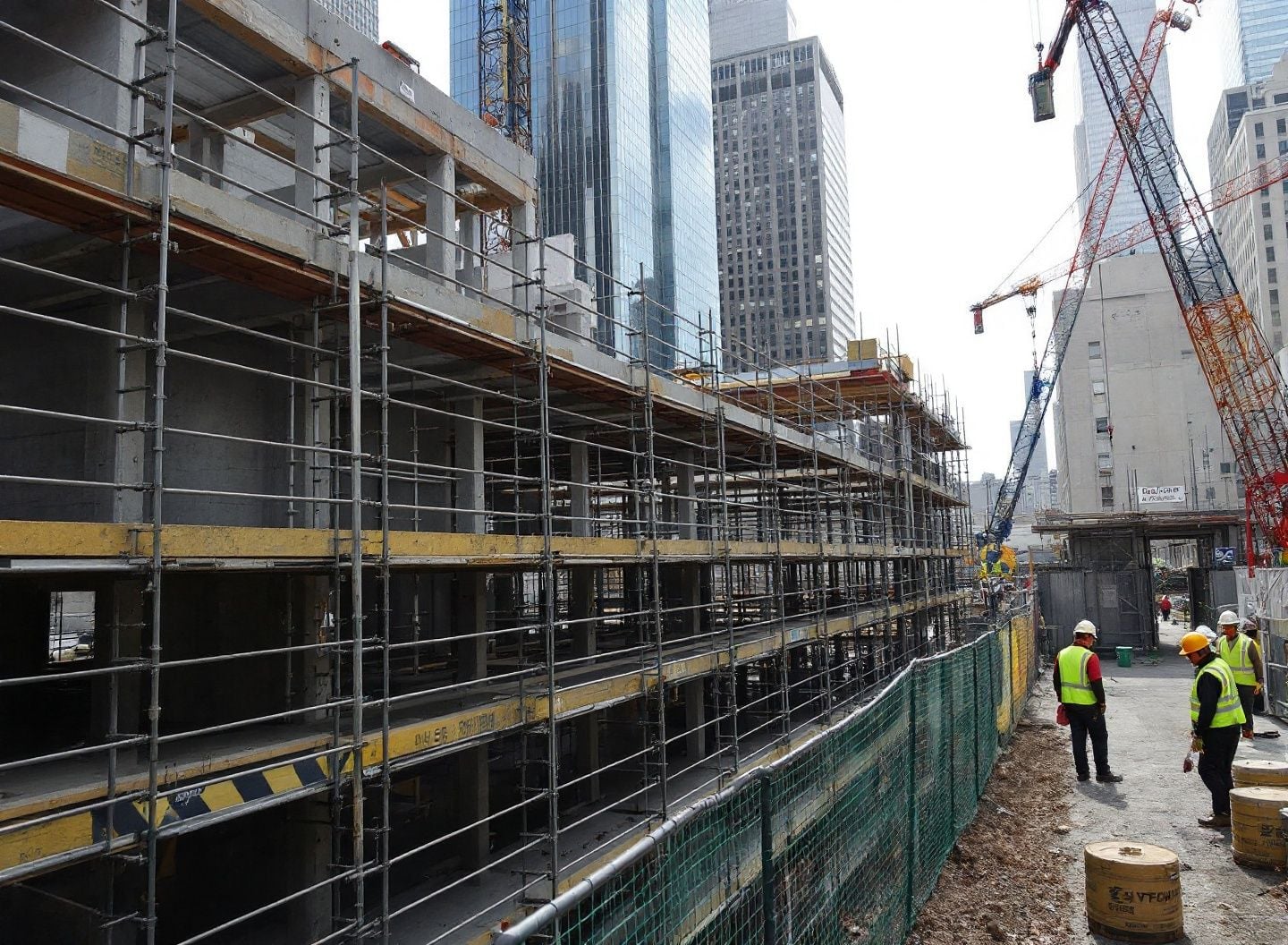
A grinding wheel sparks against steel. Concrete is jackhammered above an open floor. A nail gun misfires. In each of these moments, tiny projectiles travel at speeds that can penetrate the human eye in fractions of a second. Eye and face injuries from flying particles and debris are among the most serious non-fatal injuries that construction workers sustain, yet they remain chronically underreported and widely misunderstood from a legal standpoint. If you've been hurt on a New York construction site because you weren't given proper eye or face protection, you may have rights under state law that go well beyond a standard workers' compensation claim.
How Flying-Debris Injuries Actually Happen
The mechanism of a flying-particle eye injury is deceptively simple. A hard object, even a microscopic fragment of metal, stone, wood, or concrete, is displaced by a tool, a machine, or another worker's activity. It travels through the air and strikes an unprotected or inadequately protected face. The eye is especially vulnerable because it lacks the natural toughening of skin. The cornea can be scratched by particles smaller than a grain of sand. Larger fragments can penetrate the globe itself, causing internal bleeding, retinal detachment, or complete vision loss. Burns from welding flash are a related hazard that affects the eye in a different way, but with equally serious consequences.
Trade-specific risks matter here. Ironworkers grinding or cutting structural steel produce metal fragments that travel outward in an arc. Concrete workers using chipping hammers or saws generate chips and silica-laden dust. Carpenters using pneumatic nail guns face the risk of nail ricochets and wood splinters. Demolition crews face one of the highest exposures of all: when a wall comes down or a ceiling is jackhammered, debris falls and flies in multiple directions simultaneously. None of these workers should be on those sites without appropriate eye and face protection, but in practice they often are, either because gear was never issued, was the wrong type, or was so worn out it offered no real protection.
What 12 NYCRR 23-1.8 Actually Requires
New York's Industrial Code contains a specific regulation dedicated to personal protective equipment for the eyes and face. That regulation is 12 NYCRR 23-1.8, and it sits within the broader framework of 12 NYCRR 23-1.7, which establishes general safety rules to protect persons employed in construction, demolition, or excavation work. Together, these provisions implement Labor Law Section 241(6) by defining the specific safety practices that must be followed on covered sites.
Under 12 NYCRR 23-1.8, employers and site owners must provide suitable eye protection to workers whenever operations create a risk of injury from flying particles, dust, or harmful light or radiation. The regulation isn't vague. It calls for protection that is appropriate to the specific hazard. Safety glasses alone won't do the job when debris can enter from the sides; impact-rated goggles with side shields are required in many grinding and chipping operations. For welding operations, the standard goes further, requiring shields or helmets rated to protect against ultraviolet and infrared radiation. Face shields are required when the risk extends beyond the eye itself to the full face.
The word 'suitable' in the regulation carries real legal weight. It's not enough for a contractor to hand a worker a pair of cheap safety glasses and call it compliance. If the glasses don't meet the ANSI impact standard for the task being performed, if they're cracked, or if the hazard requires full-face protection and only partial protection was provided, the employer has failed to comply with the code. Courts in New York have recognized that the specificity of the Industrial Code regulations is precisely what gives injured workers a viable claim under Labor Law Section 241(6).
Labor Law Section 241(6): The Legal Framework for Your Claim
Labor Law § 241(6) imposes a non-delegable duty on owners and general contractors to provide reasonable and adequate protection and safety to workers on construction sites. Unlike Labor Law 240, which focuses on gravity-related accidents, Section 241(6) covers a wide range of on-site hazards, including flying debris. The key to a successful claim under this statute is linking the injury to a violation of a specific, concrete safety regulation, not just a general claim of negligence.
That's where the Industrial Code comes in. When a worker suffers an eye injury because proper protection wasn't provided, and the employer or owner was violating 12 NYCRR 23-1.8 at the time, those two facts together can form the foundation of a Labor Law § 241(6) claim. The violation of the specific regulatory standard is treated as some evidence of negligence. The injured worker doesn't need to prove that the defendant was generally careless; they need to show that a specific, mandatory rule was broken and that the violation was a proximate cause of the injury.
One important point: Labor Law § 241(6) applies to construction, demolition, and excavation work. It covers workers employed on those sites, and it applies even when the worker is an employee of a subcontractor rather than the general contractor or owner. The non-delegable duty means the owner and general contractor can't escape liability simply by arguing that the subcontractor was responsible for safety on a particular task. They had a duty, and if they failed to ensure compliance with the code, they can be held liable.
The Role of Comparative Fault and the 'Sole Proximate Cause' Defense
Hurt on a Construction Site?
Tell us what happened. A licensed New York attorney will review your case and call you — free, no obligation.
Defendants in these cases often argue that the worker was at fault for not wearing the protective equipment that was available. New York follows a comparative fault rule, so a worker's own negligence can reduce, though not eliminate, recovery in a Section 241(6) case. But this defense has limits. If the employer never provided proper eye protection in the first place, or if the only gear available was inadequate for the task, the worker cannot fairly be blamed for the injury. The defense only has traction when suitable equipment was genuinely available and the worker chose not to use it without any reasonable excuse.
Defendants also sometimes raise what's called the 'sole proximate cause' argument, claiming that the worker's own conduct was the only true cause of the accident and that no regulatory violation contributed. This is a heavy burden for a defendant to carry, and courts scrutinize it carefully. If the employer violated 12 NYCRR 23-1.8 by failing to provide appropriate protection, it's very difficult to argue that the employer's violation played no role at all in the outcome.
Where Federal Standards Fit In
Federal OSHA regulations also govern construction site safety, and they overlap with New York's Industrial Code in meaningful ways. Most people associate OSHA citations with fall protection. In fact, 29 CFR 1926.501, OSHA's fall protection standard, consistently ranks among the most cited regulations in construction nationally. In federal fiscal year 2024, there were 6,307 citations under 29 CFR 1926.501 nationwide, making falls the single most cited category. That statistic illustrates just how widespread safety violations are across the industry.
Eye and face protection violations under the federal eye protection standard, 29 CFR 1926.102, are also cited regularly, though they receive far less public attention than fall hazards. For purposes of a New York Labor Law § 241(6) claim, federal OSHA violations don't automatically create liability the way a violation of the state Industrial Code does. However, evidence of OSHA citations can be introduced to help establish that a dangerous condition existed and that the responsible parties were aware of it. It's one more piece of evidence in a case that often depends on building a detailed picture of what the worksite looked like before the injury.
Documenting an Eye or Face Injury from Construction Debris
If you've suffered an eye or face injury from flying debris on a construction site, what you do in the hours and days after the accident can significantly affect any legal claim you later bring. Seek medical attention immediately, even if the injury seems minor. Eye injuries often appear less serious than they are at first and can worsen rapidly. Tell the medical provider exactly what happened and what you were doing at the time of injury. Their notes become part of a medical record that may later be used to establish causation.
Report the accident to your supervisor and request that an incident report be completed. If possible, photograph the area where the accident occurred, the tool or equipment involved, and the protective gear (or lack of it) that was present. Note whether any eye protection was offered to you that day and what type it was. If coworkers witnessed the accident, their accounts can be valuable. All of this documentation helps establish the conditions on site and whether the requirements of 12 NYCRR 23-1.8 were actually being followed.
Why the Value of These Claims Varies So Widely
Eye and face injuries range enormously in severity. A corneal abrasion that heals fully in a week is a very different injury from a penetrating trauma that results in permanent vision loss in one or both eyes. The value of a legal claim reflects that range. Factors that affect the recovery in a flying-debris case include the nature and permanence of the injury, whether the worker can return to the same trade, the extent of medical treatment required (including surgery and ongoing care), and the degree to which the injury affects the worker's quality of life and ability to work. There's no formula, and no honest attorney will promise a specific outcome. What an attorney can do is build the strongest possible case by documenting the regulatory violations, the severity of the injury, and the full scope of economic and personal losses.
Taking These Injuries Seriously
Construction workers often minimize eye injuries because they've been conditioned to see them as part of the job. They're not. New York law exists precisely because the legislature recognized that workers can't always protect themselves from hazards that their employers control. The requirement to provide suitable eye protection under 12 NYCRR 23-1.8 isn't a suggestion. It's a mandatory legal obligation, and when employers and owners ignore it, they're not just cutting corners on safety. They're exposing workers to injuries that can end careers and permanently alter lives. If that happened to you, understanding your rights is the first step toward holding the right people accountable.
Attorney Advertising. Prior results do not guarantee a similar outcome. This article is for general informational purposes only and does not constitute legal advice. NY Construction Advocate connects injured workers with experienced New York construction accident attorneys.
Frequently Asked Questions
What specific types of eye protection does 12 NYCRR 23-1.8 require on construction sites?▼
Can I sue a property owner or general contractor for my eye injury if my own employer was responsible for safety on the job?▼
Does a workers' compensation claim prevent me from bringing a Labor Law 241(6) lawsuit?▼
What if I wasn't wearing the eye protection that was available on site? Does that destroy my claim?▼
How long do I have to bring a Labor Law 241(6) claim in New York after a construction site eye injury?▼
What evidence is most important in a flying-debris eye injury case under New York law?▼
Get a Free Case Review
Find out if you have a claim under New York Labor Law. A licensed NY attorney will review your case and call you back.