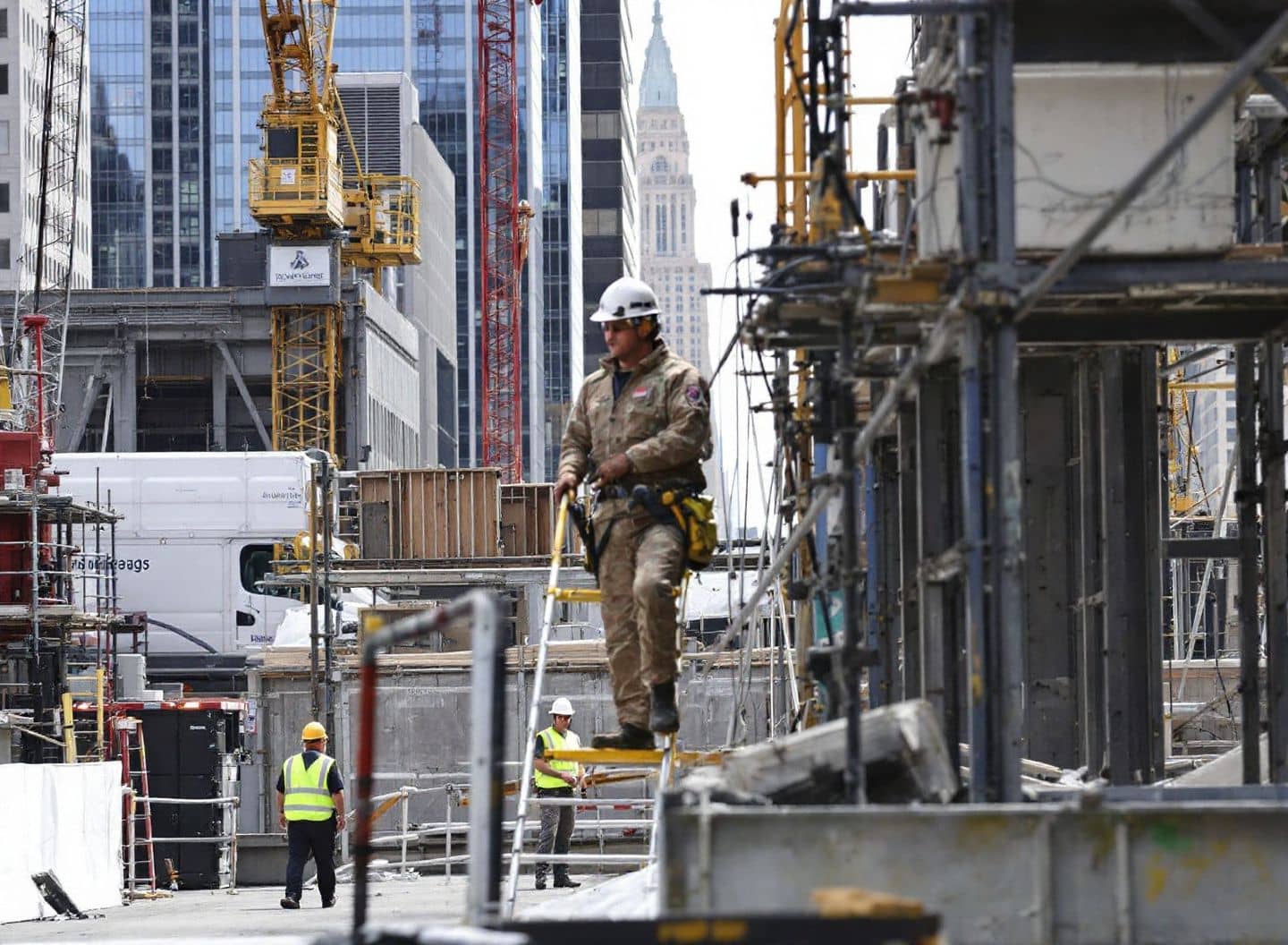
If you've been hurt on a New York construction site, the clock starts ticking the moment you hit the ground. Superintendents call cleanup crews. Scaffolding gets repositioned or dismantled. Ladders get tagged and removed. Safety cones appear where none existed before. By the time an attorney gets involved, the physical scene that caused your injury can look completely different from what it was when you got hurt. That's not an accident. It's routine practice on busy job sites, and it can seriously damage your ability to pursue a claim under New York's construction safety laws. Understanding what to document, why it matters legally, and how to do it correctly can make the difference between a strong claim and a case built on nothing but your word.
Why Construction Sites Change So Quickly After an Accident
Construction sites are dynamic workplaces. Multiple subcontractors, heavy equipment operators, delivery crews, and project managers are all moving through the same space on any given day. When an accident happens, work doesn't stop for long. General contractors have schedules and deadlines. Site foremen are trained to report injuries through internal channels, but they're also focused on getting the job moving again. That means hazardous conditions, missing guardrails, improperly secured scaffolding, or broken ladder rungs can be corrected within hours of an injury. Photographs taken by a project safety officer may not show what the site looked like at the moment of the accident. Witness memories fade. Materials get moved or replaced.
This is why independent documentation matters so much. Under Labor Law § 240, owners, general contractors, and their agents have an absolute duty to provide workers with proper scaffolding, hoists, ladders, and other safety devices when performing covered construction work. That duty doesn't disappear because the scaffold was repositioned after you fell. But proving the scaffold was improperly erected or inadequately secured requires evidence that reflects conditions at the time of the accident, not conditions as they appeared an hour later.
The Mechanism of Injury and Why It Must Be Captured Immediately
Different trades face different hazards, and those hazards produce injuries through specific mechanisms that need to be documented with precision. A roofer who falls from an unsecured plank experiences a gravity-related force injury that's directly tied to the physical condition of that plank and the system it was part of. An ironworker struck by a falling object suffers what lawyers call a 'falling object' injury, which requires proof that the object was being hoisted or was stored above the worker without proper protection. An electrician who falls from a ladder that wasn't braced or held faces a different set of facts from a carpenter who tumbled through an unguarded floor opening.
Each of these mechanisms leaves physical evidence. The plank shows rot, improper thickness, or missing cleats. The falling object tells a story about where it was stored and what, if any, barricading existed below the hoisting area. The ladder shows whether non-slip feet were attached, whether the proper angle was maintained, or whether someone had removed the safety feet altogether. Under 12 NYCRR 23-1.5, New York's industrial code establishes specific safety standards that construction workers must be provided during construction, demolition, and excavation work. When those standards are violated, evidence of the violation is frequently physical and visible. Don't assume someone else is going to preserve it.
Photograph Everything You Physically Can
If you're physically able to take photographs after an accident, do it. If you're not, ask a coworker you trust. A smartphone is enough. Here's what you need to capture, specifically.
Time-stamp your photos if your phone does it automatically. Make sure location services are on so the metadata embeds where the photos were taken. Send copies to a personal email address immediately so they're stored somewhere other than your work phone or a device that could be confiscated.
Getting Witness Information Before People Scatter
Workers on large construction sites often don't know each other by name. Subcontractors rotate in and out. Temporary laborers work for staffing agencies. By the end of the day, the person who watched you fall from a scaffold may be working on a different floor, and by the end of the week, they may be on a different job site entirely. Get names and contact information immediately.
Ask directly: 'Can I get your name and a number in case I need to reach you later?' Most workers understand. They've seen accidents before. Write names down on paper if you don't have your phone. Note the trade the person works in, the employer they work for if you know it, and roughly where they were standing when the accident happened. A witness who saw the scaffold buckle from 20 feet away is valuable. A witness who was standing right next to you is critical. Both need to be identified and documented.
Don't rely on the contractor to provide witness lists later. There's no legal obligation for a general contractor to hand you a list of everyone who saw your accident. What gets included in an official incident report is entirely within the contractor's control unless you've independently documented who was there.
The Incident Report: What It Is and What It Isn't
Hurt on a Construction Site?
Tell us what happened. A licensed New York attorney will review your case and call you — free, no obligation.
Most general contractors are required to document workplace accidents. Federal regulations under 29 CFR 1926.20 establish safety program requirements for construction employers, including provisions related to accident prevention and safety records. New York has its own overlapping requirements. When an injury occurs on a covered job site, some form of incident report typically gets filled out by a foreman or safety officer.
Here's the problem: that report is written by the contractor, not by you. It reflects the contractor's initial characterization of what happened. It may attribute the accident to worker error. It may describe the equipment as being in proper working order. It may omit witnesses who were present or describe the scene in terms that are favorable to the employer's legal position. You should request a copy of any incident report generated after your accident, but you shouldn't treat it as a neutral record. It's one document in a larger evidentiary picture, and it needs to be read critically.
What you can do is write your own account. Do it as soon as possible after the accident, while the details are fresh. Write down exactly what you were doing, what equipment you were using, where you were positioned, what happened in the moments before the injury, and what you observed about the condition of the equipment or the site. Note whether you'd raised any prior safety concerns, whether you'd been instructed to use certain equipment, and whether a supervisor was present. This personal account isn't a legal document, but it can be enormously useful to an attorney who's trying to reconstruct what happened weeks or months later.
Preserving Evidence Beyond the Physical Scene
Physical documentation of the site is essential, but it's not the only form of evidence that matters. Construction projects generate enormous paper trails: subcontracts, safety inspection logs, tool-box talk records, equipment maintenance records, daily site logs, and sometimes surveillance footage. Many of these records are required to be kept under federal and state law. The challenge is that they can be purged, altered, or 'lost' if no one demands their preservation quickly.
When you retain an attorney after a construction accident, one of the first things a competent attorney will do is send a preservation letter to the general contractor and property owner demanding that all records related to the accident and the conditions on the site be preserved. This includes video footage from security cameras, which may have captured the accident itself or may show the condition of the area immediately before and after. On large commercial projects in New York City, cameras are often present on multiple floors. That footage typically gets overwritten within days unless a legal hold is in place.
The same applies to personnel records showing who was on site that day, equipment maintenance logs that might reveal known defects, and any internal communications about safety concerns at the location. None of this evidence will preserve itself. It requires prompt legal action.
How New York's Labor Laws Shape What Evidence You Need
New York's construction safety statutes create specific legal duties that define what evidence is most important for your claim. Labor Law § 240 imposes absolute liability on owners and general contractors for elevation-related injuries, meaning that if a worker falls because a scaffold or ladder wasn't properly secured, the owner and contractor are liable regardless of whether they personally installed the equipment. But 'absolute' doesn't mean automatic. You still have to prove that the safety device failed or was absent and that this failure caused your injury.
Separately, 12 NYCRR 23-1.5 establishes the general framework for worker protection in construction, demolition, and excavation, setting out the specific practices that employers must follow to keep workers safe. Claims under Labor Law § 241(6) rely on violations of these specific industrial code provisions. The more detailed and specific your documentation of the site conditions, the more effectively these code provisions can be applied to your case. A photograph showing a scaffold plank that's visibly thinner than the minimum required thickness, for instance, is direct evidence of a 12 NYCRR 23-1.5 violation. A general description of 'a plank that looked thin' is significantly weaker.
The value of a construction accident claim varies with the severity of the injury, the extent of lost earning capacity, and the strength of the evidence establishing liability. Strong documentation doesn't guarantee any outcome, but weak documentation substantially limits what your attorney can do for you.
Practical Steps to Take Immediately After a Construction Accident
There's no substitute for acting quickly. New York's statutes of limitations set firm deadlines for filing construction accident claims, and some government-related projects require notice within a much shorter period. But even before the legal deadline becomes an issue, evidence has its own deadline: the moment the site gets cleaned up.
Attorney Advertising. Prior results do not guarantee a similar outcome. This article is for general informational purposes only and does not constitute legal advice. NY Construction Advocate connects injured workers with experienced New York construction accident attorneys.
Primary sources
Frequently Asked Questions
What should I photograph immediately after a construction accident in New York?▼
Can the general contractor's incident report be used against me in a Labor Law § 240 claim?▼
How does 12 NYCRR 23-1.5 relate to my construction accident claim?▼
What is a preservation letter and why does it matter after a construction accident?▼
What if I wasn't able to document the scene because I was taken to the hospital immediately?▼
Does 29 CFR 1926.20 apply to my New York construction accident case?▼
Get a Free Case Review
Find out if you have a claim under New York Labor Law. A licensed NY attorney will review your case and call you back.