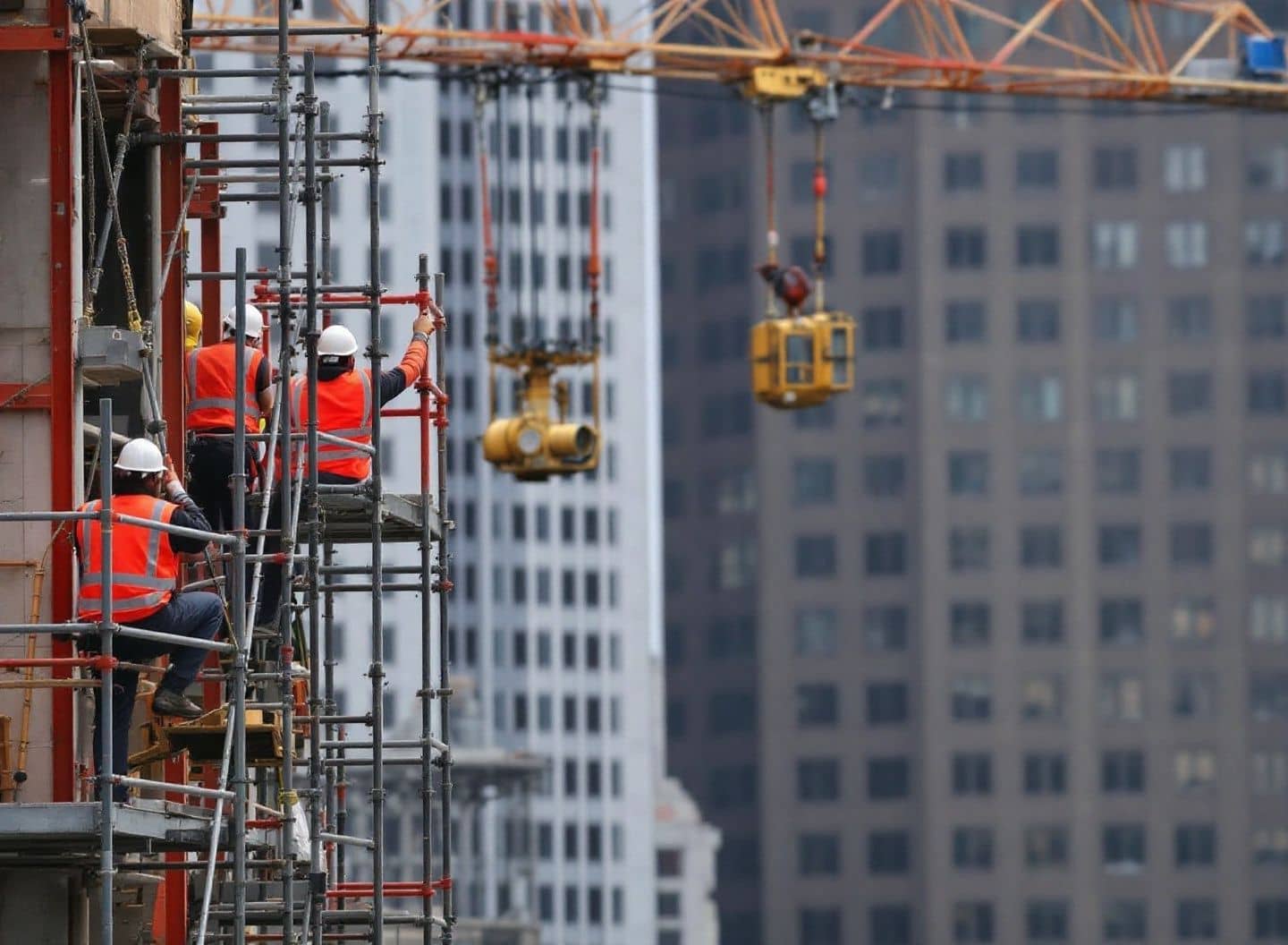
If you were hurt in a fall on a New York construction site, two statutes are probably more important to your case than anything else: Labor Law § 240 and Labor Law § 241(6). Workers, and even many attorneys outside the construction field, often treat these as interchangeable. They aren't. The difference between them can determine whether your employer's or owner's negligence even has to be proven, what safety rules are relevant, and ultimately how your claim is evaluated. This article breaks down what each statute actually does, how falls happen in the real world, and why the choice between them matters so much.
Understanding New York's Scaffold Law: Labor Law § 240
Labor Law § 240 is commonly called the Scaffold Law, though that nickname undersells its scope. The statute requires contractors, owners, and their agents to furnish or erect scaffolding, hoists, stays, ladders, slings, hangers, blocks, pulleys, braces, irons, ropes, and other devices during building work so that workers are protected against the specific hazard of gravity. When a required safety-device violation proximately causes an elevation-related injury, the law may impose liability. That phrase carries real weight.
Under Labor Law § 240(1), an owner or general contractor can be liable when a required safety device was missing or failed to give proper protection against an elevation-related risk and that violation was a proximate cause of the injury (Blake v. Neighborhood Housing Services of New York City, 1 N.Y.3d 280 (2003)). The injured worker does not need to show that the owner or contractor was careless in the ordinary sense, and once both of those things are shown, the worker's comparative negligence does not reduce recovery. A defendant may argue that the worker was the sole proximate cause of the accident, but that defense requires showing that adequate safety devices were available, the worker knew both that they were available and that he or she was expected to use them, chose for no good reason not to, and would not have been injured had they been used (Cahill v. Triborough Bridge & Tunnel Authority, 4 N.Y.3d 35 (2004)). If the scaffold lacked proper guardrails, if the planking gave way, or if a ladder was unsecured and a worker fell as a result, liability can attach without any need to dissect the defendant's state of mind or internal safety programs. The owner and general contractor can't escape by pointing to a subcontractor's negligence, because the duty under Labor Law § 240 is non-delegable. Someone at the top of the contracting chain always owns that responsibility.
The practical result is significant. An injured ironworker, carpenter, or laborer doesn't have to reconstruct every decision made in the weeks before the accident or find a smoking-gun email showing someone knew about a defective plank. The statute requires proof that a required safety device was inadequate and that the violation proximately caused an elevation-related injury (Blake v. Neighborhood Housing Services of New York City, 1 N.Y.3d 280 (2003)).
How Scaffold Falls Actually Happen
Before getting into Labor Law § 241(6), it's worth pausing on the mechanics of how workers get hurt on scaffolds, because the physical reality shapes how both statutes apply.
Two failure modes account for a large share of scaffold injuries. The first is planking failure. A worker stands on scaffold planks that deflect under load, split along the grain, or slide off their supports because they weren't properly secured. At heights as modest as ten feet, a free-fall onto concrete produces forces on the human body that far exceed what bone and soft tissue can absorb. Traumatic brain injuries, spinal fractures, and shattered lower extremities are common results. The second mode is guardrail absence or failure. When a top rail, mid-rail, or toe board is missing from a scaffold edge, a worker who loses balance, is bumped by a coworker, or catches a tool in motion has nothing to arrest the fall. Guardrails are not decorative; they are the last line of defense against a fall that, at typical scaffold heights, can be fatal.
Federal OSHA recognizes scaffolding as one of the most consistently dangerous exposures in construction. The standard at 29 CFR 1926.451 governs scaffold capacity, platform construction, access, fall protection, and falling object protection for construction scaffold work. In fiscal year 2024, that single standard generated 1,873 citations nationwide, according to preliminary OSHA data reported by Safety+Health magazine, making it one of the most frequently cited standards in all of construction. Citations under 29 CFR 1926.451 don't automatically create liability in a New York civil case, but they're a useful signal of how often the basic rules are being ignored.
Labor Law § 241(6): A Different Kind of Protection
Labor Law § 241(6) covers construction, excavation, and demolition work broadly. It requires owners and contractors to provide reasonable and adequate protection and safety to workers. On its face, that sounds similar to Labor Law § 240. The critical difference is in how liability is triggered.
To succeed under Labor Law § 241(6), an injured worker must point to a specific, concrete provision of the New York Industrial Code that was violated. A general claim that the site was unsafe isn't enough. The worker needs to identify the rule that was broken and connect that violation to the injury. This makes Labor Law § 241(6) fault-based: the worker must show that a specific, applicable Industrial Code rule was violated, that the violation amounted to negligence, and that it was a proximate cause of the injury. The owner or contractor can raise a comparative negligence defense, meaning a worker's own careless conduct can reduce the recovery, which is not an option under Labor Law § 240 in most circumstances.
The Industrial Code provisions most relevant to scaffold falls live primarily in 12 NYCRR 23-5, which sets out detailed safety rules for scaffolding used in construction, demolition, and excavation operations. Compared to the general duty language in the statute itself, 12 NYCRR 23-5 is specific: it addresses scaffold platform width, plank thickness and overlap, guardrail height requirements, scaffold footing stability, and much more. When a violation of one of those specific provisions causes or contributes to a fall, a claim under Labor Law § 241(6) can go forward. But the worker, through counsel, has to do the work of identifying and pleading the right code section.
Side by Side: The Key Practical Differences
The contrast between the two statutes becomes clearest when you map out the elements a worker's attorney must address in each.
Hurt on a Construction Site?
Tell us what happened. A licensed New York attorney will review your case and call you — free, no obligation.
Most scaffold fall cases in New York are pleaded under both statutes, because the facts often support claims under each. But the strength of the case, and the strategy for pursuing it, can differ substantially depending on which theory has better factual support.
Trade-Specific Risk and Why It Matters
Scaffold falls don't affect all construction trades equally. Ironworkers erecting structural steel frequently work at extreme elevations on platforms that are assembled incrementally as the structure rises. Bricklayers and masons work from exterior scaffolds for extended periods, often on the same level for days or weeks, making worn or improperly maintained planking a chronic hazard. Painters and building maintenance workers use suspended scaffolds, where a rigging failure or a rope defect can send the entire platform into motion. Each of these settings creates a slightly different factual picture, but both Labor Law § 240 and Labor Law § 241(6) are broad enough to cover all of them.
The regulations at 12 NYCRR 23-5 reflect this variety. Different sections address pole scaffolds, tubular welded frame scaffolds, suspended scaffolds, outrigger scaffolds, and others. Identifying which section applies to the specific scaffold type involved in an accident is part of the legal work that makes Labor Law § 241(6) claims more technically demanding than claims under Labor Law § 240. An experienced construction accident attorney will review the type of scaffold, the configuration at the time of the accident, and the specific failure mode to find the most applicable code sections.
What Workers Should Do After a Scaffold Fall
The legal framework only matters if the injured worker takes steps to preserve the evidence that makes it work. A few practical points are worth keeping in mind.
First, the scaffold itself is evidence. Construction sites are dynamic places, and scaffolds are repaired, modified, or dismantled quickly after an accident. Photographs taken at the scene, before anything is moved, are extremely valuable. If a plank split or a guardrail was missing, that needs to be documented as soon as possible.
Second, the accident report matters. Whatever is written down in the employer's incident report becomes part of the record. Workers should report accurately and not allow descriptions to be minimized or altered.
Third, medical care comes first, but consistency matters too. Courts and defendants look at the pattern of medical treatment. Gaps in care are sometimes used to argue that the injury was less serious than claimed, even when the gap has a perfectly sensible explanation.
Finally, speaking with a construction accident attorney early matters because Labor Law § 240 and § 241(6) claims are filed against owners and contractors, not just employers. Workers' compensation alone does not cover those parties. The full scope of recovery available under New York's construction laws is only accessible through a civil claim, and waiting too long risks losing the ability to bring one.
Compensation and What Drives Its Value
No one should promise a specific outcome, and anyone who does should be viewed with skepticism. What can be said honestly is that the damages in a construction fall claim generally depend on the severity of the injury, the length of the recovery, whether the worker can return to the same trade, and the degree of long-term limitation the injury imposes on daily life and earning capacity. Under Labor Law § 240(1), once a violation and proximate cause are shown, the worker's comparative negligence does not reduce recovery. When those elements are not seriously disputed, the focus may shift to damages, and that can change the posture of the case.
Attorney Advertising. Prior results do not guarantee a similar outcome. This article is for general informational purposes only and does not constitute legal advice. NY Construction Advocate connects injured workers with experienced New York construction accident attorneys.
Primary sources
Frequently Asked Questions
Can I bring claims under both Labor Law § 240 and Labor Law § 241(6) at the same time?▼
Does my own negligence affect a Labor Law § 240 claim?▼
I was employed by a subcontractor, not the building owner or general contractor. Can I still sue under Labor Law § 240 and § 241(6)?▼
What does 12 NYCRR 23-5 actually require for scaffold planking and guardrails?▼
How is a scaffold fall claim different from a standard workers' compensation claim?▼
Does federal OSHA enforcement, such as a citation under 29 CFR 1926.451, help my New York civil case?▼
Get a Free Case Review
Find out if you have a claim under New York Labor Law. A licensed NY attorney will review your case and call you back.