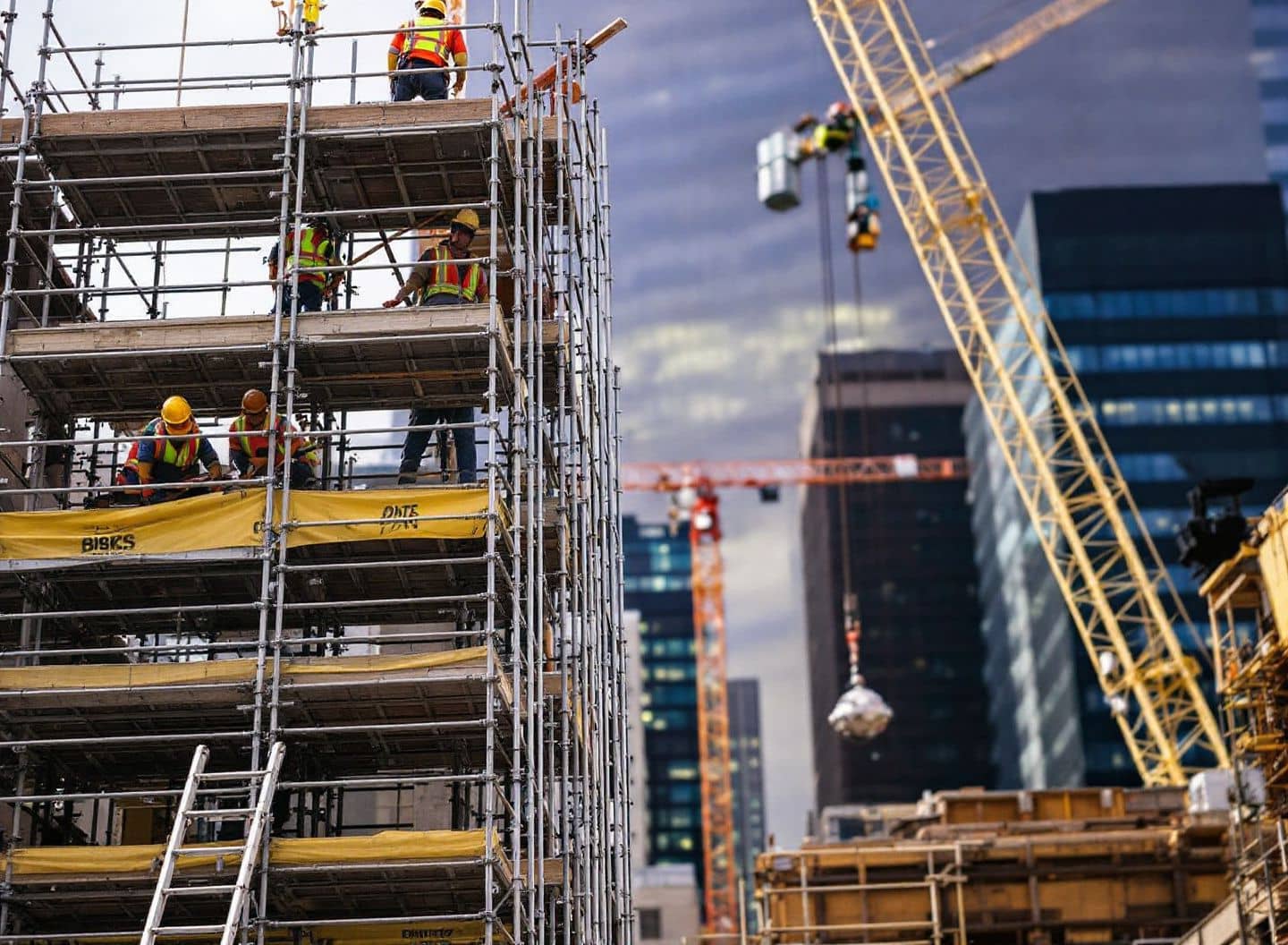
When no competent person is present on a New York construction site, a critical legal and physical protection is simply missing. That absence can directly support your injury claim under state labor law and federal safety standards. Courts and regulators treat the failure to assign or maintain a qualified safety supervisor as evidence that the worksite was fundamentally unsafe, and that matters when you've been hurt.
What Is a "Competent Person" and Why Does It Matter on a NY Job Site?
A "competent person" is a specific term of art under federal OSHA regulations, not just a general idea about experience. OSHA defines a competent person as someone who can identify existing and predictable hazards in the work environment and who has the authority to take prompt corrective action to eliminate those hazards. That's a meaningful distinction. It's not enough to have a crew leader who's been around for years but has no authority to stop work or fix a problem. The person must have both the knowledge and the power to act.
Under 29 CFR 1926.501, the federal fall protection standard that generated 6,307 citations nationwide in FY2024, employers are required to ensure workers on walking-working surfaces with unprotected edges are protected by guardrails, safety nets, or personal fall arrest systems. The competent person is the mechanism through which that requirement actually gets implemented in the field. Without someone physically present and qualified to inspect conditions, identify fall hazards, and enforce protective measures, the regulation becomes a paper rule with no real-world effect. When a worker is injured in that vacuum, the absence of the competent person becomes a central fact in any subsequent legal claim.
How Does New York Labor Law 241(6) Connect to the Absence of a Supervisor?
New York Labor Law § 241(6) imposes a non-delegable duty on property owners and general contractors to provide reasonable and adequate protection and safety to construction workers. It's a powerful statute because it can't be passed off to a subcontractor. If the site is unsafe, the owner and GC are on the hook regardless of what their contracts say internally.
The statute takes on concrete legal meaning when paired with specific safety regulations, particularly 12 NYCRR 23-1.7, the Industrial Code section that governs protection in construction, demolition, and excavation operations. These regulations exist precisely to implement Labor Law § 241(6) by defining what adequate protection actually looks like in practice. They address hazards ranging from overhead falling objects to slippery surfaces to unguarded floor openings. When you can show that a specific provision of 12 NYCRR 23-1.7 was violated, you've gone a long way toward establishing liability under the labor law because the duty is non-delegable and the standard is specific.
The absence of a competent person supports a claim under Labor Law § 241(6) because it often explains how a code violation went uncorrected. If someone with authority had been walking the site, they would have seen the unguarded floor opening, the unsecured scaffold plank, or the missing perimeter netting. The failure to have that person present is what allowed the hazard to persist until someone got hurt.
What Are New York City's Site Safety Manager Requirements?
New York City goes further than federal OSHA on the question of site supervision, and that matters for workers injured in the five boroughs. Under the NYC Construction Codes and Department of Buildings rules, certain projects require a designated Site Safety Manager or Site Safety Coordinator who must hold a DOB-issued license and be physically present at the job site during construction activities. The size and nature of the project typically determines which tier of supervision is required, but for major buildings and large demolitions, a licensed professional who has passed required examinations and training must be on site.
That's a higher bar than OSHA's competent-person standard in one important respect: the City requires licensure and documented qualifications, not just practical knowledge. When a required Site Safety Manager is absent or was never assigned to a qualifying project, that's not just an administrative gap. It's a violation of local law that can establish negligence in a personal injury case. Plaintiffs' attorneys look at site safety plans, DOB filings, and inspection logs to determine whether the required supervisor was actually on site at the time of the accident. When those records are incomplete or contradictory, it strengthens the injured worker's position.
What Types of Injuries Happen When No Qualified Supervisor Is Present?
The injuries that result from unsupervised sites tend to cluster around predictable hazard categories, and the pattern is consistent across trades. Falls from height are the most common and most catastrophic. When there's no competent person to inspect scaffolding, check guardrail integrity, or confirm that personal fall arrest equipment is in use and properly rigged, workers end up on unprotected edges, elevated platforms, or open floor holes. Falls from height can be fatal, and even non-fatal falls frequently cause traumatic brain injuries, spinal fractures, and severe orthopedic damage.
The trade-specific risks are worth understanding in detail. Ironworkers connecting structural steel on upper floors are among the most exposed, since their work inherently takes place at height with limited anchorage options. Concrete workers are exposed to form failures and edge hazards. Roofers face fall risks that are compounded by weather, surface materials, and the slope of the work surface. Carpenters and laborers working on upper floors before perimeter protection is in place face what's sometimes called the "leading edge" hazard, one of the most cited fall protection violations in the country under 29 CFR 1926.501.
Beyond falls, unsupervised sites also see higher rates of struck-by injuries from falling tools and materials, electrocutions from unguarded power lines or improperly grounded equipment, and excavation cave-ins when trenches aren't properly shored. Each of these hazard types has a corresponding regulatory requirement under 12 NYCRR 23-1.7 or the parallel federal standards, and each requires a knowledgeable person on site to ensure the requirement is actually met. When that person isn't there, the hazard doesn't announce itself.
Hurt on a Construction Site?
Tell us what happened. A licensed New York attorney will review your case and call you — free, no obligation.
How Does an Injured Worker Actually Use a Supervisor's Absence to Build a Claim?
The absence of a competent person becomes legally useful in a few distinct ways, and an attorney experienced in New York construction accident cases will pursue each of them. First, the absence is evidence that the owner and general contractor failed to meet their non-delegable duty under Labor Law § 241(6). Second, it explains the mechanism by which a known or knowable hazard went unaddressed. Third, it may constitute a per se violation of New York City's site safety rules, which is relevant to establishing negligence without needing to prove every element from scratch.
Evidence of the supervisor's absence is gathered through several channels. Payroll and timekeeping records can show who was actually on site. Daily work logs and superintendent reports may reveal gaps. Subcontractor foreman testimony can confirm that no one in a supervisory role was walking the site. Site safety plans filed with the DOB will show who was supposed to be there. When the designated Site Safety Manager's sign-in sheets don't match the DOB filings, or when OSHA records show citations for failure to have a competent person during a hazardous activity, that documentary evidence supports the injured worker's case.
It's also worth noting the connection to Labor Law § 241(6) and the fireproof flooring requirement. New York Labor Law § 241(6) requires that builders complete fireproof flooring as work progresses. When floors in a building are not being completed in sequence, upper floors can remain open, unprotected, and without the structural integrity needed to support safe working conditions. A competent person would catch this. When no one's watching, workers end up in a building that looks finished from the outside but has open holes and unprotected edges where they're expected to perform their trades.
Does the General Contractor's Absence from the Site Affect Liability?
Yes, it often does, and the law in New York is structured specifically to prevent owners and GCs from avoiding responsibility by simply not showing up. Under Labor Law § 241(6), the duty to maintain a safe site is non-delegable. That means an owner can't point to the subcontractor and say "it was their job." Similarly, a general contractor that handed off day-to-day supervision to a sub and then disappeared from the project doesn't get to escape liability for what happened in their absence.
This doesn't mean everyone is automatically liable. Courts look at the specific facts: who controlled the work, who had authority to correct the hazard, who was contractually responsible for safety on the site. But the starting point under New York law is that the owner and GC are responsible, and the burden is on them to show why they shouldn't be. Physical absence from the site doesn't help their case. It frequently hurts it.
What Should an Injured Worker Do Immediately After an Accident on an Unsupervised Site?
The steps you take in the hours and days after a construction accident have a real effect on your ability to pursue a claim later. First, seek medical attention immediately, even if you think you're okay. Some injuries, including traumatic brain injuries and internal bleeding, don't feel serious at first. Getting a documented medical record close in time to the accident is essential. Second, report the accident to your employer or foreman before you leave the site, and make sure it's documented in writing.
Third, if you're physically able, note or photograph the conditions that led to your injury. Was there a guardrail missing? An open floor hole with no cover? A scaffold plank that had shifted? These conditions change quickly on active sites. Photographs taken the same day are far more valuable than any description you might give weeks later. Fourth, try to identify who was present on site (and who was not). Did anyone tell you who the safety supervisor was supposed to be? Was anyone identified as the competent person for the task you were performing? Those details matter.
Finally, consult a New York construction accident attorney as soon as possible. New York's notice of claim requirements and statutes of limitations vary depending on who the defendants are, and some deadlines are much shorter than most people expect. An attorney familiar with Labor Law § 241(6), 12 NYCRR 23-1.7, and the New York City site safety rules can evaluate the strength of a claim based on supervisor absence and gather the right evidence before it disappears.
Does It Matter Which Trade or Task the Injured Worker Was Performing?
It does matter, because both OSHA and the New York Industrial Code tie specific supervisor requirements to specific types of work. Some operations require a competent person to be present and actively monitoring while the work is happening, not just available by phone. Excavation work is a clear example: OSHA requires a competent person to classify soil, design protective systems, and inspect excavations daily and after weather events. If no qualified person performed those functions and a trench collapses, the violation is direct and documented.
Similarly, 29 CFR 1926.501 imposes specific fall protection duties tied to the type of surface and the height of the work. Leading edge work, roofing, and work near skylights all have distinct requirements, and the competent person is supposed to ensure compliance with whichever standard applies. Understanding which specific regulation applied to your task on the day of your injury is part of how an attorney builds the technical foundation of a Labor Law § 241(6) claim.
The value of a construction accident claim in New York varies with the severity of the injury, the nature of the violation, the parties involved, and many other factors specific to each case. There's no formula that predicts an outcome, but the presence of a clear regulatory violation, especially one tied to the absence of a required supervisor, is a meaningful factor in establishing liability and the seriousness of the breach.
Attorney Advertising. Prior results do not guarantee a similar outcome. This article is for general informational purposes only and does not constitute legal advice. NY Construction Advocate connects injured workers with experienced New York construction accident attorneys.
Primary sources
Frequently Asked Questions
What exactly does OSHA mean by 'competent person,' and is a foreman the same thing?▼
Can I bring a claim under New York Labor Law 241(6) if the accident was caused by my own subcontractor's failure to supervise?▼
Does NYC require something more than just an OSHA-compliant competent person on large construction sites?▼
How do I prove that no competent person was actually present when my accident happened?▼
What is the connection between 12 NYCRR 23-1.7 and a Labor Law 241(6) claim based on supervisor absence?▼
Does it matter that the construction site had safety rules posted on signs if no one was actually supervising compliance?▼
Get a Free Case Review
Find out if you have a claim under New York Labor Law. A licensed NY attorney will review your case and call you back.