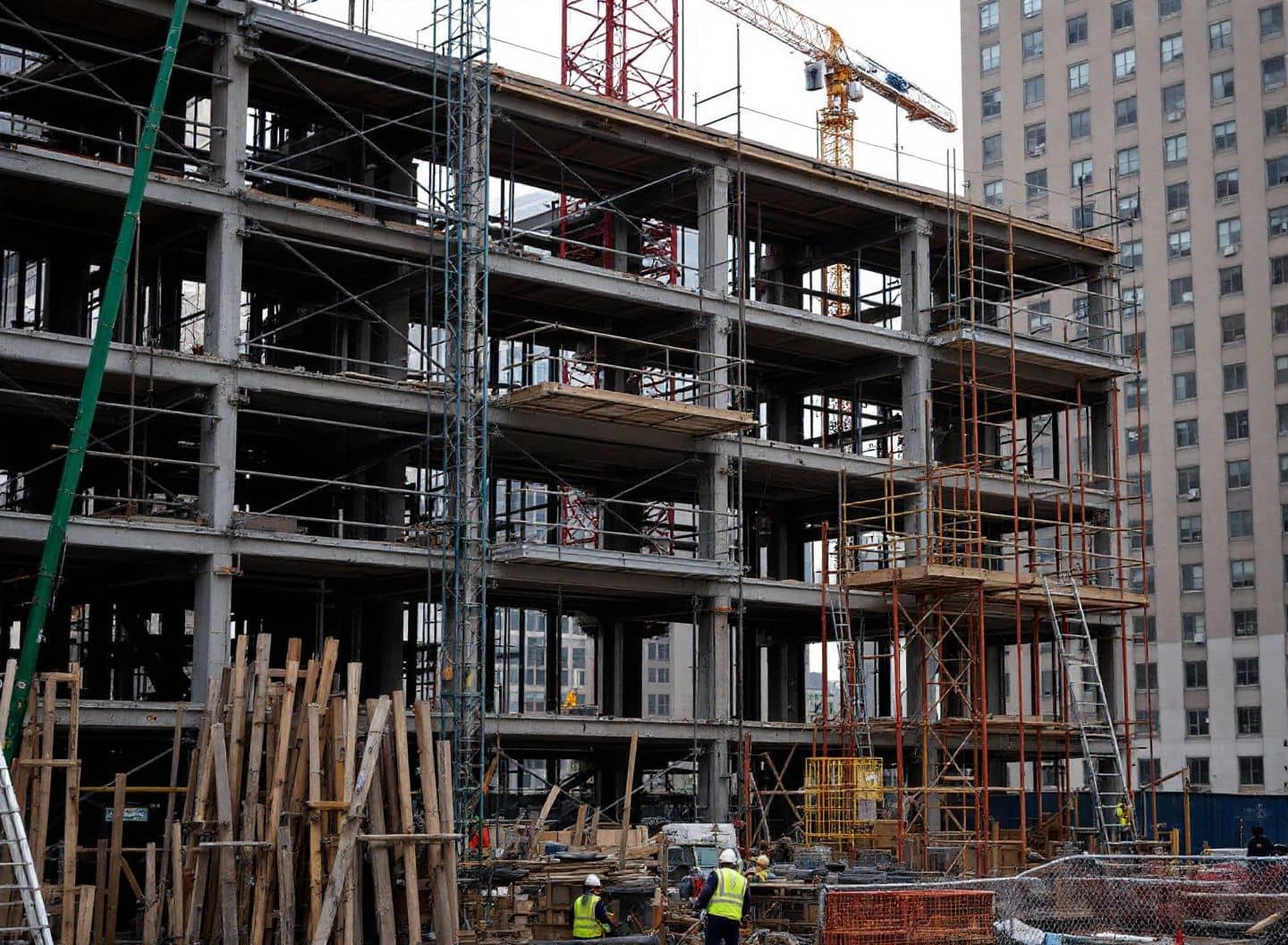
Construction sites are, by their nature, dangerous places. Workers handle heavy materials at height, operate powerful equipment, and move through spaces that change shape every single day. New York law recognizes this reality and places real legal obligations on owners, general contractors, and subcontractors to keep those spaces as safe as possible. When those obligations are ignored, the NYC Department of Buildings (DOB) has the authority to issue violations and, in serious cases, stop-work orders that halt a project entirely. If you're a worker who was hurt on a site that carried one of those orders, you should understand what that document actually means and why it can be significant in a legal claim.
What a Stop-Work Order Actually Is
A stop-work order is a formal directive from the NYC Department of Buildings requiring that all construction activity on a site—or on a specific portion of it—cease immediately. Inspectors issue them when they find conditions that violate the New York City Building Code, zoning rules, or applicable safety regulations. The order stays in effect until the responsible party corrects the cited condition and pays any required fees or fines. Work that continues in defiance of an active stop-work order compounds the violation and adds to the paper trail.
It's important to understand that a stop-work order isn't a vague warning. It's a specific, documented finding. The inspector identifies the location, the condition, the code section violated, and the date. That specificity is exactly what makes these records useful in subsequent legal proceedings.
The Legal Framework Behind Construction Site Safety in New York
New York's construction safety laws are layered, and workers benefit from protections at the state, city, and federal level. The most significant state statute in injury cases is Labor Law § 241(6), which requires that construction, excavation, and demolition work be conducted in a way that provides reasonable and adequate protection and safety for workers. Critically, this section of the law places a non-delegable duty on property owners and general contractors. That means even if an owner hired a subcontractor and never set foot on the site, the owner can still be held liable when a safety violation causes an injury. The worker doesn't have to prove the owner personally knew about the danger.
Labor Law § 241(6) gains much of its practical force from the Industrial Code, specifically 12 NYCRR 23-1.7, which sets out detailed safety rules for construction, demolition, and excavation operations. These aren't aspirational goals. They are specific, enforceable standards covering things like protection from falling objects, floor openings, overhead hazards, and more. A violation of an applicable, specific subdivision of 12 NYCRR 23-1.7 may be some evidence of negligence under Labor Law § 241(6); causation and defenses remain at issue.
At the federal level, OSHA's fall protection standard at 29 CFR 1926.501 imposes requirements on employers in the construction industry regarding guardrails, safety nets, and personal fall arrest systems. In fiscal year 2024, fall protection under 29 CFR 1926.501 generated 6,307 citations nationwide, making it one of the most cited standards in construction. OSHA citations don't create automatic civil liability in New York courts, but they do document that a specific condition failed to meet a recognized safety standard, and that documentation can support the broader negligence argument.
How DOB Records Become Evidence
When an injured worker or their attorney investigates a construction accident, one of the first stops is the DOB's Buildings Information System, which is publicly accessible. This database contains permit history, inspection records, violation notices, and stop-work orders for every site in the five boroughs. A site with a history of open violations, repeat inspections, and stop-work orders tells a story about how that project was being managed.
Here's why that story matters legally. In a negligence or Labor Law case, a plaintiff often needs to show that the defendant knew or should have known about a dangerous condition. A DOB violation notice is written proof that someone with authority to inspect the site observed the condition and told the responsible party to fix it. If the condition wasn't fixed and a worker was later hurt because of the same type of hazard, that violation record is powerful circumstantial evidence. It suggests the dangerous condition wasn't an accident of timing—it was a persistent, documented problem.
Stop-work orders go one step further because they signal that the condition was serious enough to shut the project down. When work resumed without correcting the underlying problem, or when a stop-work order was issued after a worker was already hurt, that sequence of events can speak directly to the recklessness of the parties in control of the site.
The Specific Hazards Most Commonly Linked to Violations
Hurt on a Construction Site?
Tell us what happened. A licensed New York attorney will review your case and call you — free, no obligation.
Certain categories of DOB violations appear repeatedly on sites where workers are eventually hurt. Understanding the mechanism of injury for each helps illustrate why these violations aren't just paperwork problems.
Falls from elevation are the single most common cause of serious injury in New York construction. Ironworkers, carpenters, roofers, and laborers regularly work on floors, scaffolding, or rooftops that are several stories above the ground. When guardrails are missing, floor openings aren't covered, or scaffold planking is insufficient, the risk of a fatal or catastrophic fall is immediate. Labor Law § 241(6) read alongside 12 NYCRR 23-1.7 requires that these conditions be addressed. And as the OSHA citation data under 29 CFR 1926.501 demonstrates, fall protection failures remain the most cited construction hazard in the country. A DOB violation for an unguarded floor opening or inadequate perimeter protection can directly corroborate an injured worker's account of what caused their fall.
Fireproof flooring completion is a less obvious but equally serious issue. Under Labor Law § 241(1), qualifying fireproof flooring or filling must be completed as building work progresses. This requirement exists because the absence of completed fire-resistant floors creates both structural instability risks and, in the event of a fire, a far greater danger to workers on upper floors who cannot safely exit. When DOB inspectors find that fireproof flooring hasn't been laid in areas where workers are already active, the violation reflects a failure that puts people at immediate, concrete risk.
Falling object hazards are another frequent source of both violations and injuries. Masonry workers, pipefitters, and general laborers working at or below areas where other trades are active face the risk of tools, materials, or debris falling from above. The obligation to protect workers in lower zones from overhead hazards is built into the Industrial Code, and violations related to debris netting, canopies, or overhead protection reflect a failure of that duty.
Electrical hazards, improper excavation shoring, and inadequate housekeeping (meaning cluttered walkways and unstable footing conditions) round out the categories that generate the most DOB attention and the most worker injuries. In each case, the mechanism is direct: a specific, identifiable condition puts workers in a position where normal job tasks become unreasonably dangerous.
Using the Public Record in a Claim
Workers and their families often don't know that DOB records are public and free to access. Before retaining an attorney, or early in the process of evaluating a potential claim, it can be useful to search the project address on the DOB's website. Look for the number of open versus closed violations, whether stop-work orders were issued before or around the time of the accident, which parties were named in the violations (the general contractor, a specific subcontractor, or the owner), and whether the same type of hazard appears more than once.
An attorney pursuing a Labor Law or negligence claim can then request the full inspection files through formal discovery or Freedom of Information Law (FOIL) requests. Inspector notes, photographs taken at the time of inspection, and correspondence between the DOB and the responsible parties can all flesh out the picture of what the site actually looked like and who knew what when. Permit applications also reveal who took legal responsibility for the safety of the work, which matters when identifying proper defendants.
It's worth noting that the value of a claim varies with the severity of the injury, the degree to which the violations contributed to the accident, and the specific defendants involved. There are no guarantees in litigation, and every case turns on its own facts. What DOB records do is give a worker's legal team concrete, contemporaneous documentation to work with rather than relying solely on the worker's own account against the word of an owner or contractor.
What Workers Should Do After an Accident on a Cited Site
If you're hurt on a construction site, the immediate priority is medical care. Once you're safe, a few steps can protect your legal position significantly. Report the accident to your supervisor and make sure a written incident report is prepared. Get the names of any witnesses, including workers from other trades who may have seen the condition that caused your injury. Photograph the scene if you're able, or ask a coworker to do so, because conditions on construction sites change fast.
Preserve any documentation you receive from your employer, including payroll records and any safety training records. These can become relevant in establishing the context of your work that day. And don't wait too long to consult with an attorney who handles New York construction injury cases. Statutes of limitations apply, and early investigation allows your legal team to gather site records before they're altered or lost.
A stop-work order on the site where you were hurt isn't a guarantee of anything on its own. But it's a starting point, a thread that, when pulled, often reveals a broader pattern of disregard for the safety rules that New York law put in place specifically to protect workers like you.
Attorney Advertising. Prior results do not guarantee a similar outcome. This article is for general informational purposes only and does not constitute legal advice. NY Construction Advocate connects injured workers with experienced New York construction accident attorneys.
Primary sources
Frequently Asked Questions
Does a DOB stop-work order automatically prove that my employer was negligent?▼
Can I use DOB violation records even if the violation was issued before my accident?▼
What is 12 NYCRR 23-1.7 and why does it matter for my case?▼
Does OSHA's fall protection standard under 29 CFR 1926.501 give me a right to sue in New York?▼
What if the stop-work order was issued after I was hurt, not before?▼
Who is responsible for safety on a New York construction site, the owner or the contractor?▼
Get a Free Case Review
Find out if you have a claim under New York Labor Law. A licensed NY attorney will review your case and call you back.