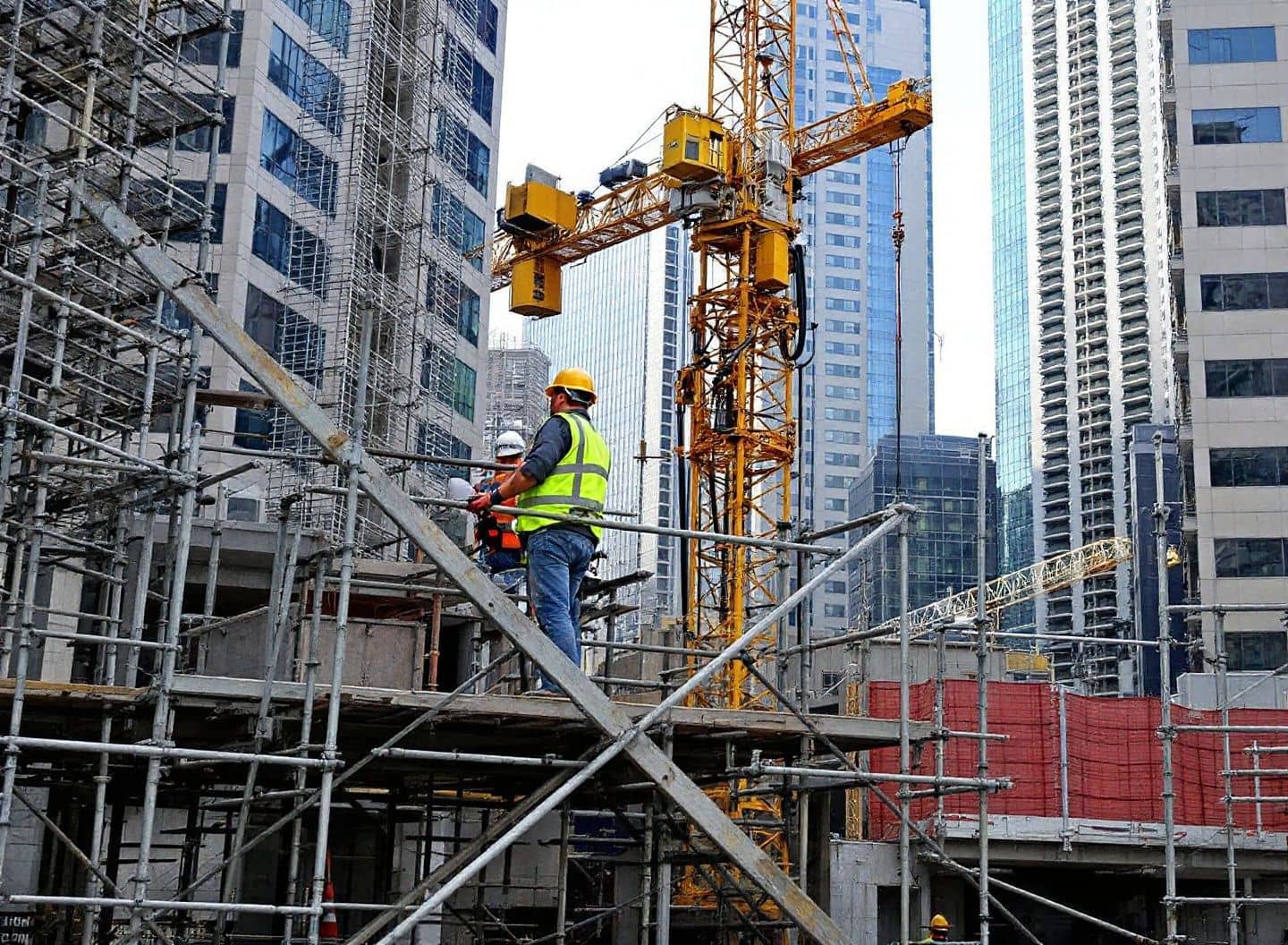
If you're a union construction worker in New York City and you've been hurt on the job, you're not starting from zero. Your union membership gives you a framework of protections that non-union workers often don't have. But that doesn't mean everything is automatic or simple. Workers' compensation, union benefit funds, third-party lawsuits, and your relationship with your employer and contractor all intersect in ways that can get complicated fast. Understanding how these pieces fit together is the first step toward protecting yourself.
Why Trade Matters: Mechanism of Injury by Craft
Construction injuries don't happen the same way across every trade. The mechanism of injury, the part of the body affected, and the legal theories available all depend on what you do and where you work on the site. Ironworkers and roofers face catastrophic fall risks from unguarded structural steel and roof edges. Electricians often work in tight ceiling voids or on scaffolding while handling energized equipment, putting them at risk for both falls and electrical burns. Carpenters and laborers frequently work beneath overhead operations, exposing them to struck-by hazards from falling tools, materials, or debris. Plumbers and steamfitters often work in excavated trenches or below-grade areas where cave-in or flooding can occur suddenly.
These trade-specific risks matter legally because New York's liability framework is partly organized around the type of accident. A fall from elevation triggers one set of rules. A falling object triggers another. A trench collapse or machinery accident brings in still others. Knowing your trade's typical injury patterns helps your attorney identify every viable legal theory from the beginning.
The Federal Safety Floor: 29 CFR 1926.20
Federal OSHA standards set the minimum safety requirements on virtually every New York construction site. Under 29 CFR 1926.20, employers must initiate and maintain programs for the prevention of accidents in construction operations. This means written safety programs aren't optional, frequent inspections must happen, and unsafe conditions must be corrected before workers are exposed to them. When an employer or general contractor ignores these duties and a worker is hurt, that failure becomes relevant evidence in legal proceedings. Union workers should be aware that OSHA violations documented on their site can support both regulatory action and civil claims, even though OSHA itself doesn't create a private right to sue.
New York's Scaffold Law and How It Protects You
New York has one of the strongest worker-protection statutes in the country for elevation-related accidents. Labor Law § 240, commonly called the Scaffold Law, requires contractors, owners, and their agents to furnish or erect scaffolding, hoists, ladders, and other protective devices during building construction, demolition, and repair work. What makes this law so significant is its imposition of absolute liability on owners and general contractors when a covered accident occurs. That means if a scaffold collapses, a ladder slips, or a worker falls through an unguarded floor opening, the owner and contractor can be held liable regardless of whether they were physically present or directly supervised the work.
Union membership doesn't change your eligibility under Labor Law § 240. Whether you're a member of the Ironworkers, Laborers, Carpenters, or any other trade union, the statute covers you as long as you were performing covered work at the time of injury. Falls from height can be fatal, and the law was designed to place responsibility squarely on those who control the site and profit from the project, not on the workers who are the most physically vulnerable.
Specific Safety Standards Under 12 NYCRR 23-1.5
Beyond the Scaffold Law, New York's Labor Law § 241(6) creates liability when an employer violates a specific, concrete safety regulation. The most commonly cited set of regulations is found in 12 NYCRR 23-1.5, which establishes general safety requirements for persons employed in construction, demolition, and excavation operations in New York State. These regulations go far beyond vague generalities. They address things like the condition and maintenance of equipment, the duty to provide adequate protective gear, and the obligation to correct hazardous conditions promptly.
Why does this matter to union workers specifically? Because union contracts often incorporate safety standards by reference, and union delegates are typically trained to identify OSHA and Industrial Code violations on the job. If you reported a hazard through your union safety representative and the contractor failed to act, that chain of events can be critically important documentation in a subsequent civil claim. Keep records of any safety complaints you filed, any written communications, and any responses you received.
Workers' Compensation and Your Union Benefit Fund
Most union workers are covered by two separate but overlapping systems after a job site injury: the New York State Workers' Compensation system and their union's benefit fund. These are not the same thing, and the interaction between them can be confusing.
Hurt on a Construction Site?
Tell us what happened. A licensed New York attorney will review your case and call you — free, no obligation.
Workers' compensation in New York is a no-fault system. You don't have to prove your employer was negligent to receive benefits. You're entitled to wage replacement (calculated as a percentage of your average weekly wage, subject to statutory caps), coverage of medical treatment related to the injury, and in serious cases, a schedule loss of use award for permanent disability to a body part. Your employer or their insurer pays these benefits. You cannot sue your direct employer for negligence in exchange for receiving workers' comp.
Your union benefit fund is a separate pool, funded through collective bargaining contributions from signatory contractors. Depending on your fund, it may provide supplemental disability benefits, medical coverage above what workers' comp covers, and annuity or pension protections during a period when you can't work. Some union members don't realize they're entitled to file with both systems simultaneously, and missing a benefit fund claim is a real and costly mistake. Contact your union hall or benefit fund administrator as soon as possible after an injury.
Third-Party Claims: Where Your Full Recovery May Come From
Workers' compensation covers your medical bills and a portion of lost wages, but it doesn't compensate for pain and suffering. A third-party lawsuit does. Because union workers on large New York City projects are typically employed by a subcontractor but work on a site controlled by a general contractor and owned by a property owner, there are usually parties other than your direct employer who are legally responsible for safety.
A third-party claim targets those other parties. Under Labor Law § 240 and § 241(6), as well as common-law negligence principles, you can sue the general contractor, the property owner, a construction manager, or any other party whose negligence contributed to your accident. These claims are entirely separate from workers' comp, and they can include compensation for pain and suffering, loss of enjoyment of life, and future economic losses. The value of a third-party claim varies with the severity of the injury, the permanence of any disability, and the clarity of the liability.
One important wrinkle for union workers: if your employer's workers' compensation insurer has paid you benefits, they typically have a lien on any third-party recovery. Your union benefit fund may also assert a lien. These liens must be addressed as part of any resolution of your third-party claim. An attorney experienced in New York construction law will know how to handle these lien negotiations.
Dealing With Your Employer After an Injury
This is where union membership makes a real, practical difference. In a non-union environment, injured workers sometimes face pressure to minimize what happened, delay reporting, or accept light-duty assignments they're not medically cleared for. Union workers have shop stewards, business agents, and union representatives who can advocate on their behalf when employers push back.
That said, you should still take some steps yourself. Report the accident to your foreman and your employer in writing as soon as possible. Get medical treatment, and make sure your doctor documents that the injury is work-related. Don't give a recorded statement to the workers' compensation insurance carrier without speaking to an attorney first. Insurance carriers are not on your side, and their adjusters are skilled at asking questions in ways that minimize your claim.
Your union collective bargaining agreement may also contain specific provisions about return-to-work rights, seniority protection during medical leave, and your right to be reassigned to appropriate work after injury. Know what your contract says. If your employer violates those provisions, you may have a separate grievance on top of your workers' comp and civil claims.
Retaliation: What the Law Says and What Your Union Can Do
New York law prohibits employers from retaliating against workers for filing workers' compensation claims or for reporting safety violations. But retaliation happens, and it doesn't always look obvious. It can look like being passed over for work calls, being assigned to less desirable jobs, or being written up for pretextual reasons after a claim is filed. If you believe your employer is retaliating against you, your union grievance process is often the fastest initial remedy. Beyond that, a retaliation claim can be filed with the Workers' Compensation Board or pursued as part of a broader legal action.
Statutes of Limitations: Don't Wait Too Long
Time limits are strict in New York construction accident cases. A workers' compensation claim must be filed within two years of the injury. A third-party personal injury claim under Labor Law § 240 or § 241(6) must generally be filed within three years of the accident. If a government entity owns or controls the property where you were hurt, you may need to file a notice of claim within 90 days. Missing any of these deadlines can permanently bar your claims. Union members sometimes assume their union is handling these filings automatically. It isn't. You need to act, and you should speak with a construction accident attorney as soon as you're medically stable.
Attorney Advertising. Prior results do not guarantee a similar outcome. This article is for general informational purposes only and does not constitute legal advice. NY Construction Advocate connects injured workers with experienced New York construction accident attorneys.
Primary sources
Frequently Asked Questions
Can I file a third-party lawsuit if I'm already receiving workers' compensation as a union member?▼
Does Labor Law § 240 apply to union workers the same way it applies to non-union workers?▼
What should I do immediately after a construction accident on a union job site?▼
What is my union benefit fund, and is it different from workers' compensation?▼
Can my employer retaliate against me for filing a workers' comp claim or reporting a safety violation?▼
How do the regulations under 12 NYCRR 23-1.5 help my injury claim?▼
Are there deadlines I need to know about for filing claims after a construction accident?▼
Get a Free Case Review
Find out if you have a claim under New York Labor Law. A licensed NY attorney will review your case and call you back.