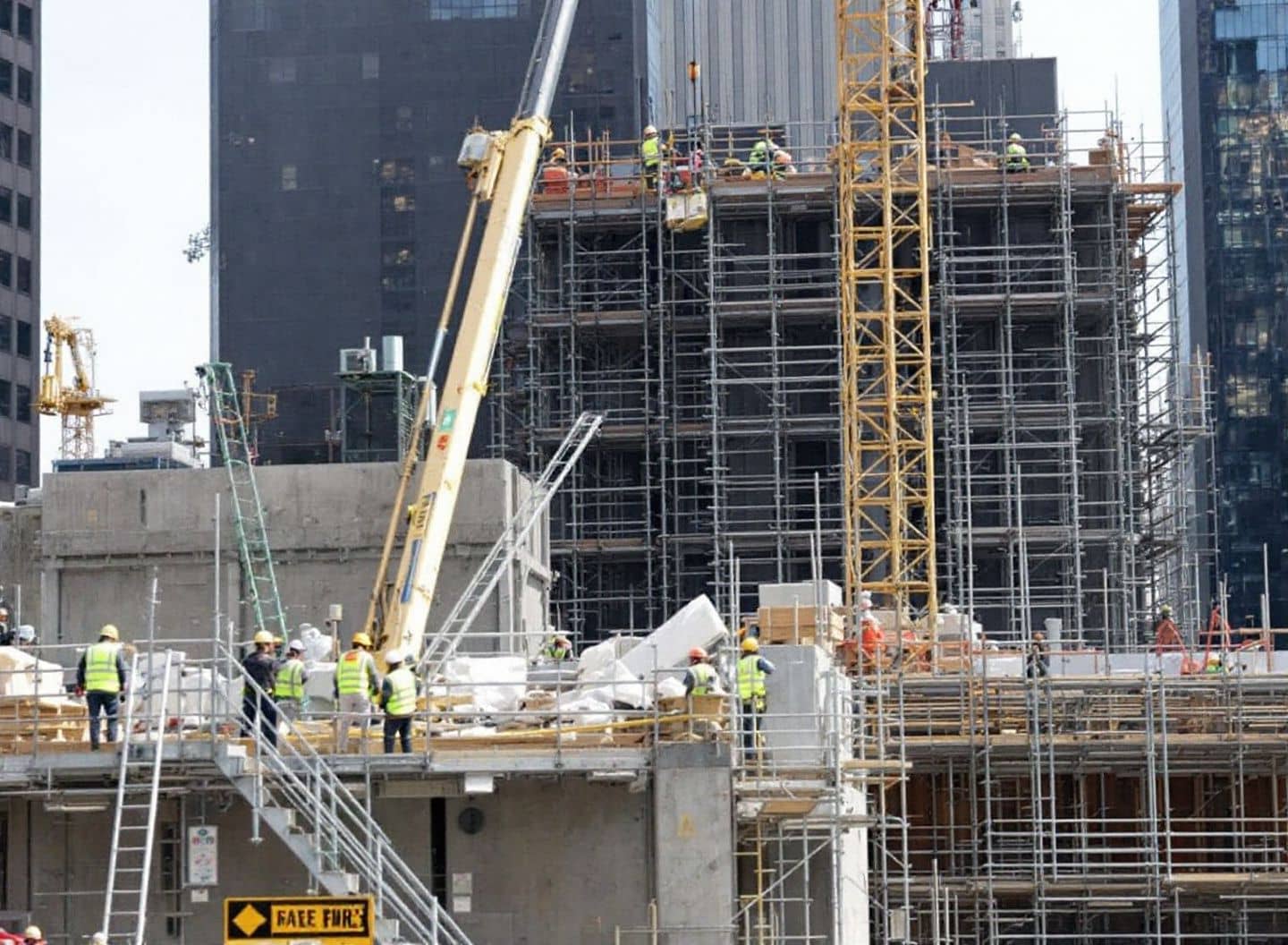
Outrigger and side bracket scaffold accidents are a leading cause of serious injury among New York masonry workers, and injured workers often have strong legal claims under both New York Labor Law § 240(1) and New York Labor Law § 241(6). These scaffold types fail for predictable, preventable reasons: overloading, improper installation, and violations of specific safety regulations that courts treat as direct evidence of negligence.
What Makes Outrigger and Side Bracket Scaffolds So Dangerous in Masonry Work?
Side bracket and outrigger scaffolds are designed to project outward from the face of a building, giving masons access to walls, cornices, parapet work, and facades without requiring a full supported scaffold system from the ground up. That design efficiency is also their central hazard. Unlike a standard scaffold that rests on legs anchored to the ground, these systems depend entirely on the integrity of their connection to the building structure and the load calculations built into their design.
Masonry work is heavy. Brick, mortar, block, and stone are among the densest materials on any construction site. A single pallet of brick can weigh over 3,000 pounds. When a side bracket platform is used not just as a working surface but as a staging area for materials, the cumulative load can exceed the scaffold's rated capacity in minutes. Workers don't always know the rated load. Foremen may not communicate it. And supervisors under schedule pressure sometimes look the other way while materials pile up.
The result is a scaffold system stressed well past its design limits, often with workers standing on it at the time of failure. Falls from these platforms onto lower roofs, setbacks, sidewalks, or ground level frequently produce severe orthopedic injuries, traumatic brain injuries, and spinal cord damage. Falls from height can be fatal even at relatively modest distances, particularly when the landing surface is concrete or masonry rubble.
How Do Side Brackets Get Misused as Material Platforms?
Side brackets are primarily intended as work platforms, not material storage platforms, but the line between the two gets blurred constantly on busy masonry sites. A bracket scaffold might be rated to support workers and their tools. But a mason who needs a steady supply of brick close at hand will naturally want the material nearby, and a laborer delivering brick finds it convenient to set it directly on the platform rather than making multiple trips.
Over the course of a workday, a bracket scaffold can accumulate brick bundles, mortar tubs, buckets of water, hand tools, and the workers themselves. None of these individual additions seems catastrophic in isolation. Together, they can create a dynamic load that far exceeds what the bracket's connection hardware, anchor points, or planking was engineered to handle. Planks can split or slide off their supports. Brackets can pull free from their wall anchors. An entire platform can tip or collapse without warning.
It's worth understanding that planking failure is its own distinct hazard within this system. When a plank deflects sharply under weight, shifts laterally, or fractures, a worker standing on it has no time to react. At heights of 10 feet or more, even a brief free-fall onto a hard surface generates forces the human body wasn't built to absorb. Injuries from this mechanism tend to be severe and often involve multiple body systems.
Understanding the Specific Safety Regulations That Apply to These Scaffolds
New York's Industrial Code at 12 NYCRR 23-5 contains the specific scaffold safety requirements that form the backbone of a Labor Law § 241(6) claim. Unlike the general duty standard under Labor Law § 240(1), a § 241(6) claim requires a plaintiff to point to a concrete, specific Industrial Code provision that the defendant violated. The regulations within 12 NYCRR 23-5 do exactly that.
Section 23-5.1 sets out general requirements applicable to all scaffolds, including requirements that scaffold planking be sound, properly supported, and free of defects. It mandates that scaffolds be capable of supporting at least four times the maximum intended load and that platforms be at least 18 inches wide. Crucially, it prohibits overloading. When a contractor allows a side bracket to be loaded with masonry materials beyond its rated capacity, that's not just a workplace safety failure. It's a violation of a specific regulatory standard that a court can evaluate.
Section 23-5.6 addresses outrigger scaffolds specifically. It imposes requirements about the size and strength of outrigger beams, the method of anchoring them to the structure, and the ratio of the inboard to outboard beam length. It also requires that all parts of the system be inspected before use. These aren't vague aspirational standards. They're concrete numerical and procedural requirements, and a plaintiff's attorney can show exactly where the defendant fell short.
Guardrail requirements are another critical piece. The regulations under 12 NYCRR 23-5 require top rails, mid-rails, and toe boards on scaffold platforms. When a side bracket platform lacks a proper guardrail system, a worker who loses balance while lifting materials or is bumped by a coworker has nothing to stop a fall to lower levels. Absence of guardrails is a documented violation in a large percentage of scaffold accident cases, and it's exactly the kind of specific, concrete failure that supports a § 241(6) claim.
How Does Federal OSHA Law Relate to a New York Construction Injury Claim?
Federal scaffold safety standards under 29 CFR 1926.451 set minimum requirements for scaffold construction, load ratings, access, and fall protection on worksites covered by OSHA. These requirements are not a substitute for New York's Labor Law claims, but they run parallel to them and can reinforce your case in several ways. OSHA citations, when issued after an inspection, document specific violations, and those records can become relevant evidence in civil litigation.
Scaffolding violations under 29 CFR 1926.451 are consistently among the most-cited OSHA standards nationwide. In fiscal year 2024, there were 1,873 citations issued under this standard across the country. That number reflects how frequently scaffold safety is compromised in the industry, not just in New York but everywhere. For injured workers, it confirms that these aren't freak accidents. They're the predictable result of systemic non-compliance.
In a New York civil case, though, the operative legal framework is state law. OSHA violations can be evidence of negligence, but the primary legal basis for a masonry worker's scaffold injury claim will almost always be New York Labor Law § 240(1) and § 241(6), along with common law negligence. Federal standards inform the analysis but don't replace it.
What Does Labor Law § 240 Actually Require of Owners and Contractors?
Hurt on a Construction Site?
Tell us what happened. A licensed New York attorney will review your case and call you — free, no obligation.
New York Labor Law § 240, commonly called the Scaffold Law, places a non-delegable duty on property owners and general contractors to furnish or cause to be furnished proper scaffolding, hoists, ladders, stays, slings, hangers, blocks, pulleys, braces, irons, and ropes during the erection, demolition, repairing, altering, painting, cleaning, or pointing of a building or structure. That's a broad mandate, and courts have interpreted it to cover most masonry facade work done at elevation.
The word 'non-delegable' matters enormously in practice. An owner can't escape liability simply because the work was performed by a subcontractor. If the scaffold was inadequate and a worker fell, the owner and general contractor face liability regardless of who actually erected the scaffold. This is one of the most protective features of New York construction law, and it reflects a deliberate legislative choice to put responsibility on the parties with the most control over site safety and the most resources to ensure compliance.
Labor Law § 240 applies when a worker is injured or killed by a gravity-related hazard, which includes falls from scaffold platforms and injuries caused by falling objects. For a side bracket collapse or outrigger failure, the causal link between the gravity hazard and the inadequate safety device is usually direct and clear.
Who Can Be Held Liable When a Masonry Worker Is Hurt on a Side Bracket Scaffold?
Liability in a scaffold accident case can extend to multiple parties, and identifying each one is a critical early step in any serious claim. The general contractor has overall responsibility for site safety and typically has the authority to direct, stop, or correct unsafe scaffold conditions. The property owner is directly liable under Labor Law § 240 regardless of involvement in day-to-day operations. The masonry subcontractor may be liable for negligence in erecting or overloading the scaffold. The scaffold manufacturer or distributor may face a products liability claim if the scaffold itself was defective.
There's no single formula for how these parties share responsibility. New York uses a system of apportionment among defendants in negligence cases, but under the absolute liability framework of Labor Law § 240(1), the comparative fault of the injured worker is generally not a defense when the scaffold itself was inadequate. This is another reason the § 240(1) claim is so important for injured masonry workers.
What Evidence Should an Injured Worker Try to Preserve?
Evidence in a scaffold accident case starts disappearing almost immediately after an incident. Contractors rebuild scaffolds, planks get discarded, and photographs taken by coworkers may not be preserved unless someone acts quickly. If you're physically able, or if a coworker can assist, photographs of the scaffold, the anchor points, the planks, the load that was on the platform, and the surrounding conditions are invaluable.
Beyond photographs, the following categories of evidence tend to be central to these cases: daily safety inspection logs (or the absence of them), load rating documentation for the scaffold components, the scaffold erection plan, any pre-job safety meetings or toolbox talk records, and payroll records establishing who was present and in what roles. Witness accounts from coworkers who saw the scaffold before it failed are often among the most powerful pieces of evidence available.
Medical records documenting the nature, extent, and treatment of injuries are also essential. The value of a construction injury claim varies with the severity of the injury, the length of recovery, and the long-term impact on a worker's ability to earn a living. Thorough medical documentation is the foundation of proving those losses.
What Steps Should You Take After a Scaffold Accident on a Masonry Site?
Seek medical treatment immediately, even if the injury seems manageable. Many serious injuries, including spinal injuries and traumatic brain injuries, don't produce their full symptom profile right away. A gap in medical care can later be used to minimize the severity of your condition in litigation.
Workers' compensation may cover initial medical bills and a portion of lost wages, but it doesn't compensate for pain and suffering or the full scope of long-term economic loss. A Labor Law claim against the owner and general contractor operates separately from workers' compensation and can address the full range of damages the worker has suffered.
Attorney Advertising. Prior results do not guarantee a similar outcome. This article is for general informational purposes only and does not constitute legal advice. NY Construction Advocate connects injured workers with experienced New York construction accident attorneys.
Primary sources
Frequently Asked Questions
Can I sue my employer if I fall from a side bracket scaffold on a New York masonry job?▼
What specific Industrial Code violations support a 241(6) claim after an outrigger scaffold accident?▼
Does it matter if I was partly at fault for overloading the scaffold?▼
How does 29 CFR 1926.451 factor into a New York scaffold injury lawsuit?▼
What if there was no guardrail on the side bracket platform where I fell?▼
How long do I have to file a lawsuit after a scaffold accident in New York?▼
Get a Free Case Review
Find out if you have a claim under New York Labor Law. A licensed NY attorney will review your case and call you back.