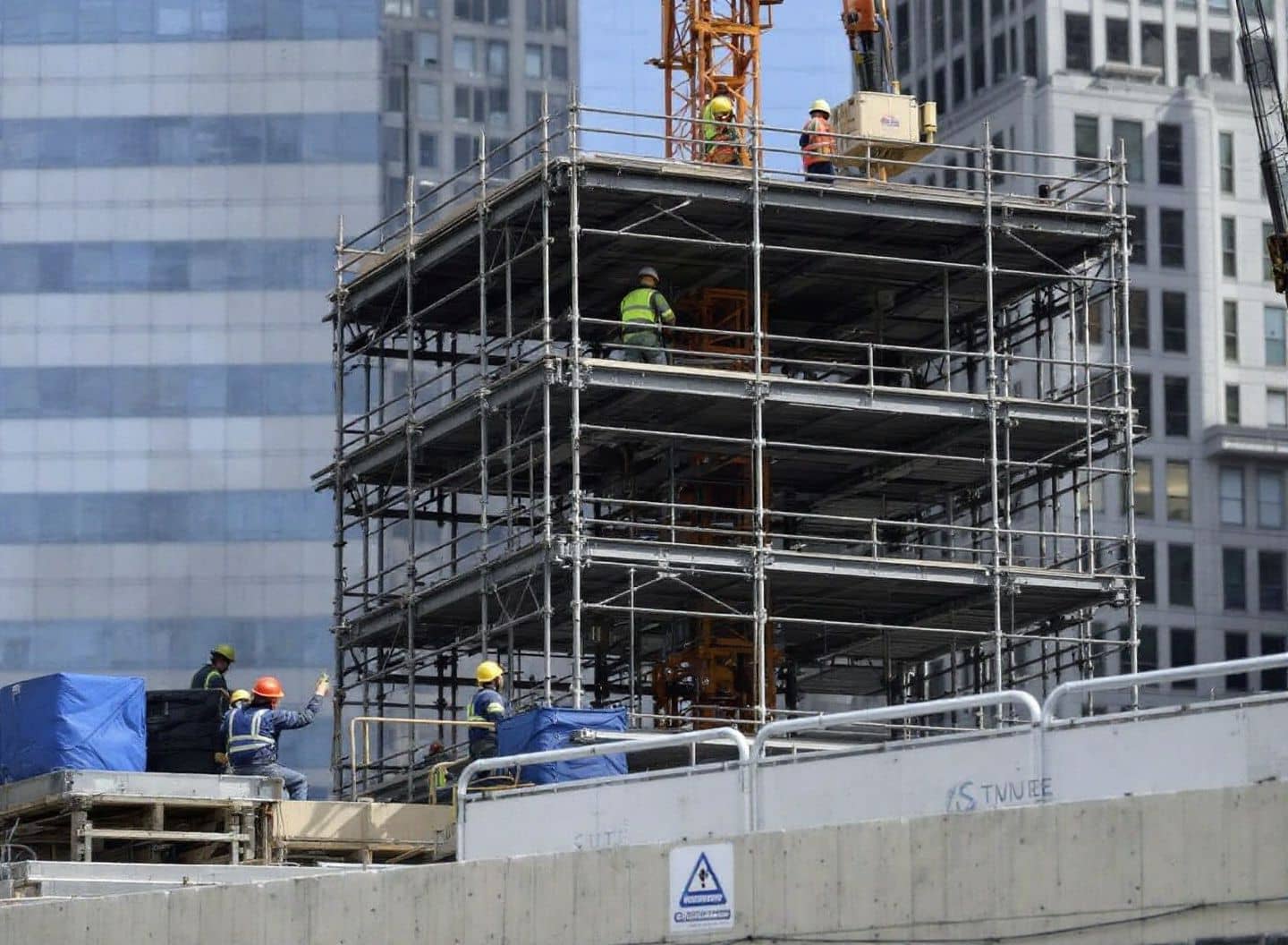
When people picture a scaffold collapse, they usually imagine a dramatic structural failure: frames buckling, planks snapping, the whole platform going down at once. The reality is often quieter and more insidious. A platform slowly accumulates scrap lumber, empty mortar bags, broken masonry, and leftover pipe sections over the course of a shift. Nobody clears it. Meanwhile, materials staged for the next phase of work get stacked in one corner because that's convenient. By the end of the day, a scaffold rated for a specific load capacity is carrying two or three times what it was designed to hold. Then someone steps onto it, and the platform goes.
This scenario plays out on New York construction sites more often than most building owners or general contractors want to admit. What makes it legally significant is that Labor Law § 240(1) may impose liability when a required safety device was inadequate in violation of the statute and that violation proximately caused a covered elevation-related injury, including some scaffold failures. If you or someone you care about was hurt in a scaffold collapse, understanding how the law treats these specific hazards matters enormously.
How Overloading and Debris Turn a Scaffold Into a Trap
Scaffold systems are engineered structures. Every component, from the base plates and frames to the cross-braces and planking, is rated to carry a defined load. Federal regulations under 29 CFR 1926.451 require that scaffolds be capable of supporting their own weight plus at least four times the maximum intended load. That four-to-one safety factor sounds generous, but it disappears fast when workers treat the platform as a dumping ground.
Debris accumulation is the subtler danger. A single shift's worth of discarded material, broken tile, excess mortar, cut-off rebar, empty buckets, and miscellaneous scrap, can weigh hundreds of pounds on a platform sized for two or three workers and their tools. Because the weight accumulates gradually and no single piece looks alarming, supervisors and workers often don't register that the cumulative load has become dangerous. The platform doesn't groan or visibly sag. It just fails.
Material overloading is a related but distinct problem. On tight job sites, it's tempting to stage materials directly on scaffold platforms to avoid repeated trips up and down. Pallets of brick, bundles of conduit, bags of concrete mix, stacked drywall: each of these can be extraordinarily heavy, and concentrating that weight in one section of the platform creates point-loading that the scaffold wasn't designed to handle. Frames can bend, base plates can shift, and plank connections can fail under loads they were never intended to bear.
The Role of Structural Instability: Bracing and Base Failures
Overloading doesn't just stress the platform. It stresses everything below it. Modular scaffold frames depend on diagonal cross-braces for lateral stiffness. When braces are removed to allow material passage or to make room for workers moving through the structure, and not reinstalled afterward, the scaffold loses its ability to resist sideways forces. Add a concentrated load to the top of an inadequately braced structure and the entire system can rack and topple, not just collapse straight down.
Base instability compounds the risk. Scaffold legs require proper mudsills on any surface that isn't solid concrete. When base plates bear on loose fill, freshly compacted backfill, or unpaved ground, even a scaffold erected correctly at the start of a project can settle unevenly as work progresses and the ground is disturbed by traffic, rain, or excavation nearby. An overloaded platform on a poorly supported base can fail catastrophically with very little warning. The worker standing on it doesn't get a chance to react.
These aren't theoretical failure modes. They're predictable consequences of skipping standard safety steps, and New York's regulatory framework specifically addresses them.
What New York Law Requires: Labor Law 240 and the Scaffold Law
New York's Labor Law § 240, commonly called the Scaffold Law, is one of the most protective worker-safety statutes in the country. It requires that contractors, owners, and their agents furnish or erect scaffolding, hoists, ladders, and protective devices during building work. Critically, the duty to furnish safe equipment isn't satisfied by simply putting a scaffold up at the start of a job. The obligation is ongoing throughout the project. If a scaffold becomes unsafe because debris has accumulated, because materials have been overloaded onto it, or because bracing has been removed and not replaced, the responsible parties remain liable for any injuries that result.
Labor Law § 240(1) is significant because comparative negligence is no defense after a statutory safety-device violation proximately causes a covered elevation-related injury. In most personal injury cases, a plaintiff has to prove that the defendant was negligent. Under Labor Law § 240(1), a covered owner or contractor may be liable if an inadequate scaffold violated the statute and that violation proximately caused a covered elevation-related injury. The worker doesn't need to prove they were personally free of fault. The comparative negligence defenses that would reduce or eliminate recovery in an ordinary negligence case don't apply in the same way here.
New York's specific safety regulations add another layer. Under 12 NYCRR 23-5, the state sets detailed rules governing scaffold construction, maintenance, and use on construction, demolition, and excavation sites. These regulations address platform planking, load ratings, guardrails, and the duty to keep scaffolds free of conditions that make them dangerous. A § 241(6) scaffold claim requires a specific applicable Industrial Code subsection. The violation is some evidence of negligence; the factfinder must find negligence by a party in the work chain and proximate cause, and comparative fault may reduce recovery. Depending on the facts, a single scaffold collapse may implicate both Labor Law § 240 and Section 241(6), along with common-law negligence claims.
Why These Violations Persist Despite Federal Standards
OSHA's scaffolding standard, 29 CFR 1926.451, sets federal safety requirements for construction scaffolds. Scaffold safety rules are well known. The problem is enforcement, culture, and pressure.
Hurt on a Construction Site?
Tell us what happened. A licensed New York attorney will review your case and call you — free, no obligation.
On a busy New York construction site, debris removal feels like a low priority when crews are racing to meet deadlines. Clearing a scaffold platform takes time and labor. Staging materials on a platform rather than making multiple lift trips saves time in the short run. Supervisors often know, at some level, that platforms are overloaded, but they're balancing schedule pressure against safety concerns, and schedule often wins. Workers who raise concerns about debris or overloading may face pushback or be told to keep moving.
New York's Scaffold Law can impose liability without proof of ordinary negligence when a statutory safety-device violation proximately causes a covered elevation-related injury. The legislature recognized that on construction sites, workers rarely have the power to unilaterally refuse to use an unsafe scaffold without jeopardizing their employment. The law shifts the burden to the parties who have the authority and resources to maintain safe conditions: the owners and contractors who control the site.
The Injuries Scaffold Collapses Cause
Falls from height can be fatal, and even non-fatal falls from scaffold heights produce serious, often permanent injuries. Spinal fractures and spinal cord injuries can result in partial or complete paralysis. Traumatic brain injuries from striking the ground or being struck by falling debris can affect cognition, memory, and motor function permanently. Shattered lower extremities, including calcaneal fractures from landing on the feet, often require multiple surgeries and can end a construction career entirely. Crush injuries from a collapsing scaffold structure can damage internal organs and limbs simultaneously.
Workers injured in scaffold collapses also face indirect consequences: lost wages during recovery, the cost of long-term rehabilitation, and in many cases the permanent inability to return to physically demanding construction work. The value of a Labor Law § 240 claim varies with the severity of the injury and the extent of the worker's economic and non-economic losses. There's no standard number, and anyone who suggests otherwise isn't being straight with you.
Who Is Liable When an Overloaded Scaffold Fails
Labor Law § 240 reaches further than most injured workers initially expect. The statute covers owners of property where the work is being done, general contractors, and agents of owners or contractors. It doesn't require that the defendant directly employed the injured worker. A building owner who hired a general contractor can be held liable even if neither the owner nor the GC was on site when the collapse happened. A property owner who had no idea the scaffold was being overloaded can still be liable because the statute imposes a non-delegable duty.
This structure of liability matters because it ensures that injured workers aren't left chasing a subcontractor with limited insurance or resources. The parties with the deepest pockets and the most authority over the construction project, the owners and general contractors, are the ones who bear the obligation to ensure that scaffolding is safe from start to finish.
There are defenses available. The available-device defense may apply only if adequate devices were available, the worker knew of them and was expected to use them, chose without good reason not to, and would not have been injured if they had used them; the worker must be the sole proximate cause, with no violation that proximately caused the injury. General contributory fault, however, doesn't defeat a Labor Law § 240 claim the way it would in an ordinary negligence case. An experienced construction accident attorney can assess whether these defenses apply to the specific facts of a given situation.
What Injured Workers Should Do After a Scaffold Collapse
If you've been hurt in a scaffold collapse caused by overloading or debris, the steps you take in the days following the accident can significantly affect your ability to pursue a claim. Seek medical attention immediately, both for your health and to document your injuries. Report the accident to your employer and make sure it's recorded in writing. If you're physically able, or someone you trust is present, take photographs of the scaffold before anything is moved or altered. Evidence on a construction site disappears quickly, sometimes deliberately.
Preserve any records you have access to: safety inspection logs, daily reports, or any written or text communications about conditions on the site. Workers' compensation will cover some of your losses, but it won't compensate you for pain and suffering or the full scope of your wage loss. A Labor Law § 240 claim, brought in addition to a workers' comp claim, is often the only path to full recovery for a seriously injured construction worker. Consulting with an attorney who handles New York construction accident cases promptly is important, because evidence preservation and witness identification are time-sensitive.
The Bigger Picture: Debris and Overloading as Systemic Problems
Overloaded scaffolds and debris accumulation aren't random accidents. They're predictable outcomes of job sites where production pressure outweighs safety culture, where debris removal is treated as optional, and where no one has been given clear authority and accountability for keeping scaffold platforms clear. New York's legal framework, through Labor Law § 240, 12 NYCRR 23-5, and federal standards under 29 CFR 1926.451, creates a structure of accountability that's supposed to counteract these pressures.
For workers, understanding that these laws exist and knowing how they work is the first step toward being able to assert your rights after an injury. For anyone involved in managing New York construction projects, the message from these statutes and from decades of case law interpreting them is clear: maintaining safe scaffold conditions throughout a project isn't optional, and the consequences of failing to do so fall squarely on the parties with the authority to get it right.
Attorney Advertising. Prior results do not guarantee a similar outcome. This article is for general informational purposes only and does not constitute legal advice. NY Construction Advocate connects injured workers with experienced New York construction accident attorneys.
Primary sources
Frequently Asked Questions
Does Labor Law 240 cover me if I was injured by a scaffold collapse caused by debris or overloading, not just a fall?▼
Can I bring a Labor Law 240 claim even if I work for a subcontractor rather than the general contractor or owner?▼
What is the difference between a Labor Law 240 claim and a workers' compensation claim after a scaffold accident?▼
What safety regulations specifically apply to scaffold overloading on New York construction sites?▼
Does it matter if I was partly at fault for the scaffold collapse, for example if I added materials to an already overloaded platform?▼
How quickly do I need to act after a scaffold collapse if I want to pursue a Labor Law 240 claim?▼
Get a Free Case Review
Find out if you have a claim under New York Labor Law. A licensed NY attorney will review your case and call you back.