Losing a family member in a construction accident is devastating in ways that no legal process can fully address. But New York law does give surviving family members a path to financial recovery, and that path is built around a concept called pecuniary loss. If you've recently lost a loved one on a job site, you need to understand what that term actually means, why it's different from what an injured worker could claim for themselves, and what evidence your attorney will need to build a meaningful case. This article explains the legal framework in plain terms, with enough detail to help you ask the right questions.
Why Wrongful Death Is Not Just a Fatal Personal-Injury Claim
People often assume that a wrongful-death case is simply a personal-injury case where the victim happened to die. That's understandable, but it's wrong in New York, and the difference can significantly affect what families recover.
A living injured worker can sue for a wide range of damages: past and future pain and suffering, loss of enjoyment of life, medical expenses, and lost wages. Many of those categories are grounded in the worker's own conscious experience of harm. When a worker dies, however, those personal claims die with him or her, except for any damages that accrued between the moment of injury and the moment of death. The wrongful-death claim that survives belongs to the estate and is governed by a completely separate statute, New York's Estates, Powers and Trusts Law (EPTL) Section 5-4.3. Under that statute, recovery is largely limited to pecuniary loss: the measurable financial harm suffered by the people who depended on the deceased.
That distinction means grief, emotional suffering, and the loss of companionship, as painful as those losses are, don't drive the dollar calculation in a New York wrongful-death case the way they might in other states. New York is actually one of the more restrictive states on this point. Courts focus on what the decedent would have contributed, financially and in services, to the people left behind.
What Counts as Pecuniary Loss Under New York Law
Pecuniary loss isn't just lost paychecks, though wages are certainly part of it. New York courts recognize several categories.
How Construction Site Fatalities Happen: The Regulatory Context
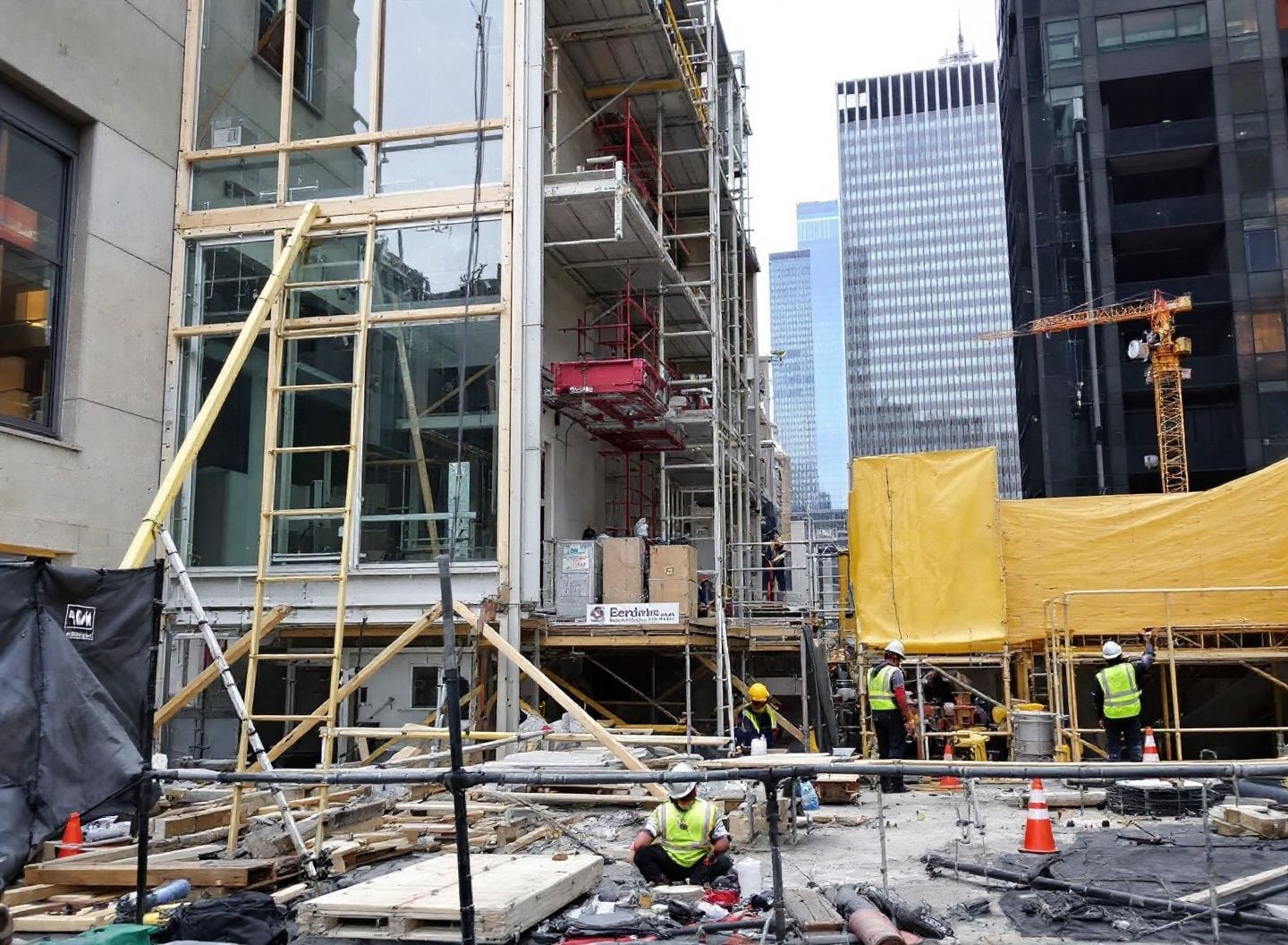
It's impossible to talk about wrongful-death claims in construction without talking about how these deaths actually occur. Falls from height are the leading cause of fatal injuries in the construction industry, and they're also the category most directly addressed by New York's strongest worker-protection laws.
Labor Law § 240, commonly called the Scaffold Law, imposes an absolute duty on property owners and general contractors to furnish or erect proper scaffolding, hoists, ladders, and other safety devices whenever workers are engaged in elevation-related work. The statute's liability is strict: if a worker falls because an adequate safety device was absent or defective, the owner and contractor are liable regardless of whether they were personally present or personally negligent. A sub-contractor's carelessness or even a worker's own comparative negligence generally does not defeat the claim, which is why Labor Law § 240 cases tend to be particularly strong for injured workers and their families.
On the regulatory side, 12 NYCRR 23-1.7 sets specific safety standards for protecting workers from hazardous conditions during construction, demolition, and excavation operations. These regulations give detailed, trade-specific requirements for things like floor openings, overhead protection, and protection from falling objects. When a fatality occurs in a context where 12 NYCRR 23-1.7 was violated, that regulatory breach can serve as a basis for a Labor Law § 241(6) claim, which runs alongside the § 240 claim. Unlike § 240's strict liability, a § 241(6) claim requires proving that a specific, concrete regulatory requirement was violated, but the defendant's negligence doesn't need to be shown in the traditional sense.
Federal law layers on top of state law. 29 CFR 1926.501 is OSHA's primary fall-protection standard for construction work, and it generated more than six thousand citations nationwide in fiscal year 2024, making it the most-cited OSHA standard for that year. An OSHA citation following a fatal accident isn't itself proof of civil liability, but it documents that the site conditions fell below federally mandated minimums, and that record can be valuable evidence as a wrongful-death case is built.
Different construction trades carry different risk profiles. Ironworkers and structural steel connectors work at extreme heights with shifting, unstable surfaces. Roofers work on sloped surfaces without the fall-protection infrastructure common on a steel frame. Masons and bricklayers often work from scaffolding that, if improperly erected or missing guardrails, creates catastrophic fall risks. Laborers doing demolition face unstable floor decks and openings that may be covered inadequately or not at all. Understanding the trade is important because it shapes both the applicable regulations and the economic loss calculation: wage rates, union benefits, and career trajectories vary significantly across trades.
Hurt on a Construction Site?
Tell us what happened. A licensed New York attorney will review your case and call you — free, no obligation.
Who Can Bring a Wrongful-Death Claim and Who Benefits
Under EPTL 5-4.3, the wrongful-death action must be brought by the personal representative of the estate, which is typically an administrator or executor. But the damages recovered don't become part of the general estate; they're distributed to the distributees who actually suffered pecuniary loss. In practical terms, that usually means a surviving spouse, children, and sometimes parents, depending on the circumstances.
Courts look carefully at the actual financial relationship between the deceased and each distributee. A spouse who shared income and household expenses with the deceased will generally have a stronger pecuniary-loss claim than an adult child who had been financially independent for years. Minor children, on the other hand, have decades of expected support and guidance ahead of them, which can significantly increase their share of the recovery.
Building the Evidence: What Attorneys Need
Because pecuniary loss is calculated rather than simply felt, the evidentiary demands in a wrongful-death case are substantial. Attorneys typically work with vocational experts and economists to project lifetime earnings. They'll need tax returns, union benefit records, pay stubs, employer records, and sometimes testimony from coworkers and supervisors about the worker's performance and trajectory.
On the liability side, attorneys will gather the accident report, OSHA inspection records, site photographs, scaffold erection plans, safety plans, and witness statements. If the case involves a Labor Law § 240 claim, the attorney will want evidence showing what safety device was absent, inadequate, or defective, and how that failure caused the fall. If 12 NYCRR 23-1.7 is at issue, the attorney will identify which specific provision was violated and document the conditions that violated it. Evidence that 29 CFR 1926.501 was breached helps establish the same point from a federal regulatory perspective.
Time is genuinely critical. New York's wrongful-death statute of limitations is generally two years from the date of death. That sounds like a long time, but accident scenes change quickly, witnesses move on, surveillance footage gets overwritten, and physical evidence disappears. Early investigation preserves options that late investigation cannot recover.
The Honest Limits of New York's Wrongful-Death Law
New York's wrongful-death statute has been criticized by advocates and legal scholars for years because it doesn't allow recovery for grief, loss of consortium in the emotional sense, or the sheer pain of losing someone who was loved. A few years ago, there were legislative efforts to modernize the statute and add a category for non-economic loss, but as of this writing, the traditional pecuniary-loss framework remains in place.
This matters practically. A young worker without dependents, who earned modest wages and had few years in the workforce, presents a smaller pecuniary-loss calculation than an experienced tradesperson supporting a spouse and three children. That result can feel deeply unjust to families, and it is worth acknowledging honestly. The law doesn't claim to compensate for the full human cost of losing someone. It compensates for the financial harm that the law can measure.
That said, the combination of New York's strict-liability scaffold law, the specific regulatory requirements of 12 NYCRR 23-1.7, and the potential for a survival action to run alongside the wrongful-death claim often gives construction families more legal tools than families in other contexts. An attorney experienced in New York construction law can identify every available theory of liability and every category of compensable loss, and that knowledge makes a real difference in outcomes.
Steps Families Should Take After a Fatal Construction Accident
Attorney Advertising. Prior results do not guarantee a similar outcome. This article is for general informational purposes only and does not constitute legal advice. NY Construction Advocate connects injured workers with experienced New York construction accident attorneys.
Frequently Asked Questions
What is pecuniary loss, and why does it limit what New York families can recover in a wrongful-death case?▼
How does Labor Law § 240 apply when a construction worker is killed rather than injured?▼
Can a family recover for pre-death pain and suffering if the worker didn't die instantly?▼
What role do OSHA citations, including violations of 29 CFR 1926.501, play in a civil wrongful-death case?▼
Who actually receives the money recovered in a New York wrongful-death case?▼
How does the family's attorney calculate what a deceased construction worker would have earned over a lifetime?▼
Is there a deadline for filing a wrongful-death claim in New York, and what happens if it's missed?▼
Get a Free Case Review
Find out if you have a claim under New York Labor Law. A licensed NY attorney will review your case and call you back.