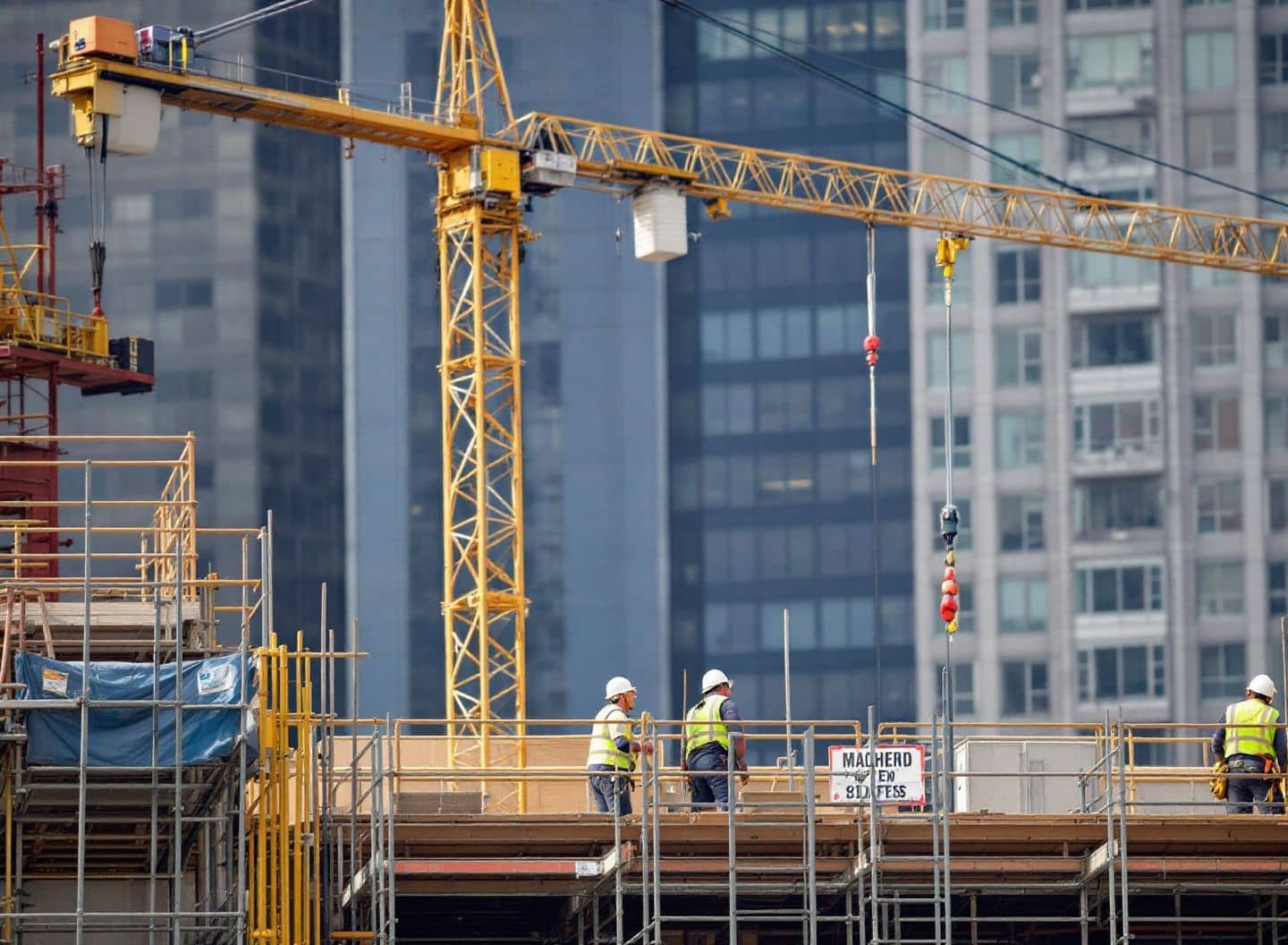
Tube-and-coupler scaffolding is one of the most common temporary structures on New York construction sites. You'll see it rising alongside renovation projects, façade repairs, and new high-rise construction throughout the five boroughs. It's versatile, it can be configured around almost any building geometry, and when it's built correctly it's reasonably safe. The problem is that it's not always built correctly. Workers get hurt, and sometimes they get killed, when the engineering fundamentals are ignored under schedule pressure or cost pressure or both.
This article explains how pipe-and-frame scaffolds fail, which specific technical deficiencies cause the most injuries, and how New York law assigns responsibility when a collapse happens. If you've been injured on a scaffold, understanding these mechanisms matters. It helps you recognize what went wrong, and it helps you understand why the law places a heavy burden on owners and contractors rather than on the workers who had no choice but to stand on the structure.
How Tube-and-Coupler Scaffolds Are Supposed to Work
Tube-and-coupler scaffolding (also called pipe-and-frame scaffolding) is built from steel tubes connected by right-angle or swivel couplers. Unlike prefabricated frame scaffolding, it doesn't rely on factory-welded frames. Each connection is made in the field, which gives the system flexibility but also creates multiple points where human error can compromise structural integrity. The system depends on a specific combination of standards (vertical tubes), ledgers (horizontal tubes), transoms (cross-members), and diagonal bracing to carry loads safely to the ground. Remove or weaken any of those elements and the whole assembly becomes unstable.
The Three Most Common Failure Mechanisms
1. Base Instability and Mudsill Failures
Scaffold legs concentrate enormous point loads. On a properly prepared, solid concrete surface, a steel base plate can distribute that load adequately. But New York job sites are rarely that clean. Sidewalk bridges sit over excavated sidewalks. Scaffolds for brownstone façade work get erected over backfilled trenches or compacted-but-not-cured fill. Scaffold standards are sometimes planted directly on asphalt, loose soil, or the kind of soft urban fill that shifts under sustained load.
When base plates bear on soft or uneven ground without proper mudsills beneath them, differential settlement begins. One leg sinks slightly more than another. That small differential introduces a lean into the vertical tubes, which changes the load path, which increases lateral force on every coupler above it. Workers may not notice the lean immediately, especially on a large scaffold. By the time a visible tilt develops, the couplers and braces may already be overloaded. A sudden additional load, a material delivery, a gust of wind, a shift in the ground after rain, can trigger a progressive collapse.
2. Missing or Inadequate Cross-Bracing
Diagonal cross-bracing is what gives a scaffold frame its lateral stiffness. Without it, a rectangular scaffold frame is geometrically unstable; it can rack side-to-side under almost no force. Bracing is well understood in structural engineering, and the regulations address it specifically. The problem on job sites is not that workers don't know bracing matters. It's that bracing gets removed and not reinstalled.
This happens constantly. A crew needs to move a sheet of plywood or a bundle of conduit through the scaffold bay, so they remove a diagonal brace to open a passage. The foreman says they'll put it back when they're done. Then another crew starts working in the same bay, nobody owns the brace, and it sits on the ground for days. Meanwhile, workers continue standing and moving loads on a scaffold that now behaves like an unbraced column. Unbraced columns buckle. When a scaffold buckles, it doesn't give much warning.
3. Overloading and Coupler Failures
Tube-and-coupler systems have rated load capacities for each scaffold bay. Those capacities assume specific tube diameters, specific coupler grades, and correct spacing between standards. On working job sites, loads change constantly. Material is staged on scaffold platforms rather than moved directly to the work area. Multiple trades work on the same scaffold simultaneously. Equipment that was never part of the original scaffold design gets placed on platforms.
When a scaffold is overloaded, the failure typically begins at a coupler. Right-angle couplers are not as strong as welded connections, and they depend on the correct torque being applied to their bolts at installation. Under-torqued couplers slip. Overloaded couplers slip. When a coupler slips on a loaded scaffold, the load redistributes to adjacent connections, which may already be near their limit. This is how a localized failure cascades into a full collapse.
New York Labor Law § 240 and What It Means for Scaffold Workers
New York's scaffold law is among the strongest worker-protection statutes in the country. Labor Law § 240 requires contractors, owners, and their agents to furnish or erect scaffolding, hoists, ladders, and other safety devices during building construction, repair, or demolition. Section 240(1) liability requires an elevation-related safety-device violation that proximately caused the injury. Once both are shown, the worker need not prove ordinary negligence and comparative fault is no defense; the worker cannot recover if their own conduct was the sole proximate cause and no violation caused the injury.
This matters practically because construction workers have almost no control over whether a scaffold is properly built. A carpenter assigned to work on a scaffold didn't design it, didn't erect it, and typically has no authority to order it torn down and rebuilt. Labor Law § 240 recognizes that reality. It places the burden where the control actually lies: on the owner who permitted the work and the general contractor who supervised the site.
Claims under Labor Law § 240 are not limited to workers who fall off scaffolds. They can also cover workers who are struck by falling materials when a scaffold collapses above them, workers on the ground who are hit when a scaffold comes down, and other elevation-related failures, when a required safety device was missing or failed and that failure was a proximate cause of the injury. There is no typical value for these cases. What a claim may be worth depends on the injury, the evidence, the available insurance and the venue, and results in other cases do not predict the outcome of yours.
Hurt on a Construction Site?
Tell us what happened. A licensed New York attorney will review your case and call you — free, no obligation.
Specific Safety Rules Under 12 NYCRR 23-5
New York's Industrial Code, specifically 12 NYCRR 23-5, contains detailed technical requirements for scaffolding used in construction, demolition, and excavation work. These rules are the regulatory backbone for claims brought under Labor Law § 241(6), which requires contractors and owners to comply with specific safety standards. A § 241(6) claim requires a specific applicable Industrial Code subsection; its violation is some evidence of negligence, and the factfinder must find negligence by a project party and proximate cause. Comparative fault may reduce recovery.
The regulations address scaffold plank thickness and support spacing, guardrail height requirements, planking coverage, and the circumstances under which scaffolds must be inspected or taken out of service. They also address the duty to maintain scaffolds in safe condition throughout the project, not just at initial erection. A scaffold that passes inspection on day one can become non-compliant by day ten if materials are staged on it improperly or if bracing is removed. Under 12 NYCRR 23-5, the obligation to maintain compliance is continuous.
Federal Standards and the Volume of Scaffold Violations
At the federal level, scaffold safety is governed by 29 CFR 1926.451, the OSHA standard for scaffolding in construction. This standard covers scaffold capacity, platform construction, access, fall protection, and falling-object protection, among many other requirements.
It's worth understanding that an OSHA citation is not the same as a civil lawsuit, and an OSHA penalty does not compensate injured workers. The two systems operate separately. But OSHA inspection records and citation history can become evidence in civil litigation, and they document the specific violations that were observed on a site. If OSHA cited a contractor for missing guardrails or inadequate base support after a collapse, that record becomes part of the factual picture in any related Labor Law claim.
Who Can Be Held Responsible Under New York Law
New York's scaffold statutes cast a wide net of responsibility. A covered owner may be liable despite lack of direct supervision if a § 240(1) safety-device violation proximately caused the injury; the statutory exemption for one- and two-family dwelling owners who contracted for but did not direct or control the work must also be checked. General contractors can be liable even if the scaffold was erected and maintained by a subcontractor, when a § 240(1) violation proximately caused the injury. This is by design. The legislature understood that workers typically can't identify exactly which party made the decision that caused the collapse, and placing liability on owners and general contractors gives those parties strong incentive to ensure that subcontractors comply with safety requirements.
There are exceptions and defenses. Workers who are the sole proximate cause of their own injury may not recover under Labor Law § 240, though courts construe this defense narrowly. Owners of one- and two-family homes who did not direct or control the work may qualify for a statutory exemption. But for the vast majority of commercial and residential construction projects in New York, the full force of Labor Law § 240 applies.
Scaffold erectors themselves, and the scaffold rental companies that supply the equipment, can also face liability, though their exposure typically runs through contract claims or products liability theories rather than directly through the Labor Law. The specific facts of how the scaffold was designed, rented, erected, and maintained determine which parties are most exposed in any given case.
What Workers Should Do After a Scaffold Collapse
If you've been injured in a scaffold collapse on a New York job site, a few practical steps protect both your health and your legal rights. Get medical attention first. Not all serious injuries are immediately painful, particularly orthopedic and spinal injuries that can worsen over hours. A medical record from the date of injury establishes the connection between the incident and your condition.
Report the incident to your foreman or employer in writing, even if they already know about it. Document everything you can: photographs of the collapsed scaffold before it's removed or repaired, the names of coworkers who witnessed the collapse, the name of the general contractor and the property owner if you know it. Scaffolds are often repaired or replaced within hours of a collapse, before any formal investigation. Evidence disappears fast on construction sites.
Speak with a construction accident attorney before giving any recorded statements to insurance adjusters or defense investigators. New York Labor Law claims are complex, and the parties who are potentially liable will have their own lawyers working quickly to protect their interests. Getting legal guidance early helps ensure your rights under Labor Law § 240, Labor Law § 241(6), and the regulations under 12 NYCRR 23-5 are fully preserved.
The Broader Safety Picture
Scaffold collapses are not freak accidents. They follow predictable patterns: base plates on inadequate surfaces, cross-bracing removed and not replaced, load limits exceeded because nobody's tracking them. Every mechanism described in this article has been documented in accident investigations across New York job sites for decades. The regulations exist because the industry understood these failure modes and chose to codify the preventive measures. When those measures aren't followed, workers pay with their bodies, and sometimes with their lives.
New York's Labor Laws exist because the legislature made a deliberate policy choice: the people with the most control over job site conditions should bear the most financial risk when those conditions cause injury. That choice puts real pressure on owners and contractors to take scaffold safety seriously. It doesn't always work, but it gives injured workers a meaningful path to accountability that workers in most other states don't have.
Attorney Advertising. Prior results do not guarantee a similar outcome. This article is for general informational purposes only and does not constitute legal advice. NY Construction Advocate connects injured workers with experienced New York construction accident attorneys.
Primary sources
Frequently Asked Questions
Does Labor Law § 240 cover workers injured when a scaffold collapses beneath them, or only when they fall off the edge?▼
Can I bring a claim under New York law if I'm undocumented or working off the books?▼
What does it mean practically that Labor Law § 240(1) does not require proof of ordinary negligence?▼
If OSHA already fined the contractor after my scaffold collapse, does that resolve my claim?▼
Is the general contractor always liable, or only if the contractor directly supervised the scaffold work?▼
What kinds of evidence are most important in a pipe-and-frame scaffold collapse case?▼
Get a Free Case Review
Find out if you have a claim under New York Labor Law. A licensed NY attorney will review your case and call you back.