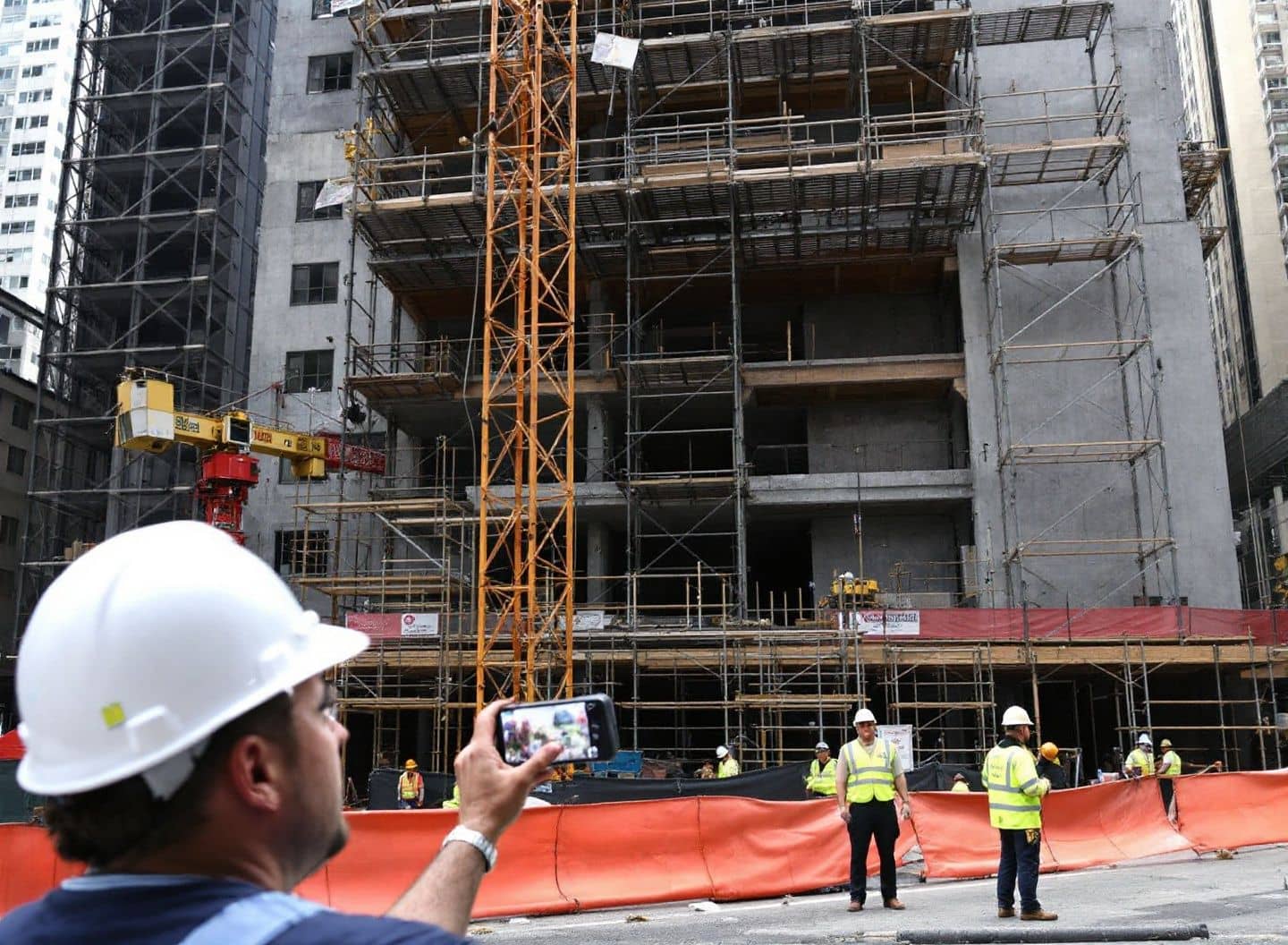
Picture a busy Manhattan high-rise project, concrete forms rising floor by floor, workers moving fast under deadline pressure. Hundreds of steel rebar rods protrude from freshly poured slabs, waiting to bond with the next pour. Each one is a spike. And when a worker falls, slips, or trips on an uneven surface and comes down on one of those unguarded rods, the injury can be catastrophic or fatal. Rebar impalement is not a rare edge-case injury. It's a recognized, preventable hazard that New York law specifically addresses, yet it keeps happening because contractors cut corners on capping.
This article explains the mechanics of rebar impalement injuries, the specific regulations that exist to prevent them, and the legal framework that gives injured New York construction workers a meaningful path to recovery. If you've been hurt, or if you've lost a family member on a site where exposed rebar was left unprotected, understanding these rules is the first step toward knowing your rights.
How Rebar Impalement Actually Happens
Rebar, short for reinforcing bar, is threaded or ribbed steel rod that's woven into concrete structures to give them tensile strength. It's everywhere on New York construction sites: in foundation excavations, on elevated decking, protruding from columns, and lining trenches. The rods are typically cut to specific lengths that leave vertical or angled ends exposed for days or weeks while the pour schedule proceeds.
The injury mechanism is straightforward and brutal. A worker slips on debris, loses footing on an uneven form board, or simply missteps near an edge. They fall downward onto a protruding rod. The rod penetrates flesh, muscle, and sometimes organs or bone. Entry wounds are often deceivingly small, but the internal damage can be severe. Injuries range from deep puncture wounds requiring surgical debridement to organ perforation, spinal cord damage, and traumatic death. Even when a worker survives, recovery can involve multiple surgeries, extended hospitalization, and permanent disability.
Certain trades carry elevated exposure to this hazard. Ironworkers are the most obvious group, since placing and tying rebar is their core task. But concrete laborers, carpenters building forms, plumbers and electricians whose work follows the concrete pour, and even general laborers tasked with cleanup all work around exposed rods regularly. Supervisors and foremen who walk the deck face the same risk. The hazard doesn't discriminate by craft.
The Regulations That Are Supposed to Prevent This
Two distinct regulatory frameworks apply to exposed rebar on New York construction sites, and together they create a clear, non-negotiable standard of protection.
New York's Industrial Code: 12 NYCRR 23-1.7
New York State's Industrial Code regulation 12 NYCRR 23-1.7 is the foundational state-level rule governing protection in construction, demolition, and excavation operations. It exists specifically to define the safety practices that employers and site owners must maintain for workers on these sites. Courts have repeatedly recognized that violations of 12 NYCRR 23-1.7 can serve as the basis for liability under New York's Labor Law.
The regulation covers a range of fall and impalement hazards. Its requirements address protecting workers from sharp projections, surface irregularities, and conditions that create foreseeable fall or impalement risk. When a general contractor or site owner allows rebar to remain uncapped and unguarded in areas where workers are present, that failure can constitute a violation of 12 NYCRR 23-1.7. The regulation doesn't exist as a suggestion. It carries the force of law.
Federal OSHA Standards: 29 CFR 1926.701(b) and 1926.501
At the federal level, OSHA's rebar impalement rule, 29 CFR 1926.701(b), requires protruding reinforcing steel to be guarded to eliminate the hazard of impalement. This regulation requires that all protruding reinforcing steel, onto and into which workers could fall, be guarded to eliminate the impalement hazard. Rebar must be guarded to eliminate impalement hazards; OSHA says ordinary mushroom-style caps may not protect a worker who falls onto the steel, while adequately protective covers or troughs may be used.
It's worth noting that not all rebar caps are created equal. OSHA has been explicit that flat plastic caps placed on top of rebar are not sufficient impalement protection. Those caps can crack, pop off, or simply buckle under the weight of a falling worker. The rule specifies the protective result rather than a particular cap shape or test; any cover used must actually eliminate the impalement hazard. Contractors who rely on cheap flat caps to check a compliance box are not actually meeting the requirement under 29 CFR 1926.701(b).
Fall protection violations under 29 CFR 1926.501 are the single most cited OSHA standard in construction nationally. In fiscal year 2024 alone, there were 6,307 citations issued under this category nationwide. That number reflects a persistent, industry-wide failure to take basic fall and impalement protection seriously.
Labor Law § 241(6) and the Duty to Injured Workers
New York's Labor Law § 241(6) is one of the most powerful tools available to injured construction workers in the state. It requires that all construction, demolition, and excavation work be conducted so as to provide reasonable and adequate protection and safety to workers. Critically, this statute imposes a nondelegable duty on owners and general contractors; a violation of a specific Industrial Code rule is evidence of negligence, and causation and reasonable care remain at issue (Rizzuto v. L.A. Wenger Contracting Co., 91 N.Y.2d 343 (1998)).
Hurt on a Construction Site?
Tell us what happened. A licensed New York attorney will review your case and call you — free, no obligation.
The phrase 'specific safety regulation' is key. Labor Law § 241(6) isn't self-executing based on a vague claim of negligence. It requires the injured worker to point to a concrete, specific rule that was violated. That's exactly where 12 NYCRR 23-1.7 becomes essential. When a worker can show that exposed rebar on the site violated 12 NYCRR 23-1.7, and that the violation caused the impalement injury, Labor Law § 241(6) imposes a nondelegable duty on owners and general contractors even without direct supervision, but a Code violation does not automatically establish negligence or liability (Rizzuto v. L.A. Wenger Contracting Co., 91 N.Y.2d 343 (1998)).
This is not a minor distinction. In typical negligence cases, a plaintiff has to prove the defendant personally did something wrong. Under Labor Law § 241(6), the property owner and general contractor can be held liable even if a subcontractor's crew left the rebar uncapped. The obligation to maintain a safe site runs through the chain of responsibility to the top.
Fireproof Flooring and the Progress-Based Safety Obligation
One specific obligation under the Labor Law framework that bears mention in the context of rebar injuries is the requirement that builders complete fireproof flooring as the work progresses. This isn't merely a fire code concern. When flooring is completed progressively, workers on upper decks have stable, solid surfaces underfoot. When flooring is left incomplete, gaps, uneven edges, and exposed reinforcement create exactly the fall conditions that send workers onto unguarded rebar below or alongside the opening. A contractor who delays flooring completion to save time or money may be creating multiple simultaneous legal violations.
What Injured Workers and Families Should Do
If you or a coworker has suffered a rebar impalement injury on a New York construction site, certain steps matter immediately, both for your health and for your legal rights.
Workers' compensation covers a rebar impalement injury regardless of fault, but it's rarely the only source of recovery available. When third-party liability exists through the general contractor or property owner, a separate civil claim can address the full scope of harm the injury caused, including losses that workers' compensation doesn't touch. The value of a claim varies with the severity of the injury, the extent of permanent disability, and the impact on the worker's earning capacity and quality of life.
Why These Cases Are Worth Fighting
Rebar impalement injuries are serious, and the law recognizes that. New York's Labor Law protections exist precisely because the legislature understood that construction workers face risks that most people never encounter in their working lives, and that those workers are often in no position to refuse unsafe conditions without losing their jobs. The law shifts the responsibility for site safety onto the parties who have the authority and resources to control it: owners and general contractors.
When someone suffers a penetrating wound from unguarded steel because a contractor chose cheap caps over covers capable of preventing impalement, or decided capping could wait until 'the inspectors come by,' that's not an accident. It's a foreseeable result of a known risk that the law required the contractor to address. The regulations under 12 NYCRR 23-1.7, the federal standard at 29 CFR 1926.701(b), and the statutory protection of Labor Law § 241(6) exist because rebar impalement is preventable. When those rules are ignored and a worker is hurt, the legal system is designed to make that matter.
If you've been hurt on a New York construction site due to an impalement injury or any fall-related hazard, speaking with an attorney who focuses on construction accidents is the best way to understand what your specific situation looks like under New York law. No article can substitute for that conversation. But knowing the regulatory framework puts you in a far better position to ask the right questions.
Frequently Asked Questions
Attorney Advertising. Prior results do not guarantee a similar outcome. This article is for general informational purposes only and does not constitute legal advice. NY Construction Advocate connects injured workers with experienced New York construction accident attorneys.
Primary sources
Frequently Asked Questions
Does New York law cover rebar impalement injuries specifically, or only fall injuries?▼
Can I sue my employer if I'm hurt by exposed rebar on a job site?▼
What's the difference between a flat plastic rebar cap and a rated mushroom cap, and does it matter legally?▼
How long do I have to file a claim after a rebar injury in New York?▼
Does it matter if I was partly at fault for falling onto the rebar?▼
Can family members of a worker killed by rebar impalement bring a claim in New York?▼
Get a Free Case Review
Find out if you have a claim under New York Labor Law. A licensed NY attorney will review your case and call you back.