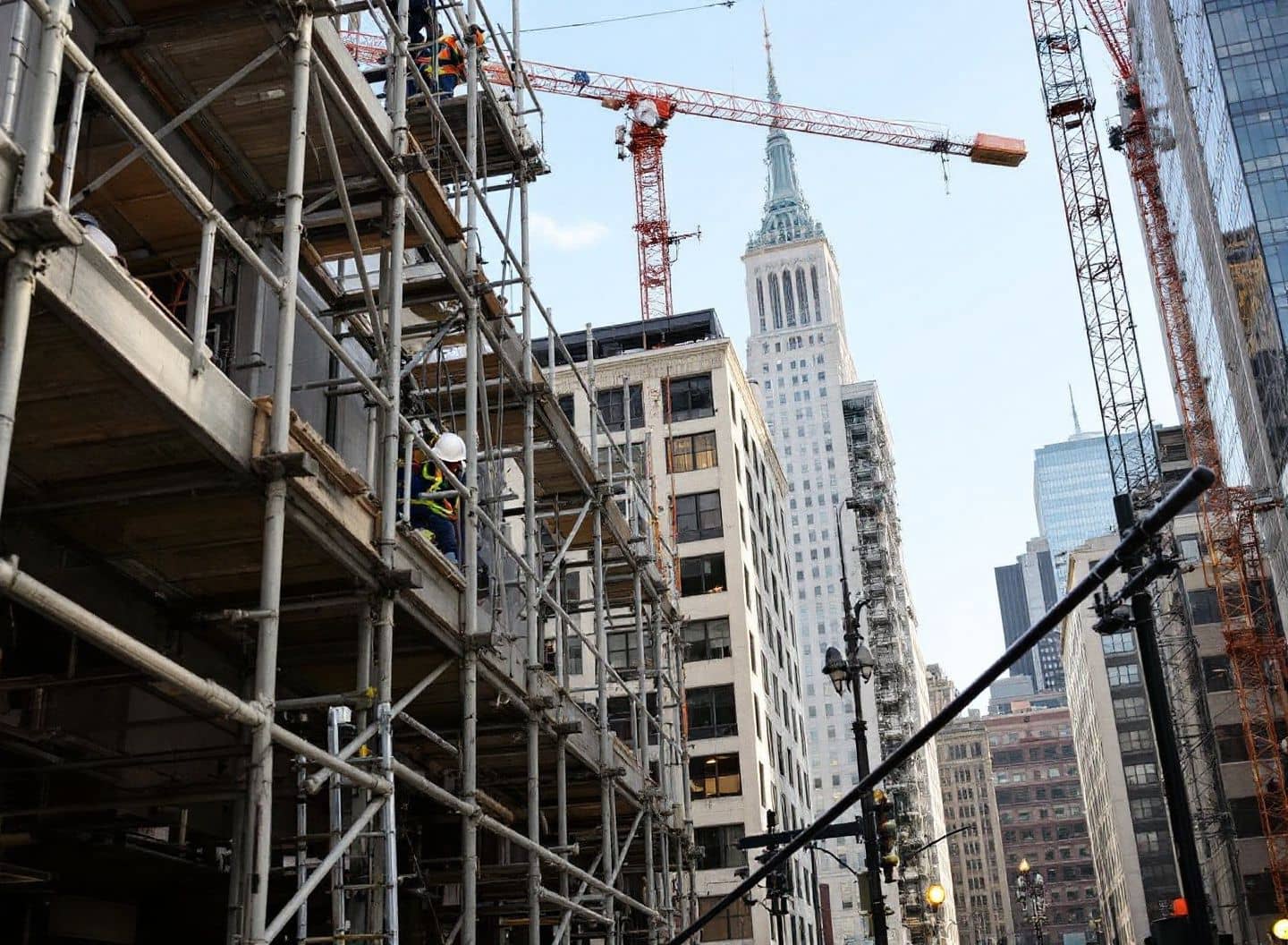
When a construction worker gets hurt on a job site, the first question most people ask is whether the site was safe. But a follow-up question that often gets overlooked is just as important: had this employer been warned before? OSHA records are public. Citation histories are searchable. And in New York, an employer's track record of safety violations can play a significant role in how a personal injury or Labor Law claim unfolds. Understanding how that history gets used, and why it matters so much, is essential for any injured worker trying to make sense of their legal rights.
What OSHA Citations Actually Mean
The Occupational Safety and Health Administration issues citations when it finds that an employer has violated federal safety standards. Citations aren't just paperwork. They're formal findings that a specific rule was broken at a specific time, and they carry penalties that escalate with the severity and willfulness of the violation. OSHA classifies violations as other-than-serious, serious, willful, repeat, or failure-to-abate. Each classification carries different legal weight.
A 'willful' violation means OSHA determined the employer either knew the rule applied and chose to ignore it, or acted with plain indifference to worker safety. A 'repeat' violation means the employer was cited for the same or substantially similar standard within the prior five years. These two categories are especially significant in civil litigation, because they go directly to what the employer knew and when.
One of the most cited federal standards in construction is 29 CFR 1926.501, which governs fall protection. It is first on OSHA's list of its ten most frequently cited standards across all industries for fiscal year 2025. Fall protection failures are pervasive, and when an employer has been cited under 29 CFR 1926.501 before, that prior citation is documentation that they already knew unprotected edges, open holes, and inadequate guardrails were putting workers at risk.
The Role of Prior Citations in Establishing Notice
In New York civil litigation, 'notice' is a foundational concept. To hold a property owner, general contractor, or employer liable for a dangerous condition, you often need to show they knew about it, or reasonably should have known about it, and failed to act. Prior OSHA citations are one of the clearest ways to establish that notice.
Think about what a prior citation actually represents. A federal inspector visited a job site, documented a violation, issued formal written notice to the employer, and the employer signed an abatement agreement. If the same type of hazard appears again at a subsequent project, the employer can't credibly claim ignorance. The citation history shows they were told, in writing, that this exact type of condition was dangerous and illegal. That's actual notice, documented in a federal enforcement database.
Courts and attorneys use this history in several ways. It can support an argument that the employer's conduct rose to the level of gross negligence. It can help defeat claims that the hazard was unforeseeable. And in some cases, it factors into the analysis of whether a violation was 'willful' under New York law, which has its own consequences for how damages are assessed and which defenses remain available to the defendant.
Labor Law § 241(6) and the Industrial Code Connection
New York's Labor Law § 241(6) is one of the most worker-protective statutes in the country. It requires that construction, excavation, and demolition work be conducted in a manner that provides reasonable and adequate protection and safety to workers. Crucially, it's not a general negligence standard. It's triggered by violations of specific rules in the New York Industrial Code.
One of those rules is 12 NYCRR 23-1.7, a regulation within Part 23 of the Industrial Code that establishes safety practices for persons employed in construction, demolition, or excavation work. These regulations exist specifically to implement Labor Law § 241(6) by translating broad statutory obligations into concrete, enforceable requirements at the job site level. When a violation of a specific provision of 12 NYCRR 23-1.7 amounted to negligence and was a proximate cause of a worker's injury, a prior OSHA citation for the same type of hazard can add evidence that the hazard was known.
Labor Law § 241(6) imposes a nondelegable duty on owners and general contractors, and the worker's comparative fault can reduce recovery. The worker need not establish the owner's or general contractor's personal negligence, but must establish that a specific, applicable Industrial Code violation constituted negligence by a participant in the construction project and proximately caused the injury. A prior OSHA citation doesn't change this structure, but it adds context that strengthens the overall case, particularly when questions arise about how the site was managed, whether safety officers were present, and whether training and equipment were provided.
Hurt on a Construction Site?
Tell us what happened. A licensed New York attorney will review your case and call you — free, no obligation.
Trade-Specific Risks and the Mechanism of Injury
Falls from height are the leading cause of death and serious injury in construction, and they're particularly common among ironworkers, roofers, carpenters, and concrete workers. When a worker is on an elevated platform, working near an unguarded floor opening, or accessing a structure without adequate guardrails or personal fall arrest systems, the physics of a fall are unforgiving. Even a fall of ten or fifteen feet can result in spinal fractures, traumatic brain injury, shattered extremities, or death. The trade-specific risk is real, measurable, and well-documented.
For concrete workers and carpenters specifically, the requirement that builders complete fireproof flooring as work progresses is directly tied to fall prevention. Unfinished floor areas create open holes and unstable walking surfaces. Workers moving through a structure that lacks completed fireproof flooring may step through gaps, lose footing on unsecured decking, or fall to a lower level without warning. These aren't hypothetical hazards. They're the kinds of conditions that OSHA inspectors document repeatedly, and that generate citation histories in the federal enforcement database.
Electrical workers, pipefitters, and laborers face a different set of risks when working in excavations or near trenches. The collapse of an unshored excavation wall can bury a worker within seconds, and the weight of the soil makes rescue extraordinarily difficult. Scaffold failures affect bricklayers, plasterers, and glaziers who work at heights every day. Each trade has its characteristic dangers, and each has a corresponding set of OSHA standards that, when violated repeatedly, create a documented history of employer indifference.
How Attorneys Use Citation Records in Practice
OSHA's citation database is publicly accessible through the agency's website. Attorneys handling construction accident cases routinely search it early in an investigation. They're looking for citations issued to the general contractor, the subcontractor who employed the worker, and the property owner's affiliated entities. They're also looking for citations from other job sites, because a citation at a different project still counts as notice that the employer was aware of the hazard.
When a prior citation exists for the same type of violation, it gets used in several phases of litigation. During discovery, it supports requests for internal safety records, training logs, inspection reports, and communications about the specific hazard. During depositions, it forms the basis for pointed questions about what corrective action was taken after the prior citation and who was responsible for ensuring compliance going forward. At trial, it can be introduced to show that the defendant had been specifically warned about this type of danger and failed to prevent it from recurring.
Willful-violation findings are particularly potent. When OSHA has already determined that an employer acted with knowledge or plain indifference, that determination (while not binding on a civil court) carries significant persuasive weight. It contradicts any narrative the defense might construct about the hazard being unexpected or the employer having done everything reasonably possible to maintain a safe site.
What Injured Workers Should Do to Protect Their Claims
If you've been hurt on a New York construction site, there are steps you can take to help preserve the evidence that matters most. Report the injury immediately and ensure it's documented. Seek medical attention right away, both for your health and to create a contemporaneous record of your injuries. If possible, photograph the condition that caused your injury before it's altered or corrected. Get the names of witnesses.
Don't assume that because OSHA hasn't visited your site yet, there's no citation history. The relevant history belongs to the company, not just that particular address. A general contractor who has been cited for fall protection violations at five different projects over three years has a significant record regardless of whether any of those projects were yours.
Consulting an attorney who handles New York construction accident cases promptly is critical. Evidence gets lost. Sites get cleaned up. OSHA may or may not conduct an inspection after your accident, and if they do, the resulting citation, abatement agreement, and any contest proceedings create a parallel record that interacts with your civil claim in important ways. Timing matters considerably.
There is no typical value for these cases. What a claim may be worth depends on the injury, the evidence, the available insurance and the venue, and results in other cases do not predict the outcome of yours. A prior OSHA citation history can help show what the employer knew about a hazard, which may be relevant evidence in your claim.
Attorney Advertising. Prior results do not guarantee a similar outcome. This article is for general informational purposes only and does not constitute legal advice. NY Construction Advocate connects injured workers with experienced New York construction accident attorneys.
Primary sources
Frequently Asked Questions
Can OSHA citations from a different job site be used in my New York construction accident case?▼
What's the difference between a 'willful' and a 'repeat' OSHA violation, and why does it matter for my claim?▼
Does a prior OSHA citation automatically prove liability in my case?▼
How do I find out if my employer or the general contractor on my site has prior OSHA citations?▼
What federal standard covers fall protection, and how common are violations?▼
Does Labor Law § 241(6) require me to prove the employer was negligent, or is there a higher standard of protection?▼
What should I do immediately after a construction site injury to protect evidence of safety violations?▼
Get a Free Case Review
Find out if you have a claim under New York Labor Law. A licensed NY attorney will review your case and call you back.