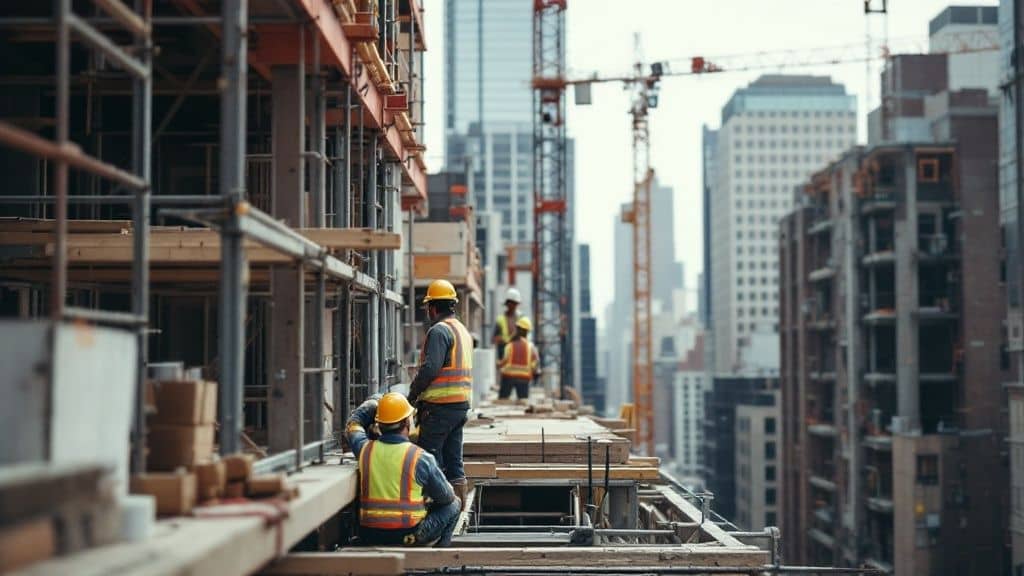
The Bronx is one of the most active construction markets in New York State. From large mixed-use developments along the Grand Concourse to residential gut-renovations in Mott Haven and commercial projects near Hunts Point, scaffolding goes up every single day. And every single day, workers trust that the scaffold supporting them was erected correctly. When it wasn't, when a base plate sinks into loose fill, or a cross-brace was stripped out and never replaced, the results can be devastating. Falls from elevated scaffolding rank among the leading causes of death and permanent disability in the construction industry. If you or someone you love was hurt in a scaffold collapse in the Bronx, understanding the specific laws that govern these accidents is the first step toward protecting your rights.
Why Scaffold Collapses Happen: The Mechanics That Matter in Court
Before discussing what a worker can recover, it's worth understanding exactly how scaffolds fail, because the cause of the collapse often determines who bears legal responsibility. Two failure modes come up again and again in Bronx cases, and both are almost always preventable.
Base Instability on Soft or Uneven Ground
Scaffold legs transfer the entire load of the structure (workers, materials, plank decking) down through base plates to the ground. On solid concrete, that load spreads predictably. On anything else, it doesn't. Loose fill, freshly compacted backfill, unpaved lots, and even saturated soil after a rainstorm can shift under load. Industry standards and the federal scaffolding regulation at 29 CFR 1926.451 require that scaffold footings be sound, rigid, and capable of supporting the maximum intended load without settling or displacement. That means mudsills (wide timber or steel pads) must be placed beneath base plates whenever the ground is anything less than solid concrete. Skip that step, and a leg can punch through the surface. When one leg drops even a few inches, the entire structure can rack and collapse sideways. Workers on upper platforms have almost no warning. They're in the air before they even understand what's happening.
Incomplete or Missing Cross-Bracing
Modular tube-and-coupler or frame scaffolds get their lateral stiffness almost entirely from diagonal cross-braces. The vertical frames hold load in compression. The cross-braces stop the structure from racking, tipping sideways like a parallelogram. Workers and foremen sometimes pull braces out temporarily to move large materials through an opening, intending to replace them afterward. They don't always do it. Sometimes braces arrive on site damaged, with bent connector pins, and crews install them anyway. Sometimes an erector simply skips a bay to save time. Any of these shortcuts leaves a section of scaffold with dramatically reduced resistance to lateral forces. A worker pushing a loaded wheelbarrow, a gust of wind funneling between Bronx buildings, or even the rhythmic bounce of crews walking in step can trigger a sudden collapse. The failure is often total, not a gradual lean but a sudden pancaking of multiple platform levels.
The Legal Framework: Three Layers of Protection
New York workers hurt in scaffold collapses don't have to rely on a single legal theory. Three distinct layers of law may apply to their case, and each carries different standards of proof and different implications for who can be held responsible.
Labor Law § 240: The Scaffold Law
Labor Law § 240 is the cornerstone of construction accident law in New York, and it's sometimes called the Scaffold Law for a reason. The statute requires property owners, general contractors, and their agents to furnish or erect proper scaffolding, hoists, ladders, stays, blocks, pulleys, braces, and other devices to protect workers engaged in building work. Under § 240(1), an owner or general contractor can be liable when a required safety device was missing or failed to give proper protection against an elevation-related risk and that violation was a proximate cause of the injury. Once both are shown, the worker's comparative negligence does not reduce recovery. This is intentional. The legislature made a deliberate policy choice that workers, who typically have no say in how a scaffold is designed or erected, should not bear the risk of an owner's or contractor's cost-cutting. In the Bronx, cases under Labor Law § 240 may be heard in Bronx County Supreme Court, located at 851 Grand Concourse. If you've been seriously hurt, that's ultimately where your case may be decided.
12 NYCRR 23-5: New York's Specific Scaffold Safety Regulations
Labor Law § 240(1) requires a statutory safety-device violation that proximately caused a covered elevation-related injury; § 241(6) separately applies when a specific applicable Industrial Code subsection was violated, that violation amounted to negligence by a party in the work chain, and it proximately caused injury. Comparative fault may reduce § 241(6) recovery. The primary scaffold regulations are found at 12 NYCRR 23-5, which sets out detailed requirements for scaffold construction, maintenance, and use across New York State. These rules cover everything from plank thickness and overhang limits to the maximum intervals between ties that anchor a scaffold to the building it serves. An applicable specific Industrial Code violation is some evidence of negligence; the factfinder must find negligence by a party in the work chain and proximate cause, and comparative fault may reduce recovery. That's a meaningful distinction. It means that even when the scaffold collapse was caused by a condition that's harder to fit within § 240's gravity framework, § 241(6) paired with 12 NYCRR 23-5 can provide an independent path to recovery.
Federal OSHA Standards: 29 CFR 1926.451
Federal OSHA regulations under 29 CFR 1926.451 set minimum standards for scaffold construction and use on most private construction sites. OSHA citations issued after a scaffold collapse may be offered as evidence in a civil lawsuit. They reflect a federal agency's finding that a specific safety standard was violated. New York courts may treat an OSHA violation as some evidence of negligence, not as proof of liability. An OSHA violation doesn't automatically decide the case, but when a defendant's own OSHA inspection record shows a 29 CFR 1926.451 violation tied to the same conditions that caused the collapse, it matters.
Hurt on a Construction Site?
Tell us what happened. A licensed New York attorney will review your case and call you — free, no obligation.
Who Can Be Held Responsible After a Bronx Scaffold Collapse
One of the most important things to understand about Labor Law § 240 is that it reaches beyond the direct employer. Workers' compensation generally limits a worker's ability to sue their own employer. But § 240 can impose liability on owners and general contractors, parties who may be entirely separate from the injured worker's direct employer. That means a laborer working for a masonry subcontractor can sue the building owner and the general contractor for a scaffold collapse even if they can't sue their own employer. In practice, Bronx scaffold collapse cases often name multiple defendants: the property owner, the GC, the scaffolding subcontractor who erected the structure, and sometimes the scaffold equipment rental company if defective equipment contributed to the failure. Each party's potential liability depends on their role, their control over the site, and the specific legal theories at play.
What Damages Are Available to Injured Bronx Workers
New York personal injury law allows injured workers to recover for the full range of harm caused by a scaffold collapse. The actual value of any particular case varies with the severity of the injury, the worker's age and occupation, the impact on their earning capacity, and many other factors. No two cases are identical. That said, the categories of recoverable damages are well established.
Past and future medical expenses: Emergency care, surgery, hospitalization, rehabilitation, physical therapy, and any ongoing treatment required because of the injury. Workers hurt in major Bronx scaffold collapses are often treated at Lincoln Medical Center, a Level I trauma center in the South Bronx equipped to handle the severe orthopedic and traumatic brain injuries these accidents produce. The cost of that care (from the ambulance ride through years of follow-up) can form a substantial part of a damages claim.
Lost wages and lost earning capacity: Time missed from work during recovery is recoverable. So is the diminished ability to earn a living going forward. A skilled ironworker or carpenter who can no longer perform their trade due to a spinal cord injury or traumatic amputation faces a loss of earning capacity that can extend across decades of a working life.
Pain and suffering: New York law recognizes both the physical pain of the injury and the mental anguish that accompanies it—the fear, depression, loss of enjoyment of life, and emotional toll of living with a serious disability. There's no formula for this. It reflects what a jury believes is fair compensation for the human experience of the injury.
Permanent disability and disfigurement: A traumatic brain injury from a fall off a multi-story scaffold, a crush injury to the pelvis, or the loss of a limb creates permanent changes to a person's life. These conditions are compensable separately from the medical bills they generate.
Loss of consortium: A spouse may have a derivative claim for the loss of companionship, services, and support that the injured worker can no longer provide.
One thing worth emphasizing: workers' compensation benefits don't disappear, but they also don't preclude a third-party lawsuit under Labor Law § 240 or § 241(6). Workers' comp pays a portion of lost wages and medical bills regardless of fault. A successful third-party lawsuit may recover categories of damages, like pain and suffering, that workers' comp doesn't touch at all. There is a lien process involved, where the workers' comp carrier seeks reimbursement from any third-party recovery, but that's a matter for your attorney to address in negotiation.
Time Limits: Don't Wait to Act
Under CPLR 214(5), personal injury actions generally must be commenced within three years. Claims against a municipal entity—like the City of New York, which owns a significant amount of Bronx property—generally require notice within 90 days under GML § 50-e and suit within one year and 90 days under GML § 50-i. Missing that 90-day window can bar a claim against a city agency unless a court allows a late notice, which is discretionary and not guaranteed. This is not a deadline to test. The investigation that supports a scaffold collapse case—preserving the scene, securing the scaffold components, obtaining OSHA inspection records, identifying witnesses—needs to happen quickly. Evidence disappears. Scaffolds are disassembled and returned to rental yards. Witnesses move on. The sooner an attorney gets involved, the better the chances of building a strong evidentiary record.
A Note on Trade-Specific Risk
Not every trade faces scaffold collapse risk equally. Bricklayers, pointing workers, and exterior restoration crews spend entire shifts on suspended or frame scaffolding—they're the workers most directly exposed when a scaffold fails. Painters on high-rise facades, concrete formwork crews, and roofers accessing work areas via scaffold access towers also face significant exposure. In the Bronx, where much of the residential building stock consists of older brick buildings requiring ongoing exterior maintenance, pointing and waterproofing work generates a disproportionate share of scaffold collapse accidents. These jobs are often performed by immigrant workers who may not speak English as a first language, who may be employed by small subcontractors with thin safety programs, and who may not know they have rights under Labor Law § 240 at all. That's part of why this educational resource exists.
Attorney Advertising. Prior results do not guarantee a similar outcome. This article is for general informational purposes only and does not constitute legal advice. NY Construction Advocate connects injured workers with experienced New York construction accident attorneys.
Primary sources
Frequently Asked Questions
Does Labor Law § 240 apply even if I was partly at fault for the scaffold collapse?▼
I work for a subcontractor on the job site. Can I still sue the building owner or general contractor?▼
What is 12 NYCRR 23-5, and how does it differ from Labor Law § 240?▼
How can OSHA records under 29 CFR 1926.451 help my case?▼
If I already filed a workers' compensation claim, can I still bring a lawsuit?▼
What should I do immediately after a scaffold collapse injury in the Bronx?▼
Are scaffold collapse claims different from other construction fall claims in New York?▼
Get a Free Case Review
Find out if you have a claim under New York Labor Law. A licensed NY attorney will review your case and call you back.