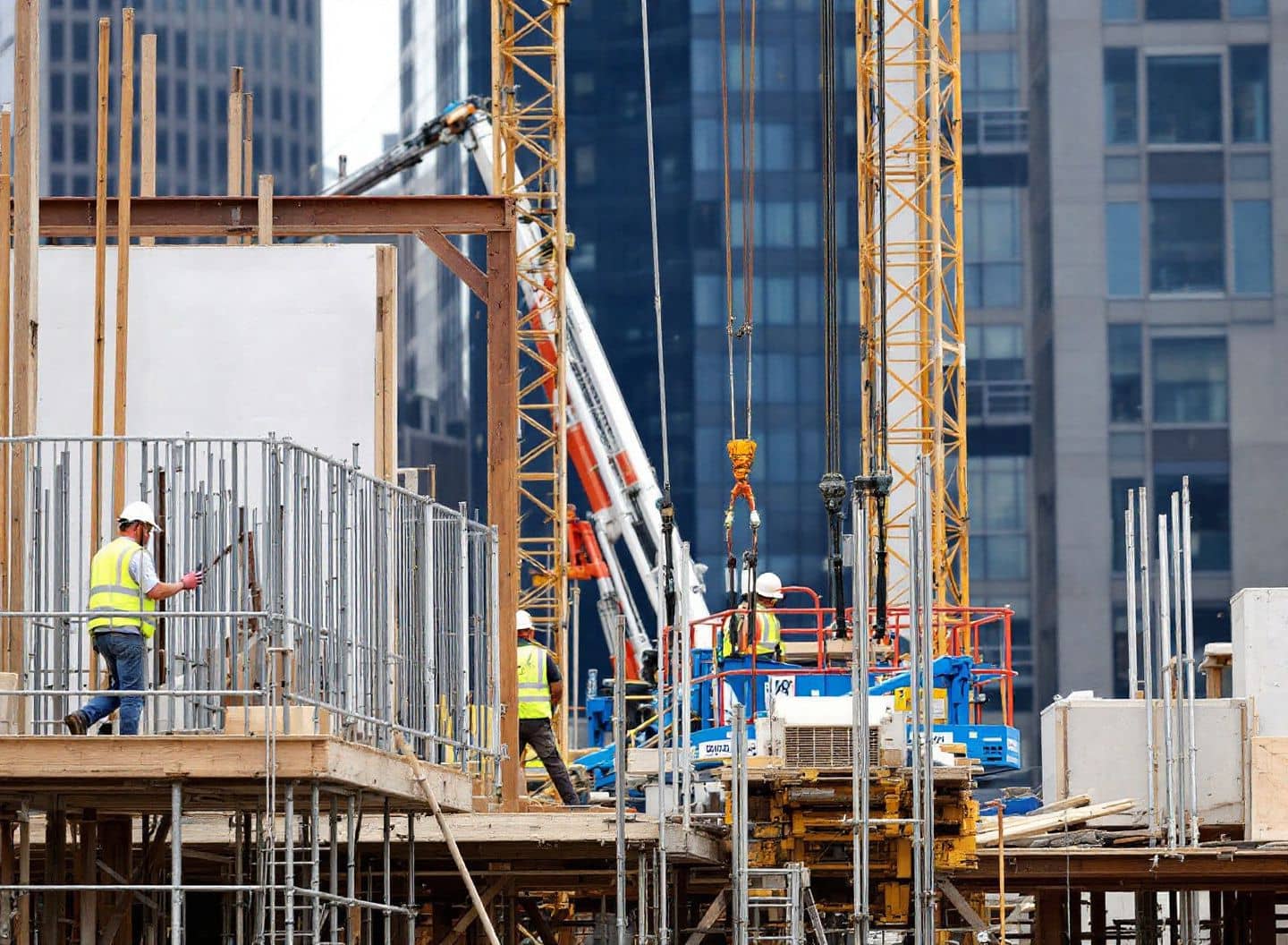
Scissor lifts are legally classified as scaffolds under New York law, so a tip-over or fall from the basket can trigger strict liability under Labor Law § 240. Owners and contractors have a non-delegable duty to provide safe equipment and guardrails. If that duty is breached and a worker is injured, the consequences for the injured worker can be serious and long-lasting.
Why Does New York Treat Scissor Lifts as Scaffolds?
New York courts have consistently ruled that a scissor lift is a scaffold because it does exactly what a scaffold does: it elevates workers so they can perform construction tasks at height. The machine's hydraulic platform, its guardrail basket, and its wheeled base all fall within the plain meaning of "scaffolding" as that term is used in New York Labor Law § 240(1). That statute requires owners, general contractors, and their agents to furnish or erect proper scaffolding, hoists, ladders, and other protective devices during building construction or repair. Because the duty under § 240(1) is strict, an owner can't escape liability simply by pointing to a subcontractor who supplied or operated the lift. If the equipment was inadequate for the elevation risk and a worker fell or was struck by a tipping platform, liability is established once the causal link is proven.
This classification matters enormously in practice. Most workplace injury claims in New York are limited by workers' compensation, which caps benefits and bars lawsuits against employers. Labor Law § 240 is a separate, additional avenue that allows an injured worker to sue the owner and general contractor directly, outside the workers' comp framework, for the full range of damages. The value of such a claim varies with the severity of the injury, the worker's lost earning capacity, and the long-term medical picture.
What Are the Most Common Ways Workers Get Hurt on Scissor Lifts?
Scissor lift injuries fall into a few recurring patterns, and understanding them helps workers and their families recognize when a preventable failure was the real cause of harm.
Driving While Elevated
Scissor lifts can be driven from the basket controls while the platform is raised, and that capability is also one of the most dangerous misuses of the machine. When a worker or a supervisor orders the lift to move across a floor while the platform is elevated several feet, the center of gravity shifts dramatically. A small obstacle, a bump in the concrete, or a slight grade in the floor can cause the entire machine to tip sideways. Workers in the basket have little warning and almost no way to brace for the fall. Injuries from tip-overs tend to be severe: the basket can crush the worker against the floor, or the worker can be ejected from the platform before the machine even fully tips. Neither scenario is survivable without serious consequences.
Uneven Ground and Outdoor Terrain
Outdoor construction sites in New York present ground conditions that change daily. Soft fill, gravel, mud, and unlevel pavement can all cause a scissor lift's wheels to sink unevenly. Manufacturers publish maximum slope ratings, often as little as a one-and-a-half to three degree grade, for elevated operation. When a lift is used on terrain that exceeds those ratings, the machine can tip without any driver error at all. Site supervisors and general contractors bear responsibility for assessing ground conditions before ordering workers aloft, and for providing outriggers or other stabilization when conditions demand it.
Missing or Unsecured Guardrail Chains
Most scissor lift baskets have a mid-rail chain or gate at the entry point. That chain is a critical fall barrier. When the chain is missing, unclipped, or broken, a worker who leans forward, loses balance, or is jostled by a co-worker has nothing between them and the drop below. Falls from even moderate heights, ten to fifteen feet, produce forces on landing that can fracture vertebrae, shatter heel bones, and cause traumatic brain injuries. The guardrail absence or failure mechanism mirrors what happens on traditional scaffolding: when a top rail, mid-rail, or toe board is missing from a scaffold edge, a worker who loses balance or is struck by a coworker has nothing to arrest the fall. Scissor lifts have the same vulnerability in a more mobile package.
Which Regulations Apply to Scissor Lifts on New York Job Sites?
Three distinct layers of rules govern scissor lift safety in New York, and each creates its own set of obligations and potential liability.
New York Labor Law § 240(1)
Hurt on a Construction Site?
Tell us what happened. A licensed New York attorney will review your case and call you — free, no obligation.
As discussed above, Labor Law § 240 imposes a non-delegable duty on owners and contractors. Courts don't require workers to prove negligence in the conventional sense. The worker must show that the statute applied, that a protective device was absent or inadequate, and that this failure was a contributing cause of the injury. Because a scissor lift is a scaffold under this framework, any tip-over or fall from the basket that results from an inadequate safety device falls squarely within the statute's reach.
12 NYCRR 23-5 and New York Labor Law § 241(6)
New York's industrial code, specifically 12 NYCRR 23-5, sets out detailed safety requirements for scaffolds used in construction, demolition, and excavation work. These regulations are adopted pursuant to New York Labor Law § 241(6), which requires that construction sites be operated in a manner that provides reasonable and adequate protection to workers. Unlike § 240(1)'s strict liability, a § 241(6) claim requires proof that the specific regulatory violation was a proximate cause of the injury, but the plaintiff does not need to prove that the defendant was negligent in a general sense. Violations of 12 NYCRR 23-5 provisions covering scaffold planking, guardrails, and load ratings can each serve as the predicate for a § 241(6) claim when a scissor lift injury occurs.
Federal OSHA: 29 CFR 1926.451
At the federal level, 29 CFR 1926.451 governs scaffold safety on construction sites and is one of OSHA's most frequently cited standards, with 1,873 citations issued nationwide in fiscal year 2024. The regulation requires guardrails on platforms more than ten feet above a lower level, sets minimum load capacity standards, and mandates that scaffolds be inspected by a competent person before each work shift. While OSHA violations don't automatically create civil liability in New York courts, they're highly relevant. An OSHA citation following a scissor lift accident can corroborate a worker's account of missing guardrails or improper use of the equipment, and it becomes part of the evidentiary picture in any resulting lawsuit.
Does It Matter That My Employer Rented the Scissor Lift From a Third Party?
No, it generally doesn't eliminate the owner's or general contractor's exposure. Under Labor Law § 240(1), the duty to provide safe equipment is non-delegable, meaning the owner and general contractor can't hand that duty off to a subcontractor or an equipment rental company and walk away clean. If the lift was defective at the time of rental, there may also be a separate products liability claim against the manufacturer or rental company. These parallel theories can coexist, and an injured worker's attorney should evaluate all of them.
What About Comparative Fault? Can My Conduct Reduce My Recovery?
Under Labor Law § 240(1), comparative negligence by the worker is generally not a defense available to the owner or contractor. New York courts have held that when the safety device was simply absent or inadequate, the worker's actions leading up to the fall don't offset liability. This is different from ordinary negligence claims, where a court apportions fault among all parties. There's one important exception: if the worker was the "sole proximate cause" of the accident, meaning the equipment was adequate and the worker deliberately misused it against all instructions, the § 240 claim can fail. But courts set a high bar for that defense, and it doesn't apply when missing guardrails or unstable ground conditions played any role in the fall.
What Steps Should an Injured Worker Take Immediately After a Scissor Lift Accident?
Taking the right steps early protects both your health and your legal rights. Get medical attention first, even if the injury seems minor at the scene. Adrenaline masks pain, and spinal or internal injuries may not present symptoms immediately. If you're physically able, photograph the scissor lift, the ground conditions, and the guardrail or entry gate before the equipment is moved or repaired. Write down the names of everyone who saw the accident happen. Report the incident to your employer in writing and keep a copy of any written report. Do not give a recorded statement to any insurance company before speaking with an attorney who handles New York construction accident cases. Evidence disappears quickly on active job sites, and the preservation window is short.
How Long Do I Have to File a Claim in New York?
The statute of limitations for a Labor Law § 240 or § 241(6) claim against a private owner or contractor is generally three years from the date of the accident. However, if a government entity owns the property or acted as the project owner, you may need to file a notice of claim within 90 days of the accident, and the lawsuit window is typically one year and 90 days. Missing these deadlines can bar an otherwise valid claim entirely. Because the rules vary based on who owns the property and who the defendants are, it's important to consult an attorney as early as possible after the accident.
Scissor lift accidents are rarely freak occurrences. They follow predictable patterns: a machine driven elevated across uneven ground, a missing guardrail chain, a soft surface that wasn't inspected before the lift was raised. New York law, through Labor Law § 240, 12 NYCRR 23-5, and the protections built into 29 CFR 1926.451, reflects a clear policy choice: the people with the power to ensure safe conditions bear the legal responsibility when those conditions aren't met. If you or someone in your family was hurt in a scissor lift accident on a New York construction site, understanding that legal framework is the first step toward knowing what options are actually available to you.
Frequently Asked Questions
Attorney Advertising. Prior results do not guarantee a similar outcome. This article is for general informational purposes only and does not constitute legal advice. NY Construction Advocate connects injured workers with experienced New York construction accident attorneys.
Primary sources
Frequently Asked Questions
Is a scissor lift considered a scaffold under New York law?▼
Can I sue my employer if I fall from a scissor lift on a New York job site?▼
What if the scissor lift guardrail chain was missing and my employer says I should have noticed?▼
Does it matter that the accident happened because the lift was driven on uneven ground?▼
What is the difference between a Labor Law § 240 claim and a Labor Law § 241(6) claim after a scissor lift accident?▼
How quickly do I need to act after a scissor lift accident in New York?▼
Get a Free Case Review
Find out if you have a claim under New York Labor Law. A licensed NY attorney will review your case and call you back.