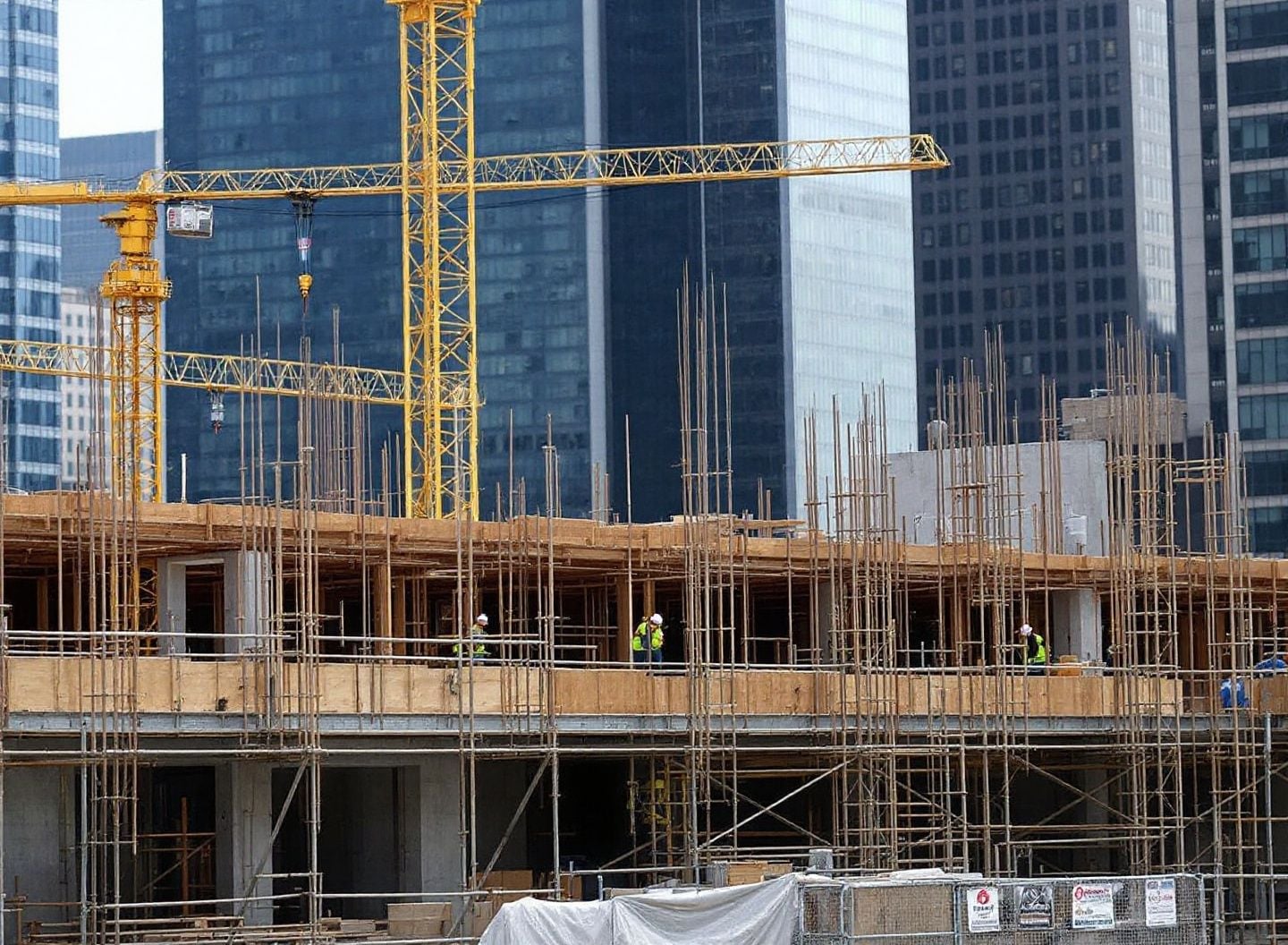
When people think about construction site injuries, they usually picture falls, falling objects, or equipment accidents. Those are serious, and they're common. But there's another category of harm that's slower, quieter, and in many ways just as devastating: occupational illness caused by breathing in respirable crystalline silica dust. For New York construction workers, silica exposure is not a remote possibility. It's a daily reality on demolition sites, drilling operations, concrete cutting jobs, and masonry work across the five boroughs and beyond.
What Is Respirable Crystalline Silica and Why Does It Matter?
Silica is a mineral found in materials that construction workers handle constantly: concrete, brick, mortar, sandstone, granite, and most engineered stone products. When those materials are cut, ground, drilled, chipped, or otherwise disturbed, they release microscopic particles into the air. The dangerous fraction is called respirable crystalline silica, meaning particles small enough to travel deep into the lungs when inhaled.
Here's the problem with those tiny particles: the human lung cannot clear them. Once silica dust reaches the alveoli, the body's immune cells attack the particles in a process that causes progressive, irreversible scarring of lung tissue. This condition is called silicosis. It has no cure. Mild silicosis may take years or even decades to become symptomatic, which is part of what makes it so insidious. By the time a worker notices shortness of breath, reduced exercise tolerance, or persistent cough, significant lung damage has already occurred.
Silicosis isn't the only disease linked to silica exposure. Workers with long-term exposure face elevated risks of lung cancer, kidney disease, and chronic obstructive pulmonary disease (COPD). Research has also associated silica exposure with autoimmune conditions including scleroderma, lupus, and rheumatoid arthritis. In short, the health consequences extend well beyond the lungs.
Which Construction Trades Face the Highest Risk?
Silica exposure isn't limited to one trade. That's an important point. Almost any construction worker can face dangerous dust levels under the right conditions, but certain tasks and trades carry especially high risk.
The common thread across all of these tasks is that silica becomes dangerous when the material is disturbed. Dry cutting amplifies the hazard. Enclosed or poorly ventilated work areas make it worse. And workers who perform silica-generating tasks for years without adequate protection accumulate a body burden of dust that eventually expresses itself as disease.
OSHA's Silica Standard: What Employers Are Required to Do
The federal Occupational Safety and Health Administration published its construction silica standard, codified at 29 CFR 1926.1153, in 2016. It represents one of the most significant updates to construction worker health protection in decades, and it places specific obligations on construction employers that go far beyond simply handing workers a dust mask.
The core requirement under 29 CFR 1926.1153 is keeping worker exposure to respirable crystalline silica at or below the permissible exposure limit (PEL) of 50 micrograms per cubic meter of air, measured as an eight-hour time-weighted average. There's also an action level of 25 micrograms per cubic meter, and exceeding that threshold triggers a set of additional employer obligations even if the PEL isn't breached.
The regulation gives employers two ways to comply. They can follow a table of specified engineering controls and work practices matched to particular tasks (the table method), or they can conduct air monitoring to measure actual worker exposure and implement controls based on those results. Either way, the employer can't simply tell workers to be careful. Specific, documented controls are required.
Engineering controls come first. These include water suppression (wet methods that prevent dust from becoming airborne in the first place), local exhaust ventilation systems attached directly to tools, and enclosures or isolation of dust-generating processes. When engineering controls alone can't bring exposure below the PEL, the employer must provide appropriate respirators. Crucially, respirators are a backup, not a substitute for engineering controls.
Beyond dust control, 29 CFR 1926.1153 requires employers to establish and maintain a written exposure control plan, train workers on silica hazards and the controls in use, restrict housekeeping practices that disperse dust (like dry sweeping or compressed air), and provide medical surveillance for workers who are regularly exposed above the action level for 30 or more days per year. Medical surveillance includes periodic chest X-rays and lung function testing. Workers exposed at those levels must have access to a licensed physician for evaluation at the employer's expense.
Hurt on a Construction Site?
Tell us what happened. A licensed New York attorney will review your case and call you — free, no obligation.
New York Law and the Construction Site Safety Framework
Federal OSHA requirements are the floor, not the ceiling. New York State has its own body of construction safety law that gives injured and ill workers additional legal tools, and understanding how those laws interact matters when someone is evaluating their options.
Labor Law § 241(6) is one of the most important statutes in this area. It imposes a non-delegable duty on property owners and general contractors to provide reasonable and adequate protection to workers engaged in construction, excavation, and demolition. The statute gets its practical teeth from the Industrial Code, particularly 12 NYCRR 23-1.7, which sets out specific safety requirements for construction, demolition, and excavation operations. When a contractor violates a concrete rule in the Industrial Code and a worker suffers harm as a result, Labor Law § 241(6) may support a claim against the owner and general contractor, even if those parties were not the direct employer of the injured worker.
12 NYCRR 23-1.7 is specifically designed to implement the protections that Labor Law § 241(6) promises. The regulations under that section address a range of site hazards, and where silica dust exposure is concerned, the applicable provisions reinforce the duty to control airborne hazards in construction environments. It's also worth noting that fall protection requirements at 29 CFR 1926.501 generated 6,307 OSHA citations nationwide in fiscal year 2024, which underscores how frequently basic safety obligations go unmet on real construction sites. Silica violations, while tracked separately, reflect the same systemic failure to protect workers.
For workers with silica-related illness, the non-delegable duty framework created by Labor Law § 241(6) is significant because it means that the property owner and general contractor cannot escape liability simply by pointing to a subcontractor as the responsible party. The law places responsibility on those who control the overall project.
Occupational Illness Claims: Workers' Compensation and Third-Party Liability
When a construction worker develops silicosis or another illness linked to silica exposure, two distinct legal pathways may be available, and they're not mutually exclusive.
Workers' compensation is usually the first avenue. New York's workers' compensation system covers occupational diseases, not just traumatic injuries. Silicosis qualifies as an occupational disease under New York law when it's caused by conditions particular to the worker's employment. A successful claim can provide coverage for medical treatment and a portion of lost wages. Workers' compensation doesn't require proving that anyone was negligent. The tradeoff is that it generally bars a worker from suing their direct employer in civil court.
The more complex and potentially more significant legal option is a third-party personal injury claim. In construction, the worker's direct employer is often a subcontractor, while the general contractor and property owner are separate entities. Those parties are not the worker's employer under the workers' compensation framework, which means they can be sued in court. A third-party claim based on Labor Law § 241(6) and its implementing regulations under 12 NYCRR 23-1.7 does not require the worker to prove that the defendant was directly negligent in the traditional sense. It requires showing that a specific safety regulation was violated and that the violation was a proximate cause of the worker's injury or illness.
Third-party claims can cover damages that workers' compensation doesn't, including pain and suffering, the full value of lost earning capacity, and compensation for the loss that family members experience when a worker's health is significantly diminished. The value of any given claim varies with the severity of the illness, the worker's age and occupation, the degree of exposure, and how clearly liability can be attributed to the parties who controlled the worksite.
Timing matters in these cases. Silica-related diseases have long latency periods, which can complicate statute of limitations analysis. Under New York law, the clock for an occupational disease claim generally begins to run when the worker knew or should have known of the illness and its connection to their work. Getting qualified legal advice promptly after a diagnosis is critical because delays in filing can forfeit otherwise valid claims.
What Workers Should Do After a Silica Exposure Diagnosis
If you've been diagnosed with silicosis, lung cancer, or another condition that a doctor links to workplace silica exposure, there are steps that can protect both your health and your legal rights.
First, continue medical care and follow your doctor's recommendations. Your health comes before any legal process. Ask your physician to document the connection between your work history and your diagnosis in your medical records. That documentation will matter in any legal proceeding.
Second, compile your work history as thoroughly as you can. Which employers did you work for, and in what years? What tasks did you perform? Were dust controls in place, and if so, what kind? Were you provided respirators, and were they properly fitted? This kind of detail helps establish both exposure and the failure to comply with OSHA requirements under 29 CFR 1926.1153.
Third, don't wait to consult an attorney who handles New York construction injury and occupational illness cases. The legal framework governing these claims, including the interaction of workers' compensation, Labor Law § 241(6), and the Industrial Code under 12 NYCRR 23-1.7, is genuinely complex. An attorney can identify who the potentially liable parties are, evaluate statute of limitations issues, and assess whether a third-party claim is viable given your work history.
Silica-related disease doesn't develop overnight, and it doesn't resolve overnight. Workers who spent years building New York's infrastructure deserve to understand that the law may provide a path to accountability for the companies that failed to keep them safe.
Frequently Asked Questions
Attorney Advertising. Prior results do not guarantee a similar outcome. This article is for general informational purposes only and does not constitute legal advice. NY Construction Advocate connects injured workers with experienced New York construction accident attorneys.
Frequently Asked Questions
Can I file a lawsuit for silicosis even if I already filed a workers' compensation claim?▼
How long do I have to file a silica exposure claim in New York?▼
What does OSHA require employers to do specifically to protect workers from silica dust?▼
What if my employer claims that respirators were available and I chose not to wear one?▼
Does Labor Law § 241(6) apply to occupational illness, or only to traumatic injuries?▼
I worked for multiple contractors over many years. Can I still make a claim if I don't know which job caused the silicosis?▼
Get a Free Case Review
Find out if you have a claim under New York Labor Law. A licensed NY attorney will review your case and call you back.