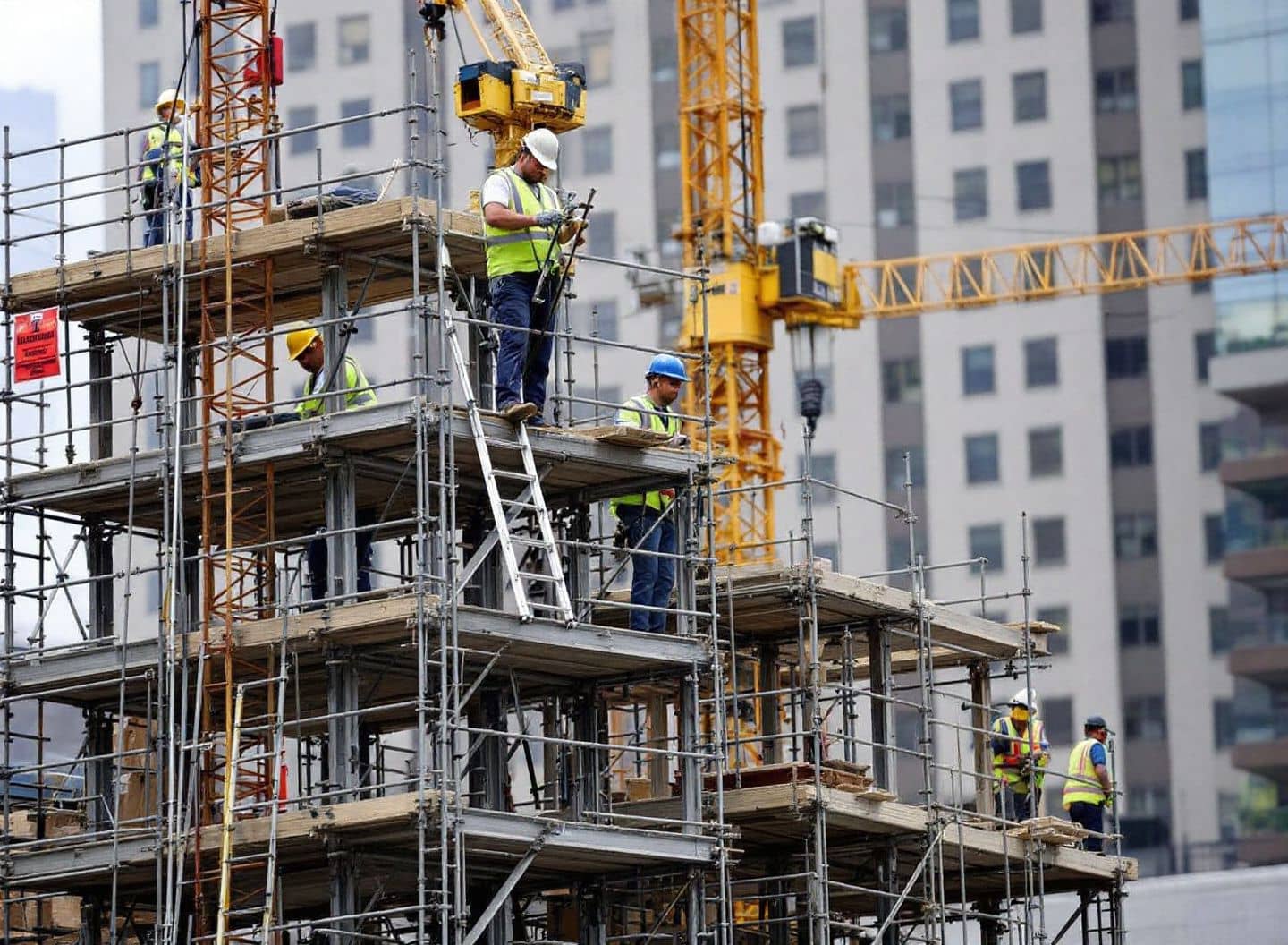
When a worker is sent onto a New York City job site without a required Site Safety Training card, that gap is more than a paperwork violation. It's direct evidence that the worker wasn't given the safety instruction the law demands. Missing SST credentials can strengthen an injury claim significantly, because training failures often connect directly to the accident itself.
What Is Local Law 196, and Who Does It Cover?
Local Law 196 of 2017 is New York City's answer to a persistent problem: workers showing up on major construction sites without any verified safety training. The law requires workers and supervisors at most sites covered by a NYC Department of Buildings construction or demolition permit to carry a Site Safety Training (SST) card proving they've completed a minimum number of OSHA-approved training hours. Workers generally need at least 40 hours of training to earn a full SST card, while supervisors need 62 hours. A temporary 10-hour card exists as a steppingstone, but it's not a long-term substitute.
The law doesn't apply to every job site in the five boroughs equally. Sites with a construction superintendent, site safety manager, or site safety coordinator requirement are the primary targets. That covers most major excavation, demolition, and high-rise projects. Smaller residential sites may fall outside the mandate, but the principle behind the law — that workers deserve verified training before they're exposed to serious hazards — applies everywhere as a matter of basic professional responsibility.
What Trades Face the Highest Risk When Training Is Skipped?
Falls are the single leading cause of construction fatalities, and the risk is sharpest for workers in trades that put them at elevation or near unprotected edges. Ironworkers, roofers, carpenters building concrete formwork, scaffold erectors, and exterior facade workers face this every day. An untrained ironworker may not recognize the difference between a properly tied-off lanyard anchor point and one that simply looks acceptable. An untrained laborer may not understand that a floor opening covered with plywood isn't the same as a properly secured hole cover.
The mechanism of injury in these situations is often straightforward: a worker without adequate training isn't taught to inspect their own fall-arrest equipment, doesn't know the site's emergency procedures, or doesn't understand what a safety monitor's instructions mean. That knowledge gap turns a manageable hazard into a catastrophic one. Falls from scaffolding, open-sided floors, ladders, and rooftops cause injuries ranging from broken bones and spinal trauma to traumatic brain injuries. Falls from height can be fatal. The trade-specific risk is real, it's documented nationally, and it's preventable through proper instruction.
How Does Federal Fall Protection Law Intersect with SST Requirements?
Federal standards don't disappear just because New York has its own rules. Under 29 CFR 1926.501, employers must ensure that workers on walking or working surfaces with unprotected sides and edges six feet or more above a lower level are protected by guardrail systems, safety net systems, or personal fall arrest systems. In federal fiscal year 2024, OSHA issued 6,307 citations nationwide under this single regulation alone, making it the most-cited standard in construction. That number tells you how often employers fail to meet even the baseline.
SST training is supposed to teach workers how to recognize when those protections are missing or defective. A worker who's never been taught to identify an inadequate anchor point, or who doesn't know that a guardrail needs to withstand 200 pounds of outward force, is operating blind. When an employer sends that worker up without proper credentials and an accident happens, the absence of the SST card is a concrete, documentable failure — not an abstract one.
Understanding the Connection Between Labor Law § 241(6) and Safety Regulations
New York Labor Law § 241(6) imposes a non-delegable duty on property owners and general contractors to provide reasonable and adequate protection to workers involved in construction, excavation, and demolition. What makes this statute powerful is that it doesn't just state a general obligation. It incorporates specific industrial codes, meaning a violation of a particular safety regulation can serve as direct evidence of liability under the statute.
One of the most frequently invoked sets of those regulations is 12 NYCRR 23-1.7, which covers protection in construction, demolition, and excavation operations. These rules implement Labor Law § 241(6) by defining the specific safety practices required on job sites — guardrails near open edges, overhead protection, and much more. When a worker is hurt because a required protection wasn't in place, the combination of § 241(6) and 12 NYCRR 23-1.7 gives an injured worker a concrete legal framework to pursue accountability. Courts have consistently held that violations of these specific regulations can support a negligence claim without requiring the injured worker to prove the owner or contractor was directly and personally at fault.
There's also the fireproofing floor requirement worth noting here. Under New York Labor Law § 241(6), builders must complete fireproof flooring as work progresses on a building. This detail matters because incomplete or inadequate flooring can create fall hazards, particularly when workers are moving through partially built structures. An untrained worker may not recognize that an unfinished floor section isn't safe to cross. A trained one should.
How Does a Missing SST Card Become Evidence in an Injury Claim?
Hurt on a Construction Site?
Tell us what happened. A licensed New York attorney will review your case and call you — free, no obligation.
A missing SST card becomes evidence by documenting a specific, verifiable failure in the safety chain. During litigation, attorneys for injured workers will subpoena training records, SST card databases, site safety logs, and contractor payroll records. If those records show that a worker was present on a covered site without a valid SST card, the employer can't claim the worker was properly trained. The absence of documentation is itself documentation of a failure.
This matters because one of the common defenses in construction accident cases is that the worker was experienced and should have known better. A missing SST card cuts against that defense directly. It shifts the conversation: the employer had a legal obligation to ensure training was completed before deploying the worker, and they didn't do it. The value of an injury claim varies with the severity of the injury and the strength of the evidence, but documented training failures are among the clearest forms of evidence available.
Attorneys also look at whether supervisors on the site had the required 62-hour credentials. A supervisor without proper training is less likely to identify and correct hazardous conditions. If the supervisor directing a worker to a dangerous location was themselves uncredentialed, that compounds the employer's exposure.
What Should You Do If You Were Sent to Work Without Proper Training?
If you were injured on a job site and you weren't properly trained or credentialed at the time, document everything you can remember as soon as possible. Write down your supervisor's name, the contractor who hired you, whether you were ever given safety training, and whether anyone on the site asked to see your SST card. If you still have pay stubs, work schedules, or any correspondence from the employer, preserve them. Don't assume that because you weren't trained, your claim is weaker. Often it's the opposite.
You should also be aware that New York's construction injury statutes, including Labor Law § 241(6), generally do not allow property owners and general contractors to shift full responsibility onto injured workers through contributory negligence arguments. The non-delegable duty standard means those parties can't entirely escape accountability even when they blame the worker. This is a significant protection, and it's one reason why construction injury law in New York is meaningfully different from personal injury law in many other states.
Why General Contractors and Site Owners Are Responsible, Not Just Direct Employers
One of the most important things an injured construction worker can understand is that the contractor who handed them a paycheck isn't necessarily the only party with legal responsibility. Under New York Labor Law § 241(6), general contractors and property owners bear a non-delegable duty to maintain safe conditions, regardless of whether they directly employed the injured worker. If a subcontractor sends an untrained worker onto a site managed by a general contractor, both parties may have exposure.
This matters enormously when the direct employer is a small subcontractor with limited resources. The general contractor and the property owner aren't automatically insulated just because they hired out the work. If they controlled the site, had authority to enforce safety rules, or failed to verify that subcontractors were complying with Local Law 196 and the SST card requirements, they may share in the legal consequences of an injury.
What Patterns of SST Non-Compliance Should Workers Know About?
Several patterns appear repeatedly in cases involving untrained workers. The first is the pressure to get workers on site quickly, especially when a project is behind schedule. Supervisors sometimes tell workers to start while their paperwork is 'being processed,' even when no actual training has been scheduled. This is a red flag. The second pattern is employers who provide fake or borrowed SST cards. Workers should know that presenting a card that belongs to someone else is a violation, but more importantly, the worker bearing that card has no actual training behind it.
A third pattern involves language barriers. Workers who don't speak English fluently are sometimes placed in training that they can't fully follow, and their cards are issued as though they completed the curriculum meaningfully. SST training is supposed to be available in multiple languages, and an employer who ignores that requirement has failed in its obligation regardless of what the paperwork shows. When an injury follows training that wasn't actually understood, that gap in comprehension becomes part of the claim.
What Is the Broader Safety Culture Problem Behind Missing Training?
Local Law 196 and the SST card system exist because the construction industry in New York City had a training gap problem that voluntary compliance wasn't solving. Training takes time and money. Some employers treat it as a box to check rather than a genuine investment in worker safety. When training is treated as administrative overhead rather than a core safety function, workers go onto dangerous sites without the knowledge they need to protect themselves.
The law imposes real consequences to change that calculus. Fines, stop-work orders, and civil liability all flow from non-compliance. But legal consequences after an injury don't undo the harm. The value of enforcing these requirements consistently is that some accidents are prevented entirely. The worker who knows how to properly inspect a harness, how to identify an inadequate anchor point, and what to do when a supervisor orders them into an unsafe area is simply less likely to be seriously hurt. That's the point of training. When it's skipped, the legal system's job is to hold accountable the people who made that choice.
Attorney Advertising. Prior results do not guarantee a similar outcome. This article is for general informational purposes only and does not constitute legal advice. NY Construction Advocate connects injured workers with experienced New York construction accident attorneys.
Primary sources
Frequently Asked Questions
What is an SST card and who needs one in New York City?▼
Can I file a construction injury claim if I wasn't properly trained?▼
Does it matter that I worked for a subcontractor, not the general contractor directly?▼
What federal law covers fall protection on construction sites?▼
How do training records get used in a construction accident case?▼
What should I do immediately after a construction accident involving an untrained worker situation?▼
Is Local Law 196 the only training requirement that applies to NYC construction workers?▼
Get a Free Case Review
Find out if you have a claim under New York Labor Law. A licensed NY attorney will review your case and call you back.