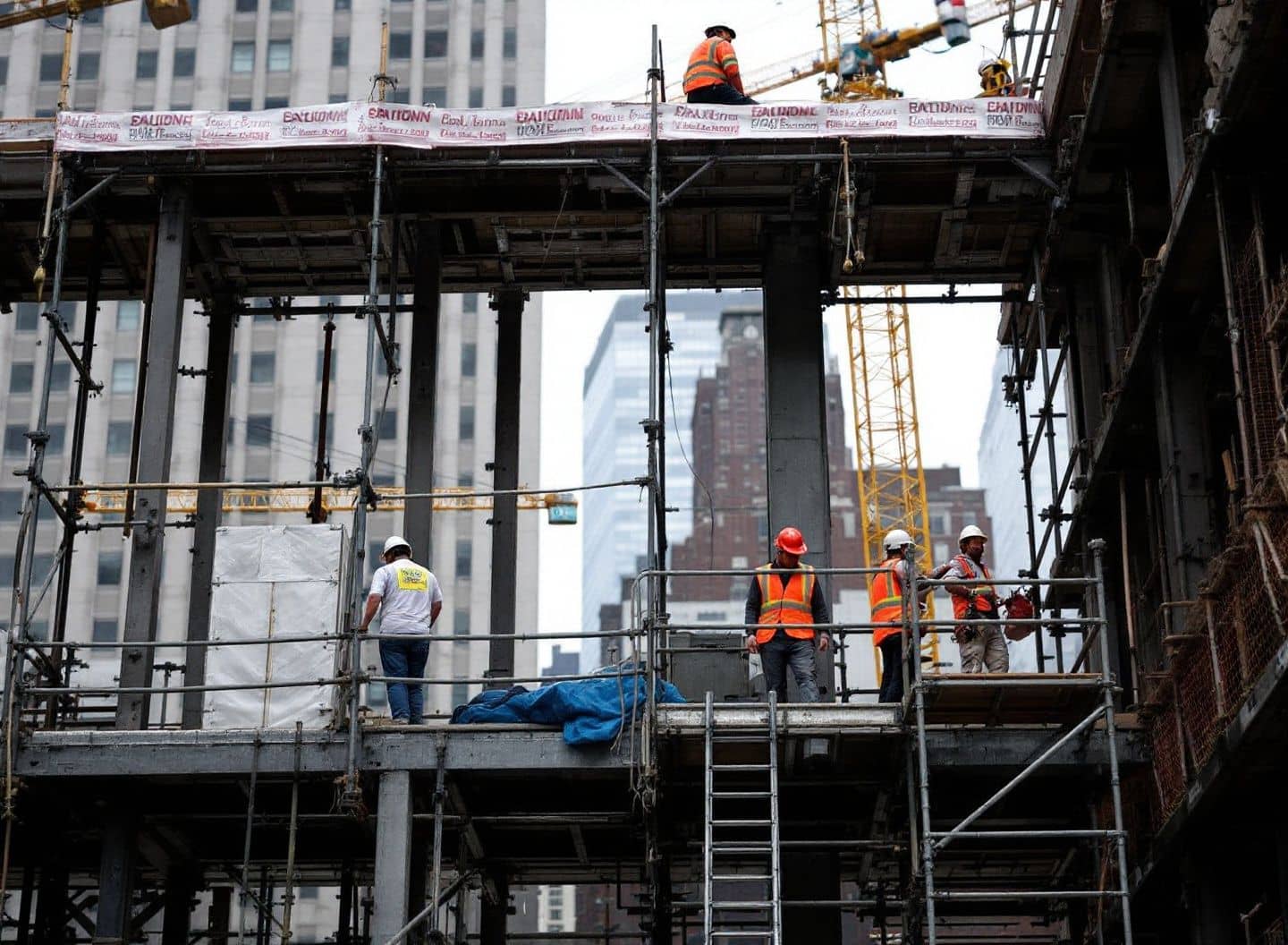
Construction work in New York is dangerous under any conditions. Add ice in January, mud after a rainstorm, or standing water from a broken pipe, and the risk of a serious slip or fall climbs fast. These aren't freak accidents. They're the predictable result of conditions that New York law specifically requires employers and site owners to prevent. If you've been hurt on a construction site because of a wet, icy, or mud-covered surface, the legal framework that applies to your situation is more specific than most people realize — and that specificity matters enormously for your case.
Why Slippery Surfaces Are a Distinct Legal Category
Not every construction site injury is treated the same under New York law. Falls from scaffolding, ladders, and elevated platforms are governed primarily by Labor Law Section 240(1), which addresses gravity-related elevation risks. Slippery surface injuries are different. They often happen at grade level or on the same working surface, and they're covered by a separate but equally powerful statute: Labor Law § 241(6). That provision requires that construction, excavation, and demolition work be conducted so as to provide reasonable and adequate protection and safety to workers. On its own, that language sounds broad. The teeth come from the industrial codes it incorporates by reference.
Labor Law § 241(6) is what lawyers call a "non-delegable duty" provision. That means the general contractor and the property owner can't escape liability by pointing to a subcontractor and saying it was someone else's job to clean up the mess. The duty belongs to them, period. But to make a viable claim under this statute, an injured worker needs to identify a specific, applicable industrial code regulation that was violated. That's where 12 NYCRR 23-1.7 enters the picture.
What 12 NYCRR 23-1.7(d) Actually Says
The regulation at 12 NYCRR 23-1.7 sets out protection rules for persons employed in construction, demolition, and excavation operations. Subsection (d) focuses specifically on slipping hazards. Section 23-1.7(d) addresses slipping hazards from ice, snow, water, grease, and other foreign substances; subsection (e) addresses dirt, debris, and tripping hazards. The regulation specifically calls out ice, snow, water, grease, and other slippery materials. When any of these conditions exist, the regulation requires prompt cleanup, the installation of non-slip materials, or other protective measures to control the hazard.
This is a concrete, specific requirement. Courts in New York have repeatedly held that 12 NYCRR 23-1.7(d) is the kind of specific safety rule that can serve as the predicate violation for a Labor Law § 241(6) claim. That matters because without a specific regulatory predicate, the 241(6) claim may not survive a motion to dismiss. With it, the injured worker has a genuine path to holding the general contractor and owner accountable regardless of whether they were personally present or personally negligent.
The Mechanism of Injury: How These Accidents Actually Happen
Understanding how slippery surface injuries occur helps clarify why the law treats them seriously. On a busy construction site, workers are constantly moving through and between work areas. They're often carrying tools, materials, or equipment that limits their ability to see what's underfoot or brace themselves if they lose footing. They may be wearing work boots that are already caked with mud from an earlier part of the site. They're operating under time pressure.
Ice is particularly dangerous in New York's winters. It can form overnight and be nearly invisible in the early morning hours when many trades begin their shifts. A thin film of ice on a concrete floor, a metal decking surface, or a plywood walkway can cause a complete loss of footing in an instant. Mud presents a different but equally serious risk: it shifts underfoot, creates an unstable base, and can cause a worker to twist an ankle or knee even if they don't fall completely. Accumulated water, whether from rain, snowmelt, a burst pipe, or construction dewatering operations, can saturate plywood surfaces, create pools across concrete slabs, and hide uneven terrain beneath.
The resulting injuries range from torn ligaments and fractures to spinal disc injuries, traumatic brain injuries from striking one's head on the ground or nearby equipment, and shoulder injuries from attempting to catch a fall. These aren't minor sprains. They often mean surgery, extended rehabilitation, and in some cases permanent limitations that affect a worker's ability to return to their trade. The value of a claim varies with the severity of the injury, the worker's age and occupation, and other factors specific to each situation.
Trade-Specific Risks Worth Knowing
Hurt on a Construction Site?
Tell us what happened. A licensed New York attorney will review your case and call you — free, no obligation.
Slippery surface injuries don't strike all trades equally. Ironworkers and decking crews work on metal surfaces that become treacherous the moment moisture hits them. Concrete laborers work in environments where water is a constant presence, whether from curing operations, rain intrusion, or underground seepage. Electricians and plumbers often work in areas of a building that haven't yet received finished flooring, meaning they're on raw concrete or plywood subfloor that can be wet from any number of sources. Carpenters on framing crews move across plywood decking that turns slick with morning dew and stays wet through drizzly days. Roofers face the combined hazard of height and water, which is why both 12 NYCRR 23-1.7 and federal fall protection standards apply simultaneously on many roofing jobs.
Federal standards matter here too. Under 29 CFR 1926.501, employers engaged in construction work must provide fall protection for workers exposed to fall hazards of six feet or more. In fiscal year 2024, 29 CFR 1926.501 generated 6,307 citations nationwide, making it one of the most-cited OSHA standards in construction. While 29 CFR 1926.501 primarily addresses fall protection systems (guardrails, safety nets, personal fall arrest), it often overlaps with slippery surface situations: a worker who slips on ice near an unguarded floor opening faces exposure under both the federal standard and the New York industrial code. In litigation, violations of federal OSHA standards can also be relevant to proving negligence, even though OSHA itself doesn't create a private right of action.
Building the 241(6) Claim: What Needs to Be Established
To make a viable claim under Labor Law § 241(6) based on a slippery surface, several things generally need to be true. First, the injured person must be a worker covered by the statute. This typically means someone employed in construction, excavation, or demolition at the site. Second, the injury must have occurred in a covered area of the site. Third, there must be a specific industrial code violation. As discussed, 12 NYCRR 23-1.7(d) fits squarely when the hazard is ice, mud, standing water, or similar accumulated slippery material. Fourth, that violation must have been a proximate cause of the injury.
One important aspect of the 241(6) cause of action is that it imposes liability on general contractors and owners even when they didn't create the condition and weren't on site. That's the non-delegable duty principle at work. If the condition existed, if the code required it to be remediated, and if it caused injury, the statutory defendants are exposed. This is fundamentally different from a common-law negligence case where a plaintiff must show that the defendant personally knew or should have known about the danger.
Labor Law § 241(1) also requires builders to complete fireproof flooring as work progresses. That requirement isn't directly about slippery surfaces, but it speaks to the broader statutory philosophy: the law expects construction sites to be brought to safe standards incrementally, not left in hazardous unfinished states while workers are present. Wet and slippery floors that haven't been addressed fall squarely within the spirit and letter of both the statute and the implementing regulations.
What Workers Should Do After a Slippery Surface Injury
If you've slipped, tripped, or fallen because of ice, mud, standing water, or a similar condition on a New York construction site, the steps you take immediately afterward can significantly affect the strength of any future legal claim. Report the injury to your supervisor and ensure it's documented in writing. If you're physically able, photograph the condition that caused your fall before it's cleaned up or altered. Identify any coworkers who witnessed the incident or who are aware of how long the condition existed before the accident. Seek medical attention right away, both because your health requires it and because medical records are key evidence.
Don't assume that workers' compensation is your only option. Workers' compensation covers medical bills and a portion of lost wages, but it doesn't compensate for pain, suffering, or the full extent of lost earning capacity. A Labor Law § 241(6) claim, if viable, can provide broader recovery. The two types of claims can often proceed simultaneously. An attorney familiar with New York construction law can review the specific facts and identify which statutes and regulations apply to your situation.
The Bigger Picture: Why These Regulations Exist
New York's Labor Law and the industrial codes implementing it aren't accidental. They reflect decades of legislative and regulatory recognition that construction workers face serious, preventable hazards and that they deserve legal protection proportionate to those risks. 12 NYCRR 23-1.7 exists because slip-and-fall injuries on construction sites have historically been treated as inevitable — something workers just have to accept. The regulation rejects that premise. It says these conditions are controllable, site supervisors and owners are responsible for controlling them, and failure to do so is a legal violation, not just a management lapse.
When a worker is seriously hurt because ice was left on a walkway, mud was allowed to accumulate across a work area, or water sat pooled on a surface for hours without anyone addressing it, the law has a clear answer about accountability. The path from that injury to a viable legal claim runs directly through Labor Law § 241(6) and 12 NYCRR 23-1.7(d). Knowing that path exists is the first step for any worker trying to understand their rights after a preventable accident.
Attorney Advertising. Prior results do not guarantee a similar outcome. This article is for general informational purposes only and does not constitute legal advice. NY Construction Advocate connects injured workers with experienced New York construction accident attorneys.
Primary sources
Frequently Asked Questions
Does 12 NYCRR 23-1.7(d) apply if I slipped on ice that formed overnight and wasn't there the day before?▼
Can I bring a Labor Law 241(6) claim if I'm a subcontractor's employee, not a direct employee of the general contractor?▼
What's the difference between a workers' compensation claim and a Labor Law 241(6) claim for a slippery surface injury?▼
Does OSHA's fall protection standard under 29 CFR 1926.501 matter in a New York construction lawsuit?▼
What if the slippery condition was caused by my own trade's work, like water I was using during construction?▼
How long do I have to file a Labor Law 241(6) claim after a construction site slip and fall in New York?▼
Get a Free Case Review
Find out if you have a claim under New York Labor Law. A licensed NY attorney will review your case and call you back.