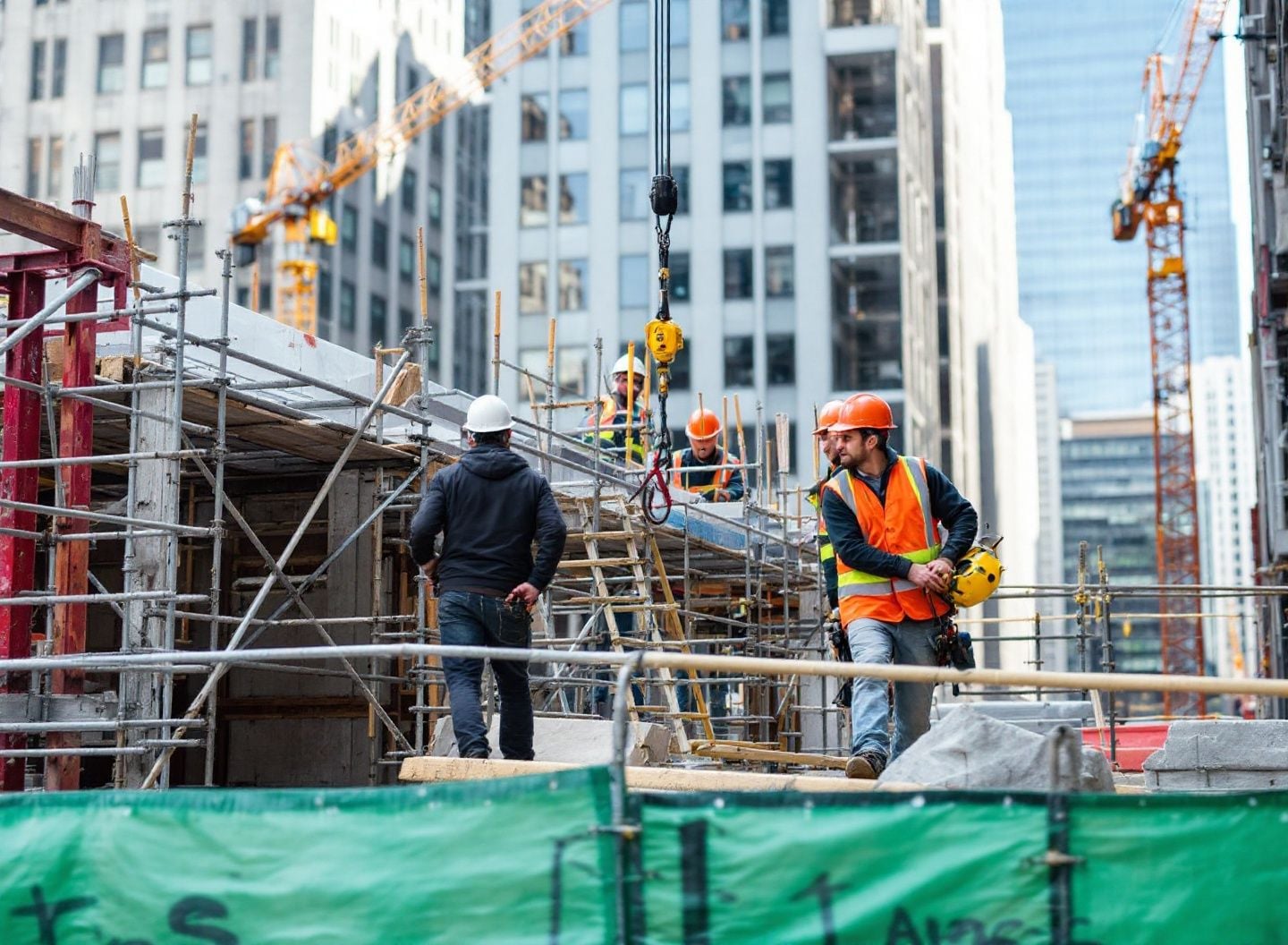
Picture this: you're walking through a construction site, doing exactly what you're supposed to be doing, and a wrench slips from a worker's hand three floors up. It falls faster than anyone can react, and it hits you. No warning. No time to move. Just impact. This kind of injury happens on New York construction sites more often than most people realize, and the consequences can be severe — fractured skulls, spinal damage, traumatic brain injuries, and worse. What many workers don't know is that New York law provides some of the strongest legal protections in the country for exactly this scenario.
What Makes Falling-Object Injuries Different From Other Construction Accidents
Most job-site hazards give you some chance to react. You see a forklift moving. You hear an excavator reversing. But a tool falling from two or three stories above you gives you no warning at all. By the time the object enters your peripheral vision, it's already a fraction of a second from impact. Physics makes this problem worse, not better: a one-pound hammer dropped from 30 feet hits with roughly the same force as a much heavier object moving at ground level. That's the brutal math of gravity on a high-rise or multi-story construction site.
The workers most exposed to this hazard are those who spend their shifts directly beneath active work areas. That includes laborers receiving materials, electricians running conduit through lower floors while framing continues above, delivery workers, and site supervisors doing walkthroughs. It also includes workers on adjacent structures, pedestrian bridges, or scaffolding runs that pass below active trades. Roofers, ironworkers, and carpenters working on upper levels are the most common sources of dropped objects, not because of carelessness, but because the nature of their work involves constant handling of heavy tools, fasteners, and structural components in physically demanding conditions.
The Specific Objects That Cause the Most Harm
Not every falling object is a tool someone dropped by accident. On a typical New York construction site, the projectiles that injure workers below include loose bolts and nuts that weren't secured during steel erection, lumber or plywood that shifts when a worker adjusts their footing, hand tools like hammers, wrenches, and nail guns that aren't tethered, buckets of fasteners or compound tipped from scaffolding planks, and debris knocked from concrete forms during stripping. Each of these represents a preventable hazard. Tethering systems, toe boards on scaffolding, debris netting, and properly enclosed hoisting areas are all standard protective measures. When those measures aren't in place, injured workers have strong grounds to pursue a claim.
Labor Law § 240: The Foundation of a Falling-Object Claim
New York's Labor Law § 240 is commonly called the Scaffold Law, but its scope goes far beyond scaffolding. The statute requires owners, general contractors, and their agents to furnish or erect scaffolding, hoists, stays, ladders, slings, hangers, blocks, pulleys, braces, irons, ropes, and other protective devices to protect workers from the hazards of elevated work. Critically, the law covers not just workers who fall from height, but also workers who are struck by objects that fall from height. This dual protection is what makes Labor Law § 240 so significant for dropped-tool and falling-object injuries.
The statute imposes what courts call absolute liability on owners and contractors when a violation of the law causes a worker's injury. That phrase is important. It means that if the required protective device was absent or inadequate, and that absence caused the injury, the owner and contractor are liable regardless of whether they were personally present or personally negligent. A worker's own comparative fault generally doesn't reduce or eliminate recovery in a valid Labor Law § 240 claim, which is a stark departure from ordinary negligence law. New York adopted this framework deliberately, recognizing that workers in construction have limited power to demand safety measures from owners and contractors who control the site.
To succeed in a falling-object claim under Labor Law § 240, an injured worker typically needs to show three things. First, the object was being hoisted or secured, or it required securing for purposes of the undertaking. Second, the object fell because of the absence or inadequacy of a safety device. Third, the falling object struck and injured the worker. Courts have applied the law to hammers dropped from upper floors, unsecured pipe that slid off scaffolding, steel beams that shifted during rigging, and many other scenarios. The common thread is gravity and inadequate protection from its consequences.
How State Safety Regulations Strengthen Your Claim
Beyond Labor Law § 240, injured workers often have a parallel claim under Labor Law § 241(6), which requires construction sites to comply with specific safety regulations. The controlling regulation for overhead hazards is 12 NYCRR 23-1.7, which sets out detailed requirements for protecting workers from hazards in construction, demolition, and excavation operations. These rules address overhead protection, including the requirement to protect workers in areas where they may be struck by falling objects or materials. When a contractor or owner fails to follow 12 NYCRR 23-1.7 and a worker is hurt as a result, that violation supports a § 241(6) claim alongside or separate from the § 240 claim.
The significance of 12 NYCRR 23-1.7 is that it converts a general duty into a specific, enforceable standard. Courts and juries don't have to decide what a reasonable contractor should have done in the abstract. The regulation spells it out. Protective structures, barriers, debris nets, and overhead canopies are not optional extras when work is being done above occupied areas of a site. They're legal requirements. A contractor who skips those measures to save time or money has violated an explicit rule, and that violation is direct evidence in your favor.
Federal Standards and What They Mean for Your Case
Hurt on a Construction Site?
Tell us what happened. A licensed New York attorney will review your case and call you — free, no obligation.
Federal OSHA requirements also apply on most New York construction sites. Under 29 CFR 1926.501, employers must protect workers from fall and falling-object hazards through guardrail systems, safety net systems, or personal fall arrest systems. OSHA's data tells a sobering story about how consistently these requirements are ignored: fall protection violations under 29 CFR 1926.501 generated 6,307 citations nationwide in fiscal year 2024, making it one of the most-cited standards in all of federal OSHA enforcement. That number reflects how frequently employers cut corners on the very protections that prevent tools, materials, and workers from falling.
An OSHA citation for fall protection violations at the site where you were injured isn't automatically admissible in your civil lawsuit, but it can be relevant background information. More importantly, it shows that federal regulators identified deficiencies in the same systems that were supposed to protect you. Your attorney can obtain OSHA inspection records through public records requests, and those records may corroborate what you experienced. The existence of a federal regulatory framework also reinforces the credibility of your argument that the protective measures were available, known, and legally required.
Who Bears Legal Responsibility for Your Injury
One of the most important features of Labor Law § 240 is who it holds responsible. The law reaches property owners and general contractors directly, even if they didn't personally drop the tool or personally supervise the worker who did. An owner who hired a general contractor and left the site entirely can still be liable. A general contractor who delegated daily supervision to a subcontractor can still be liable. This matters enormously for injured workers because the party who actually dropped the tool may be a subcontractor's employee with little ability to pay a judgment. The Scaffold Law ensures that the parties with actual control over the project — and often with adequate insurance — cannot simply point down the chain and walk away.
There are exceptions. Workers employed by the owner of a one- or two-family home where the owner did not direct or control the work may face an affirmative defense under the homeowner exemption. And workers who are the sole proximate cause of their own injuries because they acted against explicit instructions can face challenges. But these are relatively narrow exceptions in a statute that broadly favors injured workers. If you were doing your job, in an area you were supposed to be in, and an object fell on you from above, the law is likely on your side.
What to Do After a Falling-Object Injury on a Construction Site
The steps you take immediately after a falling-object injury can affect both your health and your legal claim. Seek medical attention right away, even if you feel like the injury is minor. Head injuries in particular can mask their severity for hours or even days. Tell the medical providers exactly what happened: that an object fell and struck you, where on your body it hit, and what the object was. That information becomes part of your medical record, which is crucial evidence.
Report the incident to your supervisor or the general contractor's site safety officer as soon as you're medically able. Get a copy of any incident report if you can. If you're in a position to do so, photograph the area where you were hit, the area above it, and any debris on the ground. Identify any coworkers who saw what happened and note their names. Construction sites change quickly. Scaffolding comes down, debris gets cleaned up, and the physical evidence of what caused your injury can disappear within days. The faster those conditions are documented, the better.
Contact an attorney who handles New York Labor Law claims as soon as possible. Statutes of limitations apply to these cases, and some claims involving public owners require early notice filings. An attorney can also send preservation letters to the owner and contractor requiring them to retain photographs, inspection logs, safety meeting records, and any other documentation that relates to your accident. That documentation is often the difference between a provable claim and one that becomes a credibility battle.
What Damages May Be Available in a Falling-Object Claim
The value of a Labor Law § 240 claim varies with the severity of the injury, the degree to which the injury affects the worker's ability to earn a living, and the nature of the medical treatment required. In general terms, injured workers in successful Labor Law cases can seek compensation for past and future medical expenses, past and future lost wages and earning capacity, pain and suffering, and in cases of permanent disability, compensation for the long-term impact on their quality of life. If a worker is killed by a falling object, the worker's family may bring a wrongful death claim and a claim for conscious pain and suffering experienced before death. No one can guarantee a specific outcome, and every case turns on its specific facts.
Why New York's Scaffold Law Remains Controversial — and Why That Matters to You
Property owners and contractor associations have pushed for years to weaken or repeal Labor Law § 240, arguing that absolute liability is unfair and drives up construction costs. Workers' rights advocates and labor unions have successfully defended the law, arguing that it's the only real deterrent against the endemic practice of skipping overhead protection to cut costs and meet deadlines. That political fight is still ongoing in Albany. As an injured worker, it's worth knowing that the law you're relying on has survived repeated challenges because courts and legislators have recognized its purpose: on a construction site, the person working below has almost no way to protect themselves from an object falling from above. The law puts the burden of prevention on the parties who actually control the site.
Attorney Advertising. Prior results do not guarantee a similar outcome. This article is for general informational purposes only and does not constitute legal advice. NY Construction Advocate connects injured workers with experienced New York construction accident attorneys.
Frequently Asked Questions
Does Labor Law § 240 cover me if I was hit by a falling object but I wasn't the one working at height?▼
Can the property owner be held liable even if they weren't at the site when the accident happened?▼
What if my employer is the one who failed to provide the safety device? Can I still bring a claim?▼
How does 12 NYCRR 23-1.7 apply to a dropped-tool case, and why does it matter?▼
What if I was partly at fault — for example, if I was in an area I wasn't supposed to be in?▼
How long do I have to file a claim after being hit by a falling object on a construction site?▼
Get a Free Case Review
Find out if you have a claim under New York Labor Law. A licensed NY attorney will review your case and call you back.