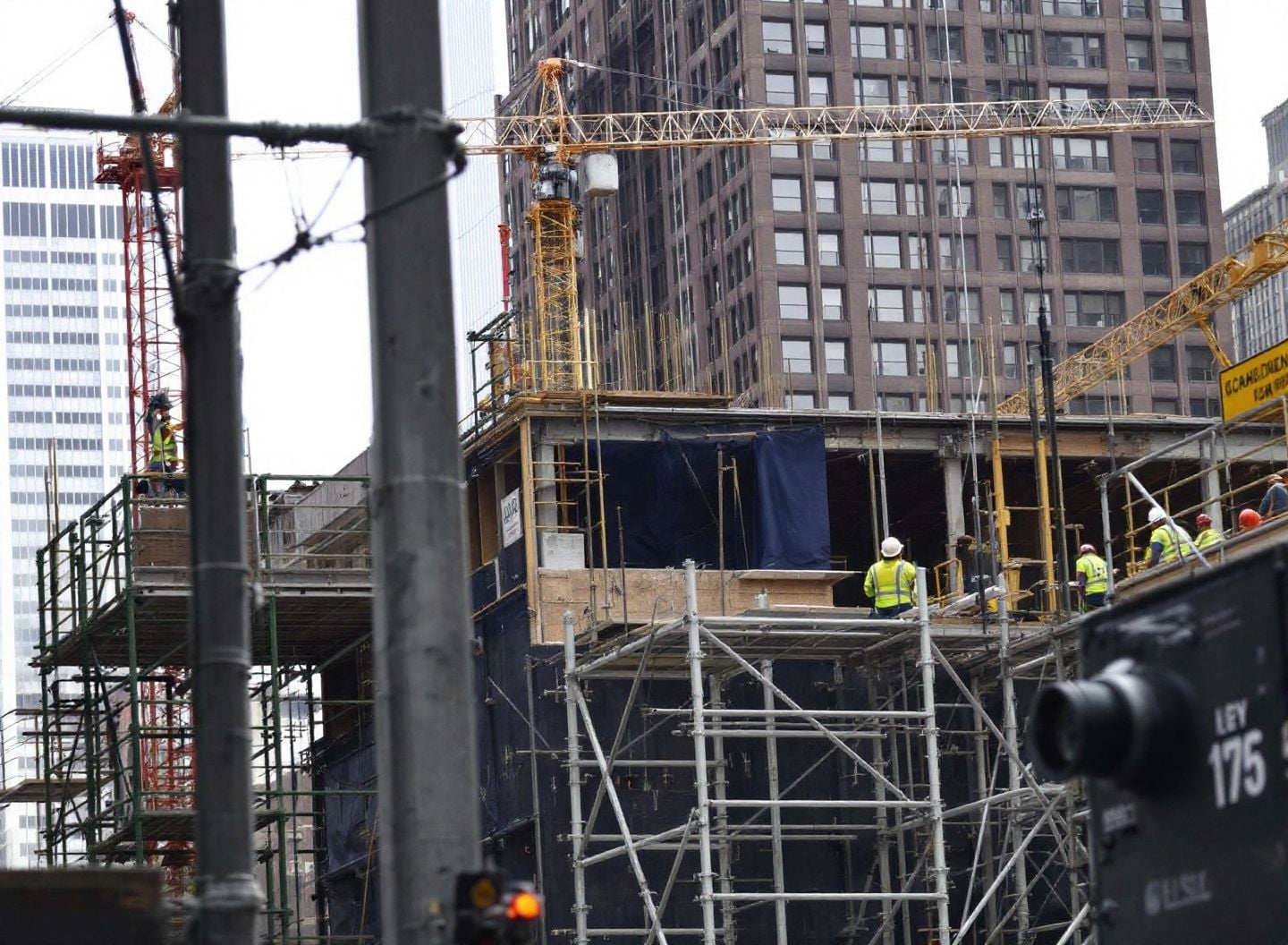
A single dropped wrench from three stories up can end a career. A bundle of rebar that shifts off an unsecured platform can cause a traumatic brain injury in a fraction of a second. These aren't hypothetical dangers: falling objects are among the leading causes of serious injury and death on construction sites across New York City. If you've been hit by a falling object on a job site, you need to understand both the physical reality of what happened and the legal framework that exists specifically to protect you.
How Falling Object Injuries Happen on New York Construction Sites
The mechanism matters legally, and it matters medically. Falling object injuries on construction sites happen in a few distinct ways, and understanding them helps you explain what occurred to doctors, safety investigators, and attorneys.
The most common scenario involves materials or tools dropped from an elevated level, such as a scaffold, floor deck, or roof edge. A worker above may be cutting, drilling, or repositioning materials. An unsecured piece of equipment slips. Gravity does the rest. The worker below has no warning and no time to move. Because construction sites are vertically active environments, multiple trades are often working at different heights simultaneously, which multiplies the exposure.
A second scenario involves materials that fall during hoisting or rigging operations. When loads are lifted by crane, hoist, or forklift, improper rigging, overloading, or equipment failure can send a load swinging or plummeting. The swing radius and vertical drop both create danger zones that are often inadequately barricaded. Workers on foot, in adjacent trades, or simply passing through the area are vulnerable.
Debris is a third category. Demolition work, concrete cutting, masonry repairs, and facade restoration all generate falling fragments. A chunk of concrete that breaks free during chipping, a dislodged brick during pointing work, or a tile that cracks off during demolition can travel faster than people expect and strike with serious force. Head injuries, spinal injuries, and crush injuries to the hands and shoulders are common outcomes.
Trade-specific risks are real. Ironworkers connecting structural steel are exposed to dropped bolts, connectors, and tools from crew members above. Laborers and carpenters working below active hoisting zones face load-drop risks. Electricians and plumbers working in ceiling spaces can be struck by objects knocked loose from above by workers they can't even see. Roofers and their ground-crew counterparts face falling equipment daily.
The Legal Framework That Protects You: Labor Law § 240
New York has one of the strongest worker-protection statutes in the country for exactly this type of injury. Labor Law § 240, commonly called the Scaffold Law, imposes what courts have described as absolute liability on property owners and general contractors when a worker is injured due to the failure to provide adequate safety devices against elevation-related hazards, including falling objects.
The statute requires that contractors, owners, and their agents furnish or erect proper scaffolding, hoists, ladders, slings, hangers, blocks, pulleys, braces, irons, ropes, and other safety devices. When a falling object injures a worker because one or more of those protective measures was absent or inadequate, the owner and contractor can be held liable regardless of whether they were personally present at the time of the accident.
This is a significant protection. In most states, an injured worker is limited to workers' compensation, which doesn't cover full wage loss and doesn't compensate for pain and suffering. Under Labor Law § 240, an injured worker may be able to bring a direct claim against the property owner and the general contractor in addition to receiving workers' compensation. The value of that claim varies with the severity of the injury, the worker's age and occupation, and the long-term impact on earning capacity.
For Labor Law § 240 to apply to a falling object case, courts generally look at whether the object was in the process of being hoisted or secured and whether the inadequacy of a safety device was the proximate cause of the injury. Not every falling object automatically triggers the statute. A tool that simply falls during normal use presents a different legal analysis than a hoisted load that drops because of a faulty rigging setup. An attorney familiar with New York construction law can evaluate the specific facts of your case and identify which claims apply.
Specific Site Safety Regulations Under 12 NYCRR 23-1.7
Beyond Labor Law § 240, New York's Industrial Code contains detailed safety requirements for construction sites. 12 NYCRR 23-1.7 sets out specific protections for persons employed in construction, demolition, and excavation operations. These regulations define concrete obligations, such as the requirement that overhead protection be provided for workers in areas where they may be struck by falling objects, tools, or materials.
Violations of 12 NYCRR 23-1.7 are relevant under Labor Law § 241(6), which creates a separate cause of action when an owner or contractor fails to follow specific safety rules. Unlike Labor Law § 240, which imposes absolute liability, a § 241(6) claim requires showing that the specific regulation was violated and that the violation caused the injury. However, § 241(6) claims can apply to a broader range of falling object situations, including those where the falling object wasn't being hoisted or secured at the time of impact.
In practice, a skilled attorney will evaluate both the § 240 and the § 241(6) pathways after a falling object injury, because the facts of the accident often support more than one theory of liability. The regulations under 12 NYCRR 23-1.7 provide a detailed checklist of what site safety should have looked like, and gaps in compliance become evidence of negligence.
Federal OSHA Standards and What They Mean for Your Case
Hurt on a Construction Site?
Tell us what happened. A licensed New York attorney will review your case and call you — free, no obligation.
Federal regulations also play a role. Under 29 CFR 1926.501, employers on construction sites are required to provide fall protection systems for workers exposed to falling object hazards. This includes toeboards, nets, canopies, and other barriers designed to prevent tools and materials from falling onto workers below. In federal fiscal year 2024, citations under OSHA's fall protection standard numbered 6,307 nationwide, making it one of the most frequently cited OSHA standards in the country.
OSHA violations don't automatically win a civil lawsuit, but they're meaningful. An OSHA citation for failure to maintain toeboards on a scaffold, for example, is evidence that the employer knew or should have known about the hazard. It can support arguments about notice and negligence. If OSHA investigated following your injury, the inspection records and any citations issued are documents your attorney will want to obtain early in the case.
Steps to Take After Being Struck by a Falling Object
What you do in the hours and days after a falling object injury can significantly affect your ability to pursue a claim. Here's a practical breakdown.
What Your Claim May Cover
A successful claim under Labor Law § 240 or § 241(6) can cover categories of loss that workers' compensation does not. Pain and suffering, both past and future, are compensable. So is the full value of lost wages, as opposed to the partial replacement provided by workers' comp. Medical expenses, future medical care, loss of enjoyment of life, and, in appropriate cases, damages for a spouse or family member affected by the injury are all part of the damages picture.
The value of any particular claim varies with the severity of the injury, the worker's occupation and earning history, the degree of fault attributable to the responsible parties, and numerous other factors. There's no formula that produces a fixed number, and anyone who tells you otherwise isn't being straight with you. What matters is that you pursue the full range of available claims, not just the workers' comp path, and that you do so with legal representation that understands New York construction law.
Time Limits and Why You Can't Wait
New York imposes strict deadlines on construction injury claims. Labor Law claims against private owners and contractors are generally subject to a three-year statute of limitations from the date of the accident. However, if the property owner is a municipality or a public authority, you may need to file a Notice of Claim within 90 days of the accident. Missing that window can bar your claim entirely, regardless of how serious your injuries are.
Beyond statutes of limitations, evidence disappears fast on construction sites. Scaffolding gets reconfigured. Materials get moved or discarded. Witnesses move on to other jobs. The sooner you consult an attorney, the sooner steps can be taken to preserve evidence, identify responsible parties, and build the factual record your case will depend on.
Attorney Advertising. Prior results do not guarantee a similar outcome. This article is for general informational purposes only and does not constitute legal advice. NY Construction Advocate connects injured workers with experienced New York construction accident attorneys.
Frequently Asked Questions
Does Labor Law § 240 cover all falling object injuries on New York construction sites?▼
Can I sue the property owner if I was working for a subcontractor and not directly for the owner?▼
I was wearing a hard hat when I was hit. Does that hurt my case?▼
What if my employer is pressuring me not to report the accident or file a claim?▼
How does an OSHA citation under 29 CFR 1926.501 affect my civil lawsuit?▼
I received workers' compensation after my injury. Does that mean I can't also bring a lawsuit?▼
Get a Free Case Review
Find out if you have a claim under New York Labor Law. A licensed NY attorney will review your case and call you back.