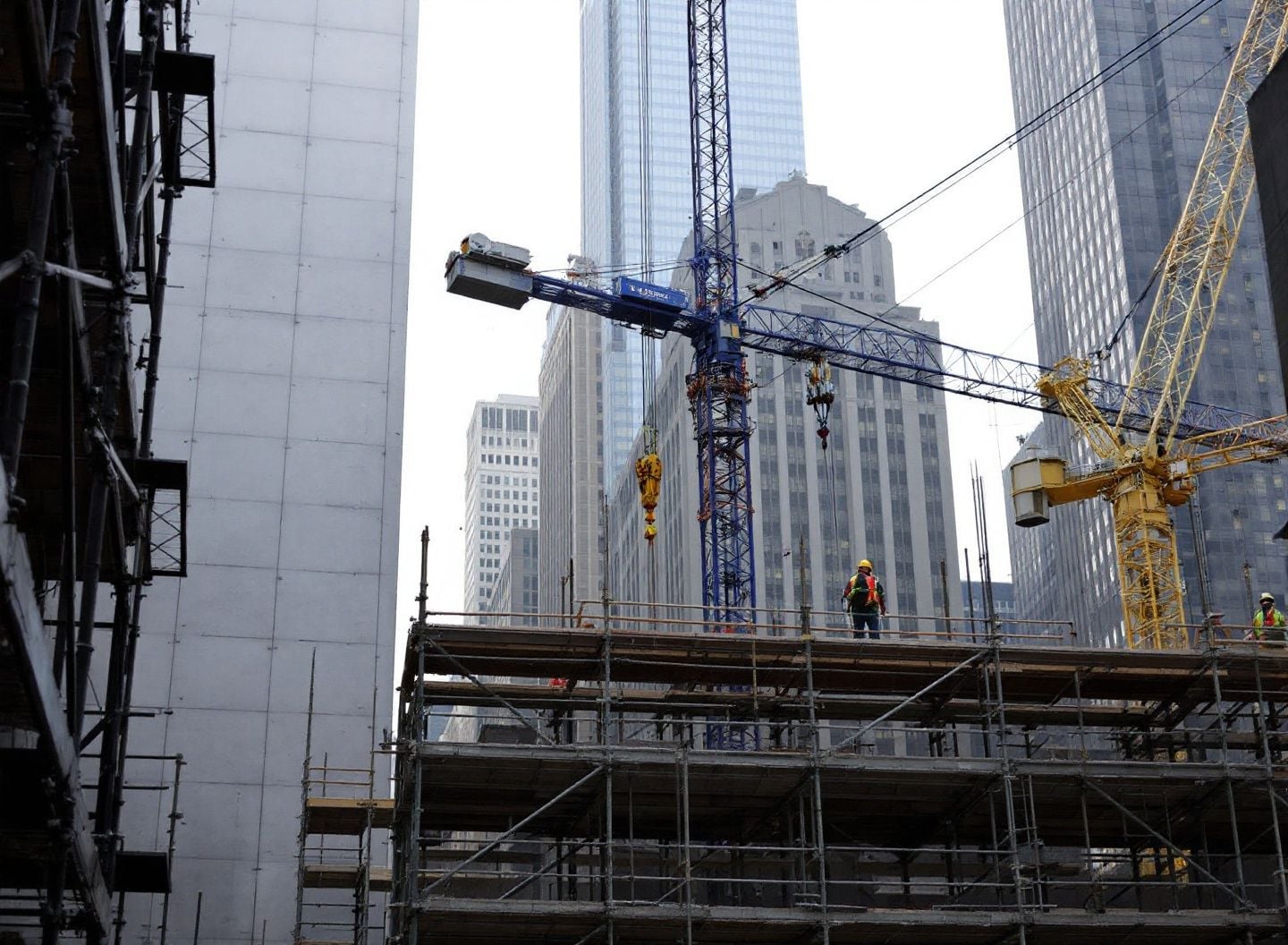
Most people picture crane accidents as something that happens far above the street, in the cab or on a mast. The reality is more complicated and, for the workers on the ground, far more dangerous. Signal persons and ground crew members stand directly beneath or alongside suspended loads. When a load swings unexpectedly, when a rigging component lets go, or when a crane's boom dips due to an overload condition, those workers take the hit. They have no cab to protect them and no warning before impact. Understanding how these injuries happen, which safety rules apply, and what legal protections exist under New York law is essential for anyone working in that role or supporting an injured worker.
Why Ground Crew and Signal Persons Face Unique Crane Risks
A signal person's entire job is to stay close to the load and communicate its position to an operator who often can't see it directly. That proximity is the point. It's also what makes the role so hazardous. Ground crew members hooking and unhooking rigging, guiding tag lines, or clearing the drop zone share the same exposure. They're working within the swing radius of the load by definition.
Crane loads don't always travel in straight vertical lines. When a crane swings laterally to reposition a load, physics takes over. If the load is heavier than calculated, if the rigging shifts, or if the operator accelerates the slew too quickly, the load pendulums outward. A steel beam weighing several tons moving even a few feet sideways carries enough momentum to kill anyone in its path. Ground workers who've positioned themselves based on the load's expected trajectory suddenly find themselves directly in it.
Pinching injuries are a related and often underreported category. When a load is lowered onto a surface, it doesn't always land flat. Workers guiding the load into position can have hands, feet, or limbs caught between the load and a fixed structure. The forces involved are enormous. These aren't pinched-finger situations; they're crush injuries that frequently result in amputations and permanent disability.
Rigging Failure: The Mechanism That Starts Many Ground-Level Accidents
Rigging failure during a lift is one of the most common triggers for ground crew injuries. Wire ropes accumulate wear at predictable stress points, particularly where rope meets hook or passes over a sheave. Shackles can be under-rated for the load or improperly pinned. Below-the-hook lifting devices, including spreader bars and lifting beams, can fail if they've been modified, overloaded, or haven't been inspected properly before the lift.
When rigging fails under load, the drop happens without warning. A load that was three feet off the ground is suddenly on the ground, and anything between it and the surface is crushed. A load higher up creates a different hazard: impact on the ground below and a secondary swing of whatever rigging remains attached to the hook. Ground crew nearby face both the falling load and flying hardware from the failed component.
Boom and mast integrity failures create another category of risk entirely. If a boom is overloaded or if the structural connection at the mast is compromised, the boom can tip or collapse toward the ground. For any worker standing in that zone, the result can be catastrophic. These failures aren't hypothetical risks. Structural failures on tower cranes have occurred in New York City, and they demonstrate that the consequences of inadequate inspection and improper assembly reach everyone on the ground, not just the operator in the cab.
Federal Rules That Set the Floor: 29 CFR 1926.1400
Federal OSHA's crane and derrick standard, 29 CFR 1926.1400, establishes baseline requirements that apply to construction sites nationwide, including every job in New York. This standard is extensive and covers signal person qualifications, crane assembly and disassembly procedures, swing radius hazard controls, load chart compliance, and pre-shift inspections. It requires that a qualified signal person be used whenever the operator doesn't have a clear view of the load or the load path, and it sets specific requirements for hand signals, radio communication, and the qualifications necessary to perform that role.
Critically, 29 CFR 1926.1400 mandates that swing radius exclusion zones be established and enforced. That means physical barriers or designated spotters must prevent workers from entering the arc through which the crane's counterweight and boom rotate. When a general contractor skips this step to save time or space on a crowded site, they're violating a federal requirement and creating the exact conditions that lead to ground crew fatalities. An employer's failure to comply with 29 CFR 1926.1400 can support an OSHA citation, and it can also become relevant evidence in a civil injury claim.
New York's Own Rules: 12 NYCRR 23-8
New York doesn't simply defer to federal OSHA standards. The state has its own industrial code provisions that apply specifically to cranes, derricks, and hoists in construction, demolition, and excavation work. 12 NYCRR 23-8 is the operative section, and it addresses crane operation safety in considerable detail. It covers rated load capacities, boom angle requirements, weather conditions that require work stoppage, clearance distances from power lines, and the responsibilities of crane operators and supervisors during lifts.
Hurt on a Construction Site?
Tell us what happened. A licensed New York attorney will review your case and call you — free, no obligation.
Why does this matter legally? Because 12 NYCRR 23-8 is a specific safety rule enacted under the authority of Labor Law Section 241(6). When a worker suffers injuries due to a violation of a specific section of 12 NYCRR 23-8, that violation can support a Labor Law 241(6) claim. Unlike claims under Labor Law 240, a 241(6) claim based on an Industrial Code violation doesn't require proof that the violation was the sole cause of the accident. It does require showing that the regulation is concrete and specific (not just general safety guidance) and that the violation contributed to the injury. Courts in New York have found various provisions of 12 NYCRR 23-8 to be sufficiently specific for this purpose.
Labor Law § 240 and the Scaffold Law's Reach in Crane Cases
Labor Law § 240, often called the Scaffold Law, imposes absolute liability on owners and general contractors for elevation-related injuries caused by an inadequate or absent safety device. The statute requires that contractors, owners, and their agents furnish or erect scaffolding, hoists, ladders, and other protective devices for workers engaged in building construction or demolition. It's remedial legislation, meaning courts interpret it broadly to protect workers.
For crane accident victims, the application of Labor Law § 240 depends on the specific facts. When a load falls from a height and strikes a ground worker, courts have found this falls within the statute's coverage because the injury results from an elevation differential and the failure to provide an adequate protective device. When a load swings laterally and strikes a worker at or near grade level, the analysis gets more fact-specific. Courts look at whether there was an actual elevation differential, whether the hazard involved a falling object, and whether a proper hoist or securing device would have prevented the accident. These aren't easy questions, and the answers depend on how the accident happened and what safety measures, if any, were actually in place.
What this means practically is that a ground crew worker hit by a swinging load may have a viable Labor Law § 240 claim, a Labor Law 241(6) claim based on a 12 NYCRR 23-8 violation, and potentially a common law negligence claim against the crane owner or operator. The value of a claim varies with the severity of the injury, the extent of lost wages, and the long-term medical needs the worker faces. An attorney familiar with New York construction law can assess which theories apply based on the specific facts.
Who Bears Responsibility When a Load Strikes a Ground Worker
One of the most important features of New York's Labor Law framework is that it doesn't require an injured worker to prove their employer was negligent in the traditional sense. Under Labor Law § 240 and Section 241(6), the duty runs to owners and general contractors, not just the worker's direct employer. This matters enormously on large construction sites where a signal person might be employed by a rigging subcontractor while the crane is operated under a different subcontract and the site is managed by a general contractor working for a property owner.
New York's Workers' Compensation system will typically cover medical expenses and a portion of lost wages regardless of fault, but it bars direct suits against employers. The Labor Law allows claims against owners and general contractors who aren't the worker's employer. This is why the legal analysis in crane injury cases often focuses on the relationships between parties on the site rather than just what the crane operator did or didn't do.
Third-party claims are also common in these cases. If the crane itself was defective, the crane manufacturer or equipment lessor may be a defendant. If the rigging hardware failed due to a manufacturing defect, the product liability claim runs against the manufacturer. These additional avenues matter because they can provide recovery that complements the Workers' Compensation benefits the injured worker is already receiving.
What Injured Signal Persons and Ground Crew Should Do
If you're a signal person or ground crew member injured by a swinging load, a rigging failure, or any other crane-related incident, a few steps protect both your health and your legal rights. Get medical attention immediately, even if you feel the injury is minor. Crush injuries and blunt trauma don't always present their full severity right away. Report the incident to your supervisor and make sure an incident report is created. Photograph the scene, the rigging, the load, and any physical evidence before anything is moved or cleaned up. Get the names and contact information of any witnesses.
File for Workers' Compensation coverage promptly, since New York imposes strict filing deadlines. Then consult with an attorney who handles New York construction accidents specifically. The intersection of Labor Law § 240, Labor Law 241(6), 12 NYCRR 23-8, and 29 CFR 1926.1400 involves nuanced legal analysis, and the facts that matter most in these cases (the load weight, the rigging configuration, the signal protocols, the inspection records) begin to disappear quickly after an accident.
New York's construction injury laws are among the most worker-protective in the country. But they don't enforce themselves. A worker who doesn't assert their rights within applicable deadlines, or who settles a Workers' Compensation claim without understanding the available third-party recovery, can leave significant compensation on the table. The law exists to make injured workers whole. Using it effectively requires knowing it.
Frequently Asked Questions
Attorney Advertising. Prior results do not guarantee a similar outcome. This article is for general informational purposes only and does not constitute legal advice. NY Construction Advocate connects injured workers with experienced New York construction accident attorneys.
Frequently Asked Questions
Does Labor Law § 240 cover a ground worker hit by a swinging crane load, or does it only apply to workers who fall?▼
I'm a signal person employed by a subcontractor. Can I sue the general contractor or property owner for my crane injuries?▼
What specific violations of 12 NYCRR 23-8 are commonly involved in swinging-load cases?▼
What does 29 CFR 1926.1400 require for signal persons specifically?▼
Can I still recover compensation if I was partially at fault for the crane accident?▼
How long do I have to file a construction injury lawsuit in New York?▼
Get a Free Case Review
Find out if you have a claim under New York Labor Law. A licensed NY attorney will review your case and call you back.