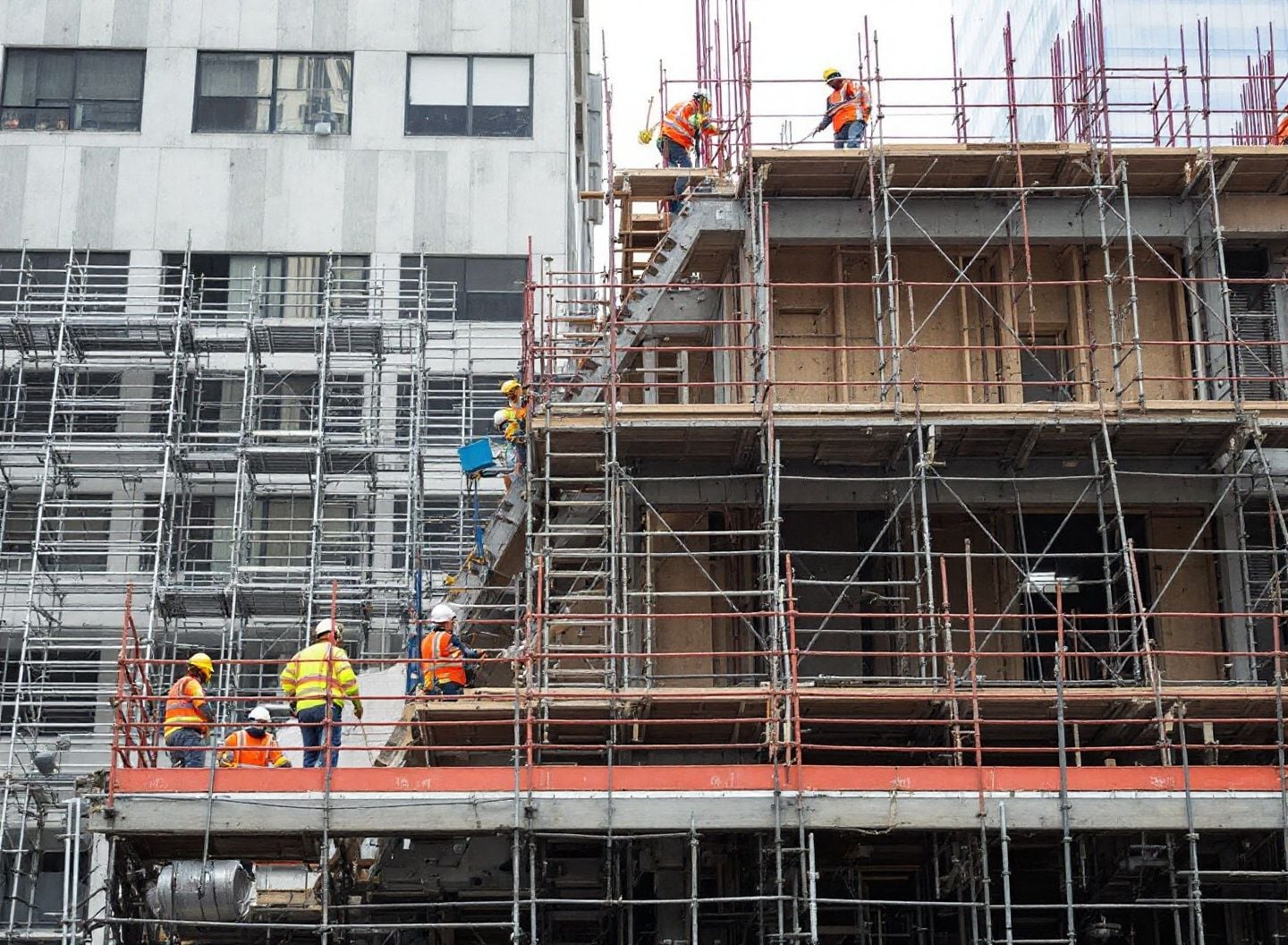
Construction sites are, by definition, incomplete structures. Floors haven't been fully poured. Walls aren't yet tied to their frames. Temporary supports carry loads that permanent structural members will eventually bear. That inherent incompleteness is what makes structural and building collapses one of the most dangerous categories of construction accident in New York. When a partial collapse occurs, workers don't always have time to react. The failure can travel through a structure in seconds, pulling down adjacent sections, burying workers under debris, or dropping them through floors that simply weren't finished yet.
This article explains the mechanics behind construction collapses, identifies the trades at greatest risk, and walks through the specific New York laws and federal regulations that govern these situations. If you've been hurt in a collapse on a New York job site, understanding this legal framework is the first step toward knowing what rights you have.
How Construction Collapses Actually Happen
It's tempting to think of a building collapse as a single dramatic event. In reality, most construction collapses unfold in stages. A partial collapse happens when one component fails and redistributes load to adjacent members that weren't designed to carry that extra burden. If those members also fail, you get what engineers call progressive collapse: a chain reaction where the failure of one part triggers the failure of another, and so on. On an active construction site, that progression can happen with terrifying speed.
Shoring failures are a particularly common trigger. Shoring systems are temporary supports installed to hold up partially constructed floors, formwork, or existing structural elements while permanent work is completed. When a shoring system is undersized, improperly installed, or damaged by site activity, the load it's carrying doesn't disappear. It transfers somewhere else. If that transfer overwhelms another element, collapse follows. Workers directly below or adjacent to shoring systems are at immediate risk of being struck by falling materials or dropped through a failing floor deck.
Formwork collapses follow similar logic. Concrete is heavy, and freshly poured concrete places enormous lateral and vertical pressure on the forms designed to hold it. If the formwork shores are spaced too far apart, if connections are inadequate, or if the pour is accelerated beyond the design rate, the whole system can buckle. Ironworkers, carpenters, and laborers who are on or below a deck during a pour face catastrophic injury risk if the formwork lets go.
Excavation-related collapses present their own set of hazards. When a structure is being built near or over an excavation, ground movement can undermine the bearing capacity of the soil supporting temporary or permanent structural elements. This is especially prevalent in New York City's dense urban environment, where adjacent buildings, underground utilities, and subway infrastructure complicate every dig. A wall collapse or foundation failure in that context can pull workers down into the excavation or bury them under masonry.
The Trades Facing the Highest Collapse Risk
Not every worker on a job site faces equal exposure to collapse hazards. Certain trades are structurally positioned to bear the greatest risk.
New York Labor Law 241(6) and What It Actually Requires
New York's Labor Law § 241(6) is one of the most worker-protective statutes in the country. It requires that construction, excavation, and demolition work be conducted in a way that provides reasonable and adequate protection for workers. Critically, it imposes that obligation on owners and general contractors, not just on the worker's direct employer. This matters because injured construction workers are often employed by subcontractors who may have limited assets. Labor Law § 241(6) gives workers a path to hold the party that controlled the site accountable, even if that party didn't directly cause the hazard.
To succeed on a Labor Law § 241(6) claim, a worker generally needs to show that a specific, concrete safety regulation was violated and that the violation was a proximate cause of the injury. The law doesn't operate in the abstract. It's anchored to specific regulatory codes, which is why understanding those codes matters so much.
Hurt on a Construction Site?
Tell us what happened. A licensed New York attorney will review your case and call you — free, no obligation.
One important provision within Labor Law § 241 is the requirement that builders complete fireproof flooring as work progresses. This isn't a minor housekeeping detail. In a collapse scenario, the absence of completed flooring at lower levels means that workers or debris falling from above have nothing to arrest their descent. It also means that workers at lower levels may be working directly below an incomplete, unprotected overhead deck. The fireproof flooring requirement reflects a practical safety reality: a completed floor is a structural barrier, not just a finished surface.
12 NYCRR 23-1.7: The Regulatory Backbone
New York's Industrial Code, specifically 12 NYCRR 23-1.7, provides the detailed safety rules that implement Labor Law § 241(6) in practice. Where the Labor Law sets the general standard, 12 NYCRR 23-1.7 defines what that standard actually looks like on the ground. The regulation covers protection for workers employed in construction, demolition, and excavation operations, establishing specific practices that employers and site owners must follow.
For collapse-related claims, 12 NYCRR 23-1.7 is important because it creates the kind of specific, concrete safety rule that Labor Law § 241(6) requires. A worker injured in a shoring failure, a formwork collapse, or a partial structural failure can point to provisions within this regulation as the specific regulatory predicate for their claim. Courts have consistently recognized that violations of the Industrial Code provisions implementing § 241(6) can support liability against site owners and general contractors. That's a meaningful advantage for an injured worker trying to establish their case.
Federal OSHA Standards and How They Interact with State Law
Federal OSHA standards run parallel to New York's state protections. 29 CFR 1926.501 governs fall protection in construction and is one of the most frequently cited OSHA standards in the country. In fiscal year 2024 alone, it generated 6,307 citations nationwide. While 29 CFR 1926.501 is primarily associated with fall hazards, its application on construction sites overlaps significantly with collapse scenarios. When a floor deck fails or shoring gives way, workers fall. The absence of adequate fall protection, including guardrails, safety nets, or personal fall arrest systems at open edges or holes, compounds the consequences of a structural failure.
It's worth understanding the distinction between OSHA citations and civil liability. An OSHA citation is an enforcement action against an employer. It can result in fines and corrective orders, but it doesn't directly compensate an injured worker. New York Labor Law claims, on the other hand, are civil causes of action that the injured worker brings directly. That said, evidence of an OSHA violation can be relevant to a civil case. An OSHA citation for a fall protection violation connected to a collapse is the kind of documentation that a worker's legal team will want to preserve early. Evidence disappears fast on active construction sites.
What Workers and Families Should Do After a Collapse Injury
The period immediately after a structural collapse is chaotic, and workers or their families are often focused entirely on medical care. That's absolutely the right priority. But certain steps, taken as early as possible, can make a significant difference in preserving a worker's legal rights.
First, document everything that can be documented. Photographs of the collapse site, the failed shoring or formwork, and any visible safety violations should be captured before the site is cleaned up or repaired. Contractors have a financial interest in returning to work quickly, and cleanup often destroys critical evidence. If you're physically unable to take photos, ask a coworker, family member, or attorney to do it.
Second, identify witnesses. Workers who saw the collapse happen, or who worked near the failed structure before it gave way, can provide critical testimony about how the site was being run and whether proper safety measures were in place. Names and contact information for those witnesses should be gathered before the job moves on and workers scatter to other sites.
Third, understand that workers' compensation is usually not the only remedy available. Workers' comp covers medical expenses and a portion of lost wages, but it doesn't account for pain and suffering or the full scope of a serious injury's impact on a worker's life. Labor Law § 241(6) claims against site owners and general contractors exist precisely because workers' comp alone is often insufficient after a catastrophic injury. The value of a claim varies with the severity of the injury, the strength of the regulatory violation, and other case-specific factors, but knowing that multiple legal avenues exist is important.
Why These Cases Are Legally Complex
Structural collapse cases involve multiple parties, competing accounts of what happened, and technical questions about engineering and construction practice that most people, including judges and jurors, aren't equipped to evaluate without expert help. Owners, general contractors, and subcontractors will often point fingers at each other. Each may claim the other was responsible for the failed shoring system, the inadequate formwork, or the incomplete floor protection.
Sorting through those competing claims requires a careful analysis of contracts, site inspection records, safety meeting logs, and any available engineering documentation. It also typically requires a structural engineer or construction safety expert who can explain, in terms a jury can follow, why the collapse happened and what a properly run site would have done differently. That kind of technical preparation takes time, which is one more reason why early action to preserve evidence matters so much.
New York's notice of claim rules and statutes of limitations also create real deadlines. Missing those deadlines can permanently bar an injured worker from recovering anything. The timelines vary depending on who the defendants are, whether any government entities are involved, and other factors. Getting legal advice promptly isn't just a general recommendation; in New York construction cases, it's a practical necessity.
Attorney Advertising. Prior results do not guarantee a similar outcome. This article is for general informational purposes only and does not constitute legal advice. NY Construction Advocate connects injured workers with experienced New York construction accident attorneys.
Frequently Asked Questions
Does Labor Law § 241(6) apply to partial collapses, or only to complete building failures?▼
Can I bring a Labor Law claim against the building owner if my employer was a subcontractor?▼
What is progressive collapse, and why does it matter for a workers' compensation or civil claim?▼
How does the requirement to complete fireproof flooring connect to a collapse injury claim?▼
Does an OSHA citation under 29 CFR 1926.501 help my civil lawsuit?▼
How long do I have to file a claim after a construction collapse injury in New York?▼
Get a Free Case Review
Find out if you have a claim under New York Labor Law. A licensed NY attorney will review your case and call you back.