When a construction worker is killed on the job in New York, the grief is immediate. The legal questions, unfortunately, follow close behind. Families are often told they have a 'wrongful death case,' but New York law actually recognizes two distinct claims that can arise from the same fatal accident: a wrongful death claim and a survival action. They sound similar. They're not. Each claim compensates for different losses, is governed by different rules, and serves a different purpose. Getting this distinction right matters enormously when a family is deciding how to move forward.
Why Construction Workers Face Disproportionate Fatal Risk
Falls from height kill more construction workers than any other single cause in New York and across the country. The federal standard 29 CFR 1926.501 governs fall protection on construction sites and requires guardrails, safety nets, or personal fall arrest systems whenever workers are exposed to fall hazards of six feet or more. In federal fiscal year 2024, fall protection violations under 29 CFR 1926.501 generated 6,307 citations nationwide, making it the single most-cited OSHA standard for the ninth consecutive year. That number reflects a persistent, industry-wide failure to protect workers at elevation.
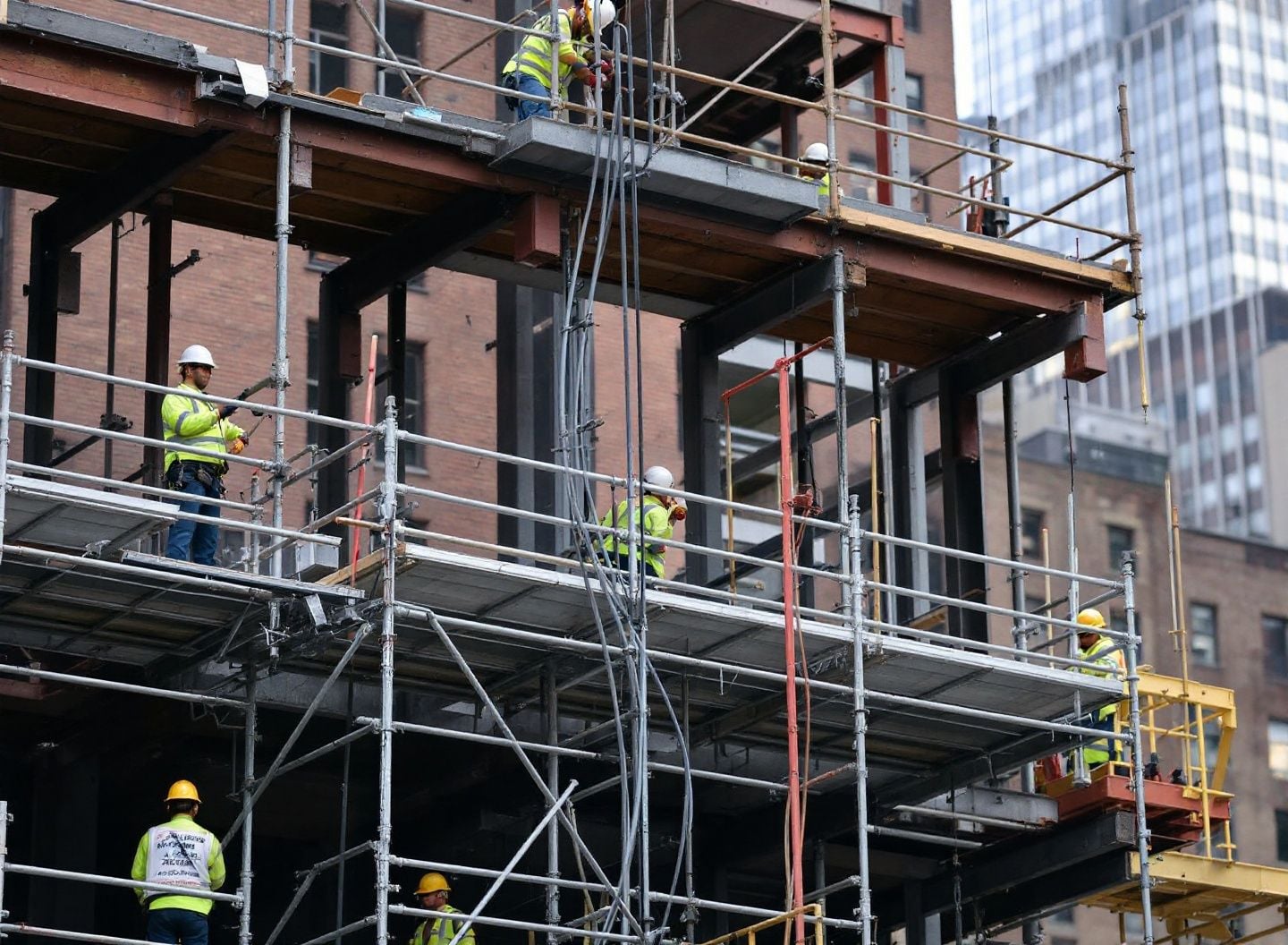
The trade-specific risks are real and varied. Ironworkers erecting structural steel work at heights where a single misstep means a fatal fall. Roofers install material on steeply pitched surfaces with little to hold onto. Scaffold workers on high-rise facades depend entirely on equipment they didn't choose and often didn't inspect. Laborers cleaning up at multi-story sites move through zones where unsecured tools and materials can fall from above. Each of these workers depends on someone else, typically a general contractor or building owner, to make sure the site is safe.
New York State has long recognized this dependence. Labor Law § 240, often called the Scaffold Law, imposes absolute liability on contractors and building owners who fail to provide proper safety devices for workers engaged in elevation-related tasks. Under Labor Law § 240, if a worker falls from an unsecured scaffold, an improperly placed ladder, or an unguarded opening, the contractor and owner are liable regardless of whether the worker contributed to the accident. The statute exists precisely because workers have no real power to demand safe conditions without risking their jobs. When those conditions fail and a worker dies, the Scaffold Law becomes one of the most important tools a surviving family has.
The Two Claims: What Each One Is Actually For
New York law splits the legal response to a fatal accident into two separate actions because two separate sets of injuries exist. One set belongs to the worker who died. The other set belongs to the family members left behind. A survival action addresses the first. A wrongful death claim addresses the second.
The Survival Action: The Worker's Own Claim
A survival action is the legal continuation of the claim the worker would have filed if they had survived. New York's Estate Powers and Trusts Law (EPTL) Section 11-3.2 allows this claim to 'survive' the worker's death and be pursued by the estate. The claim belongs to the estate, not to individual family members, and any recovery flows through the estate to be distributed according to the worker's will or the laws of intestacy.
The core of a survival action is the pain and suffering the worker experienced between the moment of injury and the moment of death. This is sometimes called 'conscious pain and suffering' because it requires showing that the decedent was conscious and aware of their suffering for some period of time. In a fatal construction fall, that window might be seconds, minutes, or hours. If a worker falls from a scaffold, lands on concrete, sustains catastrophic injuries, and dies in the hospital two days later, the estate can pursue a survival action for every moment of physical agony and emotional anguish experienced during that period. The value of that claim varies with the severity of the injuries, the level of consciousness the worker maintained, and the duration of suffering.
A survival action can also recover economic damages the worker would have recovered personally, such as lost wages from the date of injury to the date of death. These amounts, however, are often more limited when death follows quickly. The survival action does not compensate the family for their own losses. That's the wrongful death claim's job.
The Wrongful Death Claim: The Family's Own Loss
A wrongful death claim under EPTL Section 5-4.1 is brought by the personal representative of the estate on behalf of surviving distributees, which typically means a spouse, children, or parents. Unlike a survival action, a wrongful death claim is forward-looking. It doesn't compensate for what the worker suffered. It compensates for what the family lost.
New York's wrongful death statute focuses primarily on 'pecuniary losses,' meaning financial losses. This includes the economic support the worker would have provided over their expected working life, the value of household services the worker performed, and the cost of raising minor children. Courts also recognize the loss of parental guidance as a compensable pecuniary loss for minor children who lose a parent. The value of these damages varies considerably based on the worker's age, health, earnings history, the number and age of dependents, and many other factors.
One important limitation: New York's wrongful death statute does not allow surviving family members to recover for their own grief, emotional distress, or loss of companionship as standalone damages. Some states allow these 'loss of consortium' or 'solatium' claims, but New York does not in the wrongful death context. That's a significant distinction that sometimes surprises families. The law here is narrower than people expect, which makes it even more important to also pursue a survival action where the facts support one.
Hurt on a Construction Site?
Tell us what happened. A licensed New York attorney will review your case and call you — free, no obligation.
How Labor Law 240 and Site Safety Regulations Apply to Both Claims
Both a survival action and a wrongful death claim need a viable theory of liability. In construction fatalities, Labor Law § 240 is frequently the foundation of both. Because the statute imposes absolute liability, there's no need to prove that the contractor or owner 'knew' about a dangerous condition. The failure to provide adequate scaffolding, hoists, ladders, or other safety devices is itself the violation. If that failure caused the fatal fall, liability is established.
State regulations reinforce this framework. Under 12 NYCRR 23-1.7, employers and contractors must protect workers from specific hazards including falling objects, slippery conditions, and open areas where falls are foreseeable. These rules implement Labor Law Section 241(6), which requires that construction work be conducted in a manner that provides reasonable and adequate protection for workers. When a fatality occurs, investigators and attorneys look at whether 12 NYCRR 23-1.7 requirements were satisfied, because a violation of this regulation can serve as a predicate for a Labor Law 241(6) claim, even in cases where the Scaffold Law's absolute liability standard doesn't apply. The intersection of these statutes and regulations means that fatal construction accidents often generate multiple overlapping theories of liability.
It's also worth noting that federal OSHA violations under 29 CFR 1926.501, while not independently actionable in a civil lawsuit, can be relevant evidence of negligence. If OSHA investigates a fatal fall and cites a contractor for failing to provide fall protection systems required by 29 CFR 1926.501, that citation record may be introduced in a civil case to show that the contractor departed from an established industry standard. Plaintiffs' attorneys often review OSHA investigation files carefully in fatal construction cases.
Procedural Differences That Families Must Know
The two claims don't just differ in what they compensate. They differ in procedure in ways that can affect how a case is managed.
First, both claims require that an estate be opened and a personal representative appointed. This usually means probating a will or obtaining letters of administration from a Surrogate's Court. The wrongful death claim is brought by that personal representative on behalf of the distributees. The survival action is brought by the estate. In practice, both claims are often filed together in the same lawsuit, but the legal distinction matters when the case is valued, settled, or tried.
Second, the statute of limitations differs. A wrongful death claim in New York must be filed within two years of the date of death. A survival action follows the standard personal injury statute of limitations, which is three years from the date of injury. When death is immediate, both clocks start at roughly the same time. When a worker survives an injury for some period before dying, the difference in limitations periods can matter. Families should consult with an attorney as soon as reasonably possible, because two years passes faster than anyone expects during a period of grief.
Third, how any recovery is distributed differs. Wrongful death proceeds go to the distributees in proportion to their losses, as determined by the court if the parties can't agree. Survival action proceeds go to the estate and pass under the will or intestacy laws. In some families, this matters very much. A worker who was estranged from a parent or who had children from a prior relationship may have a distribution situation that doesn't align neatly with everyone's expectations.
The Practical Reality for Surviving Families
Families dealing with the sudden loss of a loved one in a construction accident are not expected to know any of this. That's not a criticism. It's simply the reality that most people never have reason to learn the mechanics of New York estate and tort law until they're suddenly thrust into it under the worst possible circumstances. What matters is understanding early that these two claims exist, that they're different, and that the facts of how their loved one was injured and died shape which claim carries more weight.
In cases involving prolonged suffering before death, the survival action may carry significant value. In cases where death was nearly instantaneous but the worker was the primary financial support for a young family, the wrongful death claim becomes the central focus. In many cases, both claims are worth pursuing, and the combined picture of what the worker endured and what the family lost tells a complete story of the harm caused by a contractor's or owner's failure to follow the law.
Construction sites in New York are supposed to be governed by layers of protection: federal OSHA standards like 29 CFR 1926.501, state statutes like Labor Law § 240, and state regulations like 12 NYCRR 23-1.7. When those protections fail and a worker dies, the law provides a way for that worker's estate and family to hold responsible parties accountable. Survival actions and wrongful death claims are the primary vehicles for doing that. Knowing the difference between them isn't just a legal technicality. It's the foundation of how a family begins to rebuild.
Frequently Asked Questions
Attorney Advertising. Prior results do not guarantee a similar outcome. This article is for general informational purposes only and does not constitute legal advice. NY Construction Advocate connects injured workers with experienced New York construction accident attorneys.
Frequently Asked Questions
Can a family file both a survival action and a wrongful death claim after a construction fatality in New York?▼
What does 'conscious pain and suffering' mean in a survival action, and how is it proven?▼
Does New York's wrongful death statute allow a spouse to recover for grief or loss of companionship?▼
How does Labor Law § 240 affect a wrongful death case after a fatal scaffold or ladder fall?▼
What is the deadline to file a wrongful death claim in New York, and is it different from the survival action deadline?▼
Who actually receives money recovered in a survival action versus a wrongful death claim?▼
Get a Free Case Review
Find out if you have a claim under New York Labor Law. A licensed NY attorney will review your case and call you back.