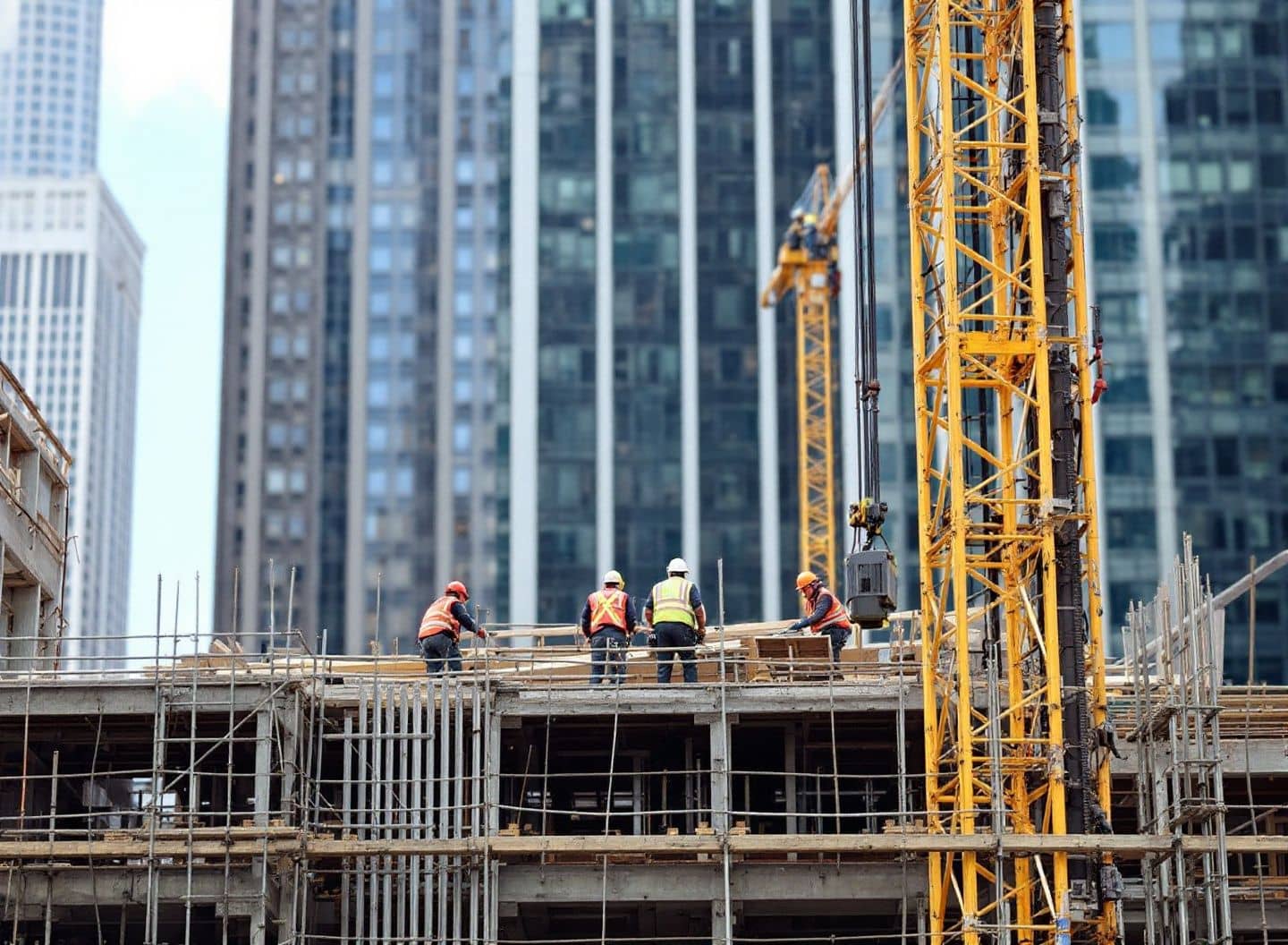
Every year, federal OSHA publishes a list of the standards cited most often by inspectors across the country. In 2024, that list looked a lot like it did in 2023, and the year before that. The top violations are not obscure technicalities. They're basic, well-known safety requirements that experienced contractors know by heart. Yet workers still get hurt, and in New York City, where construction density is among the highest in the world, those violations carry serious consequences. If you've been injured on a New York job site, understanding which rules were supposed to protect you, and how they connect to state law, is a critical first step.
Why OSHA Citation Data Matters to Injured New York Workers
OSHA enforcement data tells a story about where the industry keeps failing workers. When a standard appears on the most-cited list year after year, it signals a systemic problem, not an isolated lapse. For a construction worker injured in New York City, that data has practical legal significance. An OSHA citation issued to your employer after your accident can be evidence of negligence. More importantly, New York's Labor Law creates independent causes of action that run parallel to any federal OSHA proceedings. Understanding both federal and state frameworks helps injured workers, and their families, see the full picture of accountability.
The Undisputed Leader: Fall Protection Under 29 CFR 1926.501
Fall protection has sat at the top of OSHA's most-cited list for more than a decade, and 2024 was no exception. Nationwide, inspectors issued 6,307 citations under 29 CFR 1926.501 during fiscal year 2024. That number represents a staggering breadth of job sites, trades, and employers who failed to provide workers with the basic means to avoid falling from an elevated surface.
What does 29 CFR 1926.501 actually require? At its core, the standard mandates that employers provide fall protection, whether through guardrails, safety nets, or personal fall arrest systems, whenever workers are exposed to a fall of six feet or more in construction. That threshold sounds straightforward, but the application varies depending on the work surface. Workers on roofs, open floors, scaffolds, leading edges, and around floor holes each face different exposure scenarios, and the standard addresses each one.
In New York City, roofing work, steel erection, and concrete forming are among the trades most frequently associated with fall injuries. A roofer working near an unguarded roof edge, an ironworker walking a beam without a personal fall arrest system, a laborer moving across an open floor deck with unprotected holes, these are the real-world scenarios behind the citation numbers. Falls from height aren't just disabling injuries. They can be fatal, and when they're not fatal, they often produce fractures, traumatic brain injuries, and spinal damage that change a worker's life permanently.
How New York State Law Connects to Federal Fall Protection Rules
Federal OSHA violations matter, but New York workers have something additional on their side: Labor Law § 241(6). This statute imposes a non-delegable duty on property owners and general contractors to provide reasonable and adequate protection for workers engaged in construction, demolition, or excavation. The phrase 'non-delegable' is important. It means an owner can't escape liability simply by blaming a subcontractor. If the job site wasn't safe, the owner and general contractor are in the frame regardless of who they hired to do the work.
Labor Law § 241(6) becomes actionable when a worker can point to a specific, concrete safety regulation that was violated. That's where 12 NYCRR 23-1.7 comes in. This section of the New York Industrial Code establishes detailed, specific safety requirements for construction, demolition, and excavation operations. 12 NYCRR 23-1.7 is frequently cited in Labor Law § 241(6) claims because its provisions are specific enough to satisfy the legal standard that courts have imposed. Unlike broader, general duty requirements, 12 NYCRR 23-1.7 sets out particular obligations, such as protection from falling objects, regulation of slipping hazards, and requirements for overhead protection, that courts have recognized as giving injured workers a right to sue.
The interplay between Labor Law § 241(6) and 12 NYCRR 23-1.7 is one of the most significant legal mechanisms available to injured construction workers in New York. When a fall happens on a job site that lacked adequate guardrails, or where floor openings weren't covered or barricaded, an injured worker may have a viable claim under both the federal OSHA standard and the state industrial code, with Labor Law § 241(6) providing the cause of action.
Scaffolding Violations: A Persistent Problem in NYC
Scaffolding violations consistently rank among OSHA's most-cited categories nationwide, and New York City's dense, vertical construction environment makes them especially dangerous here. The scaffolding standards under 29 CFR 1926.451 require proper planking, guardrail systems, safe access, and load capacity management. When any of those requirements is ignored, workers can fall from scaffold platforms, or be struck by objects that fall from them.
In the NYC context, scaffolding failures injure not just the workers on the scaffold, but also workers below and sometimes pedestrians. For workers, the mechanism of injury is usually a fall to a lower level, a collapse of the scaffold structure itself, or a fall through gaps in inadequately planked decking. Carpenters, masons, painters, and laborers who work from scaffolds daily are the trades most at risk. The injuries that result, including pelvic fractures, spinal compression injuries, and head trauma, tend to be severe, and the path to recovery is often long.
Hazard Communication and Struck-By Incidents
Hurt on a Construction Site?
Tell us what happened. A licensed New York attorney will review your case and call you — free, no obligation.
OSHA's hazard communication standard, 29 CFR 1926.59, is cited frequently because compliance requires ongoing attention, not just a one-time setup. Workers on NYC job sites are regularly exposed to chemical hazards, including concrete sealers, epoxy coatings, welding fumes, and industrial solvents. When employers fail to train workers, fail to provide safety data sheets, or fail to label containers properly, workers may be exposed to toxic substances without knowing the risk or how to protect themselves. The injuries aren't always immediate, which is part of what makes this violation especially insidious.
Struck-by incidents represent another major category of injury on New York City sites. OSHA's requirements around falling object protection, barricading, and overhead protection are captured in multiple standards. In New York, 12 NYCRR 23-1.7 addresses protection against falling objects and debris, which ties struck-by injuries directly into the Labor Law § 241(6) framework. A worker struck by a falling tool, a dislodged piece of formwork, or construction material that wasn't properly secured may have a claim grounded in that combination of state and federal requirements.
The Role of Fireproof Flooring Requirements in Floor-Related Falls
Labor Law § 241(1) requires progressive completion of flooring when the specified floors or filling are fireproof. This isn't just a fire safety rule. It's a floor integrity requirement. When fireproof flooring isn't laid as the structure rises, workers on upper floors may be working on temporary decking or exposed structural elements that lack the stability of finished flooring. That creates fall risk, particularly for workers who need to move materials or equipment across those surfaces. The requirement that flooring be completed progressively reflects a legislative recognition that construction workers shouldn't be working above open, unfinished floor areas any longer than absolutely necessary.
Ladder Safety Violations: Underreported and Consequential
Ladders are among the most common pieces of equipment on any job site, and ladder violations appear year after year on OSHA's most-cited list under 29 CFR 1926.1053. The required safety practices aren't complicated: ladders must be in good condition, set at the correct angle, secured to prevent displacement, and extended at least three feet above the landing surface when used for access. Workers shouldn't carry materials while climbing. The top of a stepladder is not a step.
Despite how basic these rules are, ladder falls remain a significant source of injury in construction, particularly among electricians, HVAC mechanics, and finish carpenters who may spend a substantial part of their workday going up and down. A fall from even a six-foot ladder can produce a serious injury. From a twelve-foot or extension ladder, the consequences can be catastrophic. When the ladder itself was defective, improperly set up, or provided without training, liability may rest with the employer, the property owner, or both, depending on how New York's statutes apply to the specific facts.
What Injured Workers Should Know About Documenting Violations
If you're injured on a New York City construction site, the presence of an OSHA violation, whether cited by an inspector or identified later, can be important evidence. Here's what that means practically. First, OSHA records are public documents. If an inspection occurred at your job site, the citation records are generally accessible. Second, photographs taken at the scene, by you, a coworker, or an emergency responder, can establish the condition of the site at the time of the accident. Third, your own account of what was absent, what guardrail was missing, what warning wasn't given, what ladder was defective, is itself evidence.
New York's workers' compensation system provides medical benefits and wage replacement regardless of fault. But workers' compensation is generally not the only option when a third party, such as a general contractor, a property owner, or another subcontractor, contributed to the conditions that caused your injury. Labor Law § 241(6) claims, for example, are brought against owners and contractors, not just your direct employer. That distinction matters enormously when you're trying to understand the full range of rights available to you.
The value of any legal claim varies with the severity of the injury, the degree to which the violation contributed to the accident, the worker's lost earning capacity, and a host of other factors specific to the individual case. No two cases are alike. What matters is getting an accurate picture of what happened and which laws apply.
The Pattern Behind the Citations
Looking at OSHA's 2024 citation data as a whole, a pattern emerges. The most-cited violations aren't obscure. They're the rules every contractor should know cold. Fall protection. Scaffolding. Ladders. Hazard communication. Respiratory protection. Eye and face protection. These are foundational requirements, and yet they keep generating citations because job sites keep letting them slip, often under schedule pressure, cost pressure, or inadequate supervision.
For construction workers in New York City, that pattern is both frustrating and legally significant. Frustrating because these injuries are preventable. Legally significant because a pattern of widespread noncompliance, documented in federal citation data and reflected in New York's industrial code enforcement, reinforces the case that owners and contractors have a real, enforceable duty to do better. Labor Law § 241(6) exists precisely because the Legislature recognized that leaving safety entirely to market forces wasn't working. It still isn't.
If you were hurt on a New York construction site and you suspect that a safety violation played a role, you don't have to figure out the legal framework alone. What you should know, right now, is that New York law gives construction workers meaningful rights, that those rights exist independently of any federal enforcement action, and that the connection between OSHA violations and state labor law claims is something experienced construction accident attorneys work with every day. The citations in the 2024 data aren't just statistics. For the workers behind them, they represent real injuries that deserve real accountability.
Attorney Advertising. Prior results do not guarantee a similar outcome. This article is for general informational purposes only and does not constitute legal advice. NY Construction Advocate connects injured workers with experienced New York construction accident attorneys.
Primary sources
Frequently Asked Questions
What is the most commonly cited OSHA violation on construction sites in 2024?▼
How does Labor Law § 241(6) protect New York construction workers differently than OSHA?▼
What is 12 NYCRR 23-1.7, and why does it matter to an injured worker?▼
Can I pursue a legal claim against a property owner if I was injured by a safety violation on a NYC construction site?▼
Does receiving workers' compensation prevent me from suing for a construction site safety violation?▼
What should I do immediately after a construction accident to protect my legal rights?▼
Get a Free Case Review
Find out if you have a claim under New York Labor Law. A licensed NY attorney will review your case and call you back.