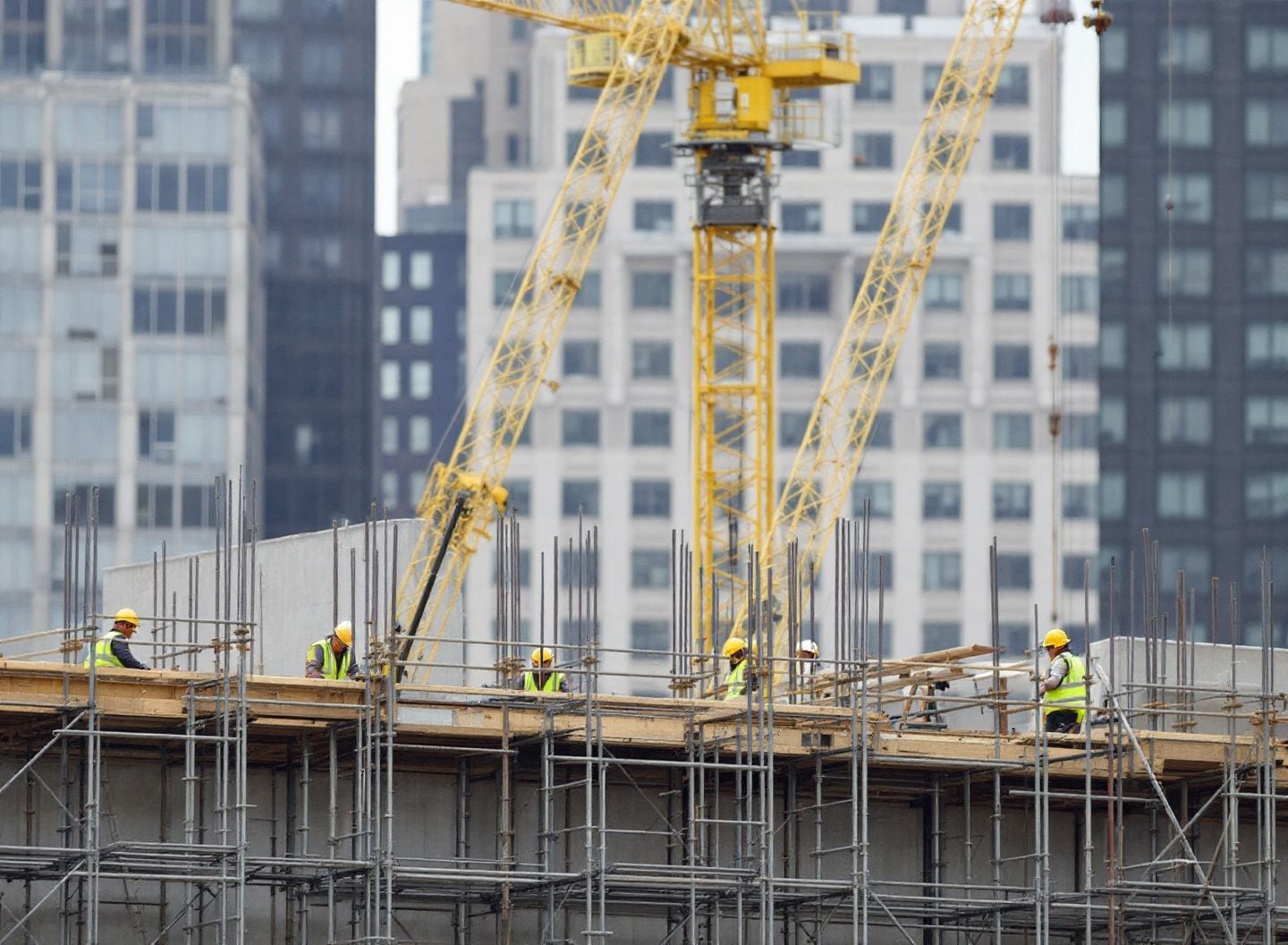
New York City's skyline keeps rising because of tower cranes. These machines lift steel, concrete, and materials hundreds of feet into the air, and they do it all day, every day, on dozens of active job sites at once. They're also among the most dangerous pieces of equipment on any construction project. When a tower crane fails, the consequences are immediate, severe, and often fatal. Workers on the ground, workers on upper floors, and ironworkers riding the crane itself can all be killed or catastrophically injured in the space of a few seconds.
This article is a plain-language guide to how tower crane collapses happen, which regulations govern crane safety on New York job sites, and what legal claims injured workers or their families can pursue. If you or someone you care about was hurt in a crane accident, the legal framework here is the foundation of any serious case.
How Tower Cranes Are Built — and Why That Creates Risk
A tower crane is not delivered to a job site as a finished unit. It's assembled in place, section by section, as the building grows. The vertical mast is made up of stacked steel lattice sections held together by bolts and internal pins. Near the top sits the slewing unit, which allows the horizontal jib to rotate. As the building rises, crews add mast sections using a process called climbing, where a hydraulic collar temporarily supports the crane's upper structure while a new section is inserted below it.
That climbing process is where things go wrong most often. If climbing collars are improperly secured, if bolts aren't torqued to specification, or if a collar is seated on a damaged section, the mast can buckle under the crane's own weight. The jib, counterweight, and entire upper assembly can then rotate and fall. Given the height of these machines on high-rise projects, a mast collapse sends debris over a wide radius and at tremendous velocity.
The 2008 crane collapses in Manhattan demonstrated this danger to the entire industry. Both tragedies involved tower cranes during or shortly after climbing operations, and both resulted in multiple fatalities. While this article won't attribute specifics to those events beyond what's publicly known at a general level, they permanently changed how regulators, owners, and contractors think about climbing collar inspections and third-party oversight of crane erection.
Rigging Failure: The Other Collapse Mechanism
Mast failure gets the headlines, but rigging failure kills and injures workers far more frequently on an everyday basis. Rigging includes the wire rope (cable), hooks, shackles, slings, and any below-the-hook lifting device that connects the crane's load line to whatever's being lifted. When rigging fails under load, the suspended material drops without warning.
Wire rope develops hidden fatigue cracks over time, particularly where it bends over sheaves or wraps around a drum. A shackle that's been side-loaded or overtightened can fail at a fraction of its rated capacity. A hook without a functioning safety latch can shed its load when the angle of the line shifts. Any of these failures can send thousands of pounds of steel, concrete panels, or mechanical equipment into free fall.
Workers in the crane's swing radius are especially vulnerable. The swing radius exclusion zone is supposed to be barricaded and controlled so that no one stands under or within reach of a suspended load. In practice, busy job sites with multiple trades working simultaneously often have workers inside that zone, either because the barricade wasn't set up properly or because someone made a judgment call that a quick task could be completed before the next pick. That judgment call can be the last one a worker makes.
The Federal Standard: 29 CFR 1926.1400
Federal OSHA governs crane safety on construction sites through 29 CFR 1926.1400, a detailed standard covering everything from operator qualification and load chart compliance to assembly and disassembly procedures, inspection requirements, and exclusion zone protocols. Under 29 CFR 1926.1400, crane operators must be certified or licensed, pre-shift inspections must be documented, and certain activities, including climbing operations, require a qualified person to supervise the work.
Violations of 29 CFR 1926.1400 matter in two ways. First, they can trigger OSHA citations and penalties against employers and subcontractors. Second, and more relevant to an injured worker's civil case, documented OSHA violations create a record that a jury can consider when evaluating whether the parties responsible for the crane acted reasonably. They don't automatically create civil liability, but they're powerful evidence of a departure from the required standard of care.
New York Labor Law § 240: The Scaffold Law and Crane Collapses
New York's Labor Law § 240, often called the Scaffold Law, is one of the most significant worker-protection statutes in the country. It imposes absolute liability on owners, general contractors, and their agents when a worker is injured or killed by a gravity-related hazard on a construction site, including falling objects and structural collapses. 'Absolute' means that if the statute applies, the owner or contractor can't escape liability by claiming the worker was partially at fault.
Labor Law § 240 applies to cranes in two ways. First, when a crane or its rigging fails and causes a load to fall and strike a worker, the falling object provision covers the claim. Courts have consistently held that a suspended load dropping because of inadequate rigging or a failed lifting mechanism is exactly the kind of elevation-related hazard Labor Law § 240 was enacted to address. Second, when a crane collapse causes a worker to fall from an elevated work platform or the crane structure itself, the statute applies to that fall.
The practical effect is significant. An injured ironworker or construction laborer who can show that the crane, hoist, or lifting device failed to protect against a gravity hazard doesn't need to prove that the owner or general contractor was negligent in the traditional sense. The failure to provide a properly functioning device is enough. The value of a claim under Labor Law § 240 varies with the severity of the injury, the worker's age and trade, and the economic losses that flow from being unable to return to work.
Hurt on a Construction Site?
Tell us what happened. A licensed New York attorney will review your case and call you — free, no obligation.
State Regulations: 12 NYCRR 23-8
New York's own regulatory framework adds another layer. 12 NYCRR 23-8 sets out specific crane safety requirements for construction, demolition, and excavation work in the state. These rules address crane setup, operation, load limits, and inspection, and they implement Labor Law Section 241(6) by defining concrete, specific safety practices that must be followed on New York job sites.
Why does 12 NYCRR 23-8 matter for a legal claim? Because Labor Law Section 241(6) creates a cause of action when a worker is injured as a result of a violation of a specific, concrete safety standard. 12 NYCRR 23-8 provides those specific standards. Unlike the general duty clause in OSHA, a violation of 12 NYCRR 23-8 can support a Section 241(6) claim, which, while not carrying the absolute liability of Section 240, still shifts significant legal responsibility to owners and contractors who failed to ensure the applicable regulations were followed.
Who's Responsible? Multi-Defendant Liability After a Tower Crane Collapse
Tower crane collapses almost never have a single responsible party. A modern high-rise project involves a property owner, a developer, a general contractor, a crane rental company, a crane erector or rigger subcontractor, and often a third-party inspection firm. Each of these parties can bear some or all of the legal responsibility depending on what went wrong and who controlled what.
The property owner and general contractor face direct exposure under Labor Law § 240 and Section 241(6) because those statutes impose non-delegable duties. They can't point to a subcontractor and claim they're off the hook. The crane rental company may be liable in products liability or negligence if the crane had a defect, if maintenance records were falsified, or if inspection reports were ignored. The crane erector faces liability if the mast was assembled incorrectly. The inspection firm can be sued in negligence if it certified the crane as safe when it wasn't.
This web of defendants is actually beneficial for an injured worker. It means there are multiple sources of liability and multiple insurance policies that can be reached. It also means that defendants may point fingers at each other, and the depositions, document requests, and expert investigations that follow tend to surface the full story of what went wrong.
The Investigation Process and Why It Matters for Your Claim
After a tower crane collapse, investigators from multiple agencies will respond. The New York City Department of Buildings has jurisdiction over crane permits and inspections. OSHA will conduct its own investigation. The police may respond if there are fatalities. The general contractor will likely retain its own forensic engineers.
For an injured worker or the family of someone killed, the most important thing to understand is that evidence disappears quickly. Crane components are removed for testing and sometimes lost or altered. Electronic data recorders in modern cranes hold load data, cycle counts, and fault logs that can be overwritten. Witness memories fade. An experienced attorney will move quickly to send preservation letters to every party, demand that inspection records and maintenance logs be kept intact, and retain independent engineers to examine the equipment before anything is moved or scrapped.
The investigations also produce reports, citations, and findings that become evidence. OSHA inspection reports, Department of Buildings violation records, and any criminal referrals all feed into the civil case. Workers and families should be cautious about giving recorded statements to anyone other than their own attorney in the period immediately following an accident, because those statements can be used against the injured party later.
Workers' Compensation and the Third-Party Lawsuit
Injured construction workers in New York are entitled to workers' compensation benefits from their employer's insurance, regardless of fault. Those benefits cover medical expenses and a portion of lost wages. They're an important safety net, but they're not the full picture.
Workers' compensation doesn't cover pain and suffering, full wage replacement, or long-term disability in the way that a civil lawsuit does. More importantly, it only runs against the employer. If the crane collapse involved the negligence of the property owner, the general contractor, the crane company, or another subcontractor, the injured worker can file a third-party lawsuit against those parties simultaneously. That's where Labor Law § 240, Labor Law Section 241(6), and claims under 12 NYCRR 23-8 come into play. The two tracks run at the same time, and a recovery in the third-party case can dramatically exceed what workers' compensation alone would provide.
What Injured Workers and Families Should Do
If you're a worker injured in a crane accident, or a family member of someone who was killed or seriously hurt, a few steps matter enormously in the days and weeks after the incident. First, get medical attention and document every diagnosis and treatment. Second, report the accident in writing to your employer and keep a copy. Third, don't sign any documents from the property owner, general contractor, or their insurance companies without speaking to an attorney first. Fourth, gather whatever information you can while memories are fresh: the names of coworkers who witnessed what happened, photographs if you're able to take them safely, and any safety complaints that were made before the accident.
The statute of limitations for personal injury claims in New York is generally three years, but certain claims against city entities have much shorter notice requirements. Don't assume you have unlimited time. The sooner an attorney is involved, the better the chances that critical evidence is preserved and the full range of defendants is identified.
Attorney Advertising. Prior results do not guarantee a similar outcome. This article is for general informational purposes only and does not constitute legal advice. NY Construction Advocate connects injured workers with experienced New York construction accident attorneys.
Frequently Asked Questions
Does Labor Law § 240 apply to crane accidents, or only to falls from ladders and scaffolds?▼
Can I sue the crane rental company if the crane's mechanical condition caused the collapse?▼
What's the difference between a Labor Law § 240 claim and a claim under 12 NYCRR 23-8?▼
If I'm receiving workers' compensation, can I still file a lawsuit against the property owner or general contractor?▼
How does the swing radius exclusion zone factor into a legal claim after a crane accident?▼
How quickly does evidence disappear after a crane collapse, and what can be done about it?▼
Get a Free Case Review
Find out if you have a claim under New York Labor Law. A licensed NY attorney will review your case and call you back.