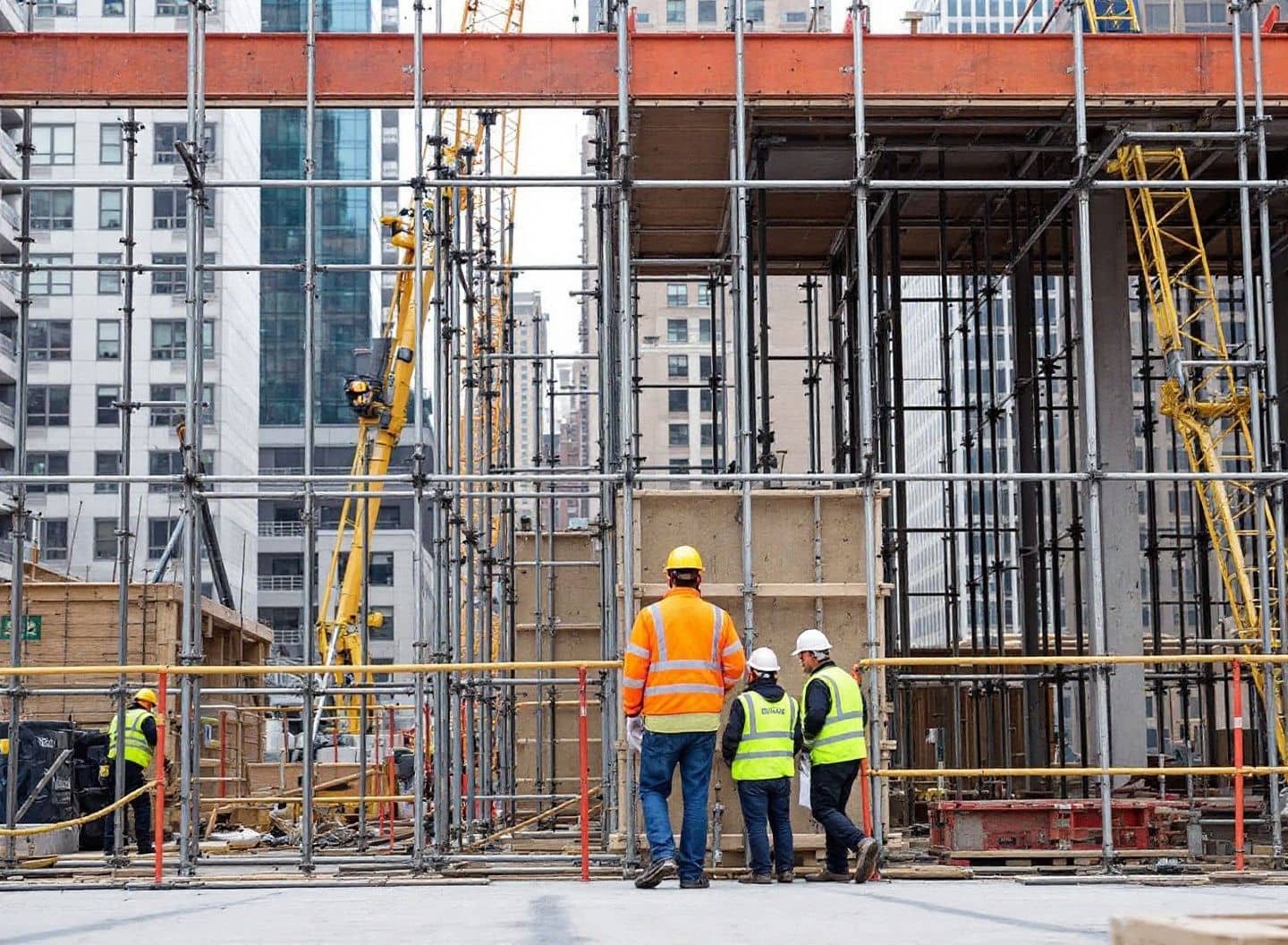
Construction sites are, by their very nature, constantly changing environments. Materials arrive and get staged in corridors. Tradespeople work in overlapping areas. Debris accumulates faster than it gets cleared. For the men and women working on these sites every day, that reality creates a serious and underappreciated hazard: tripping. Not every injury involves a fall from a scaffold or a crane collapse. Sometimes a worker simply catches a foot on a coil of wire, a stack of drywall scraps, or a puddle of dried mortar on a stairway, and the resulting fall can be just as devastating as any high-elevation accident. New York law recognizes this, and it provides specific protections for workers injured in exactly this way.
Understanding Labor Law § 241(6) and Why It Matters for Trip-and-Fall Claims
Labor Law § 241(6) is a section of New York's Labor Law that requires owners and general contractors to provide reasonable and adequate protection and safety to workers engaged in construction, excavation, and demolition work. What makes this statute so significant is that it doesn't stand alone. It gets its real teeth from the New York State Department of Labor's Industrial Code, a body of specific, detailed safety regulations. When a specific, applicable Industrial Code rule was violated, the violation amounted to negligence, and it was a proximate cause of a worker's injury, Labor Law § 241(6) can make the owner and general contractor liable whether or not they were directly supervising the work at the moment of injury. That's the legal concept of vicarious liability, and it matters enormously in practice.
The catch is that not every Industrial Code section qualifies. Courts in New York have long held that the regulation cited must be specific enough to establish a concrete standard of conduct. Vague or general directives don't count. That requirement is why 12 NYCRR 23-1.7 is so important to workers injured by tripping hazards. It's specific, it's detailed, and New York courts have consistently found it sufficient to support a Labor Law § 241(6) claim.
What 12 NYCRR 23-1.7 Actually Requires on Construction Sites
The regulation 12 NYCRR 23-1.7 is titled 'Protection from general hazards,' and it covers several specific hazardous conditions. The subsection most directly relevant to tripping and walkway injuries is 12 NYCRR 23-1.7(e), which addresses passageways and working areas.
Subdivision (e)(1) deals specifically with passageways. It requires that all passageways be kept free from accumulations of dirt and debris and from any other obstructions or conditions which could cause tripping. The plain language is sweeping: 'any other obstructions or conditions.' Courts have applied that phrase to include scrap lumber, electrical cord runs, balled-up plastic sheeting, discarded packaging materials, puddles of hardened compound, and many other common jobsite materials that accumulate in corridors, stairways, and access paths.
Subdivision (e)(2) speaks to working areas. It requires that the parts of floors, platforms, and similar areas where persons work or pass be kept free from accumulations of dirt and debris and from scattered tools and materials, and from sharp projections, insofar as may be consistent with the work being performed. This provision is particularly relevant to workers on active floors, such as carpenters laying subfloor, electricians pulling wire, or ironworkers threading conduit through areas shared with other trades.
Taken together, these two subdivisions of 12 NYCRR 23-1.7(e) establish a clear affirmative duty: keep the floors and pathways clear. Failure to do so, when it causes injury, is a direct path to liability under Labor Law § 241(6).
The Mechanism of Injury: How These Accidents Actually Happen
It's worth being specific about how tripping injuries occur on construction sites, because the mechanism matters legally and medically. A worker carrying materials has reduced visibility of the floor immediately ahead. A worker in a dimly lit corridor during rough-in phases may not see a low obstacle at all. Workers wearing heavy boots and moving quickly between tasks don't have the same sensitivity to minor floor irregularities that someone in ordinary footwear might have in a controlled environment.
When a trip occurs, the body's reaction is to reach out and attempt to catch the fall. That instinctive response can itself cause injury: fractured wrists, dislocated shoulders, torn rotator cuffs. If the worker doesn't catch himself, the head, knees, or spine may absorb the impact. On a construction floor, that impact isn't landing on carpet; it's landing on concrete, steel decking, or plywood over framing. Traumatic brain injuries, spinal fractures, and severe knee injuries are all documented outcomes of what begins as a simple trip on cluttered debris.
The trade-specific risks are real. Plumbers and pipefitters frequently work in tight mechanical rooms and basements where pipe offcuts and fittings accumulate rapidly. Drywall hangers and tapers work in areas thick with compound buckets, unused board sections, and corner bead scraps. HVAC workers often share floor space with other subcontractors, and no single foreman feels responsible for the collective clutter. That diffusion of responsibility is exactly why the law places the obligation on the owner and general contractor rather than on individual subcontractors.
How Fireproof Flooring Requirements Connect to This Framework
Labor Law § 241(1) requires progressive completion of flooring when the specified floors or filling are fireproof. That requirement exists in part because an unfinished or improperly completed floor creates uneven surfaces, gaps, and transitions that become tripping hazards in their own right. Where a project skips or delays fireproof flooring installation, workers are left walking on surfaces that weren't designed for foot traffic, creating exactly the kind of hidden hazard that 12 NYCRR 23-1.7(e) is meant to address. A claim grounded in cluttered walkways can sometimes be strengthened by evidence that the floor itself was in a defective or incomplete condition that contributed to the worker's injury.
Federal Standards and 29 CFR 1926.501: A Parallel Framework
While New York's Industrial Code provides the primary basis for a Labor Law § 241(6) claim, federal OSHA standards exist alongside it and are worth understanding. The federal fall protection regulation, 29 CFR 1926.501, governs fall hazards at construction sites covered under federal jurisdiction and received 6,307 citations nationwide in FY2024, making it one of the most frequently cited OSHA standards in the country. Federal OSHA and New York state standards sometimes overlap, and an employer cited under 29 CFR 1926.501 for failing to protect workers from fall hazards in work areas is providing evidence that safety conditions on the site were deficient.
Hurt on a Construction Site?
Tell us what happened. A licensed New York attorney will review your case and call you — free, no obligation.
It's important to understand, though, that OSHA citations don't automatically establish civil liability in New York courts. The Labor Law § 241(6) claim is the primary civil remedy, and it depends on violations of the Industrial Code, not federal OSHA. Still, a pattern of federal citations for fall protection failures at the same site can be relevant context when building a case.
Who Can Be Held Liable Under Labor Law § 241(6)
One of the most significant features of Labor Law § 241(6) is that it imposes liability on property owners and general contractors even when they weren't personally negligent. The worker's own employer, typically a subcontractor, is usually shielded from direct suit by Workers' Compensation law. But the owner of the property and the general contractor managing the site bear a non-delegable duty to maintain safe conditions. That duty can't be contractually shifted away to a subcontractor, which means even an owner who never set foot on the site can be held responsible if conditions on the site violated 12 NYCRR 23-1.7(e) and a worker was injured as a result.
In practice, most New York construction injury cases involve a general contractor who has overall responsibility for site safety and one or more property owners who hired them. Both parties should expect to be named in a Labor Law § 241(6) action. Some developers also retain direct control over certain safety protocols, which can strengthen claims against them specifically.
Comparative Fault: Does It Affect a 23-1.7(e) Claim?
Unlike Labor Law § 240(1), which covers elevation-related injuries and bars the comparative fault defense entirely, Labor Law § 241(6) does allow defendants to assert that the injured worker was partially at fault. If a worker ignored obvious hazards, bypassed a designated route to take a shortcut, or was distracted in a way that contributed to the fall, a court may reduce the damages award proportionally. This is New York's pure comparative fault system: even a worker who is found partly responsible can still recover, but the recovery is reduced by their percentage of fault.
This distinction means that building a thorough factual record matters. Photographs of the debris, witness statements from co-workers, site inspection reports, safety meeting logs, and any prior complaints about the walkway condition all become relevant to showing that the hazard was created and maintained by the defendants' failure to comply with 12 NYCRR 23-1.7, not by any misstep by the worker.
The Value of a Tripping Hazard Claim and What Shapes It
The value of any Labor Law § 241(6) tripping hazard claim varies with the severity of the injury, the worker's age and occupation, the duration of the disability, and the degree to which the injury affects the worker's ability to return to the trades. A worker who suffers a concussion and recovers in weeks faces very different circumstances than a worker whose fall results in a herniated cervical disc requiring surgery, or whose spinal injury leaves permanent functional limitations. The economic consequences extend beyond medical bills: lost wages, reduced earning capacity, and the cost of future medical care all factor into the measure of damages.
Workers' Compensation will typically cover medical treatment and a portion of lost wages from the worker's employer regardless of fault, but it doesn't compensate for pain and suffering. A Labor Law § 241(6) claim against the owner and general contractor opens the door to those additional damages, which is why pursuing both avenues simultaneously is often appropriate.
Steps Injured Workers Should Take After a Tripping Accident
The actions a worker takes in the hours and days following a tripping accident on a construction site can significantly affect any future claim. First, the injury should be reported to a foreman or supervisor immediately and documented in writing. An accident report creates a contemporaneous record that's difficult to dispute later. Second, the worker should seek medical attention promptly, even if the injury seems minor at first. Some injuries, particularly head trauma and spinal injuries, aren't fully apparent right away.
Third, photographs of the accident location should be taken as soon as possible, ideally before the debris is cleaned up. Construction sites change fast, and the hazard that caused the fall may be gone within hours. Fourth, names and contact information of any co-workers who witnessed the fall or were aware of the hazard should be noted. Fifth, a Workers' Compensation claim should be filed promptly. And finally, consulting with an attorney experienced in New York construction accident law is important, because the notice requirements and statutes of limitations for Labor Law claims are strict, and missing them can forfeit an injured worker's rights entirely.
Why Specificity in the Regulation Is What Makes These Claims Work
It bears repeating why 12 NYCRR 23-1.7(e) is such a reliable foundation for a Labor Law § 241(6) claim. New York courts have repeatedly distinguished between Industrial Code sections that are too general to support liability and those specific enough to create an enforceable standard. A regulation that simply says 'keep the site safe' wouldn't qualify. But 12 NYCRR 23-1.7(e)(1)'s requirement that passageways be kept free from debris and obstructions, and (e)(2)'s requirement that working areas be kept free from scattered tools and materials, are specific mandates tied to identifiable conditions. Courts applying Labor Law § 241(6) have found these provisions sufficient time and again, making them among the most reliably cited sections in construction injury litigation.
If you or someone you know has been injured in a tripping accident on a New York construction site, the first step is understanding that these are not just ordinary slip-and-fall cases. They involve a specific body of law designed to protect workers, and the rights those laws create are meaningful. Speaking with a construction injury attorney who knows this framework is the most important thing an injured worker can do.
Attorney Advertising. Prior results do not guarantee a similar outcome. This article is for general informational purposes only and does not constitute legal advice. NY Construction Advocate connects injured workers with experienced New York construction accident attorneys.
Primary sources
Frequently Asked Questions
What is 12 NYCRR 23-1.7(e) and how does it apply to a trip-and-fall on a construction site?▼
Can I sue the general contractor or building owner if I tripped on construction debris even though my employer controls my day-to-day work?▼
What evidence is most important to preserve after a tripping accident on a construction site?▼
Does my own carelessness affect a Labor Law § 241(6) tripping hazard claim?▼
Is a federal OSHA citation for fall protection enough to support a New York Labor Law claim on its own?▼
Are all workers on a New York construction site protected by Labor Law § 241(6), or only certain trades?▼
How long does an injured construction worker have to file a Labor Law § 241(6) claim in New York?▼
Get a Free Case Review
Find out if you have a claim under New York Labor Law. A licensed NY attorney will review your case and call you back.