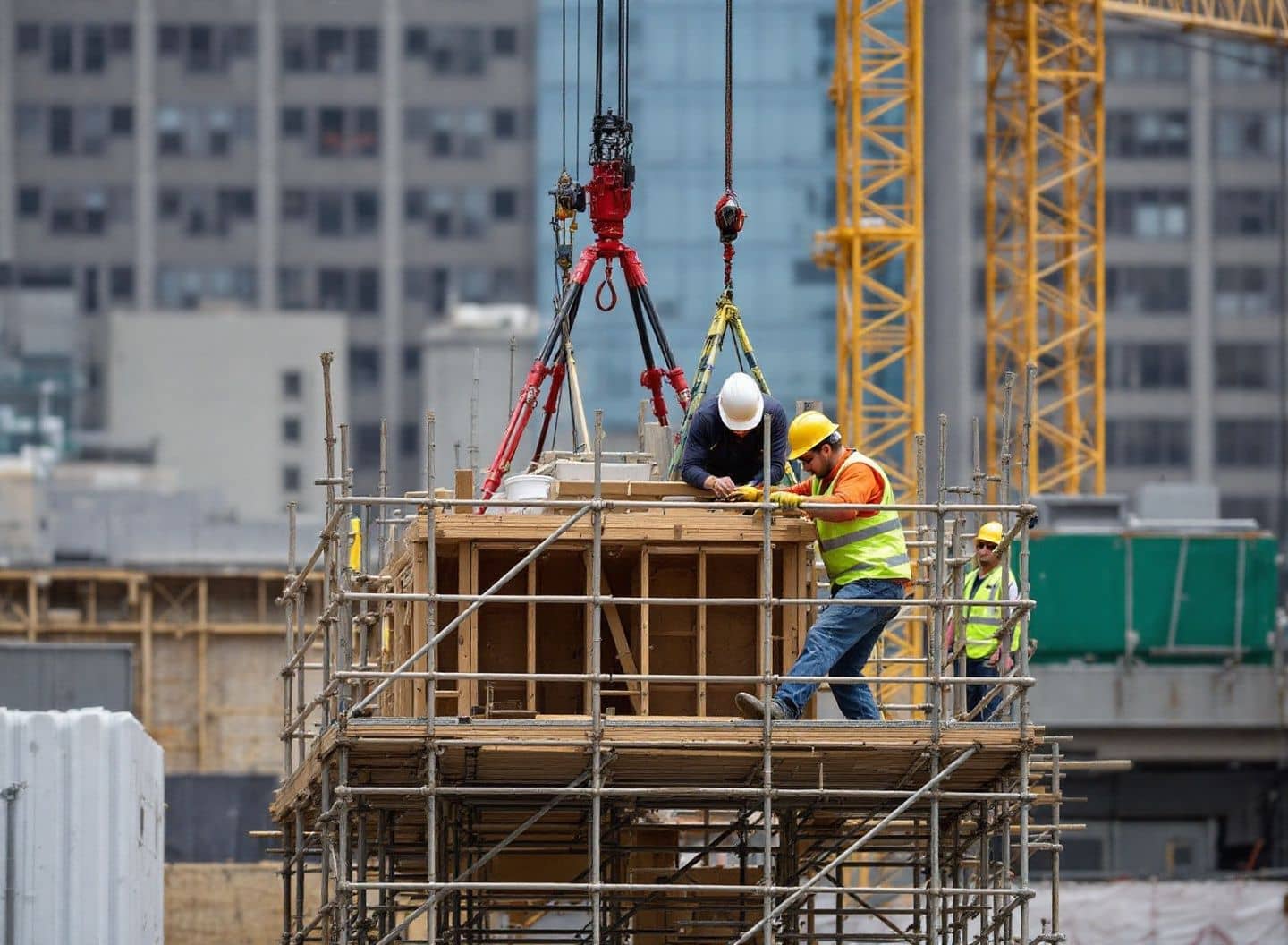
Fear is a powerful thing. For an undocumented worker hurt on a New York construction site, fear can feel like a wall between the injury they suffered and the justice they deserve. Fear of deportation, fear of retaliation, fear that the law simply doesn't apply to them. That fear is understandable, but it's also wrong as a matter of law. New York's construction accident statutes don't ask where you were born or whether you have a green card. They ask whether you were hurt because someone failed to keep a worksite safe. If the answer is yes, the law protects you.
Why Immigration Status Is Legally Irrelevant in a Construction Injury Case
New York's Labor Law doesn't contain an immigration carve-out. Courts have consistently held that workers without legal status are entitled to the same tort remedies as any other injured person. The reasoning is straightforward: the statutes were written to protect workers, full stop. Contractors and property owners have a duty to maintain safe conditions regardless of who is doing the work. If that duty is breached and someone gets hurt, liability attaches to the party who failed to provide a safe site, not to the worker who showed up to do a job.
There's also a policy reason that courts take seriously. If undocumented workers could be excluded from suing, unscrupulous employers would have a financial incentive to hire exclusively undocumented labor, knowing they could cut corners on safety without meaningful consequence. New York law refuses to create that incentive. The protections exist for every person on site.
Labor Law § 240: The Scaffold Law and How It Protects You
Labor Law § 240, widely known as the Scaffold Law, is one of the most protective worker-safety statutes in the country. It imposes absolute liability on contractors, owners, and their agents when a worker is injured by an elevation-related hazard because proper safety equipment wasn't furnished or properly erected. That means scaffolding, hoists, stays, ladders, slings, hangers, blocks, pulleys, braces, irons, and ropes all fall within its scope during construction, repair, or demolition work.
Why is this significant for undocumented workers specifically? Because Labor Law § 240 is what lawyers call a strict liability statute for gravity-related accidents. The injured worker doesn't have to prove the owner or contractor was negligent in the traditional sense. The worker has to show that a safety device was absent or inadequate and that this failure was a proximate cause of the injury. Immigration status plays no role in that analysis. The statute applies based on the nature of the work and the failure to provide protection, not the worker's documentation.
Falls from height are among the most common and most serious injuries in construction. A carpenter working on upper-floor framing, a mason on a scaffold, a laborer on a roof, an ironworker on a beam: these workers face gravity every single day. When a scaffold collapses, a ladder slips, or a worker falls through an unprotected opening, Labor Law § 240 gives them a direct legal claim against the owner and general contractor, regardless of whether their employer is the one who failed them.
Site-Specific Safety Rules Under 12 NYCRR 23-1.5
Beyond the Scaffold Law, New York has an entire regulatory framework governing day-to-day safety practices on construction sites. The Industrial Code, specifically 12 NYCRR 23-1.5, sets out the general duty of employers and other responsible parties to maintain safe conditions for every person employed in construction, demolition, or excavation work. This regulation implements Labor Law Section 241(6) by establishing concrete, specific requirements, such as proper housekeeping, adequate lighting, protection from falling objects, and maintenance of equipment.
When a worker is injured and can point to a violation of a specific provision of 12 NYCRR 23-1.5, that violation can form the basis of a Labor Law § 241(6) claim. These claims are different from a Scaffold Law case. They require showing that the violation was a proximate cause of the injury, but they still rest on the same foundation: a worker was on site doing construction work, and someone failed to follow the rules. A worker's immigration status doesn't change whether the rules were followed or broken.
Electricians working around uninsulated wiring, demolition workers exposed to unstable structures, excavation crews in unshored trenches: all of these workers face specific hazards that 12 NYCRR 23-1.5 and related code sections were written to address. Any of them can be seriously injured by a single regulatory failure, and any of them can bring a claim under New York law regardless of citizenship.
Federal OSHA Standards and What They Mean for Workers
Federal law also matters. Under 29 CFR 1926.20, OSHA requires that construction employers initiate and maintain accident-prevention programs on every jobsite. This federal standard applies to every worker on a covered construction project. It requires employers to inspect worksites, identify hazards, and take corrective action before someone gets hurt. OSHA explicitly states that workers have rights regardless of immigration status, including the right to report unsafe conditions and to request an OSHA inspection without fear of retaliation.
It's worth being direct about something: OSHA inspectors are not immigration enforcement officers. Their job is to assess safety violations, not to check documentation. Filing an OSHA complaint, or cooperating in one, doesn't trigger an immigration inquiry. Workers who are afraid to report unsafe conditions because of their status should know that the agency has a strong interest in protecting confidentiality for workers who come forward.
Trade-Specific Risks and Why the Law Catches Them All
Construction is not one job. It's dozens of distinct trades, each with its own hazard profile, and undocumented workers are found across all of them. Here's how the law maps onto the real risks these workers face.
Hurt on a Construction Site?
Tell us what happened. A licensed New York attorney will review your case and call you — free, no obligation.
What Happens to Lost Wages If You're Undocumented
This is the question that makes many undocumented workers hesitate. If you weren't legally authorized to work, can you still recover for the wages you lost because of your injury? New York courts have grappled with this, and the answer is nuanced but generally favorable to injured workers. Courts have allowed recovery for lost earnings capacity even for undocumented workers, reasoning that the defendant who created the dangerous condition shouldn't get a windfall because the victim lacked documentation. The value of any such recovery varies with the severity of the injury, the nature of the work performed, and the specific facts of the case, but it's a real category of damages that your attorney can pursue.
Medical expenses are also recoverable. Construction injuries often require surgery, rehabilitation, and ongoing care. The cost of that care doesn't go down because a worker is undocumented, and neither does the right to seek compensation for it.
Practical Steps After a Construction Injury
If you're hurt on a construction site and you're undocumented, there are concrete steps that help protect your legal rights from the start.
Retaliation Is Illegal
Some workers fear that reporting an injury or consulting a lawyer will result in their employer reporting them to immigration authorities. That fear is real, but there are legal protections against this type of retaliation. Using immigration status as a threat to discourage a worker from asserting legal rights can itself be actionable. Courts and regulators have sanctioned parties who attempted to weaponize immigration status to suppress legitimate legal claims. No worker should be silenced by that kind of pressure, and the legal system has tools to address it when it occurs.
The bottom line is this: New York's construction accident laws were built to hold powerful parties, property owners, general contractors, and developers, accountable when they cut corners on safety. Those laws don't work the way they're supposed to if the people most vulnerable to unsafe conditions can be scared out of using them. An undocumented worker hurt by someone else's failure to follow the law has the same right to seek justice as anyone else on that site.
Attorney Advertising. Prior results do not guarantee a similar outcome. This article is for general informational purposes only and does not constitute legal advice. NY Construction Advocate connects injured workers with experienced New York construction accident attorneys.
Primary sources
Frequently Asked Questions
Can I sue for a construction injury in New York if I'm undocumented?▼
Will filing a lawsuit expose my immigration status to authorities?▼
What is the Scaffold Law and does it protect undocumented workers?▼
Can I recover lost wages if I was working without authorization when I got hurt?▼
What safety regulations apply to my employer and the general contractor on the jobsite?▼
What should I do right after a construction accident if I'm afraid to report it because of my status?▼
Can my employer threaten to report me to immigration if I make a workers' compensation or injury claim?▼
Get a Free Case Review
Find out if you have a claim under New York Labor Law. A licensed NY attorney will review your case and call you back.