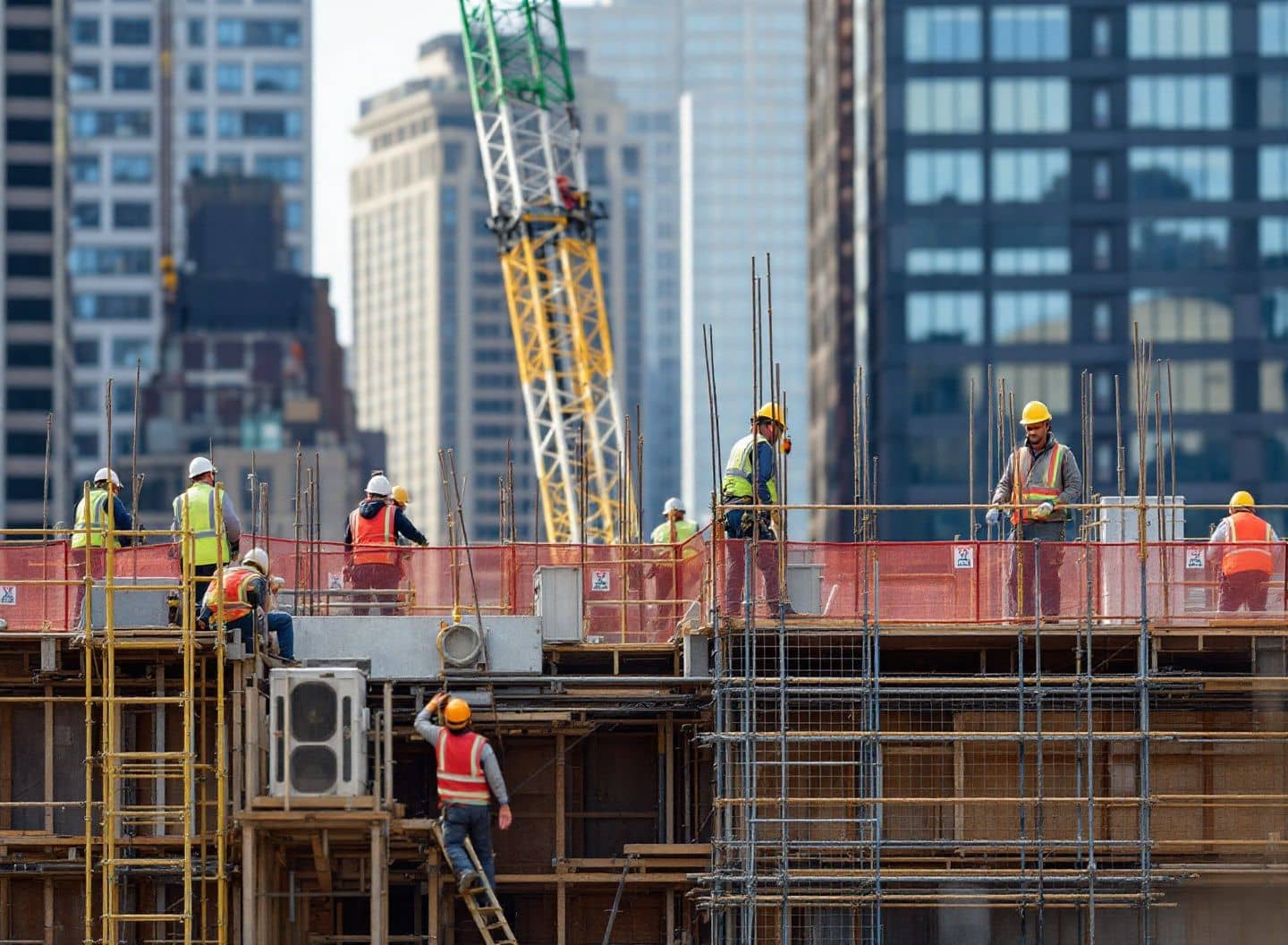
On any active construction site in New York, the floor beneath a worker's feet may be nothing more than a work-in-progress. Concrete hasn't been poured. Decking has been partially removed. A hatch cover was shifted by one crew and never replaced by another. The result is a hole in the floor that a worker on a lower scaffold, in a basement stairwell, or just walking to a work station has no reason to expect. Falls through unguarded floor openings aren't freak accidents. They're a predictable consequence of inadequate planning, poor communication between trades, and outright failure to follow the rules that New York State and federal regulators have put in place for exactly this reason.
This article explains those rules, how they interact, and why they matter to any construction worker who has been injured in this type of fall. If you or someone close to you has gone through a floor opening on a New York job site, understanding the legal framework is the first step toward knowing what options exist.
The Mechanics of a Floor-Opening Fall
A fall through a floor opening is different from a fall off a ladder or scaffold, and it's important to understand why. When a worker falls off an elevated surface, there's usually some moment of instability that precedes the fall. You can sometimes grab something, shift your weight, or catch yourself. A fall through a hole in the floor gives you almost no warning. One step, your foot goes through, and gravity takes over instantly. The opening can be as small as a few square feet, but that's more than enough to send a worker falling one story, two stories, or more into the space below.
The injuries that result from this mechanism tend to be severe. Traumatic brain injuries, spinal cord damage, shattered limbs, and internal organ trauma are common outcomes. Falls from even one story can be fatal. Workers who survive often face months or years of medical treatment and rehabilitation, and some never return to the trades at all. The severity of these consequences is precisely why the legal system places non-delegable duties on owners and general contractors to prevent them.
Which Trades Face the Highest Risk
Floor-opening hazards don't discriminate much by trade, but certain workers face elevated exposure based on where and how they work. Ironworkers installing decking may remove temporary covers to run material and forget to replace them. Electricians and plumbers doing rough-in work cut penetrations through floors for conduit and piping, and those penetrations may sit open for days or weeks before they're sealed. Carpenters framing floor systems leave sections incomplete as other work progresses. HVAC workers cut large openings for ductwork that can remain uncovered during an entire installation phase.
Hatchways present a specific sub-category of risk. Unlike an accidental opening, a hatchway is an intentional, recurring access point, often to a basement, roof, or mechanical room. The cover exists, but it may be left open after use, removed entirely during certain phases of work, or simply not secured properly. A worker who isn't aware that a hatch is in their path and who approaches in poor lighting or at the wrong angle can go through before they realize it's open. The predictability of that hazard makes it legally significant, because predictable hazards that aren't addressed represent a failure of duty, not just bad luck.
What 12 NYCRR 23-1.7 Actually Requires
New York's industrial code addresses floor opening hazards directly under 12 NYCRR 23-1.7, which covers the protection of persons from hazardous conditions in construction, demolition, and excavation operations. The specific provisions relevant to floor openings require that every hazardous opening into which a person may step or fall be guarded by a substantial cover fastened in place, or by a safety railing. The rule applies to openings in floors, roofs, and similar surfaces. The word "substantial" isn't decorative. It means a cover that won't shift, buckle, or give way under the weight and movement of workers. A sheet of plywood balanced loosely over a hole doesn't meet the standard. A cover must be secured so it stays in place.
The regulation also addresses hatchways and similar covers directly. Where a hatchway or similar opening is used, it must be guarded when open. That requirement tracks with the real-world hazard. The danger isn't primarily from hatchways that are permanently sealed; it's from hatchways that are legitimately in use and therefore cycled open and closed regularly. The duty to guard doesn't pause just because the opening is functional and intentional.
12 NYCRR 23-1.7 derives its legal authority from Labor Law § 241(6), which is the primary statute governing safety in New York construction, excavation, and demolition work. Labor Law § 241(6) requires that construction sites be guarded, equipped, arranged, operated, and conducted in a manner that gives reasonable and adequate protection to persons employed there. The statute is notable because it imposes liability on owners and general contractors even when the specific work was performed by a subcontractor. That non-delegable duty structure means a property owner can't escape responsibility simply by pointing to another party on the job site.
Federal Standards Under OSHA 29 CFR 1926.501
On the federal side, 29 CFR 1926.501 sets the floor protection requirements for construction sites under OSHA jurisdiction. This regulation requires that each employee working at heights of six feet or more above a lower level be protected from falling by guardrail systems, safety net systems, or personal fall arrest systems. For floor holes, the rule specifically requires that openings through which a worker could fall be covered or guarded. Under 29 CFR 1926.502(i)(2)–(3), covers must support at least twice the weight of employees, equipment, and materials that may be imposed and must be secured against accidental displacement.
29 CFR 1926.501 is among the most frequently cited OSHA standards in the country. Citations can result from conditions found during a planned inspection or after an accident brings inspectors to a site. Either way, an OSHA citation for a floor-opening violation creates a documented record that can be relevant to a civil lawsuit brought by an injured worker.
It's worth understanding the relationship between federal OSHA standards and New York's industrial code. New York operates its own public-sector safety program but relies on federal OSHA for private-sector construction enforcement. This means that on most private construction sites in New York, both 29 CFR 1926.501 and 12 NYCRR 23-1.7 can apply simultaneously. A site condition can violate both, and the evidence of one violation can support the other in civil litigation.
Labor Law § 241(6) and How It Creates a Private Right of Action
Hurt on a Construction Site?
Tell us what happened. A licensed New York attorney will review your case and call you — free, no obligation.
For injured workers, the practical importance of Labor Law § 241(6) is that it creates a private cause of action tied to specific regulatory violations. Under New York case law, a worker who was injured in a manner covered by Labor Law § 241(6) can sue the property owner and general contractor if a specific provision of the industrial code was violated and that violation contributed to the injury. The worker doesn't have to prove the owner was generally negligent. A violation of a specific applicable provision of 12 NYCRR 23-1.7 is some evidence of negligence; negligence, proximate cause, and any comparative fault must still be determined.
This is a meaningful distinction. Proving general negligence in a construction accident case can be complicated. You have to show duty, breach, causation, and damages, and defendants will fight each element. Under Labor Law § 241(6), the industrial code provision itself defines the standard of care. Under 12 NYCRR 23-1.7(b)(1), an applicable floor opening generally must have a fastened cover or a safety railing. If the violation caused the fall, it may support a § 241(6) claim, subject to proof of negligence and comparative fault. The damages (which vary with the severity of the injury, the worker's age, trade, and earning capacity, and the extent of long-term medical need) are then the focus of the analysis.
The Role of Fireproof Flooring Completion Under Labor Law § 241
Labor Law § 241 contains an often-overlooked provision that directly addresses the floor construction process itself. Builders are required to complete fireproof flooring as the work progresses. This provision reflects a basic principle: as a building rises, the floors being worked on should achieve a finished, safe state before work continues above them. The failure to do so leaves large, temporary gaps in the floor system that are hazardous not just to workers on that level but also to those working below.
This requirement intersects with the floor-opening rules because an incomplete floor system is itself a series of openings. Developers and general contractors who push progress on upper floors while leaving lower decks incomplete create the exact conditions that floor-opening regulations are designed to prevent. When a worker falls through an incomplete floor section, there may be multiple overlapping violations in play, which strengthens the legal foundation of a claim.
Practical Warning Signs That a Site Is Non-Compliant
Workers don't always have legal training, but they can often see when a site isn't meeting its obligations. Here are some concrete warning signs that a site may be violating the applicable floor-opening standards.
Workers who see these conditions have the right to raise them with a foreman or site safety officer without facing retaliation. OSHA's anti-retaliation rules prohibit employers from punishing workers who report safety concerns in good faith. If a worker raises a concern and is ignored or penalized, that's an additional layer of protection and potential legal issue worth noting.
Steps to Take After a Fall Through a Floor Opening
If you've fallen through a floor opening on a construction site, what you do in the hours and days after matters legally, not just medically. First, get emergency medical care. Don't let anything delay that. Second, if you're physically able to do so, or can ask a trusted coworker to do it, try to document the scene. Photos of the uncovered hole, the absence of guardrails, and the surrounding area are valuable because sites get cleaned up quickly after accidents. Third, report the accident through the appropriate workers' compensation channels, because that claim provides immediate benefits regardless of who was at fault.
Workers' compensation, however, doesn't cover everything. It doesn't pay for pain and suffering, and the wage replacement it provides is capped. A separate civil claim under Labor Law § 241(6) can address losses that workers' compensation doesn't reach. That civil claim has strict statutes of limitations in New York, so speaking with a lawyer who handles construction accident cases sooner rather than later is important. Evidence fades, witnesses move on, and site conditions change. Time matters.
Attorney Advertising. Prior results do not guarantee a similar outcome. This article is for general informational purposes only and does not constitute legal advice. NY Construction Advocate connects injured workers with experienced New York construction accident attorneys.
Primary sources
Frequently Asked Questions
Does 12 NYCRR 23-1.7 apply to all floor openings, or only large ones?▼
Can a property owner be held liable under Labor Law § 241(6) even if the owner wasn't on the job site?▼
What is the significance of an OSHA citation under 29 CFR 1926.501 in a civil lawsuit?▼
If I was partially responsible for my own fall through a floor opening, can I still recover under New York law?▼
What if the floor opening was marked with warning tape but no cover or guardrail was in place?▼
Do these floor-opening rules apply to renovation projects, or only new construction?▼
Get a Free Case Review
Find out if you have a claim under New York Labor Law. A licensed NY attorney will review your case and call you back.