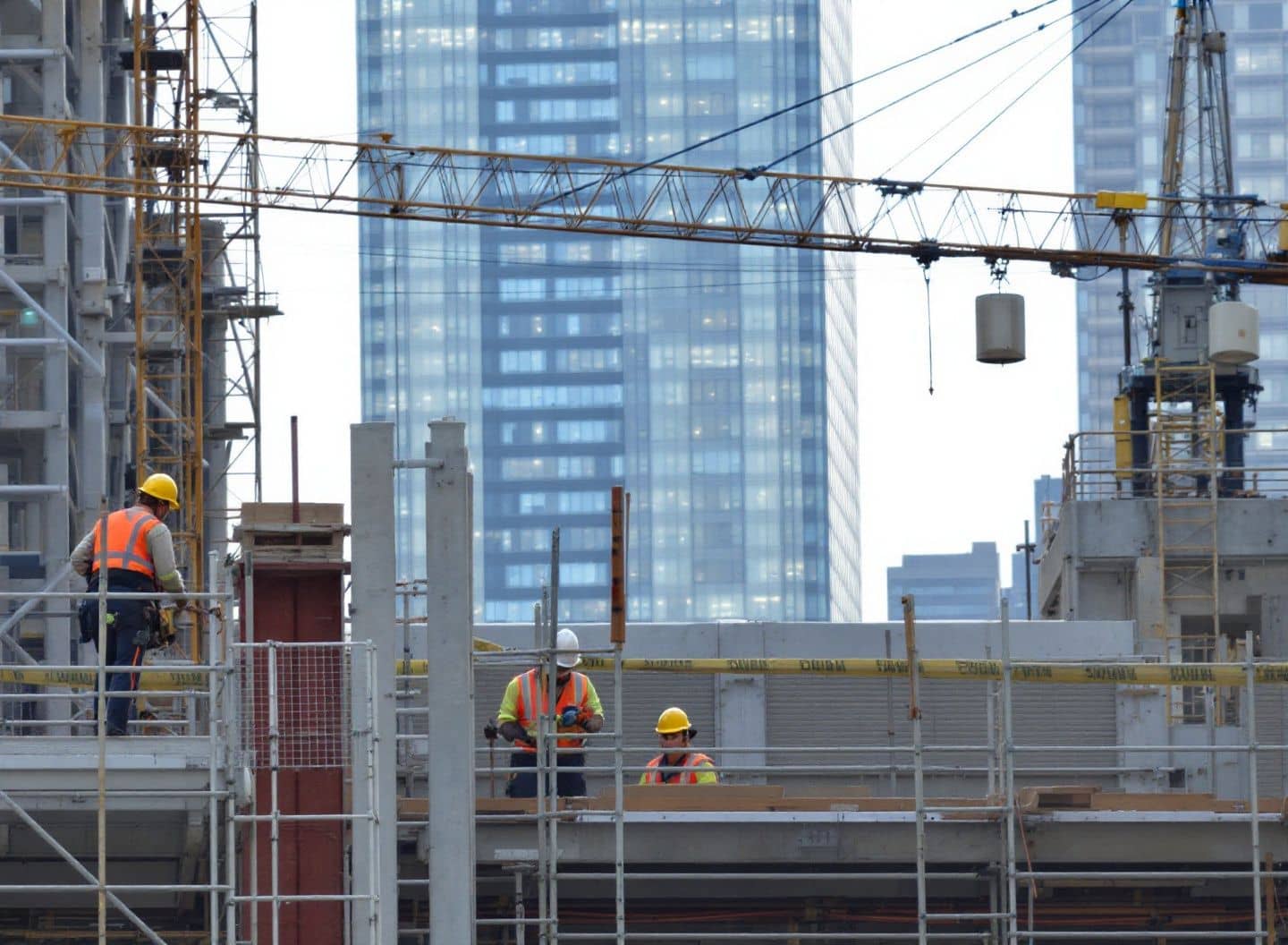
Every workday in New York, workers step onto scaffolding that may never have been formally inspected. They trust that someone, somewhere, checked the planks, the connections, the guardrails, and the base plates. Sometimes that trust is misplaced. The scaffold wasn't inspected, no tag was posted, and no competent person ever signed off. When something goes wrong under those conditions, the consequences aren't just physical. They ripple through an entire legal framework that places clear, enforceable duties on contractors and owners.
This article breaks down exactly who is required to inspect scaffolding before work begins, what federal OSHA regulations demand, how New York's own industrial code adds a second layer of obligation, and why an uninspected scaffold is almost always a legally deficient one.
Why Scaffold Inspections Exist: The Physics of a Fall
Scaffolding failures tend to produce two distinct injury mechanisms, and understanding them helps explain why the inspection rules are written the way they are.
The first is planking failure. A worker stands on scaffold planks that deflect, split, or slide off their supports. Even at relatively low heights, a free-fall onto concrete produces forces that the human spine, skull, and pelvis are not built to absorb. Planks fail for predictable reasons: they're undersized for the load, they're not secured at their ends, they're rotted or weathered, or they've been substituted with whatever was lying around the site. A proper inspection catches all of these conditions before anyone climbs up.
The second mechanism is guardrail absence or failure. When a top rail, mid-rail, or toeboard is missing from a scaffold edge, a worker who loses balance or is struck by a coworker has nothing to arrest the fall. Ironworkers, bricklayers, painters, and laborers all work near open scaffold edges as a matter of routine. The guardrail is the last line of defense when footing slips or a tool swings wide. An inspection that confirms guardrail integrity before the shift starts is not optional. It's the difference between a near-miss and a fatal fall.
These two failure modes are predictable and preventable. That's precisely why federal and state law require a designated person to look for them before any worker is exposed.
Federal Baseline: What 29 CFR 1926.451 Requires
The federal scaffold standard is 29 CFR 1926.451, and it remains one of OSHA's most-cited regulations year after year. In fiscal year 2024, it generated 1,873 citations nationwide. That number reflects how consistently employers fall short of its requirements, not because the standard is obscure, but because compliance takes deliberate effort that some employers skip.
Under 29 CFR 1926.451(f)(3), scaffolds and scaffold components must be inspected for visible defects by a competent person before each work shift, and after any occurrence that could affect the scaffold's structural integrity. That phrase 'any occurrence' is broader than it sounds. A rainstorm, a vehicle collision near the base, a neighboring crew dropping material onto a platform — any of these events triggers a reinspection obligation before workers go back up.
The competent person designation matters. OSHA defines a competent person as someone who can identify existing and predictable hazards in scaffolding, has the authority to take prompt corrective action, and has training or knowledge to recognize those hazards. It's not enough to assign any available foreman. The person doing the inspection must actually know what to look for, and they must have the authority to pull workers off the scaffold if something's wrong. On busy New York construction sites, that authority structure is often unclear, which creates gaps that 29 CFR 1926.451 is specifically designed to close.
The standard also addresses capacity, platform width, guardrail specifications, access, and fall protection in detail. But the inspection obligation in section (f)(3) is the procedural gateway. Everything else assumes a competent person has already walked the scaffold that morning and confirmed it's safe to use.
New York's Added Layer: 12 NYCRR 23-5
New York doesn't just rely on the federal floor. The state has its own industrial code, and 12 NYCRR 23-5 sets out scaffold safety requirements that apply specifically to construction, demolition, and excavation work in New York. These regulations exist to implement Labor Law Section 241(6), which requires construction work to be conducted in a manner that provides reasonable and adequate protection for workers.
12 NYCRR 23-5 covers a wide range of scaffold types, including putlog scaffolds, tubular metal scaffolds, outrigger scaffolds, suspended scaffolds, and more. For each type, the code specifies construction requirements, load ratings, planking specifications, and guardrail dimensions. But threaded through all of these type-specific rules is a consistent expectation: scaffolds must be erected and maintained in a safe condition, and the people responsible for the work are responsible for making sure that condition is verified and sustained.
Under 12 NYCRR 23-5, planking must be of adequate thickness and free of defects. Platforms must be close-planked or otherwise designed to prevent tools and materials from falling through. Guardrails are required at open edges above a specified height. These aren't aspirational guidelines. They're enforceable rules, and a violation of any specific provision of 12 NYCRR 23-5 can support a negligence claim under Labor Law § 241(6).
The practical implication for New York job sites is that contractors face obligations from two directions at once. Federal OSHA requires competent-person inspection under 29 CFR 1926.451, and New York's own industrial code under 12 NYCRR 23-5 specifies the physical standards the scaffold must meet. Missing either obligation creates legal exposure. Missing both is a serious problem.
Labor Law § 240 and the Scaffold in Context
New York's Labor Law § 240, known commonly as the Scaffold Law, imposes a non-delegable duty on contractors, owners, and their agents. They must furnish or erect scaffolding, hoists, ladders, and other protective devices during building work. The duty is non-delegable, which means a general contractor can't escape liability simply by pointing to a subcontractor who was actually running the work.
Labor Law § 240 applies to gravity-related injuries. When a worker falls from a scaffold, or when an object falls and strikes a worker below, the statute creates liability if the scaffold didn't provide proper protection. An uninspected scaffold that collapses or tips, sending a worker to the ground, fits squarely within the kind of harm the statute was written to address. Courts have consistently held that an owner or contractor who fails to provide a scaffold adequate for its intended use has violated this duty, regardless of who built the scaffold or how busy the site was.
It's worth noting that Labor Law § 240 and the regulatory requirements under 12 NYCRR 23-5 and 29 CFR 1926.451 operate on different tracks. The labor law creates civil liability. The regulations create compliance obligations. But they intersect meaningfully: when a scaffold is found to violate a specific regulatory requirement, that violation often supports the conclusion that the owner or contractor failed to provide the protection Labor Law § 240 demands.
Trade-Specific Risks: Who's Most Exposed
Scaffold inspection failures don't affect every trade equally. Ironworkers, bricklayers, and concrete finishers often work at height for entire shifts. They're on the platform all day, loading and unloading material, leaning over edges, and trusting that the planking beneath them was checked before they arrived. When a plank is undersized or improperly lapped, the failure often happens under load, which means a worker is already on it when it goes.
Hurt on a Construction Site?
Tell us what happened. A licensed New York attorney will review your case and call you — free, no obligation.
Painters and plasterers often work on suspended scaffolds, which introduce additional hazards around rigging integrity, counterweight adequacy, and wire rope condition. 29 CFR 1926.451 addresses suspended scaffolds specifically, requiring that rigging be inspected before each use. 12 NYCRR 23-5 similarly addresses suspension points and rope requirements for these systems. A competent person inspecting a suspended scaffold has to understand not just the platform, but the entire suspension system above it.
Laborers and helpers often end up on scaffolding they didn't build and that no one briefed them about. They may not know the scaffold's rated capacity, whether additional planking has been properly installed since the last inspection, or whether the guardrail that was there yesterday was removed to swing material and never replaced. This informational gap is exactly what a tagging system is designed to address. When a scaffold is inspected and tagged, the tag communicates basic safety status to everyone who walks up. Without it, every worker is starting from zero.
The Tagging Problem: What an Uninspected Scaffold Tells You
Some jurisdictions and employers use scaffold tag systems, where a competent person signs off after inspection and a tag is affixed to the access point. The tag tells workers whether the scaffold is safe for use, safe with restrictions, or not to be used. New York doesn't mandate a specific tag format in all situations, but the inspection obligation under 29 CFR 1926.451(f)(3) is clear regardless of whether a tag is posted.
When workers arrive at a scaffold with no tag and no record of inspection, they're working in an information vacuum. They can't know whether the overnight rain shifted the base, whether someone removed a guardrail to move equipment, or whether the planking was altered by the last crew. The absence of a tag is a warning sign. The absence of an inspection is the actual problem.
Employers and contractors who skip the inspection process often do so because it takes time and adds friction to the morning startup. On New York commercial sites, where schedules are tight and crew sizes are large, the competent-person inspection can feel like a bottleneck. That's the wrong way to think about it. The inspection is what stands between a productive morning and a catastrophic fall that shuts the entire project down.
What Happens After an Uninspected Scaffold Fails
When a scaffold fails and a worker is injured or killed, investigators look first at the inspection record. Was there one? Who conducted it? Were they actually qualified as a competent person under 29 CFR 1926.451? Did anyone note deficiencies, and if so, were they corrected before the crew went up?
The absence of inspection documentation is significant both for regulatory enforcement and for civil litigation. Under Labor Law § 240 and Labor Law § 241(6), a worker who is injured in a scaffold fall may bring a claim against the owner and general contractor regardless of their own employer's role. The non-delegable duty created by Labor Law § 240 means those parties can't hide behind a subcontract. And a violation of 12 NYCRR 23-5 supports a § 241(6) claim by providing the specific, applicable standard that the defendant failed to meet.
The value of a claim varies with the severity of the injury, the nature of the work, and the specific facts of the accident. What doesn't vary is the underlying legal structure: when a scaffold goes uninspected and a worker falls, multiple parties bear potential responsibility, and the regulatory framework makes that liability easier to trace.
Practical Steps Workers and Supervisors Should Know
Supervisors should also be aware that 12 NYCRR 23-5 requirements apply regardless of whether OSHA is watching. State inspectors can cite violations of the industrial code independently, and those violations can also be the basis for civil liability when a worker is hurt.
If You Were Injured on an Uninspected Scaffold
Workers injured in scaffold falls in New York often don't realize the scope of legal protections available to them. Labor Law § 240 creates a strong basis for recovery when a scaffold fails to provide proper protection against a gravity-related injury. A violation of an applicable, specific provision of 12 NYCRR Part 23 may support a Labor Law § 241(6) claim; an OSHA violation alone does not supply that statutory predicate. These claims can be brought against owners and contractors, not just the employer, which matters significantly in a workers' compensation context where a direct employer's liability is limited.
If you were hurt on a scaffold that was uninspected, untagged, missing guardrails, or had defective planking, the facts of your case may align with regulatory violations that are legally significant. An attorney familiar with New York construction law can assess whether the specific conditions of the accident match the duties that 29 CFR 1926.451, 12 NYCRR 23-5, and Labor Law § 240 impose on site owners and contractors.
The law exists because these accidents are predictable and preventable. When they happen anyway, the legal system provides a path to accountability.
Attorney Advertising. Prior results do not guarantee a similar outcome. This article is for general informational purposes only and does not constitute legal advice. NY Construction Advocate connects injured workers with experienced New York construction accident attorneys.
Primary sources
Frequently Asked Questions
Who is considered a 'competent person' for scaffold inspection under OSHA?▼
How often does a scaffold need to be inspected on a New York construction site?▼
Can I bring a claim against a property owner if I was hurt on a scaffold built by a subcontractor?▼
What does a violation of 12 NYCRR 23-5 mean for my injury claim?▼
What should I do immediately after a scaffold accident?▼
Does the scaffold have to completely collapse for these laws to apply?▼
Get a Free Case Review
Find out if you have a claim under New York Labor Law. A licensed NY attorney will review your case and call you back.