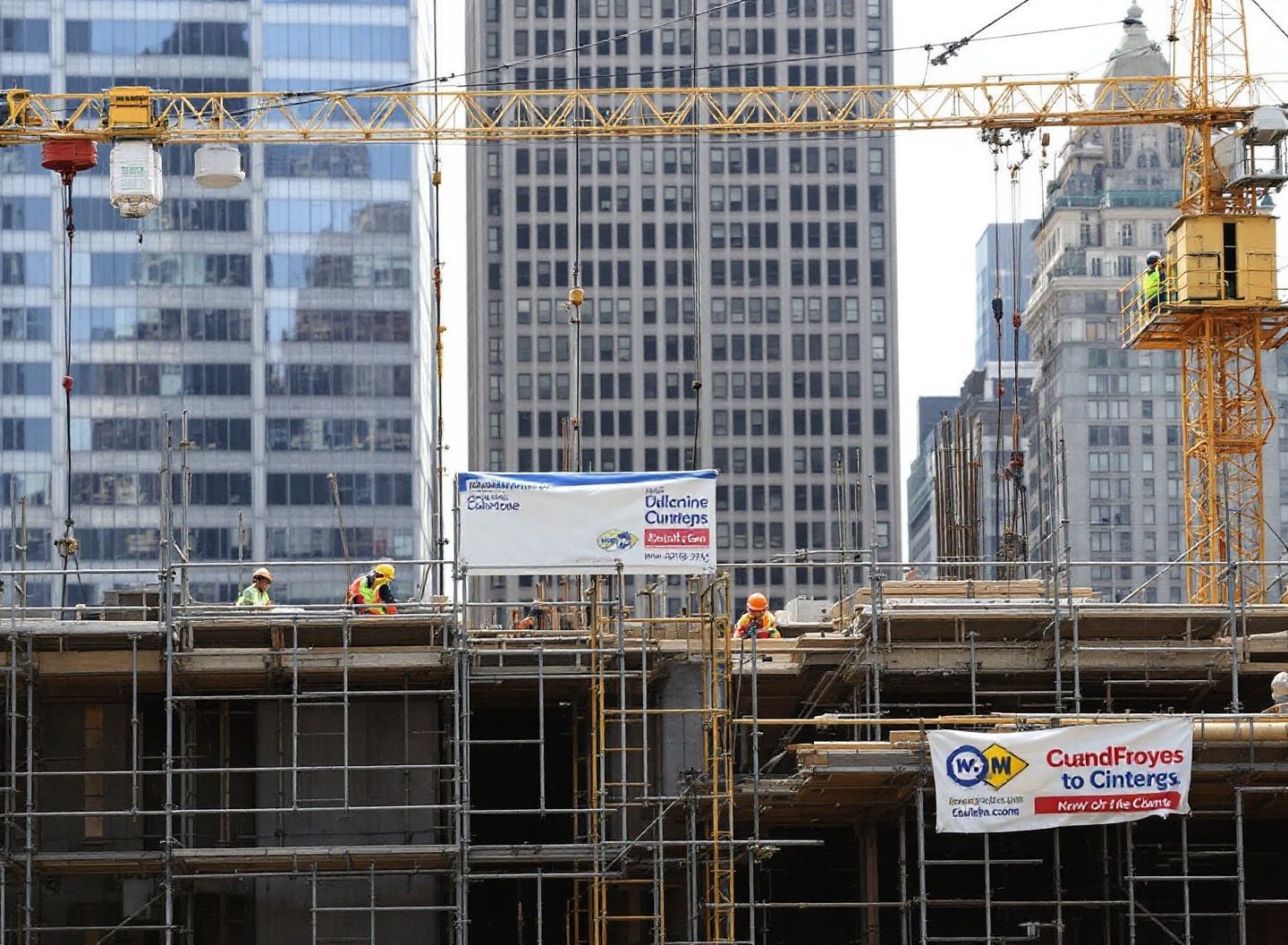
Welding, torch cutting, grinding, and other forms of hot work are routine on New York construction sites. They're also among the most dangerous tasks a construction worker can perform. The combination of intense heat, molten metal, flammable materials, and compressed gases creates a fire and burn environment that can turn a single lapse in protocol into a life-altering injury. Workers who survive these accidents often face months of surgeries, painful skin grafts, and permanent scarring. Understanding the regulatory framework that governs hot work, and the legal remedies available under New York law, is essential for any worker injured in these circumstances.
How Hot Work Burns Actually Happen
The mechanism of a hot work burn injury isn't always what people expect. Yes, direct contact with a welding arc or cutting flame can cause severe thermal burns. But the more common scenario involves secondary ignition. A welder sends a shower of sparks across a floor, and those sparks land on a pile of sawdust, a stack of cardboard, or a puddle of solvent left behind by another trade. The resulting fire spreads quickly in an enclosed space, and workers nearby find themselves trapped or engulfed before they can react.
Spatter is another underappreciated hazard. Molten metal droplets ejected during arc welding or oxy-fuel cutting can travel 35 feet or more from the point of work. A worker on a lower level who has no idea welding is happening directly above them can receive a serious burn from spatter falling through a floor opening or an unprotected edge. This is why hot work fire watches, proper floor coverings, and vertical spark containment are not optional courtesies — they're regulatory requirements.
There's also the flash burn, which affects the eyes. An arc flash emits ultraviolet and infrared radiation intense enough to cause photokeratitis, sometimes called 'welder's flash,' in anyone who glances at an unshielded arc even briefly. Workers from other trades passing through a welding area without proper warning or barriers are especially vulnerable to this injury.
Trade-Specific Risks: Who Gets Hurt and Why
Ironworkers, pipefitters, and plumbers are the trades most directly exposed to hot work hazards. But carpenters, laborers, electricians, and workers from nearly every other trade can be injured as bystanders. In multistory construction, vertical separation between trades is often inadequate. A welder working on the fifth floor may not know that a carpenter is working directly below on the fourth floor, and no one has placed a fireproof blanket over the floor opening between them.
Demolition work carries its own distinct burn profile. Cutting through old piping, structural steel, or corroded metal with an oxy-acetylene torch is standard practice during demolition. The problem is that old buildings often contain unknown residues: oil in old pipes, insulation materials that release toxic and flammable fumes when heated, and decades of accumulated debris inside wall cavities. A demolition torch can ignite materials that weren't visible during any pre-work inspection. Workers doing this cutting are at serious risk of flash fires, and workers nearby face exposure to toxic combustion products on top of the burn hazard itself.
Compressed gas cylinders used in oxy-fuel cutting add a third layer of risk. An oxygen cylinder that's improperly stored, damaged, or exposed to heat can fail catastrophically. Even a minor leak near an ignition source creates a serious explosive and fire hazard. OSHA's regulations at 29 CFR 1926.350 through 1926.354 address cylinder storage, transportation, handling, and the conditions under which hot work may be performed, precisely because these hazards are well-documented and preventable.
Federal OSHA Standards for Hot Work Operations
OSHA's construction industry standards at 29 CFR 1926.350 through 354 set out detailed requirements for welding, cutting, and heating operations. The regulations require employers to designate a fire watch when hot work is performed near combustible materials. That fire watch must remain in place not just during the work, but for at least 30 minutes after the hot work is completed, because fires frequently smolder and then ignite after the welder has moved on. This requirement exists because some of the worst construction fires in history started long after the hot work itself was done.
The standards also require that combustible materials be cleared from the work area before hot work begins, or that the work area be shielded with fire-resistant blankets or curtains. Floors must be swept clean of debris. Floor openings must be covered to prevent spatter from falling to lower levels. Fire extinguishing equipment must be readily accessible. These aren't suggestions buried in a safety manual — they're enforceable federal standards, and violations can form the basis of an OSHA citation, a negligence claim, and in New York, a Labor Law claim.
It's also worth noting that fall protection requirements under 29 CFR 1926.501 intersect with hot work hazards in ways that aren't always obvious. A fire watch stationed near an unprotected floor opening faces both the fire hazard and the fall hazard simultaneously. In FY2024, 29 CFR 1926.501 generated 6,307 citations nationwide, making fall protection the most-cited OSHA construction standard, which reflects how often these basic protections are ignored on active job sites. When a worker responding to a hot work fire near an open edge is injured by a fall, both the fire hazard violations and the fall protection violations are legally relevant to what happened.
New York Labor Law and the Rights of Burned Workers
New York's Labor Law § 241(6) is one of the most powerful tools available to injured construction workers in this state. It imposes a non-delegable duty on property owners and general contractors to provide reasonable and adequate protection to workers on construction, demolition, and excavation sites. The critical phrase is 'non-delegable,' which means the owner can't escape liability simply by pointing to the subcontractor who was actually doing the welding. If the site condition was unsafe, the owner and GC share responsibility.
Hurt on a Construction Site?
Tell us what happened. A licensed New York attorney will review your case and call you — free, no obligation.
To successfully pursue a claim under Labor Law § 241(6), an injured worker must typically tie the violation to a specific Industrial Code provision. This is where 12 NYCRR 23-1.7 becomes important. That regulation establishes protective requirements for workers in construction, demolition, and excavation operations, including requirements related to fire hazards, flammable materials, and site conditions. The regulation exists to implement Labor Law § 241(6) by defining the specific safety practices that courts and agencies look to when evaluating whether a site was adequately protected. When a contractor skips the fire watch, fails to cover floor openings before welding, or stores oxygen cylinders improperly next to combustibles, those failures can constitute violations of 12 NYCRR 23-1.7 and support a statutory claim under Labor Law § 241(6).
There's also New York's requirement that builders complete fireproof flooring as work progresses on a construction site. This provision of the Labor Law recognizes that progressive construction creates ongoing fire exposure at each floor level, and that leaving combustible or unprotected flooring in place while hot work continues above creates a foreseeable hazard. When that requirement isn't met and a burn injury results, the statutory violation is relevant to the injured worker's claim.
What an Injured Worker's Claim May Cover
Workers' compensation is available to virtually any employee injured in a hot work accident, regardless of who was at fault. It covers medical treatment and a portion of lost wages during recovery. But workers' comp has limits. It doesn't compensate for pain and suffering, permanent disfigurement beyond a scheduled award, or the full wage loss a severely burned worker may experience over a lifetime of reduced earning capacity.
A third-party personal injury action is typically the vehicle for recovering those broader categories of loss. The potential defendants depend on the facts: the general contractor who failed to enforce hot work safety protocols, the property owner who is liable under Labor Law § 241(6), a subcontractor whose workers created the hazard, or an equipment manufacturer whose defective torch or regulator malfunctioned. The value of a burn injury claim varies with the severity of the injury, the extent of permanent disfigurement, the effect on the worker's ability to work, and the specific violations that can be proven. Serious burns, particularly those covering large surface areas or affecting the face and hands, can lead to claims that reflect a lifetime of consequences.
Burn injuries are also frequently paired with other injuries. A worker caught in a hot work fire may suffer from smoke inhalation, respiratory damage, or a fall while trying to escape the hazard. Each of those additional injuries expands the scope of the claim. An attorney familiar with the New York construction site context will look at the full picture, not just the burn itself.
Steps an Injured Worker Should Take
If you're injured in a welding or hot work accident on a New York construction site, the actions you take in the immediate aftermath matter more than most people realize. Seek medical attention right away, even if your initial burn seems minor. Burns can be deceptive: a wound that looks manageable in the first hour can reveal much greater depth and severity over the following days.
New York has specific statutes of limitations for both workers' compensation filings and personal injury claims. The timelines are different, and missing one can affect the other in ways that aren't always intuitive. Getting legal guidance promptly protects your options.
Attorney Advertising. Prior results do not guarantee a similar outcome. This article is for general informational purposes only and does not constitute legal advice. NY Construction Advocate connects injured workers with experienced New York construction accident attorneys.
Frequently Asked Questions
Does Labor Law § 241(6) apply to burns caused by hot work on a construction site?▼
What is a hot work fire watch, and does OSHA require one on New York construction sites?▼
Can I sue someone other than my employer if I'm burned in a welding accident at work?▼
Are bystander workers who aren't doing the welding themselves protected by these laws if they're burned?▼
How does the requirement to complete fireproof flooring relate to a burn injury claim?▼
What types of burn injuries from hot work tend to support the most serious legal claims?▼
Get a Free Case Review
Find out if you have a claim under New York Labor Law. A licensed NY attorney will review your case and call you back.