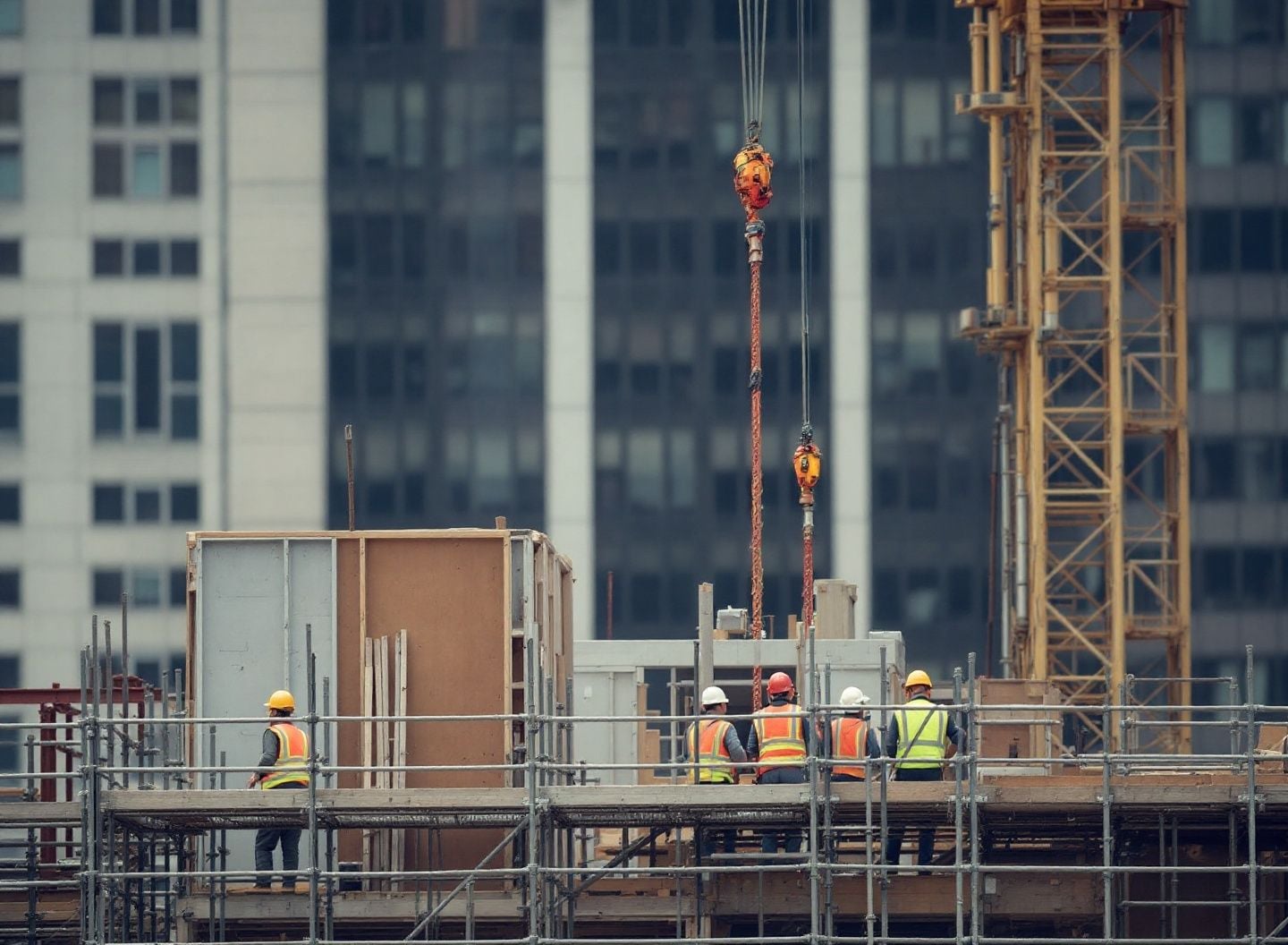
A crane lifts a steel beam. A bundle of pipe rides a hoist up the face of a building under construction. A concrete bucket swings out over the heads of ironworkers below. In each scenario, rigging hardware is the only thing standing between a controlled lift and a disaster. When that hardware fails — a sling parts, a shackle pin backs out, a choker slips — the load falls. And what falls on a construction worker can kill them, or inflict injuries that reshape the rest of their life.
New York's construction industry runs on vertical movement. Skyscrapers, bridge repairs, facade restorations, and residential towers all require materials to travel upward and across job sites on a daily basis. That reality means riggers, ironworkers, laborers, and bystanders are regularly working beneath suspended loads. The risk isn't theoretical, and the law reflects that.
How Rigging Failures Actually Happen
Rigging is a trade, and like every trade it has its failure modes. Understanding those failure modes matters both for preventing accidents and for evaluating liability after one occurs.
Wire rope slings are among the most common rigging components on New York job sites. They're rated for specific working load limits, and those limits assume the sling is in good condition, properly configured, and used within its design parameters. In practice, slings get dragged across concrete, kinked during storage, pinched under loads, and exposed to welding spatter that burns individual wires. A sling that looks serviceable may have internal corrosion, broken wires hidden beneath the outer strands, or fittings that have been hammered rather than properly installed. When a degraded sling takes a dynamic load — a crane picking up quickly, a load that swings unexpectedly — it can part without warning.
Synthetic web slings introduce different failure modes. Cuts, abrasion, UV degradation, and chemical exposure all reduce their capacity, often invisibly. A synthetic sling that has been dragged over a sharp steel edge may look intact from the side that faced the operator while hiding a deep cut on the underside. Industry guidelines call for retiring synthetic slings at the first sign of red warning yarns showing through, but on a busy site those guidelines aren't always followed.
Chokers deserve special attention. A choker hitch reduces a sling's rated capacity significantly compared to a vertical or basket configuration, and the choke point concentrates stress in a small area. If a rigger uses a choker hitch without accounting for that capacity reduction, or if the choke point seats against a sharp corner of the load rather than a padded surface, failure becomes far more likely. Loads that aren't properly balanced in a choker can also roll, shifting the center of gravity and causing the sling to slip off entirely.
Hardware failures are equally dangerous. Shackle pins can back out if they're not moused or if the load rotates during the lift. Hook latches — which are never intended to be load-bearing, only to retain the sling under slack conditions — break when a sling rides up and the hook inverts. Turnbuckles can unthread if not locked. Rigging eyes in structural steel can crack if the material has a pre-existing defect or if the geometry of the pull creates bending rather than pure tension. Each of these mechanisms is well-understood within the rigging trade, which is why they're also recognized in safety standards and, ultimately, in the courtroom.
Who Is at Risk, and Where on the Site
The workers most directly at risk are those who work beneath active lift zones: ironworkers connecting steel, concrete workers waiting to receive a bucket, carpenters working on a platform below the hoist path, or laborers moving material near a loading dock. But the danger isn't limited to the workers directly involved in the lift. A dropped load can travel horizontally when it hits a surface, roll off a floor edge, or generate flying fragments when structural steel strikes concrete. Workers who have no idea a lift is occurring overhead can be struck.
The trades most frequently involved in rigging operations include ironworkers, riggers, operating engineers, and teamsters. But laborers and carpenters often work in the same areas and share the same hazard exposure without necessarily having the same training or awareness. That combination of proximity and information gap is a recurring feature of serious rigging accidents.
What Labor Law § 240 Says About Falling Objects
New York's Labor Law § 240, commonly called the Scaffold Law, is the cornerstone of protection for workers injured by falling objects on construction sites. The statute imposes absolute liability on owners and general contractors when they fail to provide adequate safety devices and that failure is a proximate cause of a worker's injury. 'Absolute' means contributory negligence on the worker's part doesn't reduce or eliminate the defendant's liability, which is a significant departure from ordinary negligence law.
For falling-object claims, Labor Law § 240 requires that the object that fell be in the process of being hoisted or secured, or that the failure to properly secure it was a direct cause of the injury. Courts have interpreted this to cover loads that drop during an active lift, materials that fall when rigging hardware gives way, and objects that were improperly staged above a worker's position. The key legal question is whether the object was exposed to the special elevation-related risks that the statute was designed to address.
When applied to rigging failures specifically, Labor Law § 240 means that if a sling parts, a shackle releases, or a choker slips during a lift and a worker is injured by the falling load, the owner and contractor face liability regardless of whether they were personally present or personally aware of the defective rigging. The duty to furnish adequate hoisting equipment and protective devices is non-delegable. It can't be shifted to a subcontractor or to the injured worker.
Hurt on a Construction Site?
Tell us what happened. A licensed New York attorney will review your case and call you — free, no obligation.
The Role of 12 NYCRR 23-1.7 and Specific Safety Standards
Beyond the absolute liability framework of Labor Law § 240, New York's Industrial Code establishes specific operational requirements for construction sites. 12 NYCRR 23-1.7 sets out protection requirements in construction, demolition, and excavation operations, including rules governing falling object hazards to workers below active work areas. Violations of these regulations can support a separate claim under Labor Law § 241(6), which doesn't carry absolute liability but doesn't require proof of the owner or contractor's direct negligence either.
Under a § 241(6) theory, the plaintiff's attorney identifies a specific, applicable regulation from the Industrial Code and shows that the regulation was violated and that the violation was a proximate cause of the injury. For rigging failures, relevant provisions may address the use of adequate hoisting equipment, the inspection and condition of rigging hardware, and the requirements for overhead protection in areas where workers are exposed to falling objects. 12 NYCRR 23-1.7 is frequently cited in these cases because of its specific requirements regarding protection from falling materials.
Federal Standards and Their Relationship to NY Claims
OSHA's federal construction standards also apply on New York job sites. 29 CFR 1926.501 addresses fall protection broadly, and companion regulations in Subpart CC (cranes and derricks) and Subpart H (materials handling) establish detailed requirements for rigging hardware, inspection protocols, load ratings, and operator qualifications. OSHA citations don't create civil liability directly, but they're highly relevant in litigation because they establish what a reasonably safety-conscious contractor would have known and done.
When an OSHA inspector finds violations after a rigging accident — improper sling ratings, lack of inspection records, untrained riggers, or no load chart in the cab — those findings can inform a plaintiff's expert witness and help establish that the contractor departed from accepted industry practice. The fact that 29 CFR 1926.501 was one of the most cited OSHA standards nationally in recent years tells you something important: fall and falling-object protection violations remain pervasive, not just in New York but across the industry.
Identifying the Liable Parties After a Rigging Accident
New York's Labor Law structure means that liability in rigging accidents often doesn't stop with the employer. The general contractor, who coordinates the work and controls the site, is almost always a potential defendant under Labor Law § 240 and § 241(6). The property owner is similarly exposed. Neither can escape liability by arguing that a subcontractor was responsible for the rigging crew.
Beyond the GC and owner, other parties may share responsibility. The crane rental company may bear liability if the equipment was defective or improperly maintained. The rigging subcontractor can be liable in negligence even if they don't share the statutory liability that falls on owners and general contractors. Manufacturers of defective rigging hardware can face product liability claims if the hardware failed due to a manufacturing defect or design flaw rather than misuse. In complex rigging accidents, assembling the full picture of who supplied what equipment, who inspected it, and who supervised the lift is essential work.
What Injured Workers Should Do Immediately
If you're a worker injured by a dropped load or falling rigging hardware, the steps you take in the hours and days after the accident can significantly affect your ability to pursue a claim. First, get medical attention, even if the injury seems manageable. Some internal injuries and traumatic brain injuries don't fully manifest immediately, and a gap in medical treatment can be used to challenge the seriousness of your injuries later.
Report the accident to your supervisor and make sure a written incident report is created. If you're able, photograph the scene, the failed rigging hardware, the load, and the area where you were struck. Rigging hardware is sometimes removed from the scene quickly after an accident, and physical evidence can disappear. If a coworker witnessed the accident, get their contact information. These steps preserve evidence that becomes critical when liability is disputed.
Contact a construction accident attorney before speaking extensively with the property owner's insurance company or the general contractor's representatives. They have their own interests, and those interests are not aligned with yours. New York's statutes of limitations for construction accident claims are specific and unforgiving; waiting too long to consult an attorney can close legal doors permanently.
The value of a rigging accident claim varies with the severity of the injury, the extent of lost earnings, the long-term medical needs of the injured worker, and the specific facts of the accident. There's no formula that applies uniformly, but the Labor Law's absolute liability provision removes one of the biggest obstacles workers face in ordinary negligence cases: the need to prove that someone was careless. Under Labor Law § 240, the failure of the rigging is itself the central fact.
Attorney Advertising. Prior results do not guarantee a similar outcome. This article is for general informational purposes only and does not constitute legal advice. NY Construction Advocate connects injured workers with experienced New York construction accident attorneys.
Frequently Asked Questions
Does Labor Law § 240 cover injuries from a load dropped during a crane lift?▼
What's the difference between a Labor Law § 240 claim and a § 241(6) claim for a rigging accident?▼
Can I still have a claim if my employer's rigging crew made a mistake that caused the load to drop?▼
What if the rigging hardware was rented from a third-party equipment company? Can they be held liable?▼
How does OSHA's 29 CFR 1926.501 factor into a civil lawsuit for a rigging-related falling object injury?▼
What evidence matters most in a falling-load rigging accident case?▼
Get a Free Case Review
Find out if you have a claim under New York Labor Law. A licensed NY attorney will review your case and call you back.