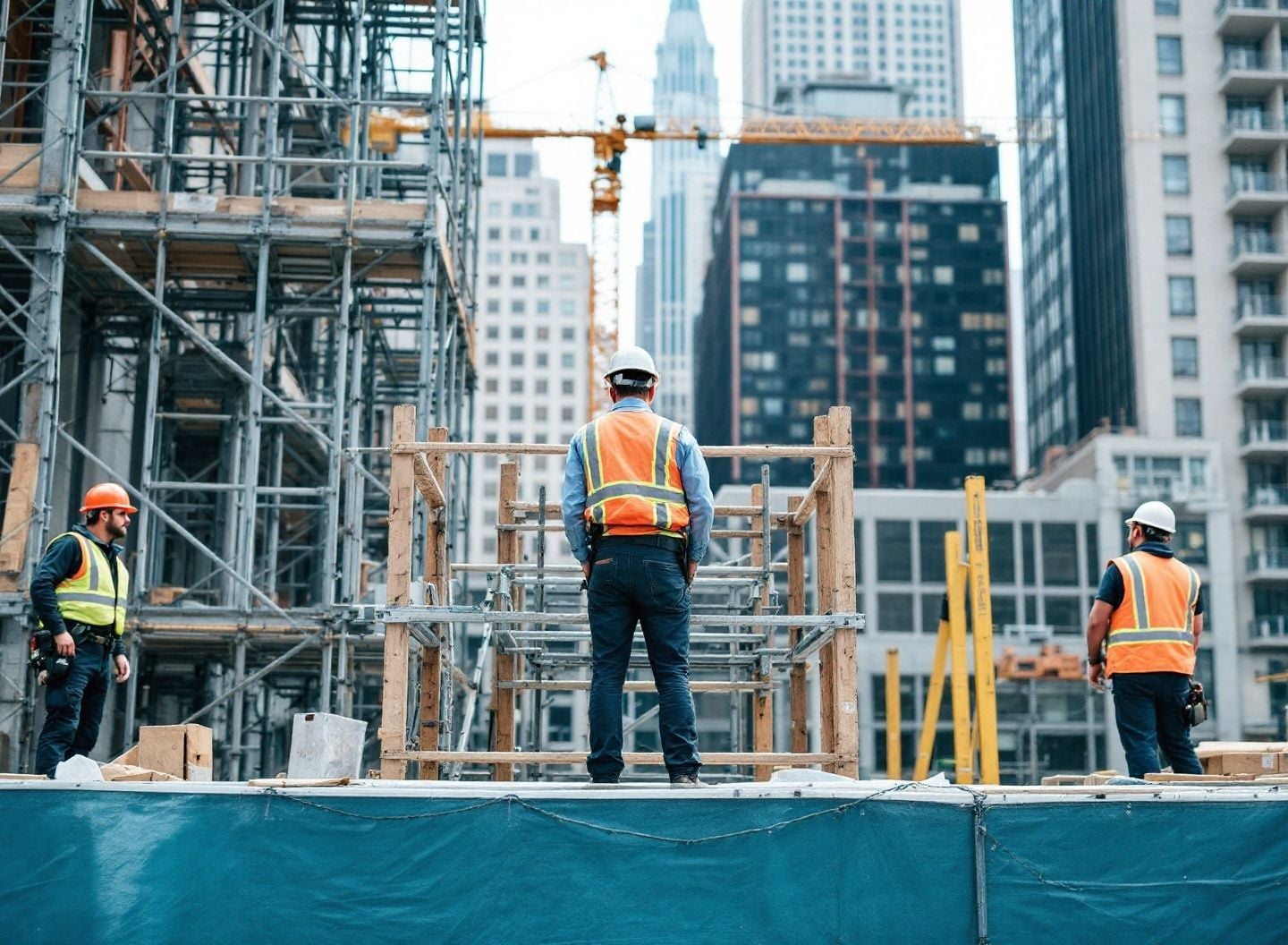
One of the most common misconceptions in New York construction law is that a general contractor is only responsible for the workers it directly employs. In reality, New York has some of the strongest worker-protection statutes in the country, and those statutes deliberately reach beyond the direct employment relationship. If you're a carpenter, ironworker, electrician, or laborer working under a subcontractor on a New York job site, and you get hurt because of a fall or a safety violation, the general contractor can be held liable for your injuries. Understanding why that's true requires a close look at how New York's Labor Law is structured and what the phrase 'non-delegable duty' actually means in practice.
The Core Concept: Non-Delegable Duties
A non-delegable duty is a legal obligation that cannot be handed off to someone else. When a duty is non-delegable, the party who holds it can't escape liability simply by hiring another company to do the work. This is the foundation of how Labor Law § 240 and Labor Law § 241 operate in New York. The legislature intentionally made the safety obligations in these statutes non-delegable so that general contractors and property owners couldn't insulate themselves from responsibility by structuring projects through layers of subcontracts.
Think about how a typical New York construction project is organized. A developer or property owner hires a general contractor to manage the build. That GC then parcels out the work to dozens of specialized subcontractors: the steel erector, the concrete contractor, the mechanical trades, the finish crews. Workers on the ground are employees of those subs, not of the GC. Without non-delegable duties, a GC could argue it had no control over how a subcontractor set up a scaffold or whether a roofer wore a harness, and therefore bore no liability when a worker fell. New York's legislature closed that gap decades ago.
Labor Law § 240: Elevation-Related Hazards and the 'Scaffold Law'
Labor Law § 240, often called the Scaffold Law, applies specifically to elevation-related hazards. It covers work that exposes a worker to the risk of falling from a height or being struck by a falling object. The statute imposes absolute liability on general contractors and owners when a violation of the law is a proximate cause of the injury. 'Absolute' here means the worker doesn't have to prove that the GC was negligent in the traditional sense. The failure to provide adequate safety devices such as scaffolding, hoists, stays, ladders, slings, hangers, blocks, pulleys, braces, irons, ropes, or other devices is itself the violation.
Falls from height are among the leading causes of fatal and catastrophic injuries in construction. A roofer working for a roofing subcontractor who falls because a scaffold was improperly erected, or because no safety harness anchorage was provided, has a direct claim under § 240 against the general contractor regardless of the employment relationship. The same applies to a worker struck by materials dropped from above. The mechanism of injury is predictable in these cases: gravity. The law demands that someone with authority over the site either provide proper fall protection or face liability when that protection is absent.
It's worth noting that comparative negligence is not a complete defense under § 240. Even if a worker made a mistake, that doesn't automatically bar a claim if the required safety device was never provided in the first place. Courts have consistently held that the legislative purpose of § 240 is protective of workers, and courts interpret the statute accordingly.
Labor Law § 241: Site-Wide Safety Standards for All Construction Work
While § 240 targets elevation hazards specifically, Labor Law § 241 covers a broader range of construction site dangers. Section 241(6) requires that construction, excavation, and demolition work be conducted in a manner that provides reasonable and adequate protection for workers, and it directs the Commissioner of Labor to adopt rules implementing that protection. The critical implementing regulation is 12 NYCRR 23-1.5, which sets out the general safety requirements for construction, demolition, and excavation operations in New York State.
Under 12 NYCRR 23-1.5, employers and contractors must ensure that machinery, equipment, and work areas are safe, that workers are given instruction on job hazards, and that protective gear is provided and used properly. A violation of a specific section of 12 NYCRR Part 23 can serve as the predicate for a § 241(6) claim. Unlike § 240, § 241(6) is not absolute liability. A worker's comparative negligence can reduce the recovery. But the non-delegable nature of the duty still holds: the GC can't escape liability by pointing to the subcontractor as the party actually responsible for the safety violation.
The types of injuries § 241 addresses are wide-ranging. Trench collapses, equipment rollovers, improperly guarded machinery, inadequate lighting, slip-and-fall conditions from debris or construction materials on walking surfaces — all of these can give rise to a § 241(6) claim when the underlying regulatory standard was violated. An ironworker employed by a steel erection subcontractor who is injured because floor openings weren't covered, or because there was no adequate warning system near moving equipment, can bring a claim against the GC under § 241(6).
Labor Law § 200 and the General Duty of Care
Labor Law § 200 is New York's codification of the common-law duty to maintain a safe workplace. It requires that work sites be constructed, equipped, arranged, operated, and conducted so as to provide reasonable and adequate protection to workers and lawful visitors. Under § 200, machinery and equipment must be properly positioned, operated, guarded, and illuminated for safety. Claims under § 200 require a showing that the GC had supervisory control over the work or the condition that caused the injury. This is a higher bar than § 240 or § 241(6), but it remains an important avenue for workers whose injuries stem from a dangerous site condition that the GC knew about or created.
Hurt on a Construction Site?
Tell us what happened. A licensed New York attorney will review your case and call you — free, no obligation.
When a GC has actual or constructive notice of a hazard and the authority to correct it, § 200 can apply even if the injured worker was a subcontractor's employee. Courts look at whether the GC had the authority to direct or control the work giving rise to the injury. General oversight of the project is not enough; there must be some control over the specific activity or condition involved.
Federal Standards Run Parallel: 29 CFR 1926.20
New York's Labor Law operates alongside federal OSHA standards, and the two systems reinforce each other. Under 29 CFR 1926.20, the federal safety standard for construction work, contractors and subcontractors are required to initiate and maintain safety programs, conduct frequent and regular inspections of job sites and materials, and ensure that all equipment and materials that are not in compliance are removed from service. This regulation makes clear that federal law also contemplates that the responsible contractor must be actively managing safety, not just assuming a subcontractor has it covered.
A violation of 29 CFR 1926.20 doesn't create a private right of action on its own the way a New York Labor Law violation can, but OSHA records and citations can be relevant evidence in a civil case. When a GC failed to conduct inspections or maintain a safety program as required under 29 CFR 1926.20, that failure speaks directly to the question of control and notice under Labor Law § 200, and can strengthen the overall case for a worker's claim.
Who Qualifies as a Covered Worker Under These Statutes?
Labor Law § 240 and § 241 protect workers engaged in construction, demolition, or repair work. New York courts have interpreted these terms broadly. You don't have to be classified as a construction worker by your employer to qualify. Delivery workers, maintenance employees, and others performing covered work on a job site have been found to fall within the statutes' protections. The focus is on the nature of the task being performed, not the job title on the worker's paycheck.
Workers' compensation is typically the exclusive remedy against a direct employer in New York. That means a subcontractor's employee generally cannot sue their own employer in tort for a workplace injury. But Labor Law § 240 and § 241 allow that same worker to bring a claim against the general contractor and the property owner. This is one of the most practically significant features of New York construction law. It opens a legal avenue that wouldn't exist in most other states and reflects a deliberate policy choice to incentivize GCs and owners to take site safety seriously.
Trade-Specific Risks Worth Highlighting
Every construction trade carries its own profile of risk, and the laws discussed here intersect with those risks in specific ways. Ironworkers and structural steel workers face constant exposure to fall hazards during erection work, and the absence of perimeter cables, safety nets, or personal fall arrest systems is a classic § 240 violation. Electricians often work on energized systems or elevated platforms without adequate fall protection or lockout procedures. Demolition workers face crush hazards from structural collapse, inadequate shoring, and falling debris, implicating both § 240 and § 241(6). Concrete laborers and masons may be exposed to scaffold collapses, formwork failures, or inadequately guarded openings in floor slabs. Each of these scenarios involves a foreseeable mechanism of injury that the general contractor, as the party with site-wide authority, is positioned to prevent.
The severity of injuries in these scenarios varies considerably. Falls from moderate heights can cause fractures, spinal cord injuries, or traumatic brain injuries. Falls from greater heights, or being struck by heavy falling materials, can be fatal. The value of a claim varies with the severity of the injury, the worker's loss of earning capacity, and the long-term medical needs involved. What doesn't change is the legal framework: if the GC failed to meet its non-delegable duties, liability attaches regardless of which company had the injured worker on its payroll.
What Workers and Their Families Should Know
If you or a family member was injured on a New York construction site, the fact that you work for a subcontractor doesn't close the door on a Labor Law claim against the general contractor or owner. In fact, New York's statutory framework was written with exactly that situation in mind. Filing a workers' compensation claim with your direct employer is typically required and covers medical bills and a portion of lost wages, but it doesn't prevent you from also pursuing a separate civil claim under § 240, § 241(6), or § 200.
Evidence matters in these cases. Photographs of the site conditions, incident reports, witness statements from coworkers, safety inspection logs, and records of whether a safety program existed under the requirements of 29 CFR 1926.20 can all be relevant. The sooner evidence is preserved, the stronger any future claim will be. Construction sites change quickly: scaffolding gets modified, debris gets cleared, and conditions that existed at the moment of injury may look different within days.
New York has a three-year statute of limitations for most personal injury claims, but there are exceptions and complications that can shorten that window in certain circumstances. Acting promptly is always the better course.
Attorney Advertising. Prior results do not guarantee a similar outcome. This article is for general informational purposes only and does not constitute legal advice. NY Construction Advocate connects injured workers with experienced New York construction accident attorneys.
Frequently Asked Questions
Can a general contractor be liable for an injury to a worker employed by a subcontractor?▼
What does 'non-delegable duty' mean in the context of New York Labor Law?▼
What types of injuries does Labor Law § 240 cover?▼
How is Labor Law § 241(6) different from § 240?▼
If I already filed for workers' compensation through my subcontractor employer, can I still sue the general contractor?▼
What role does federal OSHA law play in a New York construction injury case?▼
Does Labor Law § 240 apply if the injured worker contributed to the accident?▼
Get a Free Case Review
Find out if you have a claim under New York Labor Law. A licensed NY attorney will review your case and call you back.