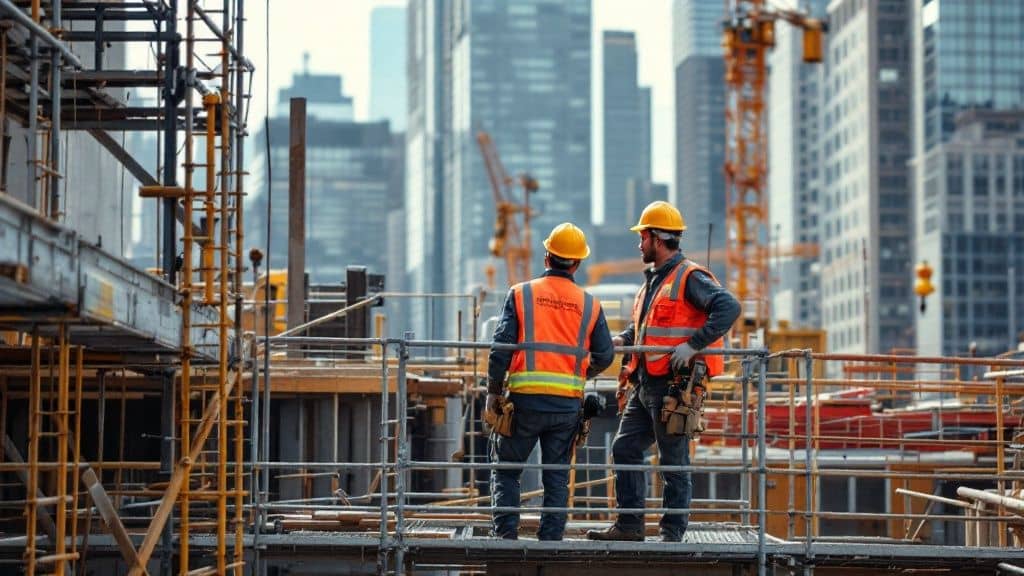
If you work construction in New York and you've ever stood on a scaffold twenty feet off the ground, you already know the fear is real. What you may not know is that New York law takes that risk seriously in a way that is almost unique in the United States. Labor Law § 240, commonly called the Scaffold Law, creates a form of liability so strong that courts and legal scholars describe it as 'absolute.' That word carries enormous legal weight, and understanding what it actually means can make the difference between a successful claim and a dismissed one.
What the Scaffold Law Actually Says
Labor Law § 240 requires that contractors, owners, and their agents furnish or erect scaffolding, hoists, stays, ladders, slings, hangers, blocks, pulleys, braces, irons, ropes, and other devices during construction, demolition, repairing, altering, painting, cleaning, or pointing of a building or structure. The law doesn't just encourage safe equipment — it mandates it. And when that equipment is missing or fails, the statute places the legal burden squarely on the owner and the general contractor, not the injured worker.
That placement of burden is the heart of what 'absolute' means. In most personal injury cases, a defendant can argue that the plaintiff was careless, that someone else was responsible, or that the accident was a pure fluke. Under Labor Law § 240, those arguments are largely unavailable when the injury flows from a gravity-related hazard. The owner can't point to the worker's momentary distraction. The contractor can't blame a subcontractor and walk away. The statute imposes a non-delegable duty, meaning the obligation to keep workers safe from falls cannot be passed off to anyone else.
What 'Absolute' Liability Really Means in Practice
Absolute liability under Labor Law § 240 means that once a worker proves two things — (1) that the law applied to the worksite and the task being performed, and (2) that a gravity-related failure caused the injury — the owner and contractor are liable. Period. It doesn't matter whether the owner never visited the jobsite. It doesn't matter whether the contractor delegated scaffolding setup to a subcontractor. It doesn't matter whether ten other workers used the same scaffold that morning without incident.
Courts in New York have described the statute as placing the risk of an elevated-work accident on those who are in the best position to prevent it: the people who control the project, hire the crews, and decide which equipment gets rented. That policy choice reflects something important. An individual laborer usually has no say in whether a scaffold gets guardrails or whether planks are secured. The owner and general contractor do. The law holds accountable the parties with actual authority to fix the hazard before someone gets hurt.
One nuance worth understanding: absolute liability does not mean automatic recovery. The worker still needs to show that the absence or failure of a proper safety device was a proximate cause of the injury. If a worker falls but the evidence shows that a fully compliant scaffold was in place and was intentionally bypassed by the worker without any instruction or pressure to do so, the analysis gets more complicated. But in the vast majority of scaffold-fall cases, causation isn't the hard part. The planks gave way. The guardrail was missing. The ladder wasn't tied off. Those failures speak for themselves.
How Scaffold Falls Actually Happen — and Why They're So Dangerous
To understand why the legislature gave the Scaffold Law such force, you have to understand the mechanics of a construction fall. Two failure modes come up again and again in height-related accidents: planking failure and guardrail absence.
Planking failure occurs when the boards that form the working surface of a scaffold deflect, crack, split, or slide off their supports under a worker's weight. A plank that was adequate for a solo worker may fail when two workers stand near each other, or when a load of materials is placed on it. At heights as low as ten feet, a free-fall onto concrete produces forces on the human body that far exceed what bone and tissue can absorb. Spine injuries, traumatic brain injuries, and shattered extremities are common outcomes. The physics are unforgiving, and no hard hat in the world protects a worker from the impact forces of a straight vertical fall.
Guardrail absence is the other leading mechanism. Federal scaffolding rules under 29 CFR 1926.451 require guardrails, midrails, and toeboards on scaffold platforms above certain heights — and those rules exist because the data is clear that an unguarded edge is a fall waiting to happen. When a top rail is missing, a worker who simply loses balance, is bumped by a coworker, or is startled by falling debris has nothing to arrest the fall. The worker goes over the edge before there's any conscious decision to grab something. It's that fast.
Carpenters, ironworkers, masons, painters, and laborers are all exposed to these risks depending on the phase of construction. Ironworkers walk steel beams with no platform at all. Masons work from tubular scaffolding that can be incorrectly assembled if the erectors cut corners. Painters often work from pump jacks or suspended scaffolds where a single cable or pump failure can send the entire platform dropping. The trade doesn't matter as much as the height. Gravity doesn't care what your union card says.
Hurt on a Construction Site?
Tell us what happened. A licensed New York attorney will review your case and call you — free, no obligation.
New York State Regulations and Federal Standards That Define Safe Scaffolding
Beyond the Scaffold Law itself, New York's Industrial Code provides specific technical rules for scaffold construction and maintenance. Under 12 NYCRR 23-5, the state sets out detailed requirements covering scaffold planking thickness, load ratings, guardrail dimensions, and inspection obligations. These regulations implement Labor Law § 241(6) by defining specific safety practices required on construction sites, but they're also highly relevant context when evaluating whether a scaffold was properly built and maintained. When a scaffold fails in a way that violates 12 NYCRR 23-5, that violation can support both a Labor Law § 240 claim and a separate Labor Law § 241(6) claim, giving an injured worker multiple legal avenues.
On the federal side, OSHA's scaffolding standard at 29 CFR 1926.451 recorded 1,873 citations nationwide in fiscal year 2024, making it one of the most frequently cited construction standards in the country. Those citations represent real jobsites where real workers were exposed to fall hazards because employers didn't follow the rules. Federal OSHA citations don't automatically create liability in a state court case, but they're powerful evidence of industry standards. When a contractor's scaffold is cited for the same defect that injured a worker, it's difficult for that contractor to argue the problem was unforeseeable or outside normal practice.
Who Is Covered and Who Is Liable
Labor Law § 240 covers workers engaged in construction, demolition, repair, alteration, painting, cleaning, or pointing of a building or structure. That's a broad category. It includes union tradespeople, non-union laborers, day workers, and in many cases workers employed by subcontractors who have no direct relationship with the building owner. If you were injured while doing covered work at a covered location, the owner and general contractor can be liable even if they didn't hire you directly.
On the defendant side, liability attaches to owners of the property, general contractors, and their agents. Homeowners who hire a contractor for certain types of work can sometimes invoke an exemption for single-family dwellings, but commercial property owners and developers have no such protection. The owner of a Manhattan office tower being renovated can't escape liability by pointing to a general contractor. The general contractor can't escape by pointing to the scaffolding subcontractor. The duty is non-delegable, which means it travels with authority over the project.
What Happens After a Scaffold Fall — The Legal Path Forward
When a worker is injured in a fall from a scaffold or other elevated work surface, the immediate priorities are medical and personal. Once those are addressed, the legal clock starts running. New York has statutes of limitations that govern how long an injured worker has to bring a claim, and those deadlines are strict. Missing them typically ends any possibility of recovery regardless of how strong the underlying case might be.
Evidence preservation matters enormously in these cases. Scaffolding gets dismantled, planks get discarded, and worksites get modified quickly after an accident. Photographs taken at the scene, witness statements gathered while memories are fresh, and early legal intervention to send preservation notices to the owner and contractor can make or break a case. An attorney experienced in Labor Law § 240 claims knows how to move quickly on evidence and how to evaluate whether the facts support claims under the Scaffold Law, 12 NYCRR 23-5, or both.
The value of a scaffold-fall claim varies considerably with the severity of the injury, the worker's occupation and earnings history, the extent of future medical needs, and the impact on the worker's ability to return to the trades. Some injuries allow a worker to recover fully. Others result in permanent disability that ends a career in construction. The law accounts for that range. There's no fixed formula, but the severity of what scaffolding failures do to the human body means these cases often involve serious, long-term consequences that are fully recognized by New York courts.
Why New York's Approach Differs from Other States
Most states have moved away from absolute liability for scaffold accidents, adopting comparative fault frameworks that allow defendants to reduce their liability by pointing to the worker's own conduct. New York has resisted those changes despite significant lobbying from real estate and construction industry groups. The political debate around the Scaffold Law resurfaces regularly in Albany, but the statute remains in place, and New York courts continue to enforce it as written.
That's worth appreciating if you work construction in New York. You have stronger statutory protection than workers in most other states. If you're injured in a fall from a scaffold in New Jersey, Pennsylvania, or most other jurisdictions, comparative fault will almost certainly be part of the calculus. In New York, under Labor Law § 240, it generally isn't — and that makes an enormous practical difference in whether injured workers can actually access the legal system and obtain meaningful relief.
Attorney Advertising. Prior results do not guarantee a similar outcome. This article is for general informational purposes only and does not constitute legal advice. NY Construction Advocate connects injured workers with experienced New York construction accident attorneys.
Primary sources
Frequently Asked Questions
Does Labor Law § 240 apply if I was injured on a scaffold owned by a subcontractor, not the building owner?▼
Can the owner or contractor argue that I was careless and reduce what I can recover?▼
What's the difference between a Labor Law § 240 claim and a workers' compensation claim?▼
Does the Scaffold Law cover injuries that happen when something falls on a worker, or only when a worker falls?▼
How do the OSHA scaffolding rules under 29 CFR 1926.451 interact with a New York Scaffold Law case?▼
Is there a deadline to file a Labor Law § 240 scaffold injury claim in New York?▼
Get a Free Case Review
Find out if you have a claim under New York Labor Law. A licensed NY attorney will review your case and call you back.