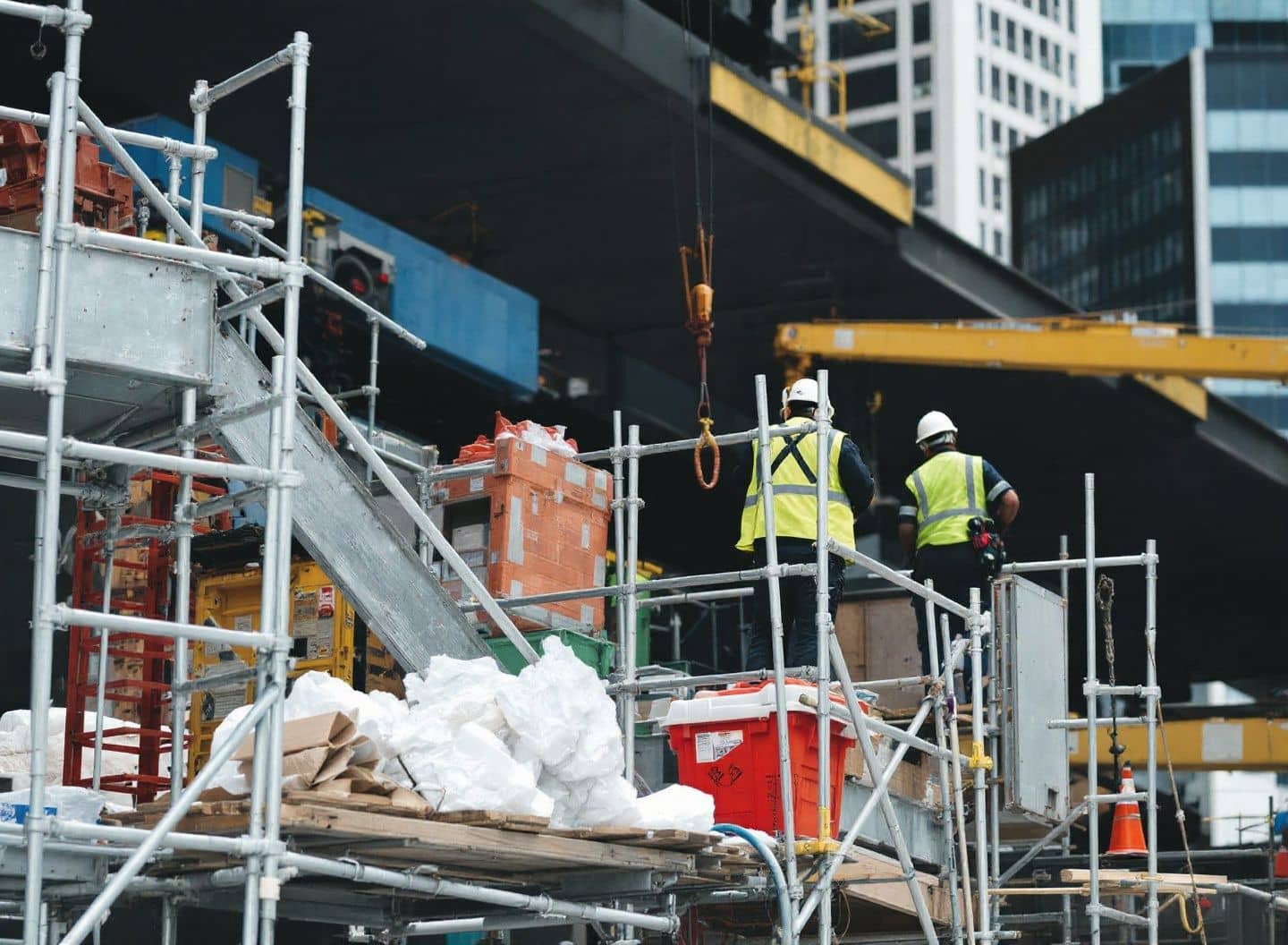
Construction in New York rarely stops for the weather. Deadlines, budgets, and the relentless pressure to keep a project moving push supervisors to keep crews on scaffolds even when the sky is threatening. That decision — to keep working through wind gusts, freezing rain, or an overnight ice accumulation — can turn a manageable scaffold into a death trap. When a worker falls as a result, the legal question isn't just whether a plank was slippery. It's whether the people in charge of that job site had a duty to stop work, and whether they failed to meet it.
Why Weather Makes Scaffolds Uniquely Dangerous
Scaffolds are elevated, open structures. That's exactly what makes them useful for reaching the face of a building, and exactly what makes them vulnerable to conditions that would barely affect a worker standing on the ground. Wind, ice, and freezing rain attack scaffold systems in ways that aren't always obvious until something gives way.
Wind is the most commonly underestimated hazard. A sustained gust at 30 mph exerts meaningful lateral force on a worker standing upright on a platform, especially one carrying a sheet of plywood, a door panel, or any large flat material. At height, wind speed increases and gusts are less predictable than at street level. A worker who shifts their weight to compensate for a gust can step onto a plank that has vibrated loose from its support. Or they can simply lose their balance entirely, and if a guardrail is missing or inadequate, there's nothing between them and the ground.
Ice is subtler but at least as dangerous. An overnight temperature drop can coat scaffold planking with a transparent film of ice that looks like a wet surface. Workers who don't see ice don't treat it with caution. One misstep and they're falling before they've processed what happened. Ice also builds on the metal frames, cross-braces, and ladder rungs that workers climb to reach the platform. A slip on an icy rung at the bottom of the climb can send a worker falling backward onto the ground. A slip near the top can result in a fall of two or three stories.
Rain and high humidity create a separate category of risk. Wet planks lose friction. Workers wearing work boots with good dry-surface grip can find those same boots sliding on saturated wood. If the scaffold also lacks proper guardrails or the toe boards are missing, a slide at the edge of the platform becomes a fall.
The Mechanism of Injury: What Actually Happens in a Scaffold Fall
Scaffold fall injuries generally happen one of two ways: planking failure or guardrail absence. Both are made far more likely by adverse weather.
Planking failure occurs when the surface a worker stands on deflects excessively, splits, or slides off its supports. Scaffold planks are rated for specific loads and specific spans, but those ratings assume dry, stable conditions. Waterlogged wood is heavier and weaker. Planks that have been repeatedly wetted and dried can develop splits along the grain. Ice adds weight and eliminates friction between the plank and the frame, so a plank that seemed secure can shift the moment a worker steps onto it. At even ten feet above grade, a free fall onto a concrete surface produces forces that the human body cannot absorb without serious injury.
Guardrail absence or failure is the other dominant pattern. A top rail, mid-rail, and toe board form the system that keeps a worker who loses their footing from going over the edge. When any of those components is missing, damaged by a weather event, or was never installed properly to begin with, a worker who slips or is buffeted by wind has no secondary protection. Falls from scaffold height are frequently fatal or result in catastrophic orthopedic, neurological, and internal injuries. The value of any legal claim varies with the severity of the injury, but the injuries involved in these cases are often life-altering.
What New York Law Requires: Labor Law § 240
New York's scaffold law, Labor Law § 240(1), requires property owners, general contractors, and their agents to furnish or erect scaffolding, hoists, stays, ladders, slings, hangers, blocks, pulleys, braces, irons, ropes, and other devices that give proper protection to workers engaged in covered activities. An owner or general contractor can be liable when a required safety device was missing or failed to give proper protection against an elevation-related risk and that violation was a proximate cause of the injury, even if they did not know about the specific defect, subject to the statutory owner exemption. Once both are shown, the worker's comparative negligence does not reduce recovery. A defendant may argue that the worker's own conduct was the sole proximate cause of the accident, but that defense generally requires showing that adequate safety devices were available, the worker knew both that they were available and that he or she was expected to use them, chose for no good reason not to, and would not have been injured had they been used.
Adverse weather fits squarely within this framework. If ice on the scaffold planking caused the fall, the question is whether the owner or contractor provided a scaffold that was adequate for the actual conditions on the job site at the time the worker was required to be there. A scaffold that meets minimum standards on a dry summer day may not meet the standard of 'proper protection' on a freezing January morning with overnight ice accumulation. Courts have consistently held that the protection required by Labor Law § 240 must be adequate for the specific task and the specific conditions at the time of the accident.
State Safety Regulations: 12 NYCRR 23-5
Beyond the broad duty imposed by Labor Law § 240, New York's Industrial Code contains detailed technical requirements for scaffolding. The relevant section, 12 NYCRR 23-5, establishes specific standards for scaffold construction, planking, guardrails, and safe use in the context of construction, demolition, and excavation work. These regulations exist because the Legislature recognized that general duties alone don't prevent injuries — workers need specific, enforceable rules about plank thickness, guardrail height, platform width, and load capacity.
12 NYCRR 23-5 is important in weather-related scaffold cases because its specific requirements can form the basis of a Labor Law § 241(6) claim alongside a § 240 claim. Where a contractor failed to keep scaffold planks clear of ice, failed to maintain guardrails in good repair after a windstorm damaged them, or failed to inspect the scaffold before sending workers up after adverse conditions, those failures may constitute violations of specific Industrial Code provisions. A § 241(6) claim requires that a specific, applicable Industrial Code rule was violated, that the violation amounted to negligence, and that it was a proximate cause of the injury. Unlike a § 240(1) claim, the worker's comparative fault can reduce recovery on a § 241(6) claim.
Federal Standards: 29 CFR 1926.451
Hurt on a Construction Site?
Tell us what happened. A licensed New York attorney will review your case and call you — free, no obligation.
Federal OSHA's scaffolding standard, 29 CFR 1926.451, addresses weather conditions directly and with specificity. OSHA requires a competent person to inspect scaffolds and components before each work shift and after any occurrence that could affect structural integrity. It requires that scaffold platforms be kept free of accumulated snow, ice, and other slippery materials. It prohibits work on scaffolds during storms or high winds unless a competent person determines that it is safe and workers are protected by personal fall arrest systems or wind screens.
The underlying safety rule may also matter in a civil lawsuit. In a civil lawsuit in New York, evidence that a contractor violated 29 CFR 1926.451 by failing to inspect the scaffold after an ice storm, or by sending workers onto an icy platform, is directly relevant to whether the contractor acted reasonably. OSHA violations don't automatically create civil liability, but they may be offered as evidence of negligence.
The Duty to Suspend Work: Who Decides and Who's Responsible
One of the most contested factual issues in weather-related scaffold cases is who had the authority and responsibility to stop work. The general contractor typically controls the job site and has the power to halt operations when conditions become unsafe. A subcontractor's foreman may have the practical ability to keep their crew off the scaffold, but they may also face pressure from the GC or the owner to keep production moving.
Under Labor Law § 240, it doesn't matter much who made the call to keep working. The owner and general contractor share non-delegable liability, meaning they can't escape responsibility by pointing to a subcontractor. If an inadequate scaffold violated § 240(1) and that violation proximately caused an elevation-related injury, a covered owner or contractor may be liable, subject to the statutory owner exemption and any sole-proximate-cause defense. That said, the factual record — site logs, weather service data, text messages between supervisors, OSHA inspection reports — often tells a clear story about who knew the conditions were dangerous and chose to proceed anyway. That story matters for establishing what happened, even if it doesn't change who's legally on the hook.
Workers themselves often feel they have no choice. Refusing to work in dangerous conditions risks being sent home, losing pay, or being labeled a troublemaker. New York law accounts for this reality. A worker who was injured after being directed to work on an icy scaffold doesn't lose their rights simply because they complied with the direction. The law places the burden of safety on the parties with the power and resources to address hazardous conditions, not on the worker who's just trying to do their job.
What Injured Workers Should Know About Protecting a Claim
If you're injured on a scaffold during or after adverse weather conditions, the steps you take in the immediate aftermath have real consequences for any future claim. Some of this is practical, and some of it involves understanding how these cases are built.
The Bigger Picture: Why New York's Scaffold Law Exists
New York's Labor Law § 240 has been on the books for well over a century, and it remains one of the strongest worker-protection statutes in the country. Its safety-device duty exists because the Legislature made a deliberate policy choice: the parties who profit from construction — owners and general contractors — are best positioned to ensure that the work is done safely. They control the budget, the schedule, and the site. They can require adequate scaffolding, mandate weather inspections, and stop work when conditions are dangerous. The worker on the platform doesn't have that power.
Adverse weather is not an act of God that excuses a contractor's failure to provide safe conditions. A contractor who knows a winter storm is coming can plan for it — by scheduling sensitive scaffold work before the storm, by ensuring de-icing materials are on hand, by building weather delays into the project schedule. When they choose production over safety instead, and a worker falls as a result, the law holds them accountable. That's not a harsh result. It's the result the law was designed to produce.
Attorney Advertising. Prior results do not guarantee a similar outcome. This article is for general informational purposes only and does not constitute legal advice. NY Construction Advocate connects injured workers with experienced New York construction accident attorneys.
Primary sources
Frequently Asked Questions
Does Labor Law § 240 cover scaffold accidents that happen because of icy or wet conditions?▼
Can an owner or contractor argue that bad weather was an 'act of God' to avoid liability under Labor Law § 240?▼
What does 29 CFR 1926.451 say about working on scaffolds during bad weather?▼
If a worker was told to get on the scaffold despite icy conditions and complied, can they still bring a Labor Law § 240 claim?▼
How does 12 NYCRR 23-5 differ from Labor Law § 240 in a scaffold injury case?▼
What evidence is most important in a weather-related scaffold fall case?▼
Get a Free Case Review
Find out if you have a claim under New York Labor Law. A licensed NY attorney will review your case and call you back.