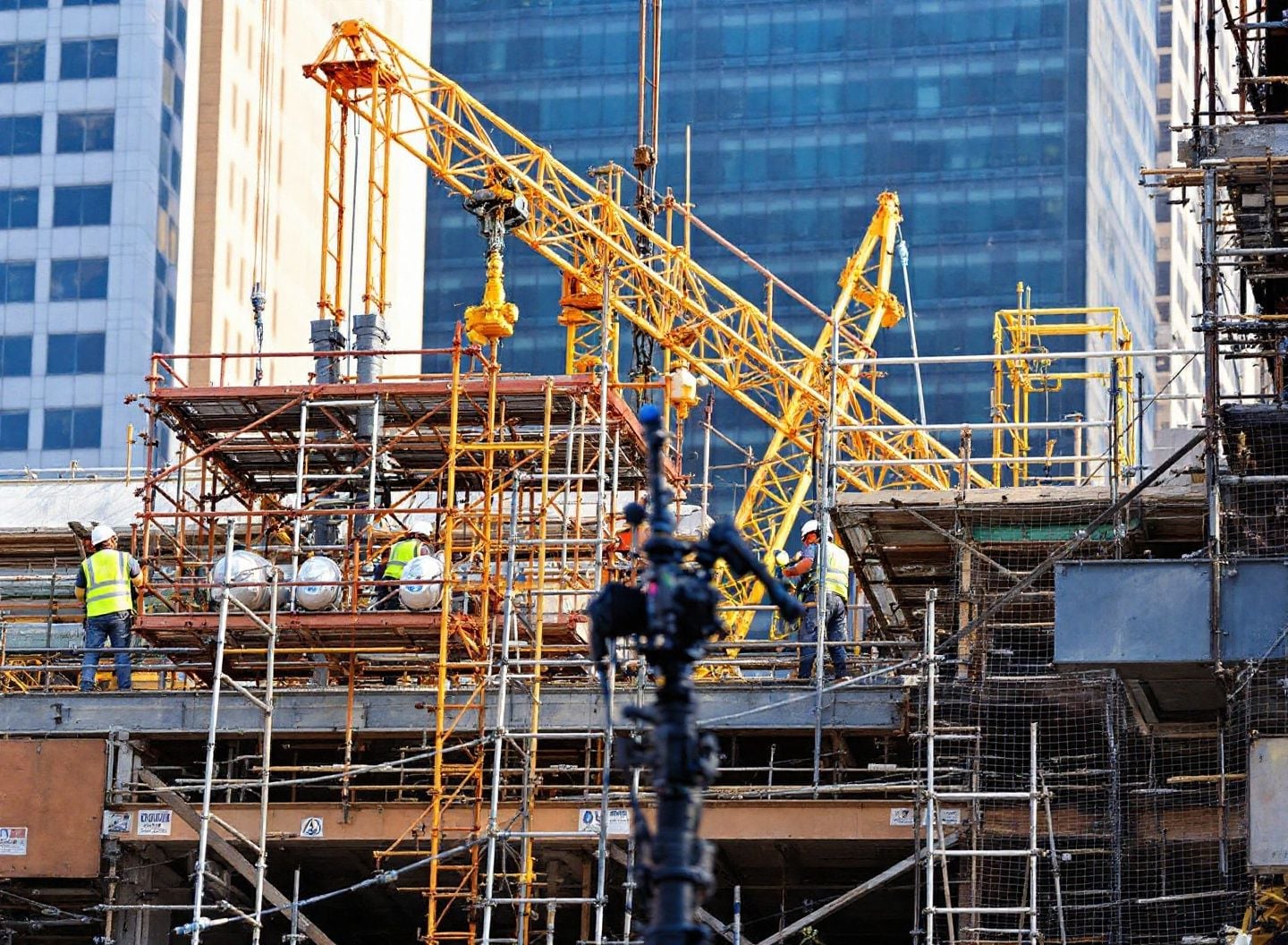
When a construction worker gets hurt on a New York job site, the first question most people ask is: 'Do I file for workers compensation?' The answer is yes—but in most serious cases, that's only the beginning. New York's legal framework gives injured construction workers access to two completely separate systems of recovery, and understanding how they interact can make an enormous difference in what an injured worker ultimately receives.
Why Two Systems Exist Side by Side
Workers compensation is a no-fault insurance program. It doesn't matter whether the employer was careless or whether the worker made a mistake—if you're injured on the job, you're generally entitled to medical benefits and a portion of lost wages through the comp system. The trade-off is significant, though: you cannot sue your employer directly in most circumstances, and the benefits are capped. Workers comp was never designed to make an injured person whole. It was designed to keep injured workers from total financial ruin while protecting employers from unlimited tort exposure.
A third-party lawsuit is something entirely different. It's a civil claim brought against a party other than your direct employer—often the general contractor, the property owner, an equipment manufacturer, or a subcontractor whose crew created the hazard that hurt you. In New York, third-party liability in construction cases is heavily shaped by three statutes that don't exist in most other states: Labor Law § 240, Labor Law § 241(6), and Labor Law § 200. These laws impose duties on owners and contractors that go well beyond what OSHA requires, and they've created a legal environment where construction injury claims in New York are genuinely different from those in any other jurisdiction.
What Workers Compensation Actually Covers
Workers comp benefits in New York typically cover medical treatment related to the injury, a weekly wage replacement benefit calculated as a percentage of your average weekly wage, and, in some cases, a schedule loss of use award for permanent impairment to a specific body part. Death benefits are available to surviving family members when a worker is killed on the job. These benefits are real and they matter, especially in the weeks immediately after an injury when a worker can't return to the site and bills are already piling up.
But workers comp doesn't compensate for pain and suffering. It won't pay for the full scope of your lost future earnings if you're permanently disabled. It won't account for the ways a serious injury ripples through every part of a worker's life. That's the gap a successful third-party civil lawsuit is designed to fill.
Labor Law § 240: The Scaffold Law and Why It Matters
Falls from height are among the most common and most devastating injuries in construction. A roofer stepping onto unsecured decking, an ironworker whose harness anchor pulls free, a bricklayer working from an improperly braced scaffold—these aren't abstract risks. They're the mechanisms of real injuries that happen across New York City and the rest of the state every day. The injury often happens in seconds. The consequences can last a lifetime.
Labor Law § 240 imposes an absolute duty on owners, general contractors, and their agents to furnish or erect proper scaffolding, hoists, ladders, and other protective devices when workers are engaged in construction, demolition, or repair work at elevation. The statute is often called the Scaffold Law, though it covers far more than scaffolding. If the required safety device was absent, inadequate, or defective, the owner and contractor are liable—regardless of whether the worker bore any comparative fault. Courts have interpreted this as a form of strict liability for gravity-related injuries, which is why Labor Law § 240 claims are treated with particular seriousness.
The practical implication: if a worker falls because a scaffold lacked proper guardrails, or a ladder shifted because it wasn't properly secured, or a hoist line snapped because it wasn't rated for the load, the injured worker has a strong basis for a third-party civil claim even if workers comp is also paying benefits. The two paths run in parallel.
The Role of 12 NYCRR 23-1.7 in a Civil Claim
Not every construction injury involves a fall from elevation. Workers are also hurt by falling objects, collapsing excavations, exposure to hazardous conditions underfoot, and inadequate protection from overhead hazards. Labor Law § 241(6) provides another avenue for civil recovery—but unlike § 240, it requires the injured worker to point to a specific, concrete safety regulation that was violated.
That's where 12 NYCRR 23-1.7 comes in. This regulation, promulgated by the New York State Department of Labor, sets out detailed safety requirements for construction, demolition, and excavation operations. It covers protection from overhead hazards, from falling materials, from slipping and tripping hazards in passageways, and from other dangerous conditions workers routinely encounter. Courts have consistently held that 12 NYCRR 23-1.7 qualifies as a specific enough regulation to support a § 241(6) claim. When an employer or contractor fails to meet the standards set out in this regulation and a worker is hurt as a result, the door to civil liability opens.
The trade-specific risk here is worth spelling out. Laborers and pipefitters working in below-grade areas face slipping hazards from accumulated water or mud that 12 NYCRR 23-1.7 is specifically designed to address. Carpenters and drywall workers moving materials through corridors can be struck by falling debris if overhead protection requirements aren't followed. Each trade has its own injury profile, and 12 NYCRR 23-1.7 creates enforceable standards across all of them.
Federal Standards and How OSHA Fits Into the Picture
Federal OSHA regulations don't create a private right of action—meaning an injured worker can't sue in civil court simply because OSHA's rules were broken. But OSHA violations are relevant evidence, and understanding them helps workers and their attorneys build a complete picture of what went wrong.
29 CFR 1926.501 is the federal fall protection standard for construction. It requires employers to provide fall protection at six feet or more above a lower level in most construction scenarios, and it specifies acceptable systems including guardrail systems, safety net systems, and personal fall arrest systems. In fiscal year 2024, fall protection under 29 CFR 1926.501 was cited 6,307 times nationwide, making it the single most frequently cited OSHA standard in construction. That number tells you something important: fall protection violations aren't rare or unusual. They're common. They happen on job sites of every size, in every trade, in every borough of New York City and across the state.
Hurt on a Construction Site?
Tell us what happened. A licensed New York attorney will review your case and call you — free, no obligation.
When OSHA cites a contractor for fall protection violations after an injury, that citation can support the factual narrative in a civil case, even if it doesn't independently create liability. A savvy attorney will look at OSHA records, site inspection reports, and safety plans alongside the state law claims under Labor Law § 240 and § 241(6).
How the Two Claims Actually Run Together
Here's the part that surprises a lot of injured workers: you can collect workers comp benefits and pursue a third-party civil lawsuit at the same time. They're not mutually exclusive. The workers comp carrier will typically assert a lien against any civil recovery—meaning if you win a civil judgment or settle a third-party case, the comp carrier is entitled to be reimbursed for benefits paid, subject to certain reductions. The precise rules governing that lien and how it's negotiated are complex and vary by case.
The bottom line is that an injured construction worker who only pursues workers comp may be leaving a substantial part of their potential recovery on the table. The civil system compensates for things the comp system simply doesn't cover: pain and suffering, full lost earning capacity, loss of enjoyment of life. The value of those elements varies with the severity of the injury, the worker's age and occupation, and the specific facts of how the accident happened.
Common Trade-Specific Scenarios Where Both Claims Apply
Why Timing and Documentation Matter Immediately After an Injury
One of the most critical things an injured worker can do is report the injury promptly and get medical care right away. This protects the workers comp claim. But it also preserves the civil claim. Evidence from a construction site disappears fast. Scaffolding gets reconfigured. Equipment gets moved or repaired. Witnesses' recollections fade. Photographs taken in the hours after an accident can be the difference between a strong case and a weak one.
Workers should also be careful about what they sign in the immediate aftermath of an injury. Some employers and insurers move quickly to get workers to sign releases or recorded statements before the worker fully understands their rights. New York law gives injured construction workers certain protections, but those protections are only meaningful if the worker knows about them and acts on them in time.
The statute of limitations for a Labor Law civil claim in New York is generally three years from the date of injury, but there are exceptions and complications—including shorter notice requirements when the defendant is a municipality or public authority. Don't assume there's plenty of time. Consulting an attorney early is always better than waiting.
The Bigger Picture for Injured Workers
New York's Labor Laws exist because the state legislature recognized decades ago that construction is dangerous work, that workers are often powerless to refuse unsafe conditions without risking their jobs, and that the parties with actual control over a site—owners and general contractors—should bear the responsibility for keeping that site safe. Labor Law § 240, § 241(6), 12 NYCRR 23-1.7, and federal standards like 29 CFR 1926.501 all reflect that basic principle from different angles.
Understanding that you have rights under both the workers comp system and the civil litigation system isn't just legal strategy. It's a matter of knowing what the law actually provides for people who are hurt doing one of the hardest and most hazardous jobs in the state. The comp system keeps the lights on while you recover. A successful civil case can address what a serious injury actually costs a person and their family over a lifetime.
If you've been hurt on a New York construction site, the most important step you can take is to get informed about both avenues of recovery as quickly as possible. At NY Construction Advocate, our goal is to make sure you understand the full scope of your rights before you make any decisions that might limit them.
Attorney Advertising. Prior results do not guarantee a similar outcome. This article is for general informational purposes only and does not constitute legal advice. NY Construction Advocate connects injured workers with experienced New York construction accident attorneys.
Frequently Asked Questions
Can I file a workers comp claim and a third-party lawsuit at the same time in New York?▼
What is the Scaffold Law and does it apply to my injury?▼
What is 12 NYCRR 23-1.7 and how does it relate to a civil construction injury claim?▼
Does an OSHA violation automatically mean I can sue the contractor in New York?▼
How long do I have to file a third-party construction injury lawsuit in New York?▼
What types of damages can a third-party civil lawsuit recover that workers comp does not?▼
What should I do immediately after being injured on a New York construction site?▼
Get a Free Case Review
Find out if you have a claim under New York Labor Law. A licensed NY attorney will review your case and call you back.