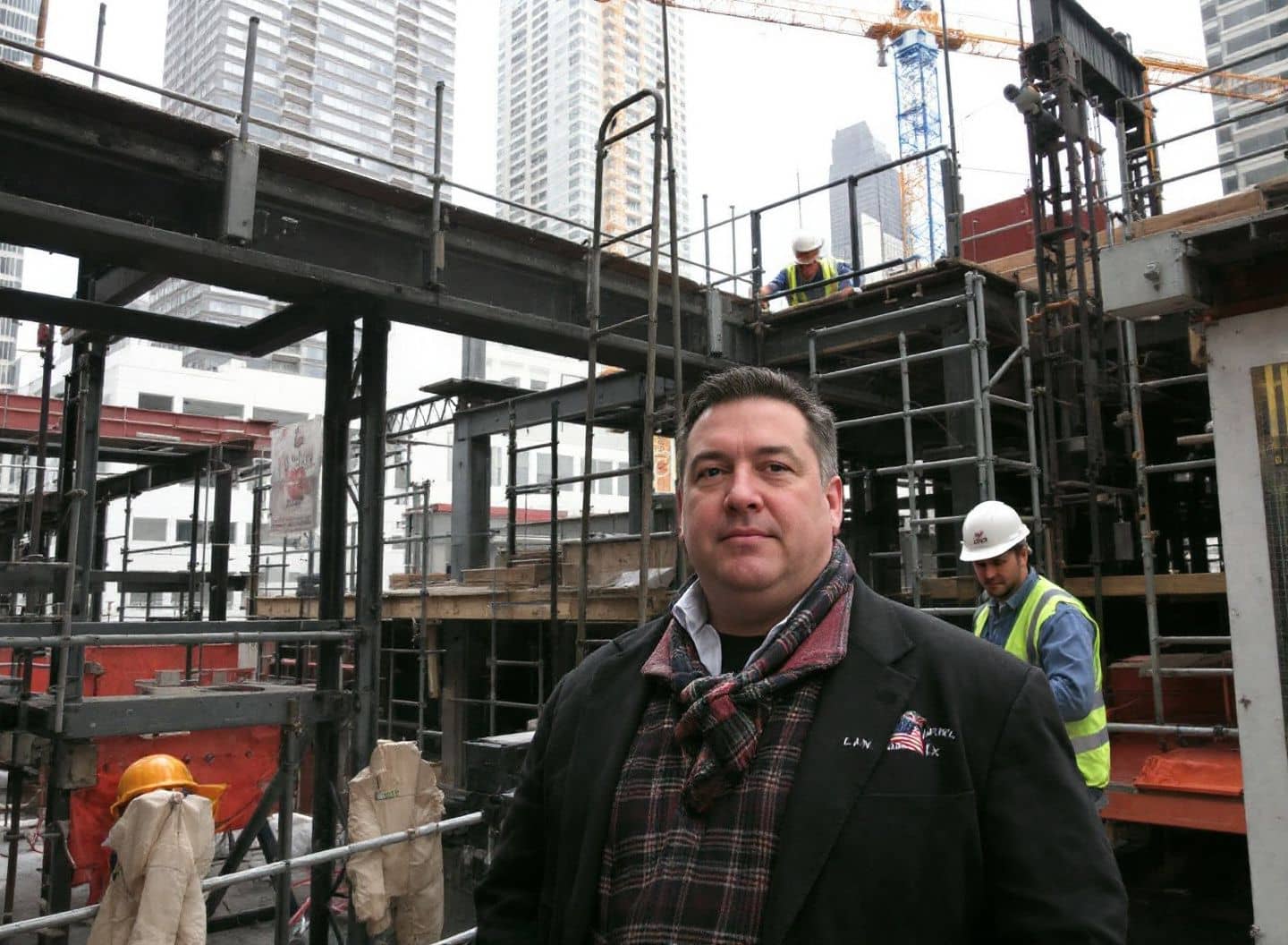
When a construction worker is seriously hurt on a New York job site, the legal case that follows is rarely simple. There's a gap between what the law says an owner or contractor was supposed to do and what actually happened on the day of the accident. Closing that gap is the job of expert witnesses. In New York Labor Law cases, three categories of experts carry most of the weight: licensed engineers, construction safety professionals, and forensic economists. Each one speaks to a different piece of the puzzle, and together they build the factual foundation a jury needs to understand how an injury happened, why someone was legally responsible, and what the injured worker has genuinely lost.
Why Expert Testimony Matters in New York Labor Law Cases
New York's Labor Law statutes, particularly Labor Law § 240 and Labor Law § 241(6), impose what courts call non-delegable duties on property owners and general contractors. That means those parties can't simply point a finger at a subcontractor and walk away. But the existence of a legal duty doesn't automatically prove it was violated. An injured worker's legal team still has to show the jury exactly how site conditions fell short of the required standard, and that's where experts come in. Jurors aren't construction professionals. They don't know what a proper scaffold tie-back looks like, how a safety harness should be anchored, or why a certain beam configuration creates a fall hazard. Expert witnesses translate the technical world of construction into language a jury can evaluate.
The Scaffold Law and What Triggers the Need for Engineering Analysis
Labor Law § 240, commonly called the Scaffold Law, requires contractors, owners, and their agents to furnish or erect scaffolding, hoists, ladders, and other safety devices during building work. The statute covers elevation-related injuries—falls from height, and injuries caused by falling objects. It's one of the most powerful worker-protection statutes in the country, and when a required safety-device violation proximately causes injury, an owner or contractor may face liability (Blake v. Neighborhood Housing Services of New York City, 1 N.Y.3d 280 (2003)). But 'adequate' is a word that needs definition in each case, and that definition comes from a licensed professional engineer.
A forensic structural or civil engineer examines the physical record of the accident: photographs, inspection logs, scaffold erection drawings, equipment specifications, and site survey data. The engineer reconstructs what the safety device looked like, how it was installed, and whether it conformed to the load ratings and design standards required by law. If a scaffold collapsed, the engineer calculates whether it was properly braced and whether its planking met required thickness and span limits. If a worker fell through an unguarded floor opening, the engineer identifies the opening's dimensions and the absence of any cover or barrier system. That technical analysis is what connects the bare statutory language of Labor Law § 240 to the specific conditions that injured a worker.
Safety Experts and the Regulatory Code Behind Labor Law § 241(6)
Labor Law § 241(6) is a different animal. A claim requires proof that a specific, applicable Industrial Code rule was violated, the violation amounted to negligence, and it was a proximate cause of the injury; the worker's comparative fault can reduce recovery. A rule often cited in New York construction cases is 12 NYCRR 23-1.7, the Industrial Code section on protection from general hazards in construction, demolition, and excavation operations. Industrial Code rules set specific safety requirements for a construction site—safety railings, covers for hazardous openings, protection from slipping hazards, and protection against falling objects. A construction safety expert's job is to show the jury that the site conditions on the day of the accident violated one or more of those specific provisions.
Construction safety experts typically have backgrounds as former OSHA compliance officers, safety directors, or site superintendents with decades of field experience. They don't just cite the rule; they explain the purpose behind it. When a worker slips on an icy, unpainted concrete stairway with no non-slip tread and no handrail, the safety expert explains that 12 NYCRR 23-1.7 exists precisely because that type of condition causes that type of fall. The expert reviews the safety plan for the project, the subcontractor safety agreements, the daily safety inspection logs (if they exist), toolbox talk records, and any prior near-miss reports. Gaps in those records are themselves significant findings.
Federal Fall Protection Standards as a Parallel Reference Point
New York's Industrial Code isn't the only regulatory framework safety experts draw on. Federal OSHA's fall protection standard, 29 CFR 1926.501, sets minimum requirements for fall protection on construction sites—guardrails, personal fall arrest systems, safety nets—for workers exposed to falls of six feet or more. This standard is one of the most frequently cited regulations in the country, with 6,307 citations issued nationwide in fiscal year 2024 alone. That statistic matters in a case because it tells a jury that fall protection failures are not exotic or rare; they're an industry-wide pattern that regulators have specifically targeted.
Safety experts use 29 CFR 1926.501 alongside New York's own rules to establish what a competent safety professional would have required on the site. Even though OSHA violations don't automatically create civil liability in New York courts the way Labor Law violations do, the federal standard is admissible as evidence of the industry's expected practice. A contractor who ignored both a state code requirement under 12 NYCRR 23-1.7 and a federal OSHA obligation under 29 CFR 1926.501 has a harder time arguing that its conduct was reasonable. The safety expert draws that picture for the jury.
Trade-Specific Risks and Why They Matter to the Expert's Analysis
Construction isn't one job; it's dozens of different trades working in close proximity under constantly changing conditions. The risk profile for an ironworker bolting structural steel twenty stories up is entirely different from the risk facing a roofer applying membrane waterproofing on a low-slope commercial building, and both differ from the conditions a laborer faces in a trench excavation. Expert witnesses need to understand the specific trade involved because the mechanism of injury determines which safety regulations apply and which safeguards were required.
Hurt on a Construction Site?
Tell us what happened. A licensed New York attorney will review your case and call you — free, no obligation.
For ironworkers, the relevant analysis often involves perimeter cables, safety nets, and personal fall arrest systems anchored to structural members. For roofers, it focuses on parapet heights, roof edge protection, and the condition of the work surface itself. For workers on interior renovation projects, the analysis frequently involves floor openings, temporary stairways, and the placement of materials near edges. A safety expert who doesn't understand these trade-specific distinctions will give testimony that sounds generic, and generic testimony rarely persuades a jury. The best experts can explain the particular job task the worker was performing, step by step, and show exactly which hazard presented itself and when.
Forensic Economists: Putting a Full Picture on What's Been Lost
Proving liability is only half the case. The other half is damages, and that's where forensic economists and vocational rehabilitation specialists become essential. A serious construction injury often ends or permanently limits a worker's career. A journeyman electrician who loses significant hand function may never work in the trade again. A carpenter with a severe back injury may be physically incapable of the repetitive lifting, bending, and kneeling the job demands. The economic loss in those situations is substantial, and it extends decades into the future.
A forensic economist reviews the worker's employment history, union wage rates, benefit packages, and projected career trajectory. Union construction trades in New York often include pension contributions, annuity payments, health benefits, and apprenticeship advancement that wouldn't appear on a simple pay stub. The economist accounts for all of it. Future lost earnings are then calculated based on the worker's age, the expected duration of their working career absent the injury, wage growth projections, and the present value of money over time. The result is an opinion expressed in terms of economic loss, not a raw number pulled from thin air.
On top of lost earnings, the economist also addresses future medical costs. Construction injuries involving the spine, joints, and traumatic brain function frequently require ongoing treatment for life. Surgeries, pain management, physical therapy, assistive devices, and home health care all carry costs that multiply over years. A life care planner often works alongside the forensic economist to project what future medical needs will look like, and the economist then calculates their present economic value. The total picture of economic loss varies significantly with the severity of the injury, the worker's age, and the trade involved.
How the Expert Team Works Together
The three categories of experts don't operate in isolation. They build on each other's work. The engineer establishes that the physical safety system failed. The safety expert establishes that the failure violated specific regulatory standards under 12 NYCRR 23-1.7 and applicable federal requirements. The economist establishes what that failure cost the worker in concrete economic terms. When those opinions are consistent and mutually reinforcing, they create a case narrative that a jury can follow from cause to consequence. Lawyers work with these experts early in the case to identify which regulations are implicated, what physical evidence needs to be preserved, and which records need to be obtained through discovery.
Expert selection matters too. Courts scrutinize whether a witness is truly qualified in the area where they're offering an opinion. A retired safety officer with site experience is well-positioned to discuss hazard recognition and industry practice. A licensed professional engineer with structural experience is the right voice on scaffold load ratings. A credentialed forensic economist with experience in union construction labor markets is who you want calculating wage loss. Mismatching expertise to the opinion being offered invites challenges and, in some cases, the exclusion of testimony before trial.
Preserving Evidence Before Experts Can Work
Experts can only analyze what exists. Construction sites are active environments that change quickly. Scaffolding gets dismantled. Equipment gets repaired or replaced. Photographs taken by supervisors after an accident may be the only visual record of the conditions that existed at the time of injury. Workers and their families should understand that gathering information immediately after an accident is critical. Photographs, video, the names of witnesses, the identity of subcontractors on the site, any safety signage present or absent, and any documents the worker received about the job all become raw material for expert analysis.
Attorneys in serious construction cases routinely send preservation letters to site owners and contractors, demanding that physical evidence be held and not destroyed. In some cases, they seek court orders allowing their engineer to inspect the accident site before it changes further. That kind of early action is what gives the expert team something to work with.
What an Injured Worker Should Know
If you've been seriously hurt on a construction site in New York, the involvement of expert witnesses isn't a luxury reserved for complicated cases. It's a standard part of how Labor Law claims are built and presented. The legal duties under Labor Law § 240 are powerful, but proving that they were violated in your specific situation requires the kind of technical analysis that only a qualified expert can provide. The same is true for establishing the full scope of your economic loss. The severity of your injury, the trade you work in, and the specific conditions on the site all shape the analysis. Understanding that expert testimony plays this central role helps you ask better questions and make more informed decisions about your case.
NY Construction Advocate exists to give injured construction workers and their families the kind of plain-language education they need to understand a process that can otherwise feel overwhelming. The law is on your side in significant ways—but making it work requires building a case with the right people involved from the beginning.
Attorney Advertising. Prior results do not guarantee a similar outcome. This article is for general informational purposes only and does not constitute legal advice. NY Construction Advocate connects injured workers with experienced New York construction accident attorneys.
Primary sources
Frequently Asked Questions
What kind of expert witness is typically needed in a Labor Law § 240 scaffold case?▼
Can a safety expert's opinion about a code violation actually change the outcome of a case?▼
Why do construction accident lawyers also cite 29 CFR 1926.501 when New York has its own safety codes?▼
How does a forensic economist calculate future lost wages for an injured construction worker?▼
What happens if critical evidence at the construction site is destroyed before an expert can inspect it?▼
Do expert witnesses always testify at trial, or do they play a role earlier in the case?▼
Get a Free Case Review
Find out if you have a claim under New York Labor Law. A licensed NY attorney will review your case and call you back.