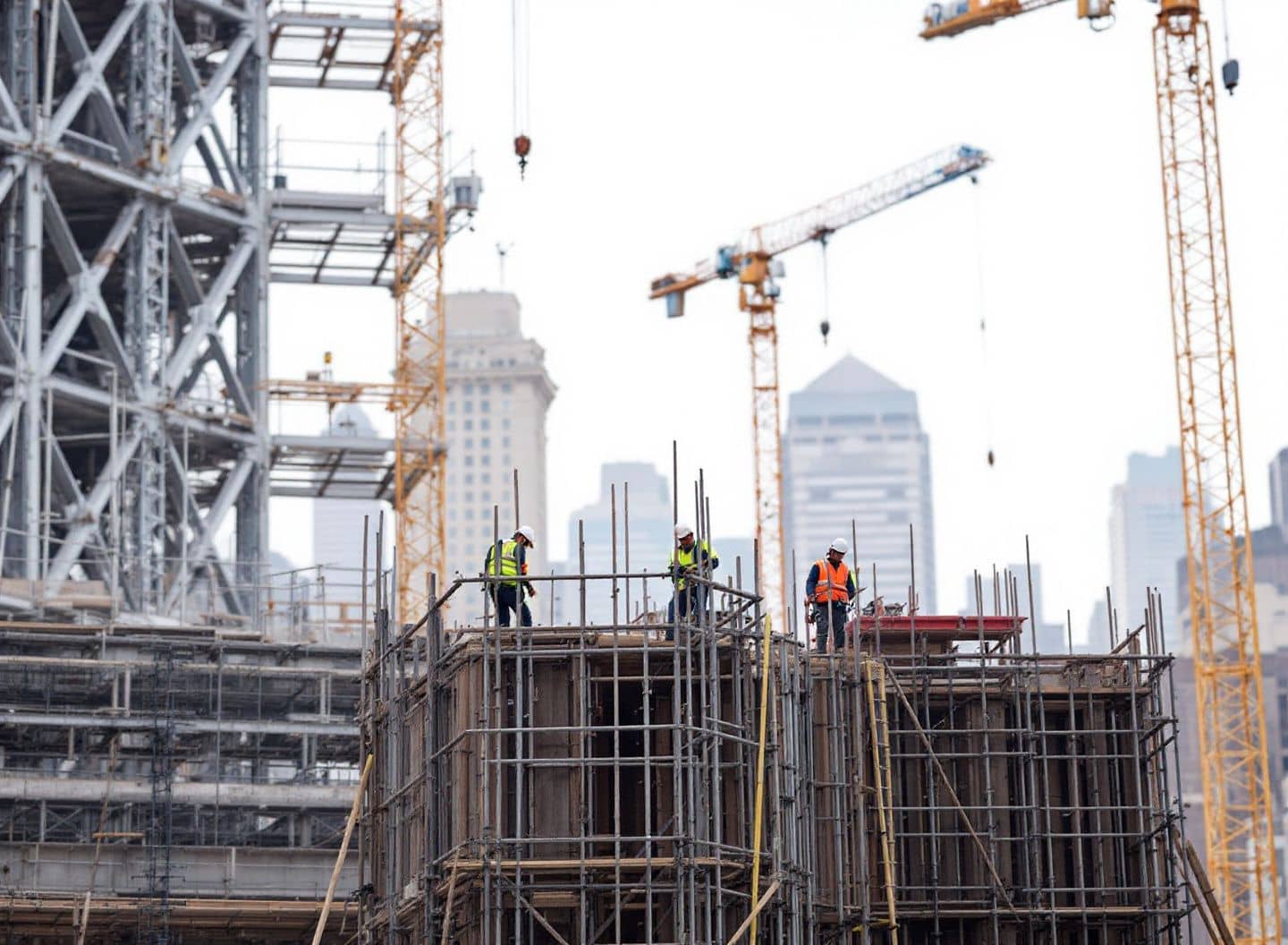
If you work in New York construction, someone at some point has probably handed you a 1099 instead of a W-2 and called you an independent contractor. Sometimes that classification is legitimate. Often, it isn't. And when you're hurt on a job site, the difference between those two categories can shape almost every aspect of your legal options. It affects whether workers' compensation covers your medical bills, whether you can sue the general contractor, and which specific statutes protect you under New York law. This article explains the mechanics of that distinction so you can walk into any conversation with a lawyer already knowing the terrain.
Why Classification Is the First Question After a Construction Injury
New York has some of the strongest worker-protection statutes in the country, but those statutes don't all apply equally to every person on a job site. The moment you're injured, two tracks open up simultaneously: the workers' compensation track and the civil litigation track. Which doors are open to you on each track depends, in large part, on whether the law treats you as an employee or as an independent contractor.
Workers' compensation is a no-fault system. If you're a covered employee, you file a claim, and the insurer pays for medical treatment and a portion of your lost wages regardless of who caused the accident. You don't have to prove negligence. That's the upside. The downside is that workers' comp is generally your exclusive remedy against your direct employer. You can't also sue the employer for pain and suffering under most circumstances.
Independent contractors, by contrast, typically fall outside the workers' compensation system. They aren't covered by their hiring party's workers' comp policy. That sounds like a disadvantage, and in some ways it is. But it also means that if you're an independent contractor injured on a New York construction site, you may not be barred from suing the general contractor or property owner directly for damages that go well beyond what workers' comp would pay.
How New York Actually Defines 'Employee' for These Purposes
New York courts don't just take an employer's word for it. The label on your contract doesn't control the legal analysis. For construction work, New York's Construction Industry Fair Play Act generally presumes a person performing services for a contractor is an employee unless the statutory three-part test is met or the person qualifies as a separate business entity.
Under that test, the person must be free from control and direction, perform services outside the contractor's usual course of business, and be customarily engaged in an independently established similar trade or business. A separate business entity must meet the statute's separate criteria; a 1099 or contract label alone does not decide classification.
Here's the critical reality for construction workers: many contractors who are called 'independent' in their paperwork are actually functioning as employees under this legal test. A roofer who shows up every day to the same general contractor's sites, uses the GC's equipment, and follows the GC's daily schedule is likely an employee under New York law, regardless of what the contract says. Courts and the Workers' Compensation Board both scrutinize these arrangements closely, and misclassification is common in the trades.
The Workers' Compensation Track: What Changes Based on Your Status
If you're properly classified as an employee, you're entitled to workers' compensation benefits through your employer's carrier. This covers medical treatment, a percentage of your average weekly wage during the period you can't work, and, in serious cases, a schedule loss of use award for permanent impairment to a limb or body part.
The flip side is the exclusive remedy doctrine. Under New York Workers' Compensation Law, accepting those benefits ordinarily bars you from suing your direct employer in civil court. You can still sue third parties, such as the general contractor, the property owner, or a subcontractor whose negligence contributed to your injury. That distinction matters enormously, because the general contractor and property owner often have far greater exposure under New York's Labor Law statutes than your direct employer does.
If you're classified as an independent contractor, you're generally outside the workers' comp system entirely. You'd need your own disability coverage or accident insurance to fill that gap. On the litigation side, however, you're not barred by the exclusive remedy rule, which opens the door to a full negligence and Labor Law case against all parties on the project.
New York Labor Law: Which Protections Apply and to Whom
New York's Labor Law creates specific liability for general contractors, property owners, and their agents. The statutes most relevant to construction injury claims are Labor Law §§ 200, 240, and 241. Each one has slightly different language about who it protects, and worker classification plays into that analysis.
Hurt on a Construction Site?
Tell us what happened. A licensed New York attorney will review your case and call you — free, no obligation.
Labor Law § 200 codifies the general duty to maintain a safe workplace. It requires that all places where construction work is performed be so constructed, equipped, arranged, operated, and conducted as to provide reasonable and adequate protection to the life, health, and safety of all persons employed therein. The word 'employed' has been interpreted broadly by New York courts. Workers who are economically dependent on the site's operations, even those labeled contractors, can fall within its protection depending on the facts.
Under Labor Law § 240(1), the 'scaffold law,' an owner or general contractor can be liable when a required safety device was missing or failed to give proper protection against an elevation-related risk, such as a fall from height or a falling object, and that violation was a proximate cause of the injury. Once both are shown, the worker's comparative negligence does not reduce recovery. The statute covers workers and 'other persons' employed in the work. Courts have extended this protection to certain independent contractors performing the actual construction work, not just formal W-2 employees. If you were doing the work the project required, you may qualify, regardless of your tax form.
Labor Law § 241(6) requires that construction sites be equipped, guarded, arranged, operated, and conducted in a manner that provides reasonable and adequate protection and safety to workers. This provision is implemented through the Industrial Code (12 NYCRR Part 23), which lays out specific safety practices required on construction sites. A § 241(6) claim requires that a specific, applicable Industrial Code rule was violated, the violation amounted to negligence, and it was a proximate cause of the injury; comparative fault can reduce recovery. General provisions such as 12 NYCRR 23-1.5, which sets out employers' general responsibility, are usually not specific enough to support the claim. Independent contractors performing construction work have successfully brought § 241(6) claims in New York courts because the statute is read to protect anyone doing the actual work of construction, not just those classified as employees.
Federal Safety Standards and the OSHA Layer
Beyond New York's own statutes, federal OSHA standards set baseline safety requirements for construction sites. 29 CFR 1926.20 establishes general safety and health provisions for construction work. It requires that employers initiate and maintain accident-prevention programs, that only qualified individuals supervise work, and that construction operations be planned with adequate safety measures in place. An OSHA violation doesn't automatically create civil liability in New York, but evidence of a regulatory violation is frequently relevant to proving negligence or supporting a Labor Law § 241(6) claim when tied to an Industrial Code provision that tracks the same conduct.
It's worth noting that OSHA's own rules on who counts as an 'employee' for regulatory purposes can differ from New York's civil liability analysis. A worker might be covered by OSHA's protections but not by a specific contractor's workers' comp policy. These distinctions sound technical, but they matter when you're piecing together a legal strategy after an injury.
Trade-Specific Risks and Why Misclassification Makes Them Worse
Construction injuries follow predictable patterns tied to specific trades. Roofers and ironworkers fall from height. Electricians suffer arc flash burns and electrocution. Concrete workers face crush injuries from formwork failures. Laborers are struck by swinging crane loads or moving equipment. These mechanisms of injury are well documented. What changes with misclassification is who's responsible for making those hazards safe and who pays when they're not.
When a worker is misclassified as an independent contractor, the general contractor may argue that it did not control the worker's methods. Control over the work can matter to a Labor Law § 200 claim and to whether a party acted as an owner's or contractor's agent. But owners and contractors cannot avoid their nondelegable duties under Labor Law §§ 240(1) and 241(6) merely by delegating work or calling a subcontractor 'independent.'
Misclassification also creates gaps in safety training and equipment. Workers labeled as independent contractors are sometimes excluded from site safety briefings, denied personal protective equipment that employees receive, or denied access to the site's formal accident-reporting system. That exclusion puts them at greater risk on the very hazards, falls, electrical contacts, struck-by events, that New York's Labor Laws were written to prevent.
What to Do If You're Unsure About Your Classification
Don't assume your employer got it right. Collect your pay stubs, any written contracts, correspondence about your work schedule, and any records showing who provided your tools and equipment. Note whether you work exclusively for one contractor or for multiple clients. Think about whether anyone on site told you how to do the work step-by-step, or whether you set your own methods.
A construction accident attorney can run through the relevant tests with you and give you a clearer picture before you file anything. If you were misclassified, you may be entitled to workers' compensation benefits you were never offered, in addition to any civil claims you have against the general contractor, owner, or other parties. Those two things aren't mutually exclusive in many scenarios. Getting the classification right at the start of your case shapes the entire strategy.
The value of your claim varies with the severity of the injury, the number of responsible parties, and which statutes apply. What doesn't vary is that worker classification is one of the first questions any experienced construction injury lawyer will ask. Understanding why puts you in a much better position to protect your rights from day one.
Attorney Advertising. Prior results do not guarantee a similar outcome. This article is for general informational purposes only and does not constitute legal advice. NY Construction Advocate connects injured workers with experienced New York construction accident attorneys.
Primary sources
Frequently Asked Questions
Can I still sue the general contractor if I'm classified as an independent contractor?▼
What if my employer calls me an independent contractor but controls how I do my work every day?▼
Does 12 NYCRR 23-1.5 apply to independent contractors on a construction site?▼
If I file a workers' compensation claim, does that prevent me from suing anyone?▼
How does Labor Law § 200 differ from Labor Law § 240 in a construction injury case?▼
Does OSHA's 29 CFR 1926.20 create a direct right to sue in New York court?▼
Get a Free Case Review
Find out if you have a claim under New York Labor Law. A licensed NY attorney will review your case and call you back.